Uk politics

Nick Clegg to give separate Leveson statement

From our UK edition

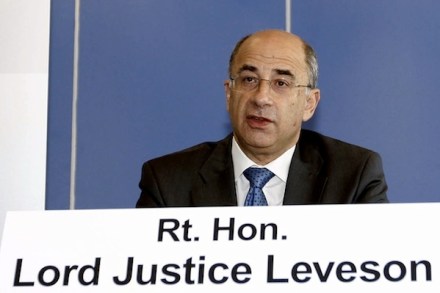
Nick Clegg will make his own statement on Leveson in the Commons today after the Prime Minister has spoken. Party sources were saying yesterday that this would only happen if the two men disagreed on the government's response to the report. The Lib Dems want to back the rapid creation of a statutory backstop for newspaper regulation, while David Cameron does not want to back any press law, at least for now. This is probably the biggest clue we'll get as to the content of the Leveson report before the embargo lifts at 1.30pm. But it doesn't necessarily mean a big split over the outcome: the coalition cabinet committee will meet at noon to discuss the full response, and there may well be greater unity over this than initially appears.
The big flashpoints over Leveson

From our UK edition

Nick Clegg and David Cameron will return, with their officials, to their speed reading exercise of the hefty Leveson report this morning. The Deputy Prime Minister wasn't giving much away unsurprisingly, when he spoke to journalists a short while ago as he left his home. He said: 'In this whole process, everybody wants two things: firstly a strong, independent, raucous press who can hold people in positions of power to account. And secondly to protect ordinary people, the vulnerable, the innocent when the press overstep the mark. That's the balance we're trying to strike, and I'm sure we will.' There is still the possibility that Clegg may give a second statement in the House of Commons later today if he and the Prime Minister fail to agree on the government's response to Leveson.

Bold Boles’ planning push is a key example of ‘spreading privilege’

From our UK edition

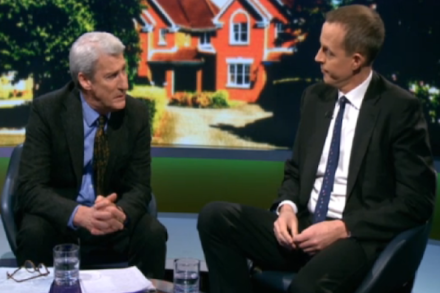
Nick Boles has just put in a fierce performance on Newsnight over his controversial remarks on planning. Amusingly, the minister's remarks aren't a million miles away from Nick Clegg's slightly less well-reported speech on housing last week, but Boles has a knack of going where other ministers fear to tread when he speaks about difficult issues. He was extremely impressive on why making development a priority does not mean England is going to turn into an enormous concrete jungle, saying: 'Under 10% of Britain, currently, 10% of England, is covered by urban development in any way. A very small amount. Over 85%, 88%, would still be rural, undeveloped countryside, and we would have completely solved our housing need for the next 20 years.

Labour is sitting a little less comfortably for tomorrow’s by-elections

From our UK edition

Tomorrow's three by-elections — the 11th, 12th and 13th since the general election — should have been three easy Labour victories. They are defending majorities of 16,481 in Croydon North, 10,462 in Rotherham and 8,689 in Middlesbrough. And certainly neither the Conservatives nor the Liberal Democrats — second and third in all three seats in 2010 — look capable of overturning them. But Labour are not looking as comfortable as they'd hoped. In both Croydon North and Rotherham, they've come under threat from Respect, raising the possibility that we'll see a repeat of the 'Bradford Spring' that saw George Galloway return to the Commons with 56 per cent of the vote in Bradford West in March.

PMQs sketch: PM paints Work Programme a marvellous success

From our UK edition

While Leveson packs his sun-cream and flip-flops and prepares for a holiday in Australia, the nation holds its breath in anticipation of his report. One lucky citizen, the prime minister, is permitted a sneak glance at the findings of the great inquisitor into press malpractice. At 11.45 this morning, the monumental hardback landed with a thump on Number 10’s doormat. David Cameron barely had time to turn to the index and see how many name-checks he’d been given before he was whisked off to the Commons to answer questions from Ed Miliband. It was not a great occasion. The opposition leader challenged Cameron on the failure of the Work Programme, (b. June 2011), to terminate long-term unemployment. Reports yesterday revealed that just 3.

The Coalition split over Leveson

From our UK edition

I'm informed by someone involved in the coalition negotiations on the issue that the reason the Liberal Democrats want to be able to make their own statement on the Leveson Report is that they intend to back the rapid creation of a statutory back-stop for newspaper regulation. By contrast, I hear that David Cameron doesn’t want to back any press law, at least for now. The key moment tomorrow will come with a meeting of the Cabinet’s coalition committee at noon. It is scheduled for an hour and is meant to thrash out whether a common position can be agreed. Michael Gove, the government’s most passionate opponent of statutory regulation, is a member of it as are all five Liberal Democrat Cabinet Ministers and David Laws.

Grayling defends stand-off with ECHR on prisoner votes

From our UK edition

Chris Grayling today defended the Government's decision to square up to the European Court of Human Rights on prisoner votes. The Justice Secretary seemed to enjoy his hour and a half before the Justice Select Committee, and used it to make a number of typically forthright assertions about the criminal justice system. Labour MP Jeremy Corbyn attacked the minister for the government's decision to refuse to give prisoners the vote, saying: 'What message does this give to other countries if you are inviting the British parliament and judiciary to pick and choose which ECHR judgements it enacts or doesn't enact? In any event, you could easily agree with the ECHR by a very minimal level of prisoner voting.

Lib Dems seek alternative Leveson statement slot

From our UK edition

As teams in secure rooms in Downing Street pore over the half dozen copies of the Leveson report, which arrived this morning, the Liberal Democrats are already starting to work out what they'll need to do if David Cameron and Nick Clegg find they cannot agree on the government's response. The Lib Dems have approached the Speaker to find out whether there is a possibility that Nick Clegg could give his own separate statement following Cameron's own response in the Commons tomorrow afternoon. Sources say they hope that this is an unlikely scenario, but add that 'he would like to be able to make his position clear in Parliament' if he does take a different stance.

Why The Spectator will take no part in state licensing of the press

From our UK edition

Lord Justice Leveson reports at 1.30pm tomorrow and David Cameron has blocked out 90 minutes in parliament to respond. The big question is this: will he introduce state licensing of the media? A group of 42 Tory MPs wants him to, and No.10 apparently thinks they will rebel if he doesn’t. But this would mean revoking Britain’s 317-year history of press freedom, and give Parliament power to set the parameters under which the press operates. If the state seeks to compel publications to join the government scheme, then they face a choice: sign up, or defy the new law. In tomorrow’s Spectator, we make our choice. We say in our leading article that we would happily sign up to any new form of self-regulation which the industry proposes, no matter how onerous.

The Lib Dems can use Leveson to show coalitions work

From our UK edition

The Liberal Democrats’ strategic imperative in this parliament is to show that coalitions can work. Their response to the Leveson Inquiry is, I suspect, going to be part of this plan. Their position on the issue is hardening. Yesterday’s Guardian report that they would make clear if David Cameron was only speaking for the Conservative party not the government, has been followed by Nick Robinson’s news that Clegg will make his own statement in the Commons if no coalition position can be agreed. I understand that, ideally, Clegg would make his statement from the despatch box.

Cameron to receive Leveson report as Tory party splits on press regulation

From our UK edition

David Cameron will receive his copy of the Leveson report later today, and will meet twice with Nick Clegg to discuss its contents: once this evening, and again as part of a coalition committee tomorrow. There will be a Commons statement tomorrow at about 2.30 from the Prime Minister, but Nick Robinson reports this morning that the Deputy Prime Minister is considering speaking after his colleague if the pair fail to agree on the government's response to the Leveson report. Those won't be the only tensions over the recommendations from the Inquiry, though. Scores of Tories are among the 86 MPs,who have signed a letter which today pleads with the government to not introduce state-backed regulation of newspapers.

Miliband’s false ‘millionaires’ tax cut’ attack

From our UK edition

Messrs Miliband and Balls performed their pre-autumn statement double act today. If for some inexplicable reason you missed it, the Labour chiefs launched their Q&A with an attack on the government for its decision to cut 50p income tax rate to 45p: 'The Government is about to give an average of £107,500 each to 8,000 people earning over a million a year. Not £40,000, but £107,500. To 8,000 millionaires. David Cameron and George Osborne are giving them this money. But it’s coming from you. 'You are paying the price of their failure and them standing up for the wrong people. David Cameron and George Osborne believe the only way to persuade millionaires to make work harder is to give them more money.

Work programme figures disappoint

From our UK edition

Today's headline figures on the Work Programme are not good news for the government: in its first 12 months, only 2.3 per cent of participants actually landed sustainable employment against the department's target of 5.5 per cent. This sounds even worse when you contrast it with the government's own figures suggesting that 5 per cent of people who have been unemployed for a long time can find sustainable jobs without any intervention at all, suggesting the programme is actually worse than doing nothing. At Coffee House, we are keen to see the Work Programme succeed, not just because it will vindicate the ministers co-ordinating it, but also because a successful programme would bring those furthest from the labour market back into employment.

Sir Mervyn defends George Osborne’s QE trick

From our UK edition

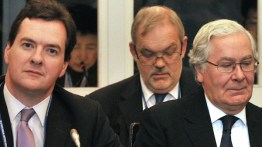
Sir Mervyn King told MPs, slightly wearily, at the end of today's Treasury Select Committee hearing, that this was his 100th appearance before a parliamentary committee since he joined the Bank of England. It was as rigorous a session as any of the 99 others that the Governor has sat through in his time, with the committee members choosing in particular to attack the decision to transfer £37 billion from debt interest in the Asset Purchase Facility from the Bank's QE budget back to the Treasury. As Jonathan blogged on Monday, the Institute for Fiscal Studies warned George Osborne against using that transfer to meet his debt target, and MPs were unimpressed, not just with the substance of the decision, but also the way in which it was announced.

The City: a beacon of diversity

From our UK edition

Now, what would those in the Equalities industry say to an industry so diverse that it has — in proportion — seven times as many Hindus, five times as many Indians, three times as many atheists and three times as many gays or lesbians as the rest of the country? And that this was achieved not by a positive discrimination employment strategy, but by sheer hard-headed hunt for the best talent? It would likely be hailed as an exemplar of diversity, an example of how Britain is the most tolerant country in the world. But if they happen to be bankers? Well, that’s another issue altogether. The study from Astbury Marsden (cited in Allister Heath’s City A.M. column yesterday) sampled 1,655 City workers and the results are below.

How will Michael Gove respond to Ofsted’s attack on councils?

From our UK edition

Ofsted's annual report, due out later today, will launch a scathing attack on those responsible for underperforming schools. But rather than taking aim at the teachers or the schools, it's the local authorities that the watchdog has got set in its sights. The report will say that there is too wide a gap in standards between different councils.

No ifs. No buts. Heathrow must have a third runway. Or must it?

From our UK edition

'No ifs. No buts. Heathrow must have a third runway.' This was our motion of the evening at last night's Spectator debate, but when it came to kick-off time, it appeared the audience was there for the taking. The pre-vote count found a majority of nine votes against the motion, but with 21 undecided attendees, everything was still left to play for. Graham Brady - Chairman of the 1922 committee, and MP for Altringham and Sale West (with Manchester Airport on his doorstep, he added) - opened the debate by speaking for the motion. With more than a nod to David Cameron’s conference speech in Birmingham, Brady argued: ‘We are in a global race today… Sink or swim. Do or decline.

UKIP is not a libertarian party – Spectator Blogs

From our UK edition

I'm sure, as James says, that the idea of some kind of Tory-UKIP non-aggression pact will not go away. But that's because many Tory backbenchers are remarkably stupid. Proponents of a Tory-UKIP alliance ignore the stubborn fact that many voters - voters the Tories need if they are to win a majority - aren't too keen on UKIP. There is no point adding one vote from the right if it costs you two from the middle, mainstream ground of British politics. Besides, the Tories are not every UKIP voter's second-choice and, anyway, the real battle is for the Liberal Democrat vote. Be that as it may, it is UKIP's insistence that it is a libertarian party that annoys me. Granted, there are many brands of libertarian and UKIP can describe itself as it wants.