Uk politics

One Nation Labour can’t just be about reassuring voters

From our UK edition

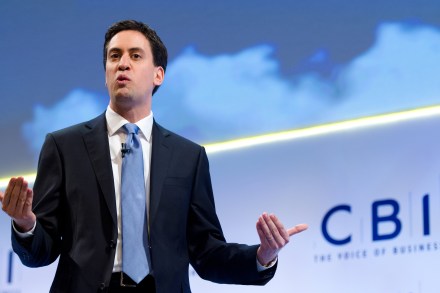
Ed Miliband is giving another one of his repositioning speeches today: this time about immigration and integration. We're going back to the Labour leader's school and his family again, as well as reminiscing about Olympics: none of which are exactly groundbreaking territory, given Ed explored the first two at length in his conference speech, has explored his family history at length in many speeches since becoming leader, and that all three party leaders used the Olympics for their own purposes in their autumn conference speeches. Mo Farah and Jessica Ennis should start charging politicians royalties for using their names in speeches about culture: they appear, alongside Zara Philips, in Miliband's speech today.

George Osborne isn’t clashing with Vince Cable: he’s starting to agree with him

From our UK edition

By this stage in the Coalition, everyone would have expected at least one major bust-up between George Osborne and Vince Cable. But his evidence to today's Treasury Select Committee suggested that the Chancellor isn't so much involved in a stand-off with the Business Secretary as he is taking on his point of view. It was significant how many times Osborne had to explain a softening in what were previously hard-and-fast economic rules, and hard-and-fast policies. His refusal to rule out replacing the Bank of England's inflation target with a growth target is the most significant sign of a coalescing between the two men.

The History Kids

From our UK edition

Martin Kettle has a column in today's Guardian lamenting the inadequacy of the teaching of English history in schools today. He suggests that "the English people are increasingly cut off from their own history." Is this so? Possibly! But then he makes the mistake of presuming the English are unusually unfortunate in this respect. To wit: It is a fair bet that today's young Scots know more about Scotland's history, today's young Welsh more about Wales, and today's young Irish more about Ireland than today's young English know about England. In fact the nature of their own historical experiences may mean that the Scots, the Welsh and the Irish also know more about England's history than the English do. I suspect most of this is pretty unlikely.

Nick Boles attempts to soothe planning critics

From our UK edition

Planning Minister Nick Boles admitted yesterday that he did not believe his controversial suggestion for Britain to build homes on two million acres of countryside should be put into practice. The new minister caused a storm last month when he supported a 3 per cent increase in UK-wide development to alleviate the housing shortages caused by high immigration. The plan was to build homes on green-field land, increasing development from 9 per cent to 12 per cent nationwide. But yesterday, Boles denied the claims, arguing that they were meant to illustrate a wider point about under-development rather than create a particular policy or target.

Liam Byrne interview: The welfare system is ‘completely out of whack’

From our UK edition

Liam Byrne is a modernising, Blairite Labour MP, and in case you were in any doubt about that, he conducts his interview with Coffee House sitting next to a framed photograph of him with Tony Blair. The party's Shadow Work and Pensions Secretary is well known for his modernising zeal, which has sometimes led him onto a collision course with his party grassroots and other MPs on the left. This week, though, he's on a collision course with the Conservatives, who hope they've managed to corner Labour into admitting it hasn't quite modernised its welfare policy enough to win voters back. The Welfare Uprating Bill, launched in last week's Autumn Statement, will see benefits rise by 1 per cent, rather than in line with inflation.

BBC vs Fracking

From our UK edition

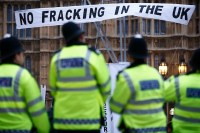
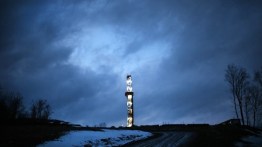
There was something odd about George Osborne offering tax breaks for fracking when it was still banned by another part of his government. The ban has been lifted and exploration can begin again in Lancashire, in what could be the most important piece of economic good news since the discovery of North Sea oil. But listening to the BBC reports this morning, it's striking how the corporation already seems to be against it. Fracking has begun, it says. And the two things is listeners need to know about fracking? That it has been accused of polluting water in America and causing earth tremors. The upside, especially for Blackpool and its environs, was not mentioned.

PMQs sketch: Ed Miliband, the political vulture

From our UK edition

PMQs today revealed just how dependent Ed Miliband is on Britain’s future performance. The public finances have shaped his entire career. In government, he watched Gordon Brown screw the economy. Then he watched the economy return the compliment. Now he hopes the economy will wreck the Coalition and propel him into Downing Street. But there’s a snag. The economy has to tank, and to carry on tanking, for Miliband’s Mission Zero to succeed. And today, in defiance of all the soothsayers, the economic news is good. Employment figures are rising. Nearly 30 million Britons are in work. And those tricky youth unemployment totals are moving into sunny territory too. Ed Miliband, the political vulture, will starve without fresh corpses on the savannah.

Top civil service appointments in desperate need of reform, says former Environment Secretary

From our UK edition

Civil Service Commission chief Sir David Normington this week rejected plans to allow ministers to pick their own permanent secretaries. It will be a great disappointment to Francis Maude, who argued involving ministers in the appointment process would increase the accountability of the most senior civil servants in a department. I've had a chat with one former Secretary of State who agrees with Maude that the selection process is in desperate need of an overhaul: Caroline Spelman. The former Environment Secretary has kept her head down since she lost her job in September's reshuffle, but she's emerged to speak to Coffee House on this key issue of civil service reform.

Insults fly at PMQs

From our UK edition

Today’s PMQs was visceral stuff. Ed Miliband accused the Prime Minister and the Chancellor of being Bullingdons Boy who were taking decisions about ‘people they’ll never meet, people, people whose lives they’ll never understand.’ Cameron gave as good as he got, attacking Labour as the ‘party of unlimited benefits’ and said that Miliband ‘only stands up for those who claim.’ These exchanges over the decision to limit the increase in working age benefits to 1% in the autumn statement cheered up both side of the House, the Lib Dem benches looked a bit glum though. Labour and the Tories are both comfortable with these battles lines—convinced that the public is with them.

The ‘Stop Boris’ Hunger Games: an interview with Michael Gove

From our UK edition

On Monday, I interviewed Michael Gove for the new Christmas double issue of The Spectator. It’s out tomorrow but here’s a longer version, arranged in subheadings so CoffeeHousers can skip over bits they’re not interested in. This is the picture that stands behind Michael Gove’s desk: an imposing McCarthy-era poster which saying: 'Sure, I want to fight Communism - but how?' In their less charitable moments, Tories may argue that his Department of Education is as good a place as any to start. The strength of its grip over state schools has long been the subject of political laments and Yes, Minister sketches. Confronting the educational establishment was too much for the Blair reformers and even the Thatcher government.

Downing Street defends Maria Miller’s special adviser

From our UK edition

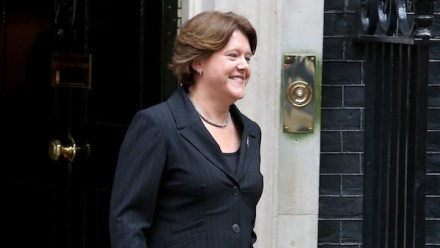
Downing Street has defended Maria Miller's special adviser over the way she warned the Telegraph about the Culture Secretary's connection to Leveson as it prepared a story on her expenses. The Prime Minister's official spokesman has just told the lobby: 'My understanding is that the special advice was raising legitimate concerns about the way in which the investigation had been handled. It was perfectly reasonable for her to do that. 'The Secretary of State raised these concerns directly with the editor. It is reasonable for someone in the government to raise these kinds of concerns about the way a newspaper is conducting an investigation.' Asked whether the Prime Minister still had confidence in Miller, the spokesman said: 'Yes.

Maria Miller’s adviser reminds us why politicians can’t be trusted with press regulation

From our UK edition

An email from an Asian friend last night pointed me to a piece in the Telegraph  saying: 'This is the kind of thing they do in Singapore! I’m amazed it’s happening in Britain.' She was referring to Maria Miller, the Culture Secretary, whose adviser told the Daily Telegraph to be careful about exposing her expenses because the minister now has power over press regulation. The story is here: a classic example of the 'chilling effect'. As soon as you give these politicians a hint of power over the press, they will abuse it. As Maria Miller’s case has shown, they will abuse it even before they get power. They will abuse it even while they decide whether to give themselves power of statutory regulation.

Maria Miller’s Leveson threat

From our UK edition

Journalists don't normally reveal their conversations with special advisers to ministers, no matter how grumpy they are about a forthcoming story. So it is significant that the Telegraph has chosen to disclose a warning from Maria Miller's adviser Joanna Hindley about the minister's connection to press regulation when reporters were preparing a story on her expenses claims. This is the key passage: When a reporter approached Mrs Miller’s office last Thursday, her special adviser, Joanna Hindley, pointed out that the Editor of The Telegraph was involved in meetings with the Prime Minister and the Culture Secretary over implementing the recommendations made by Lord Justice Leveson.

Tory minister says yes to EU and no to immigration to win at 2015

From our UK edition

David Cameron's Conservative modernisation agenda is struggling. Several of today's front pages highlight how traditional Tory issues — immigration and family values — have returned to the centre stage. And many of Cameron's attempts to modernise his party on big issues (climate change, green energy, gay marriage, HS2) have met with a negative responses. How can he retool his modus operandi to win a Tory a majority at the next general election? Policing and ex-immigration minister Damian Green has a few suggestions. In a speech he will give to Bright Blue this evening, Green suggests Cameron's modernising agenda is not yet an ex-agenda, and can still be refashioned to work in 2015.

Maria Miller holds gay marriage briefing to reassure nervous Tory MPs

From our UK edition

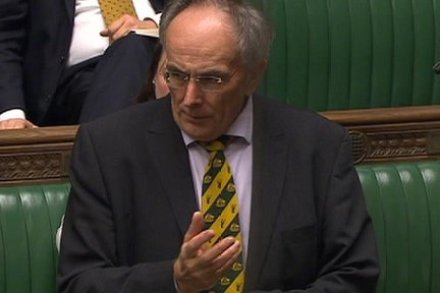
After giving her statement to the House of Commons on the government's plans for gay marriage, Maria Miller held a meeting with Tory MPs. I understand that the meeting was a question-and-answer session designed to help reassure Tories about the 'quadruple lock'. It was well-attended, although apparently the Secretary of State was around 25 minutes late, which meant Peter Bone left early to make another appointment. This was immediately interpreted as a walkout in protest from Bone, who is one of the more vocal opponents of the legislation. I spoke to Bone this evening, who said 'I wasn't storming out: it was a private Q&A meeting with Maria Miller who was 25 minutes late'. But even though he didn't storm out, Bone is still not happy or reassured by today's announcements.

David Cameron defends secret courts

From our UK edition

It was striking that at today’s liaison committee session the Treasury Select Committee chairman chose not to ask the Prime Minister about the economy but the secret courts bill. In what were the tensest exchanges of the 90 minutes, Tyrie questioned whether secret courts were necessary while Cameron asked Tyrie to think what he would do in his position. Cameron kept stressing that the government was not making any existing proceedings secret but trying to find a way to have cases heard that can’t be at the moment. Tyrie’s vocal opposition, though, is further evidence that this bill isn’t out of the woods yet. Given that the terms of it were essentially thrashed out between Cameron and Clegg, I’d be surprised if Lib Dem MPs turned against it.

Today’s easy question: Why won’t minorities support right-wing parties? – Spectator Blogs

From our UK edition

I'm afraid that I can't help but feel some of the comments left responding to this post go some way towards answering a question Daniel Hannan asked recently: why do right-wing parties struggle to win support from immigrants? After all, and as Mr Hannan notes, emigration is an entrepreneurial act and immigrants tend to be thrifty, hard-working types. This should, all things being equal, be fertile territory for conservatives. Except, as we know, not all things are equal and they're certainly not equal in this case. The truth of the matter is that the conservative movement - whether in the United Kingdom or the United States - still has a race problem.

Make up your mind on shale gas, fracking chief tells government

From our UK edition

The head of the company seeking to exploit shale gas reserves in Lancashire today pleaded with the government to make up its mind about the future of the unconventional energy source. Giving evidence to the Energy and Climate Change Select Committee this morning, Francis Egan, chief executive of Cuadrilla, said his company was desperate to get the go-ahead to explore how much shale gas was available in the area around Blackpool. Sounding a little exasperated, he told the committee: 'We'll give you the data as soon as you let us start. We know the geology is good, we know the gas is there, and we know it's a mile thick. In fact, we haven't even reached the bottom. The geology is good, but we need to establish flow rates.