Uk politics

If they can frame a Chief Whip, they can frame anyone

From our UK edition

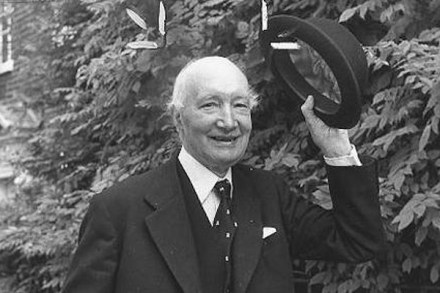
Lord Denning was perhaps the most beloved judge of the 20th century. He even inspired a Lord Denning Appreciation Society. But I and many others found something sinister behind his charming Hampshire accent. We noticed that his professed concern for the victims of injustice never extended to the victims of police fit-ups. In 1980, he heard an appeal by the Birmingham Six, the men falsely convicted for the IRA’s massacre of drinkers in two Birmingham pubs in November 1974. The six were suing the police for damages for the beatings they said they had received. Although it was not a full appeal, Denning understood the implications, and rejected the claim: 'Just consider the course of events if their action were to proceed to trial ...

We need a recipe to solve food poverty

From our UK edition

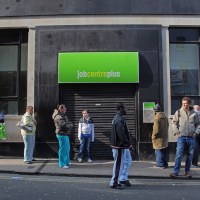
At Prime Minister’s Questions yesterday, the Opposition touted food banks as evidence of Britain’s regression into a Dickensian era. With 128,000 visitors passing through the Trussell Trust’s doors last year, today was not the first Wednesday on which the Government has been blamed for more children going hungry and more families struggling to put food on the table. But why are food banks multiplying at a rate of three a week and are they really a workable solution? One answer is that organisations such as the Trussell Trust can now place their leaflets in jobcentres. In addition, unlike under Labour, food banks can now receive referrals from a range of sources such as Community Nursery Nurses, Headteachers, and Health Visitors.

Mitchell row could make MPs think again before criticising a colleague in trouble

From our UK edition

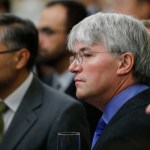
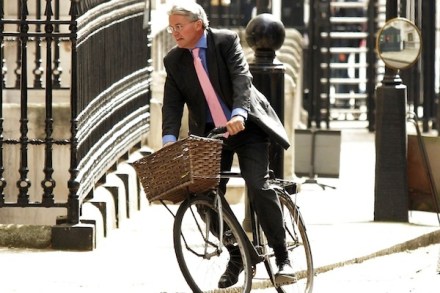
Tory MPs - and the occasional Lib Dem, too - were flocking around Andrew Mitchell in the Commons yesterday to show their support for the former chief whip. He is enjoying a new wave of support in his party, rather than languishing as persona non grata on the backbench. But the picture is still not clear. Mitchell himself admitted that he swore during the exchange with the police: less politically toxic, perhaps, than 'pleb', but swearing at a police officer is still something that can land you with a fine in a Magistrates Court. And there are two other police officers who claim the chief whip said both words. Another person who has not emerged unscathed from this row is Sir Jeremy Heywood. He reviewed the CCTV footage himself, but seems not to have noticed that there were no witnesses.

We may soon know the truth about the Andrew Mitchell incident

From our UK edition

The plot is rapidly thickening around the whole Andrew Mitchell and police incident. By the end of this matter, I suspect several reputations will have been severely damaged. The email allegedly sent by a police officer, who was posing as a member of the public and an eyewitness to the incident, to his local MP John Randall is a quite remarkable document. It is well worth reading in full just to see the level of detail involved. Those close to Mitchell stress that he is more interested in clearing his name rather than returning to the Cabinet or seeking legal redress. But I understand that this whole scandal might well reach a denouement quicker than anyone currently expects.

PMQs sketch: Labour stage a relentless attack on Cameron

From our UK edition

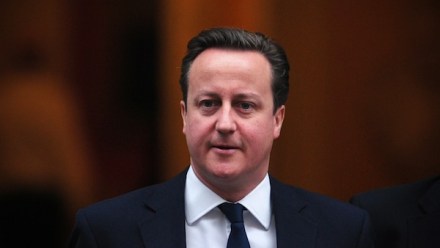
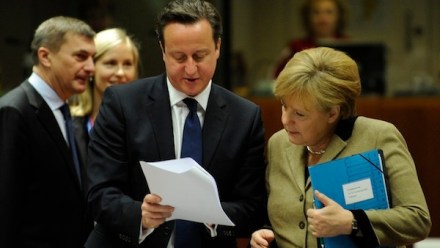
A fascinating PMQs. Labour staged one of the most carefully orchestrated attacks on David Cameron they’ve ever mounted. It was relentless. Ed Miliband kicked off by asking the PM about the six fold rise in food-bank dependency. Cheekily, Cameron praised Miliband for applauding the volunteer spirit. ‘It’s what I call the Big Society.’ Miliband gave him the ‘withering disbelief’ look which he practises in the mirror. He then revealed that two out of every three teachers ‘know a colleague’ who has given food or cash to famished children. Cameron shrugged this aside and replied that he wanted to do the most for the poorest.

Is this the nastiest Conservative MP in Britain? – Spectator Blogs

From our UK edition

Despite strong competition, Alec Shelbrooke is the new front-runner for the coveted title of Nastiest, Most Stupid Tory MP 2012. Here's what he proposes: Mr Shelbrooke has drafted a Bill that would change the law to allow welfare payments to be made on a new “welfare cash card” whose use could be restricted by the Government. "Introducing a welfare cash card on which benefits will be paid, claimants will only be able to make priority payments such as food, clothing, energy, travel and housing. The purchase of luxury goods such as cigarettes, alcohol, Sky television and gambling will be prohibited,” Mr Shelbrooke told MPs. I wonder how many poor people, far less people on welfare, Mr Shelbrooke encounters. Some, presumably.

Ed Miliband might talk a good game on food banks, but he’s still wrong

From our UK edition

David Cameron made a perfectly good stab at explaining what the government is doing to support families who are struggling at Prime Minister's Questions today. He said: 'I agree with the right hon. gentleman that we need to do more to help the poorest in our country. That is why we have lifted the personal tax allowance and taken 2 million of the lowest paid people out of tax altogether. Let us take someone who is on the minimum wage and works full time - because of the tax changes that we have made, their income tax bill has been cut in half. I would also make this point: because of the decisions that we made in this government to increase the child tax credit by £390 ahead of inflation, we have helped those families with their bills and we will continue to do more in the future.

PMQs: Labour attacks Cameron as the leader of a ‘Dickensian Britain’

From our UK edition

PMQs started off in a very consensual manner as Ed Miliband asked some worthy questions on Afghanistan. But this quickly changed when Miliband moved onto food banks. The Labour leader attempted to paint food banks as a consequence of the coalition’s policies. When Cameron mentioned the ‘Big Society’, Miliband shot back that ‘I never thought the Big Society was about feeding children here in Britain.’ A string of Labour MPs then made similar attacks on Cameron. One even waved a suicide note left by a constituent affected by changes to disability benefits. The question is whether the picture of, to quote one Labour MP, a Dickensian Britain with ‘grandeur for the few, the workhouse for the many’ rings true. I don’t think it does.

Andrew Mitchell’s next step could be an international job

From our UK edition

The Westminster grapevine is buzzing with the latest rumours about the truth of ‘pleb-gate’. There are legal limits to what we can say. But a few things seem certain. Andrew Mitchell’s friends believe he is on the cusp of vindication. On the Today Programme just now, David Davis called for him to be returned to high office as soon as possible. Davis also claimed that Mitchell had not been able to handle the matter in the way that he wanted to because of constraints imposed on him by people around the Prime Minister. One lesson of the Mitchell affair is that the only person who can really defend a politician when his integrity is under attack, is the politician himself.

Improve human rights by quitting Strasbourg court, Tory Bill of Rights advisers argue

From our UK edition

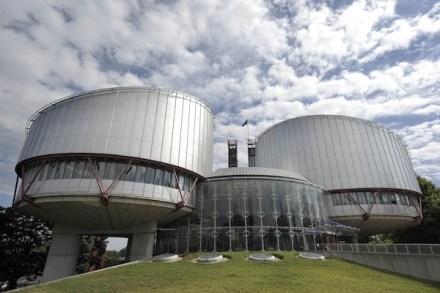
As expected, today's report from the Commission on a Bill of Rights offered little. With a membership evenly split between Tory and Lib Dem nominees, it was set up to fail. Michael Pinto-Duschinsky, who resigned from the Commission in March, tells me that this problem was exacerbated by the way in which it was run: it was barred from discussing either the European Court of Human Rights or the Convention. He says: 'The Commission was not able to have a productive discussion because of the determination of the civil service to produce an artificial argument'. Attention now moves to what the Conservatives will say about the matter in their manifesto.

Was the deputy chief whip just doing his job by passing on Mitchell concerns?

From our UK edition

The latest twist in the Andrew Mitchell story is particularly intriguing. The Guardian is reporting that news of the confrontation between the police and the chief whip was passed onto Downing Street by the deputy chief whip John Randall. Now, Randall and Mitchell were known not to get on and Randall played a key part in forcing Mitchell out by indicating that he was not comfortable working under him. This latest news threatens to inject yet more poison into the Tory bloodstream. If brother whips can treat each other like this, what hope party discipline? But one longstanding Conservative MP made the case to me just now that Randall’s behaviour is not as odd as it might seem.

A pact wouldn’t solve the Tories’ UKIP problem

From our UK edition

UKIP has seen a significant bump in support in the latest set of polls: it is up five points with Populus this morning. All of which makes Lord Ashcroft’s examination of why people are attracted to UKIP particularly timely. The Ashcroft polling confirms that the UKIP vote is only partly about Europe. It also reflects a wider anger with a political class that appears aloof from peoples’ concerns. Among those considering voting UKIP, the most frequently stated reason is to send a message to the big parties on Europe and immigration. It is also striking that any kind of Tory / UKIP pact seems unpopular. ‘The few voters who had heard the idea of a Conservative-UKIP pact thoroughly disapproved of the proposal.

Chris Grayling wants a robust response to the European Court, but will he get his way?

From our UK edition

It's a big day for Chris Grayling: the long awaited Commission on a British Bill of Rights reports today. But the Justice Secretary is already setting himself up for disappointment, with reports swirling in the press that the Commission has failed to reach a strong conclusion. In any case, as Grayling acknowledges in his op-ed in the Telegraph today, there isn't much he can do about reforming the rights landscape in this country while the Tories remain in Coalition with the Lib Dems. Grayling says he will 'read and digest the report of the Commission, and will see what help it gives me to deliver change in the short term'. But he adds that he will 'also be looking clearly towards the next election, and starting work on ensuring that we had a real plan for change then as well'.

Will the Lords really slay the gay marriage bill?

From our UK edition

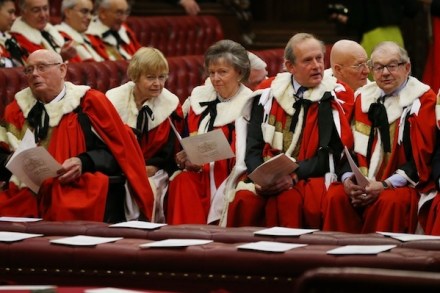
Think the Commons is in uproar at the moment over gay marriage? Just wait until the legislation makes its way into the House of Lords. The received wisdom is that equal marriage will go into the upper chamber, but never make it out alive after a savaging from socially conservative peers. But is that true? If it's uproar you're looking for, then you're unlikely to be disappointed, but the chances of angry words in the chamber translating into embarrassing defeats for the government aren't quite so high. Remember that after 13 years of Labour in power, the House has a large liberal-leaning majority. There are 224 Labour peers and 90 Lib Dems.

The Tories mustn’t make another silly pledge on benefits in 2015

From our UK edition

As the country approaches a general election, a party leader, desperate to reassure a key group of voters, makes a very silly pledge. He is as unequivocal as possible that, in spite of the big spending implications in a time of economic crisis, he will stick to this silly pledge to keep his target voters happy. Months later, a Coalition has formed, and those target voters are enraged because that promise turned out to be worth little more than the paper it was written on. We all know that this is what happened with the Lib Dems and their extraordinarily stupid pledge to block rises in tuition fees.

The gumming up of Whitehall

From our UK edition

Tony Blair is paying a visit to journalists in the Commons this week for a festive lunch. Last week, David Cameron complained to lunching hacks about the 'gumming up' of government; perhaps the former Prime Minister will wish to add his own thoughts today on the ingredients of that sticky gum that makes the progress of the Whitehall machine so glutinous. One of the gummy bits in Whitehall at the moment is the way permanent secretaries are appointed. Last week the Civil Service Commission blocked plans by Francis Maude to allow ministers to pick the most senior civil servants in their departments from a list of approved candidates, opting instead for an independent panel to recommend candidates.

The Liberal Democrat paradox

From our UK edition

Labour under a more left-wing leader, the Tories bearing right. These are circumstances in which you would expect the Liberal Democrats to flourish. But they are in government and haven’t benefitted from this moment. Instead, they are struggling in the polls, coming fourth too often for comfort. Part of the problem is that the public simply aren’t listening to Nick Clegg at the moment. As one Conservative Cabinet Minister sympathetic to the Liberal Democrats’ political strategy observes, ‘Clegg can say anything, he’s just not being heard.’ Those close to Clegg believe that this will turn round in time.