Uk politics

Cristina Kirchner forgets the most important people in the Falklands row: the Islanders

From our UK edition

The British government has been gently rattling the bars in its stand-off with Argentina over the Falklands of late: giving the Queen a stretch of land in Antarctica which Cristina Kirchner's government disputes the ownership of is one example. But today, ahead of a referendum in March for Islanders to decide whether they want the Falklands to remain under British sovereignty, Kirchner has upped the tension. In a letter published as an advert in today's papers, the Argentine President demands that the UK 'abide by the resolutions of the United Nations' to end colonialism and negotiate a solution to the sovereignty dispute over the Islands.

Teachers are demoralised, but parents are protesting

From our UK edition

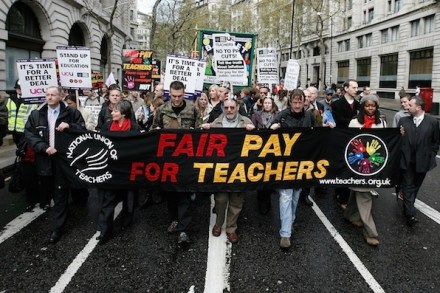
The school holidays are nearly over, so here's a cheery tale for those returning to the classroom next week. Teachers are demoralised, says a poll [PDF] for the NUT which found 55 per cent of those in the profession described themselves as having low or very low morale. Out of the 804 surveyed by YouGov, 71 per cent said they didn't think the government trusted them to get on with their jobs. Michael Gove has made it pretty clear that there is indeed one group of teachers that he doesn't trust to get on with their jobs: 'militant' trade union members who initiate industrial action such as 'work-to-rule' measures. But there's another group that's feeling rather demoralised, too: parents. Just before Christmas, a group of people waving placards appeared outside a school in Chesterfield.

New terrorism control measures under the spotlight

From our UK edition

It has not been a very happy start to the new year for Theresa May, who will have to answer difficult questions in the Commons about the disappearance of a terrorism suspect. Ibrahim Magog has been on the run since Christmas eve when police first realised he had failed to meet the conditions of his overnight residence requirements. Magog has been under investigation for two years and is believed to have trained with al-Shabaab, a Somali terrorist group linked to al-Qaeda. The group has waged a violent campaign in East Africa and has long threatened attacks against the West (although none have actually materialised).

Now Nick Clegg turns on Labour ahead of mid-term review

From our UK edition

Nick Clegg is in a pugnacious mood at the moment. First there was the very conveniently leaked memo in which Lib Dem strategists urged MPs to criticise their Tory Coalition partners publicly. Now he's gone on the attack against Labour's spending plans, or lack thereof. The Deputy Prime Minister writes in The Times: 'The Labour leadership continue to complain about the coalition's approach, but without providing any credible alternative. They're learning the tricks of opposition and finding their rhetorical refrains. But where are the numbers? Where are their sums? The country has undergone the biggest economic crisis in living memory, yet they offer no explanation of how they'd get us out of this mess, nor any admission of responsibility for their part in creating it.

Society is forgetting its elderly

From our UK edition

During the 2010 general election, two grand politicians came to visit the teaching hospital where a doctor friend of mine worked. He had finished a 13 hour night shift, and, at a loose end, decided to track those two grand politicians' journey around the hospital. They visited the impressively equipped cardiology wards, stopped by at a premature baby unit (if you can't have a photo of you kissing a baby, you can at least get one next to an expensive incubator with an even tinier baby inside it), and moved on to the oncology wards to talk to patients battling cancer. My friend went home feeling rather disconsolate.

A new EU membership for Britain: second-class or sensible?

From our UK edition

Becoming a 'second-class' member of the European Union doesn't sound awfully appealing on first glance at today's Times story. But the 'associate membership' being considered by the Union of European Federalists would see Britain remain in the single market but lose its commissioner in Brussels and eventually its MEPs, too. Those drawing up this version of the new treaty also envisage that there would continue to be a seat at the Court of Justice for Britain.

Realism and optimism: David Cameron’s New Year message

From our UK edition

David Cameron's New Year message is a rather sober one, but it's not downbeat. The theme is 'realism and optimism' and the Tory leader's aim is to demonstrate to voters that his policies are putting the country on the right track, and to that end he makes some strong points on deficit reduction, unemployment, education, welfare, tax and pensions. Encouraging optimism about Britain's trajectory is important because 2013 is going to be a difficult year, not just for the Conservative party internally on issues such as Europe and gay marriage, but for the Coalition, as new cuts come in and critics call on the government to change tack. Ed Miliband's Dickensian pre-Christmas PMQs offered a little taster of that.

Why should MPs stay put in the Palace of Westminster?

From our UK edition

Tristram Hunt paints a bleak picture of the state the Palace of Westminster is in for Spectator readers this week as he draws parallels between the crumbling parliament building in New Delhi and plans to renovate the Mother of Parliaments in London. The Labour MP and historian writes: In SW1, the situation is critical. Forget the obvious signs of decay — the mice; the leaking roofs; the wafts of sewage. Deep in the belly of Charles Barry’s 1830s Gothic wonderland, the infrastructure is in meltdown. The steam and condensate systems are beyond life expectancy. Explosions from the boilers risk the cabling and water pipes. The vertical risers are ridden with asbestos. And like a decaying hulk, the Palace glides on with gallons of water swashing around its basements.

When will we able to have a mature conversation about the health service?

From our UK edition

Nigel Lawson described the NHS as the closest thing to a national religion that this country has. The NHS is certainly like a national religion to the extent that it is pretty much impossible to have a rational debate about it. There is often a choice posited between the NHS and no healthcare at all. One can see this mindset in today’s Guardian article on the news that the Thatcher government in 1982 held Cabinet discussions about fundamental rethinking the size and shape of the state.

Ed Miliband and Nick Clegg make their new year pitch to voters

From our UK edition

According to a spuriously scientific study, today is the day when festive excess gets the better of us, with one in two Brits opting to stay on the sofa with the curtains closed fretting about bills and weight gain. So how fortunate it is that Nick Clegg and Ed Miliband have chosen to rouse a hungover nation today with their stirring new year messages. Ed Miliband promises that he will be setting out 'concrete steps' on how One Nation Labour will work, citing business, education and welfare as examples. He does add that he doesn't 'offer easy answers and I'm not going to offer false promises either'. But it's difficult to see how the Labour leader can make any promises at all on areas such as welfare without talking about money.

Gove to Treasury: let schools borrow!

From our UK edition

For all the good intention of Michael Gove's school reforms, there have been only a few dozen new schools so far. When I interviewed him for The Spectator earlier this month, I asked if there was much point to all this if the successful schools could not expand (and, ergo, add capacity to the system). Crucially, Academies cannot borrow because the Treasury doesn't allow it - a relic from the Gordon Brown control freak days. How much of an impediment is this? I didn't run his answer in the magazine version of the interview as this is a fairly technical point. But as Brown knew, it's on seemingly dull issues like borrowing powers that can decide the success or failure of public sector reform that he so loathed. Anyway, here's the exchange.

Austerity hits home in the North East of England

From our UK edition

Have you personally suffered from George Osborne's spending cuts? Your answer depends largely on where you live. I’ve witnessed both over the past few days. This Christmas, I’m enjoying my first prolonged stay away from London in some time and the impact of austerity in the North East has really struck me. First to note is spending cuts in local government. In this part of the world, the public sector is a vast beast. The Guardian reported in 2010 34 per cent of the total employment in Newcastle upon Tyne is in the public sector, one of the top 15 councils in the country. The authorities of Sunderland, Northumberland, North Tyneside and Darlington all have above-national average employment in the public sector.

The winter fuel payment silliness continues

From our UK edition

On the subject of welfare, while the Lords debates whether a disabled person who can walk further than the length of a cricket pitch is allowed help with their transport costs, a minister has rather neatly highlighted the mess another part of the welfare state has ended up in. Nick Hurd told the Telegraph that he would 'congratulate' pensioners who donated their winter fuel payment to charity. He said: 'The government is going to stick to its commitments. But if people take their own decisions that they want to use [the money] for good, of course, as minister for charity, I would support, congratulate and encourage them.

Government could face another welfare rebellion in the Lords

From our UK edition

Remember those rebellions in the Lords on welfare earlier this year? Well, the fight hasn't disappeared entirely from the Upper Chamber. Secondary legislation filling in the detail of the Welfare Reform Act is the new battleground, and I understand another uprising could be on the cards over regulations affecting disabled people. Baroness Thomas of Winchester, who regularly cropped up on the Naughty List last year when peers revolted on the welfare reform primary legislation, is calling on the Government to think again about its regulations for the mobility component of the Personal Independence Payment, the benefit replacing the Disability Living Allowance.

David Cameron needn’t fear renegotiating Britain’s relationship with the EU

From our UK edition

Nick Clegg has made a not-so-startling intervention in the debate about Britain's relationship with Europe today, warning that Britain must avoid selling itself short in a renegotiation. His interview with the Guardian is a necessary piece of positioning ahead of David Cameron's Big Europe Speech in mid-January, and this kind of differentiation is something the Tories are more than happy for the Lib Dem leader to continue doing. So in some ways, Clegg warning Cameron not to overdo it on Europe isn't at all significant. But the Deputy Prime Minister makes an important observation in his interview about Britain's bargaining power.

‘One Pound Fish’ singer deported

From our UK edition

Everything you need to know about the fallen state of our political and cultural capital is captured by the story of Muhammad Nazir. A Pakistani immigrant who came here to study at a now defunct college, he took part-time work in Queen’s Market, East London, and was filmed singing a bizarre yet inexplicably catchy song about ‘One Pound Fish.’ Nazir’s innocence, rubbery grin, and fluvial Bollywood cadences made the experience all the more endearing. The video went viral; Nazir went on X Factor; and he was signed by Atlantic Records. Nazir eventually ranked 29th in the Christmas charts, a formidable accomplishment considering he was just five spots behind the chicly grace of Adele.

High Court judge: Gay marriage is ‘wrong policy’

From our UK edition

Sir Paul Coleridge's intervention in today's Times (£) on gay marriage has ensured the debate won't go quiet after various angry Christmas Day sermons. The High Court Judge tells the paper that introducing weddings for same-sex couples is the 'wrong policy', adding: 'So much energy and time has been put into this debate for 0.1 per cent of the population, when we have a crisis of family breakdown. 'It's gratifying that marriage in any context is centre stage… but it [gay marriage] is a minority issue. We need a much more focused position by the Government on the importance of marriage.

Banking Commission to force Chancellor’s hand on reform

From our UK edition

As is becoming increasingly clear to David Cameron, the problem with answering calls for an inquiry into a scandal in one industry or another is that at some point that Inquiry will report back with a bunch of recommendations which may or may not be politically expedient to implement. The Parliamentary Commission on Banking Standards came up with proposals last week for an electrified ring fence, which the Treasury politely said it would look at, and Vince Cable rather more bluntly said the government should ignore, preferring instead that ministers get a move on with implementing the Vickers proposals, rather than opening up the whole debate again.

Will ‘plod-gate’ make voters more sceptical of class-based political attacks?

From our UK edition

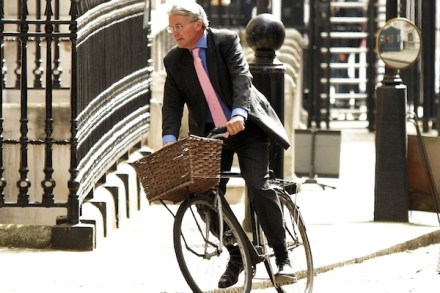
The Andrew Mitchell story has always been about class. If all Mitchell was alleged to have said was ‘you supposed to f’ing help us’ there would have been some clucking and some mockery but no serious calls for his resignation. But the word ‘pleb’ and the phrase ‘know your place’ made the charge toxic. This was also what made some in Number 10 so queasy about any kind of robust defence of Mitchell; the Cameroons believe that whenever the conservation is about class the Tories are losing. This class angle is also what enabled the Labour Party to make political hay out of the issue.

Tory MP mulls boundaries rebellion

From our UK edition

In spite of the best efforts of its ministers in the Lords, it looks as though the government is going to face a vote on the dreaded boundaries legislation early next year, with the Electoral Registration and Administration Bill returning to the Upper Chamber in January. The big story is that the Lib Dems will be able to kick the reforms away until 2018 using an amendment, but it isn't just the members of the smaller Coalition party who will be rebelling against government policy. Tory MP Glyn Davies has now come out as an opponent of the reforms, too. On his blog, he writes that he is 'contemplating voting against my government for the first time' for a number of reasons.