Uk politics

In a preview of David Cameron’s 2013, Europe dominates his New Year interview

From our UK edition

David Cameron’s New Year interview on Marr was dominated not by the economy but by Europe. In a sign of what the promise of a speech setting out his European strategy has started, Cameron was repeatedly asked about what powers he would like back. He didn’t give much away, repeatedly telling Andrew Marr he would have to wait for the speech later this month. But two interesting things did emerge. First, Cameron indicated that he wanted to toughen up the way that the free movement of people is applied. I presume this means that only those with work or a clear means of support could come here; Nick Boles and others have long argued that this is possible under the existing treaties. Second, Cameron indicated that the new terms-or-out referendum would take place within five years.

Don’t ban Frosties: teach children the life skills they need to make choices

From our UK edition

What a very sensible idea from a group of more than 200 MPs in today's FT: teach children about personal finance. The All-Party Parliamentary Group on Financial Education for Young People wants financial education to become a compulsory part of the curriculum, with banks visiting classrooms. The idea that Natwest and Barclays could send their representatives into classrooms is obviously not enormously palatable to everyone, with critics arguing that this is just another route for big business to indoctrinate innocent minds. But consider this: research from the Centre for Economics and Business Research found a lack of financial education costs the taxpayer £3.

Let Them Eat Gruel: The Government-Health-Security Complex Invades Your Kitchen – Spectator Blogs

From our UK edition

Addressing the American people for the final time as President, Dwight Eisenhower warned that: This conjunction of an immense military establishment and a large arms industry is new in the American experience. The total influence — economic, political, even spiritual — is felt in every city, every statehouse, every office of the federal government. We recognize the imperative need for this development. Yet we must not fail to comprehend its grave implications. Our toil, resources and livelihood are all involved; so is the very structure of our society. In the councils of government, we must guard against the acquisition of unwarranted influence, whether sought or unsought, by the military-industrial complex.

Parts of the Left are beginning to realise that they got the family wrong

From our UK edition

One of the more interesting trends in British politics in the last few years has been sections of the left realising that the cultural changes of the 1960s and 70s too often chucked the baby out with the bathwater. Today, Diane Abbott has given an interview to Patrick Wintour in which she calls for more support for the family; arguing that stable families are the best way of preventing social breakdown. She also concedes that feminists were too ‘ambivalent’ about the family. Interestingly, Abbott also comes out in favour of school uniforms. She points out that they are a check against materialism and the designer label arms race. Now, I know that it is easy to mock Abbott — the left-wing fire brand who sent her son to a private school.

The next Labour welfare policy?

From our UK edition

As he was selling his party's plan for a jobs guarantee on the airwaves today, Liam Byrne made a passing reference to something that could form another part of Labour's welfare policy offer. The Shadow Work and Pensions Secretary was talking about myths and misconceptions about the benefits system, and said: 'I think a lot of people are surprised when they find out that jobseeker’s allowance is a little bit above £70 a week, and I’ve had constituents who’ve been frankly shocked when they’ve lost their job, they’ve gone down the jobcentre and they’ve discovered what the true rate of JSA is.

David Cameron denies bickering with Nick Clegg

From our UK edition

Nick Clegg made clear before Christmas that he wants gory, open and honest government; today the Prime Minister was equally clear that he doesn't. Asked this morning on Radio 5Live about whether he was happy with the Lib Dem desire for greater differentiation between the parties, the Prime Minister replied: 'I think that both parties will succeed if the Coalition succeeds, Nick Clegg and I work well together, and actually there are huge challenges facing this country. We have got to pay down the deficit, re-balance the economy and we have got to improve standards in our schools.

Labour revisits old welfare ghosts with its jobs guarantee

From our UK edition

Dig out the bunting, fly the red flags in celebration, for finally we have a policy from the Labour party. Ed Miliband promised that 2013 would be the year he'd set out some 'concrete steps' on key policy areas, and to that end he's announced a jobs guarantee for the long-term unemployed. Coffee House readers will already be familiar with this scheme, as Shadow Work and Pensions Secretary Liam Byrne discussed it in his interview on this site in December.

The Tory message in 2015: Vote Cameron for PM

From our UK edition

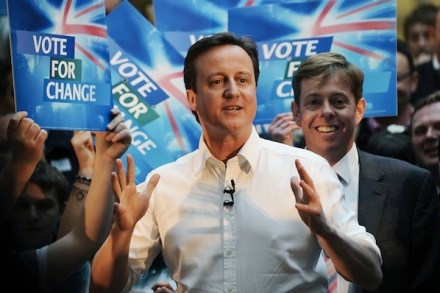
One thing is already apparent about the Tories’ 2015 campaign, it will be even more dependent on David Cameron than the 2010 one was. Why, because as Anthony Wells points out again today, Cameron polls ahead of his party. There’ll be those who criticise this decision. They’ll point out that the big billboard posters of him in 2010 backfired badly. Others will wonder what more juice can be squeezed out of Cameron, given that by the next election he’ll have been leading the party for nigh-on ten years. But to the Tory leadership, the Cameron lead on the best Prime Minister question is one of their trump cards. It is key to their attempt to take seats off the Lib Dems.

What’s wrong with foreign aid?

From our UK edition

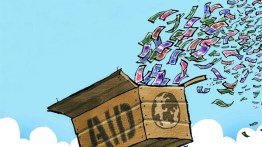
Justine Greening is a robust politician and bean counter who reportedly used extremely fruity language when told she was being reshuffled to the International Development Department. Even though the new Secretary of State has made a strong start in her role, announcing the end of Britain's aid programme to India by 2015 and suspending bilateral aid to Rwanda, she remains in a difficult position. In this week's Spectator aid special, two writers examine the problems with Britain's international development policy, from its target to spend 0.7 per cent of Gross National Income to politicians' underlying assumptions about aid.

The horror of the ‘fake’ independent coffee shop

From our UK edition

It's official: this country is going to the dogs. The proof? Tesco has been insidiously infiltrating the coffee shop market with a chain of shops that look independent. The Guardian reports outrage in Crouch End, where customers were 'duped' by 'independent-looking, stripped back coffee shops'. The greatest crime of Harris + Hoole - which has its majority stake owned by the family that founded it - is that Tesco has a 49 per cent stake in the business, but doesn't plaster its own logo above the shops, preferring instead to fill them with nice furniture and pretty decor. Here's one quote from the piece: "I avoid Starbucks because it's a big chain and it avoids tax," said Carol Levine, 50, a Crouch End physiotherapist enjoying her lunch break in Harris + Hoole.

Cristina Kirchner forgets the most important people in the Falklands row: the Islanders

From our UK edition

The British government has been gently rattling the bars in its stand-off with Argentina over the Falklands of late: giving the Queen a stretch of land in Antarctica which Cristina Kirchner's government disputes the ownership of is one example. But today, ahead of a referendum in March for Islanders to decide whether they want the Falklands to remain under British sovereignty, Kirchner has upped the tension. In a letter published as an advert in today's papers, the Argentine President demands that the UK 'abide by the resolutions of the United Nations' to end colonialism and negotiate a solution to the sovereignty dispute over the Islands.

Teachers are demoralised, but parents are protesting

From our UK edition

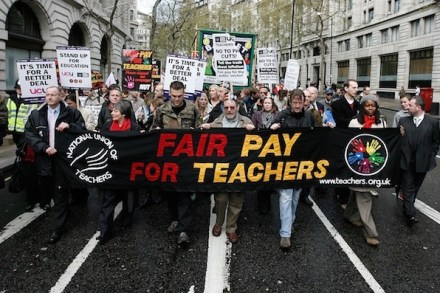
The school holidays are nearly over, so here's a cheery tale for those returning to the classroom next week. Teachers are demoralised, says a poll [PDF] for the NUT which found 55 per cent of those in the profession described themselves as having low or very low morale. Out of the 804 surveyed by YouGov, 71 per cent said they didn't think the government trusted them to get on with their jobs. Michael Gove has made it pretty clear that there is indeed one group of teachers that he doesn't trust to get on with their jobs: 'militant' trade union members who initiate industrial action such as 'work-to-rule' measures. But there's another group that's feeling rather demoralised, too: parents. Just before Christmas, a group of people waving placards appeared outside a school in Chesterfield.

New terrorism control measures under the spotlight

From our UK edition

It has not been a very happy start to the new year for Theresa May, who will have to answer difficult questions in the Commons about the disappearance of a terrorism suspect. Ibrahim Magog has been on the run since Christmas eve when police first realised he had failed to meet the conditions of his overnight residence requirements. Magog has been under investigation for two years and is believed to have trained with al-Shabaab, a Somali terrorist group linked to al-Qaeda. The group has waged a violent campaign in East Africa and has long threatened attacks against the West (although none have actually materialised).

Now Nick Clegg turns on Labour ahead of mid-term review

From our UK edition

Nick Clegg is in a pugnacious mood at the moment. First there was the very conveniently leaked memo in which Lib Dem strategists urged MPs to criticise their Tory Coalition partners publicly. Now he's gone on the attack against Labour's spending plans, or lack thereof. The Deputy Prime Minister writes in The Times: 'The Labour leadership continue to complain about the coalition's approach, but without providing any credible alternative. They're learning the tricks of opposition and finding their rhetorical refrains. But where are the numbers? Where are their sums? The country has undergone the biggest economic crisis in living memory, yet they offer no explanation of how they'd get us out of this mess, nor any admission of responsibility for their part in creating it.

Society is forgetting its elderly

From our UK edition

During the 2010 general election, two grand politicians came to visit the teaching hospital where a doctor friend of mine worked. He had finished a 13 hour night shift, and, at a loose end, decided to track those two grand politicians' journey around the hospital. They visited the impressively equipped cardiology wards, stopped by at a premature baby unit (if you can't have a photo of you kissing a baby, you can at least get one next to an expensive incubator with an even tinier baby inside it), and moved on to the oncology wards to talk to patients battling cancer. My friend went home feeling rather disconsolate.

A new EU membership for Britain: second-class or sensible?

From our UK edition

Becoming a 'second-class' member of the European Union doesn't sound awfully appealing on first glance at today's Times story. But the 'associate membership' being considered by the Union of European Federalists would see Britain remain in the single market but lose its commissioner in Brussels and eventually its MEPs, too. Those drawing up this version of the new treaty also envisage that there would continue to be a seat at the Court of Justice for Britain.

Realism and optimism: David Cameron’s New Year message

From our UK edition

David Cameron's New Year message is a rather sober one, but it's not downbeat. The theme is 'realism and optimism' and the Tory leader's aim is to demonstrate to voters that his policies are putting the country on the right track, and to that end he makes some strong points on deficit reduction, unemployment, education, welfare, tax and pensions. Encouraging optimism about Britain's trajectory is important because 2013 is going to be a difficult year, not just for the Conservative party internally on issues such as Europe and gay marriage, but for the Coalition, as new cuts come in and critics call on the government to change tack. Ed Miliband's Dickensian pre-Christmas PMQs offered a little taster of that.

Why should MPs stay put in the Palace of Westminster?

From our UK edition

Tristram Hunt paints a bleak picture of the state the Palace of Westminster is in for Spectator readers this week as he draws parallels between the crumbling parliament building in New Delhi and plans to renovate the Mother of Parliaments in London. The Labour MP and historian writes: In SW1, the situation is critical. Forget the obvious signs of decay — the mice; the leaking roofs; the wafts of sewage. Deep in the belly of Charles Barry’s 1830s Gothic wonderland, the infrastructure is in meltdown. The steam and condensate systems are beyond life expectancy. Explosions from the boilers risk the cabling and water pipes. The vertical risers are ridden with asbestos. And like a decaying hulk, the Palace glides on with gallons of water swashing around its basements.

When will we able to have a mature conversation about the health service?

From our UK edition

Nigel Lawson described the NHS as the closest thing to a national religion that this country has. The NHS is certainly like a national religion to the extent that it is pretty much impossible to have a rational debate about it. There is often a choice posited between the NHS and no healthcare at all. One can see this mindset in today’s Guardian article on the news that the Thatcher government in 1982 held Cabinet discussions about fundamental rethinking the size and shape of the state.