Uk politics

Merkel ally’s referendum warning underlines Cameron’s precarious position

From our UK edition

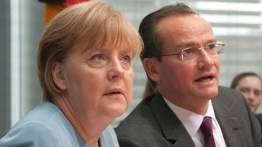
The major gamble that David Cameron is taking with his strategy on Europe is, as James explains in this week's magazine, that he's relying on signals from Angela Merkel that she is keen to help him with a renegotiation. She has certainly given a few of those in recent months. But today one of her colleagues in the Christian Democrat party undermined some of the confidence that has been building about Merkel's position. Gunther Krichbaum is the chair of the Bundestag's European Affairs Committee, and is leading a two-day cross-party delegation to Britain. He believes a renegotiation would open a 'Pandora's Box', and that Britain should tread carefully: 'There is certainly a risk that [a referendum] could paralyse efforts for a better Europe and deeper integration.

Can you help Andrew Mitchell?

From our UK edition

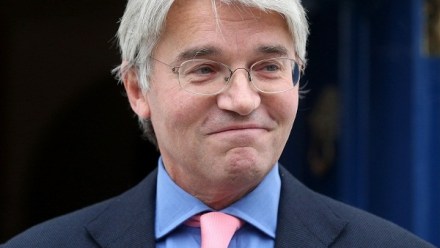
Andrew Mitchell, formerly of DFID, urgently needs Coffee Housers' help. It seems he won't believe DFID wastes money, unless he sees actual, concrete examples. Last week, in the magazine, we ran a foreign aid special in which Jonathan Foreman and Justin Shaw  showed us how and why we waste so much on ineffectual aid. In principle of course aid is a wonderful idea, but it can also be a blight: propping up dictators and entrenching corruption in the countries that are struggling most. We identified two major concerns: A lack of DFID due diligence The daft ring-fence around aid ­ 0.7% of GDP ­ which means the DFID has its work cut out trying to get rid of all the cash quick enough, and has an incentive to turn a blind eye to what happens to it on the ground.

Exclusive: John Nash is the new schools minister

From our UK edition

The new schools minister is John Nash. He succeeds Lord Hill who has gone off to replace Tom Strathclyde as leader of the House of Lords. Nash, a venture capitalist, is the sponsor of Pimlico Academy, one of the original Adonis academies, and has been a non-executive member of the Department for Education’s board for the past two years. This means that he already knows both the academy and departmental ropes. Given that he is close to Michael Gove and the other key figures in the department and part of what they are trying to do, there shouldn’t be much lost in transition. I suspect that there’ll be a media squall over the fact that Nash and his wife have donated £300,000 to the Tories over the years.

Three problems with Sir Jeremy Heywood’s ‘plebgate’ evidence

From our UK edition

Sir Jeremy Heywood's evidence to MPs on the Andrew Mitchell row didn't go down very well at all this morning. Though a powerful man, the Cabinet Secretary is not well-liked by MPs, and before he appeared some had already named him as a central figure in the fiasco that led to the chief whip resigning. The Public Administration Select Committee hearing did little to improve this perception. Here are the main problems with his evidence: 1. Heywood's investigation was limited. The Cabinet Secretary said he was asked to conduct a 'very specific review' of emails about Mitchell's behaviour from a man claiming to be a constituent of the deputy chief whip to see whether they should change the Prime Minister's view of whether Mitchell should remain in position.

The coalition’s half-time score

From our UK edition

Yesterday, the coalition released its mid-term self-assessment, comparing the commitments made in its Programme for Government back in May 2010 to the policies it has actually implemented to date. Sadly, it does not allow for a simple tick/cross exercise as to whether each commitment has been kept, as there is a lot of grey area. Some of the promises were too vague, some may be being stuck to but haven't been delivered yet, and on others it depends how charitable you're willing to be to the government. I've therefore given each commitment a tick (delivered), a cross (not delivered at all) or a question mark (those you might give a tick if you're being kind to the coalition, or might give a cross if not).

Nick ‘the fibber’ Clegg faces the fibbed-to

From our UK edition

Trying out new career options on LBC this morning, Nick Clegg inadvertently illustrated several serious political truths. A caller claimed to have been a member of the ‘Liberal Democrat’ party – indeed an ex county-councillor in Surrey.  But he said that he had recently ripped up his party membership card.  Happily, however, he proceeded to read from it. Before this morning I had never heard anyone recite this hilarious document.  But if the caller was telling the truth the card says: ‘The Liberal Democrats exist to build and safeguard a fair, free and open society in which we seek to balance the fundamental values of liberty, equality and community in which no one shall be enslaved by poverty, ignorance or conformity.

Solve childhood obesity with nudging, not nannying

From our UK edition

Whilst I have been a vocal supporter in Parliament of the need to tackle childhood obesity, I am by no means a shining example.  My childhood was fuelled by sugar and E numbers that had me running around convinced that one day I would be a professional cricketer, or the next Gary Lineker, inspired by whatever sport happened to be on the telly.  The year was 1986 and politicians hadn’t given a second thought to Frosties. Listening to Andy Burnham this weekend (over my bowl of Frosties), it occurred to me that, whilst I ate additives that would probably strip paint and enough sugar to power a small town, I was never overweight. Politicians are missing the point on childhood obesity.  The problem cannot be attributed to diet alone.

Nick Clegg survives LBC grilling intact

From our UK edition

At 9 o'clock this morning, journalists all over the country were fiddling with their radios excitedly. Nick Clegg was about to start his first LBC phone-in, and they were gleefully waiting for the Deputy Prime Minister to huff and puff his way through half an hour of enraged callers. There was even a live high-definition feed from the studio, so everyone could watch Clegg looking sad. Disappointingly for those lying in wait next to their radios, Clegg actually performed rather well. Sure, those on the phone weren't calling just to say they loved him, but the Deputy Prime Minister wasn't huffing and puffing when he answered their questions about tuition fees, benefit cuts and all the other awkward things the Lib Dems have had to swallow since entering government.

Michael Gove’s plans for profit-making schools

From our UK edition

Coffee House readers won't be surprised by the Independent's report that Michael Gove has been telling friends he has no objections to profit-making schools: he explained his position on the matter at length to Fraser in December. Then, the Education Secretary said he was keen for the one profit-seeking school in this country, IES in Suffolk, to make the case to the public for more profit-seeking schools: 'What I said to them [IES] is the same argument that Andrew Adonis has made: we’ve created the opportunity for you to demonstrate what you can do and win the argument in the public square. You have an organisation that has been criticised, in some cases demonised, now running a state school.

What David Cameron plans to say in his Europe speech

From our UK edition

David Cameron’s big Europe speech is now less than a fortnight away. It will be, I suspect, the most consequential speech of his premiership. When you look at the challenges involved, one can see why the speech has been delayed so many times. Cameron needs to say enough to reassure his party, which has never been more Eurosceptic than it is now. But he also needs to appeal to European leaders, whose consent he will need for any new deal. At the same time, he’s got to try and not create too much nervousness among business about where all this will end up. I understand that he intends to argue that Britain needs to remain inside the single market. But he will commit to a renegotiation of Britain’s terms of membership, starting after the next election.

PMQs sketch: Labour unleashes Operation Starving Kiddie

From our UK edition

Seemed a good idea at the time. Ed Miliband decided that the progress report published by the Coalition is a ‘secret audit’. At today’s PMQs he accused Cameron of sneaking it out in order to dodge bad coverage. Poor old Ed. He can’t read the chess-match more than one move ahead. The PM gave the obvious answer. Labour has never fessed up to the gap between its promises and its achievements. The Coalition has. ‘A week sitting in the Canary Islands with nothing else to think of,’ mocked Cameron. ‘Is this the best he can do?’ ‘Well, he’s going to have to do better than that,’ said Miliband from his lofty moral perch. Cameron jeered at him for lacking credible policies.

Could Jesse Norman be the next Tory leader?

From our UK edition

He might want to stay Prime Minister until 2020, but who will succeed David Cameron once he's gone? In this week's Spectator, Bruce Anderson offers his own tip for the next Conservative leader: David Cameron has announced that he would like to stay in No. 10 until at least 2020. That is excellent news for one Old Etonian candidate for the succession. Although he is at least as good as anyone else in the 2010 intake (an outstanding vintage), this fellow could not promoted in the last reshuffle, because he had played a splendid innings as the captain of the revolt over House of Lords reform. He earned the gratitude of anyone who respects the British constitution, but the whips, although a valuable recent adornment to that constitution, have a narrower perspective.

The press needs a regulator that outlives the memory of the last scandal

From our UK edition

Ahead of a major Spectator debate on the implications of the Leveson report, Conservative MP Nadhim Zahawi explains why he supports a statute-backed system of press regulation. Yesterday's mid-term review included the statement 'We will continue to work on a cross-party basis towards the implementation of the Leveson Report on press regulation'. A welcome reminder that the question of what to do about press regulation has not been forgotten over the Christmas break. But what we should do is still very much up for debate. We now have two Bills, Labour's 'Press Freedom and Trust Bill' and Hacked Off's 'Leveson Bill', and of course the Government will be coming forward with its own Bill in due course.

Secret audit of Coalition pledges offers few clues on progress

From our UK edition

Finally, the copper-bottomed, unvarnished Programme for Government Update, aka the Secret Audit, has landed. You can read the full document here, but in summary, it's not immediately very helpful. It is laid out as a point-by-point 'analysis' of how the government is meeting its pledges in the Coalition Agreement, but the wording is such that you can't actually tell whether there are any areas on which it has failed. Reading this document, you'd think everything was pretty hunky-dory with the government as there is no assessment of whether each pledge is completed, underway, or forgotten. This is the assessment of the House of Lords reform pledge: We published a draft Bill and White Paper on House of Lords reform in May 2011.

PMQs: Leaders trade dull insults as Andrew Mitchell holds court

From our UK edition

No one could call today’s PMQs illuminating. Ed Miliband led on the whole embarrassment of a Downing Street aide being snapped with a memo about whether to release a full audit of the coalition’s performance. There followed some not particularly sharp PMQs knock-about. Miliband claimed the ‘nasty party is back’ while Cameron bashed Labour for having no policy and took his usual shot at Ed Balls. There was a brief flurry of excitement when David Cameron declared, unprompted, that he had never broken the broken the law. Lots of the press are now pointing out various incidents when we know that he has. But in the Chamber it was clear that Cameron was talking about the hunting ban, the subject of the question, rather than more generally.

2013: Can the SNP move beyond preaching to the already converted? – Spectator Blogs

From our UK edition

Alex Salmond is back in Bute House, refreshed and chippered by a much-needed holiday. If 2012 was a year in which the Referendum Guns were first deployed it was still, in the end, something of a phoney war. At the risk of exhausting an easily-exhausted electorate, 2013 should see more action. This week's column at Think Scotland argues that the SNP need to broaden their vision and approach the campaign with a greater sense of generosity than is sometimes seen. At present they depend too heavily - in my view - on the idea that independence is a way to Tory-proof Scotland. That's a negative, not a positive, case. Moreover it's one that muddles a short-term inconvenience (A Tory-led government with little support in Scotland) with a long-term reality: independence is for life, not Christmas.

Unpublished Mid-Term Review annex acknowledges Coalition failures

From our UK edition

The Coalition's decision to publish a Mid-Term review reminded some of Tony Blair's ill-fated annual reports, which strangely stopped appearing after 2000. Blair's last report embarrassed him because it contained mistakes: the danger of this document was that while lauding the government's progress to date, it might also have to accept a number of failures. That wasn't the case on Monday: in fact, the report itself was largely a paraphrase of every government policy announced so far, which was quite Blairite in itself as it sought to dress up old announcements as new plans. There was no admission of failures, or at least not until David Cameron's adviser Patrick Rock was snapped carrying a memo warning that the annex assessing those targets could lead to 'unfavourable copy'.

Britain is dangerously vulnerable to crippling cyber attacks

From our UK edition

Ill prepared, ill suited and irrelevant — that’s the conclusion a new report on Britain’s cyber defences. In a scathing analysis, the House of Commons Defence Committee’s demands the government take the cyber threat more seriously: ‘The Government needs to put in place — as it has not yet done — mechanisms, people, education, skills, thinking and policies which take it into both the opportunities, and the vulnerable, which cyber presents. It is time the government approached this subject with vigour.’ The constantly evolving threat from hackers has left the government struggling to stay one step ahead of hackers.