Uk politics

The Big Society and the problem of faith-based policy making

From our UK edition

The real problem with the Big Society (and I speak as someone who has written in favour of the idea) is that it was a vaguely-defined description that was turned into a vaguely-defined aspiration. As with so much of the Conservative Party’s agenda it turned out the project was infused with a nostalgic right-wing utopianism. Yesterday’s letter to The Times from Sir Stephen Budd, the CEO of the Association of Chief Executives of Charitable Organisations (Acevo) was an important intervention from the third sector, which feels justifiably angry that it was marched up to the top of the hill by Iain Duncan Smith and then marched all the way back down again.

Follow Lynton’s yellow brick briefing

From our UK edition

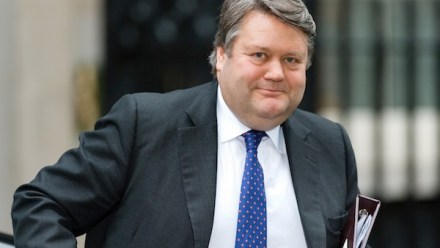
The benefits debate in Westminster will rage on long after today’s vote in the Commons. It’s not just a straight row between the government and opposition over who is really on the side of hard working people, nor is it just a debate within the two governing parties. It seems that divisions are now opening in the higher echelons of the Tory machine over just how hard to push the rhetoric. More outspoken MPs — like Dr Sarah Wollaston — have taken to the airwaves to decry the term ‘scroungers’ and ‘skivers’, but most surprisingly even Lynton Crosby, who Labour are desperate to paint as a rather rash and extreme antipodean, is calling for things to be toned down. Or at least that’s what someone told the Fiancial Times.

Is the boundary Black Swan dead?

From our UK edition

One of the amusing inclusions in yesterday's otherwise anodyne Mid-Term review document was the promise that the government 'will provide for a vote in the House of Commons on the Boundary Commission's proposals for changes to constituencies'. If yesterday was a renewing of vows, some of them have been rather watered down since the Coalition Agreement, as its pledge for legislation for providing for fewer and more equal-sized constituencies has now simply become a 'vote'. Today at Deputy Prime Minister's Questions, Chloe Smith was quizzed by opposition MPs on whether the government might just drop the boundary changes. She said: 'The boundary commissions are continuing with the boundary review in accordance with the legislation which requires them to report in October 2013.

Tories make hay with Labour’s welfare stance

From our UK edition

The Welfare Uprating Bill won't fall into difficulty when it has its second reading in the Commons today, but with around five Lib Dem MPs expected to vote against or abstain on the 1 per cent rise in benefit payments, it's going to be a lively debate. The Conservatives are focused on making the debate less about Sarah Teather and other angry colleagues in her party and more about Labour's welfare stance. Grant Shapps has a new, bald poster campaign today on six sites in London. Shapps' new posters simply read: 'Today Labour are voting to increase benefits by more than workers' wages. Conservatives: standing up for hardworking people.' Iain Duncan Smith has taken the same line on his morning tour of the television and radio studios.

Briefing: What does the Mid-Term Review say the Government is going to do?

From our UK edition

The coalition has worked very hard, taken tough decisions, worked in the long-term interest of the country for short-term political gain. That, if you can't summon the energy to read all 46 pages of the Mid-Term Review, is its surprising verdict on the Coalition so far. But the document also sets out plans for the rest of this Parliament, although many have already been announced in previous speeches and launches. Here's the bluffer's guide to what the Government has got in store up to 2015: Deficit - The Government will stick to its deficit reduction plan 'while protecting vulnerable groups and key long-term investments'. Business, enterprise and growth - Sector-specific industrial strategies, including plans to boost high-tech industry.

David Cameron reads blog comments

From our UK edition

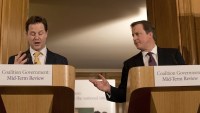
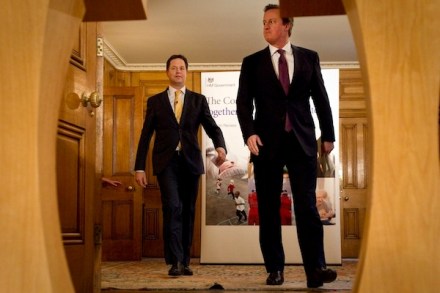
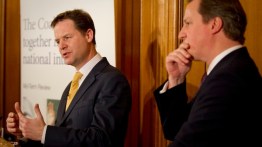
The Cameron/Clegg press conference did not teach us very much — save that the chemistry between the two is as good as ever, that they can still finish each other's sentences and exchange bad jokes. The Prime Minister's bad joke related to one of the comments under his interview with Matthew d'Ancona yesterday where he (in effect) said he wanted to stay in No10 until 2020. When asked about this today, the PM replied that a commentator on the Telegraph Online complained: ‘It's already 20:51 and you're still here.’ The assembled journalists treated his joke with the same respectful silence that they did to Clegg's ‘unvarnished truth’ joke. ‘You're all very slow today,’ Cameron chided.

Fisking the coalition’s deficit-reduction boast

From our UK edition

'We have reduced the deficit by a quarter in just two years' — the coalition's mid-term review. True. But when Gordon Brown proposed to do precisely the same in Labour's last budget, George Osborne criticised him for not moving fast enough and endangering the economy. The ONS shows that public sector net borrowing was down 24 per cent from 2009-10 to 2011-12. But George Osborne cannot claim to have stuck to his deficit reduction plan. That has been torn up. The below graph shows Brown's plan (in the middle), Osborne's original plan (at the bottom) and his current plan (at the top): As you can see, Osborne is now cutting the deficit more slowly than Alistair Darling proposed in 2010. Darling planned to cut the deficit by 33.9 per cent by this year, compared to the 24.

Sarah Teather dents the Coalition’s unity message by announcing her benefits rebellion

From our UK edition

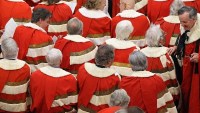
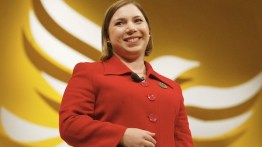
Coupled with Lord Strathclyde's resignation over the way the Coalition worked in the House of Lords, Sarah Teather's announcement that she will rebel against the government tomorrow is extremely poor timing. Today was supposed to be about unity, the Coalition working well together in the national interest. Now there are suggestions that this unity isn't visible in the Upper Chamber, and that senior Lib Dems aren't quite as ecstatic about key policies as Nick Clegg might try to argue. Ever since she went AWOL on the day of a vote on the benefit cap, Teather was a rebellion waiting to happen.

Hacked Off produces its own ‘clean’ Leveson legislation

From our UK edition

It is no great surprise that Hacked Off director Brian Cathcart believes the government can't be trusted to implement Leveson: the Prime Minister made very clear on the day of the report's publication that he didn't believe governments could be trusted to regulate the press via statute. But what is interesting about the draft bill that the media reform pressure group has published this morning is that it claims to be the most faithful implementation of the Leveson recommendations: more faithful, even, than that proposed by the Labour party.

David Cameron and Nick Clegg’s joint foreword to the Mid-Term Review

From our UK edition

Two and a half years ago, our parties came together in the national interest and formed a coalition at a time of real economic danger. The deficit was spiralling out of control, confidence was plummeting, and the world was looking to Britain with growing anxiety about our ability to service our debts. This Government’s most urgent job was to restore stability in our public finances and confidence in the British economy. In just two years we have cut the deficit by a quarter and have set out a credible path towards our goal to balance the current budget over the economic cycle. Dealing with the deficit may have been our first task, but our most important task is to build a stronger, more balanced economy capable of delivering lasting growth and widely shared prosperity.

While the Coalition celebrates proalition, the two parties are still making their differences public

From our UK edition

The Coalition reaches its proalition peak today with the publication of the mid-term review, but Downing Street strategists are keen to spin out the good feeling for as long as possible. David Cameron and Nick Clegg will launch the review in their first joint appearance in Downing Street since December 2010, but the details of many of the measures on childcare, transport, housing and pensions won't come today. Instead, we'll see a trickle of announcements over the next couple of months. The leaders have already published a foreword to the review document, which starts by restating the Coalition's central mission: deficit reduction.

The truth about dead bats and wind farms

From our UK edition

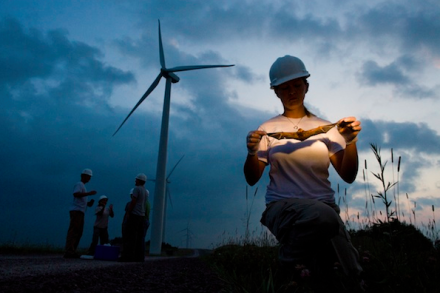
Are wind turbines really good for the environment? The economics, as we know, is often deeply dubious. But in this week’s Spectator, Oxford biological lecturer Clive Hambler reveals another drawback: the slaughter inflicted on birds and bats caught in the blades. Hambler argues that despite death tolls from numerous sources in various countries, many environmentalists are not being thorough with their questioning of renewable energy. In Britain, this argument isn't made much — but overseas, as Hambler says, they're realising the damage inflicted on nature: 'Every year in Spain alone — according to research by the conservation group SEO/Birdlife — between 6 and 18 million birds and bats are killed by wind farms. They kill roughly twice as many bats as birds.

Cameron readies childcare package

From our UK edition

David Cameron and Nick Clegg will launch the coalition’s mid-term review tomorrow. There will be some announcements in it. But I understand that some of the most interesting, new coalition policies are being held out from it. The government wants to keep some of its powder back for later. There are also some final details to be worked out in certain areas. I’m informed that there’ll be a Quad on childcare this week. The coalition is close to agreement on a package which, as I say in the Mail on Sunday, would see working mothers receive thousands of pounds of help with childcare costs for the under fives. This will follow on from moves to liberalise the sector which will be announced in the next week or so.

In a preview of David Cameron’s 2013, Europe dominates his New Year interview

From our UK edition

David Cameron’s New Year interview on Marr was dominated not by the economy but by Europe. In a sign of what the promise of a speech setting out his European strategy has started, Cameron was repeatedly asked about what powers he would like back. He didn’t give much away, repeatedly telling Andrew Marr he would have to wait for the speech later this month. But two interesting things did emerge. First, Cameron indicated that he wanted to toughen up the way that the free movement of people is applied. I presume this means that only those with work or a clear means of support could come here; Nick Boles and others have long argued that this is possible under the existing treaties. Second, Cameron indicated that the new terms-or-out referendum would take place within five years.

Don’t ban Frosties: teach children the life skills they need to make choices

From our UK edition

What a very sensible idea from a group of more than 200 MPs in today's FT: teach children about personal finance. The All-Party Parliamentary Group on Financial Education for Young People wants financial education to become a compulsory part of the curriculum, with banks visiting classrooms. The idea that Natwest and Barclays could send their representatives into classrooms is obviously not enormously palatable to everyone, with critics arguing that this is just another route for big business to indoctrinate innocent minds. But consider this: research from the Centre for Economics and Business Research found a lack of financial education costs the taxpayer £3.

Let Them Eat Gruel: The Government-Health-Security Complex Invades Your Kitchen – Spectator Blogs

From our UK edition

Addressing the American people for the final time as President, Dwight Eisenhower warned that: This conjunction of an immense military establishment and a large arms industry is new in the American experience. The total influence — economic, political, even spiritual — is felt in every city, every statehouse, every office of the federal government. We recognize the imperative need for this development. Yet we must not fail to comprehend its grave implications. Our toil, resources and livelihood are all involved; so is the very structure of our society. In the councils of government, we must guard against the acquisition of unwarranted influence, whether sought or unsought, by the military-industrial complex.

Parts of the Left are beginning to realise that they got the family wrong

From our UK edition

One of the more interesting trends in British politics in the last few years has been sections of the left realising that the cultural changes of the 1960s and 70s too often chucked the baby out with the bathwater. Today, Diane Abbott has given an interview to Patrick Wintour in which she calls for more support for the family; arguing that stable families are the best way of preventing social breakdown. She also concedes that feminists were too ‘ambivalent’ about the family. Interestingly, Abbott also comes out in favour of school uniforms. She points out that they are a check against materialism and the designer label arms race. Now, I know that it is easy to mock Abbott — the left-wing fire brand who sent her son to a private school.

Briefing: Means-testing Child Benefit

From our UK edition

George Osborne's removal of child benefit from high-earners kicks in on Monday, but what exactly does it entail? Who loses what? Initially, Osborne's plan was 'to remove child benefit from families with a higher rate taxpayer', as he announced in the Spending Review of October 2010. (This year, that'd be anyone earning over £42,475.) But after criticism that this would hit too many people, and that it would create a 'cliff-edge effect' (whereby someone earning £42,475 would keep all their Child Benefit but someone earning £42,476 would lose it all, so the lower-earner would end up better-off), Osborne changed his mind.