Uk politics

Labour’s Eastleigh by-election fight

From our UK edition

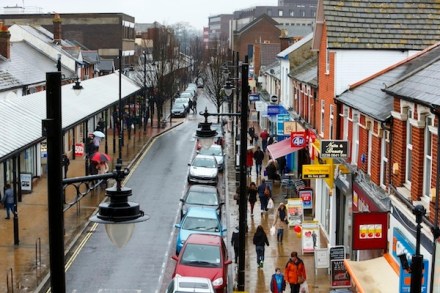
The Eastleigh by-election machine is well and truly up and running this weekend, with ministers starting to make their way down to the Hampshire constituency to start campaigning. The focus is on the two coalition parties who have now both chosen their candidates, but it's also interesting to see what Labour's up to in the constituency. Labour came second in the 1994 by-election, but as the graph below shows, the party then embarked on a slide which saw it poll third in the four subsequent elections. What's interesting, though, is that though the party hasn't yet announced its candidate, it's had a stall down in the town for two weeks already, when there wasn't even a by-election on the cards until last Monday.
Where’s the outrage?

From our UK edition

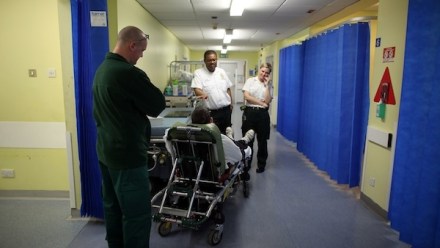
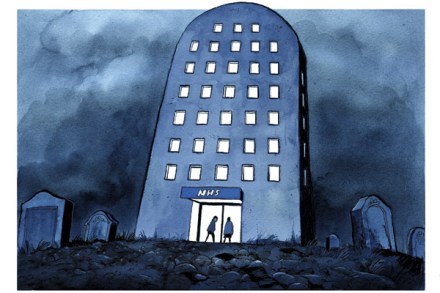
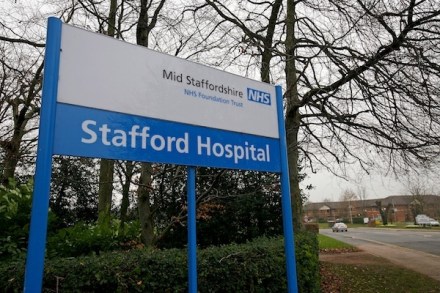
There’s normally no shortage of outrage in our politics. In Britain today, we specialise in working ourselves into a bate. This is what makes the lack of outrage at what happened at Mid Staffs all the more peculiar. If the government had received a report detailing such appalling behaviour in any institution other than an NHS hospital and responded so meekly, there would have been a series of angry front pages denouncing Whitehall complacency. The government is considering changing the law of the land because of what happened at the care home Winterbourne View, which was appalling but nowhere near as serious as what happened at Mid Staffs. But when it comes to the NHS, we all suspend our critical faculties.

Jeremy Hunt’s promising path as Health Secretary

From our UK edition

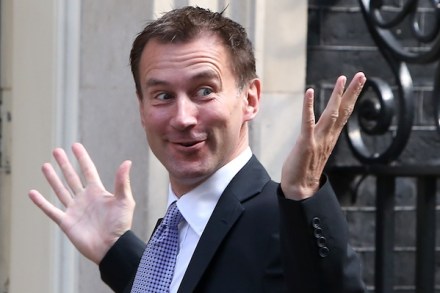
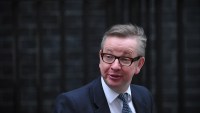
When Jeremy Hunt became Health Secretary last September, the Google Alert I set up against his name would spew forth a regular stream of contemptuous comment on the new appointment. Invariably accompanied by an unflattering photo – quite often that one (above) where Hunt arrives in Downing Street looking less ready for a Cabinet meeting than as the stand-in children's entertainer – the pieces conformed to an ordained boiler-plate. They would focus either on his Murdoch-stained record in office, or on the certainty that he was about to privatise the NHS out of existence or, failing that, on the general observation that here was another public school twit, capable of getting lost in the back of his own ministerial car.

Victorious PM paints himself as Camileo the EU heretic

From our UK edition

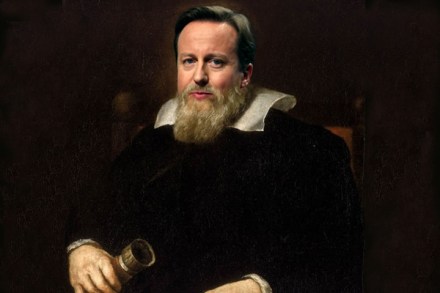
In his victory address after the successful EU Budget deal this afternoon, David Cameron sought to paint himself once again as a Galileo-style EU heretic who spoke truth to power. This was all about what Cameron himself had achieved: his press conference statement was full of first person references to what he had 'slashed' and 'achieved'. At one point he even said 'at last someone has come along' to sort the EU's 'credit card', again clearly referring to himself. This echoes the Prime Minister's Europe speech last month where he talked about Europe's 'experience of heretics who turned out to have a point'. Today he was Camileo, the heretic who did have a point and won the argument.

Tories use Chris Huhne as Eastleigh by-election weapon

From our UK edition

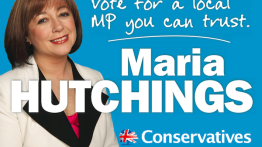
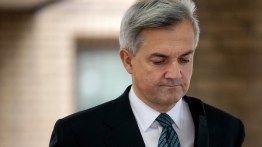
The Conservatives have just published their poster for the Eastleigh by-election. Like most campaigns, they're capitalising on the fact that the Tory candidate, Maria Hutchings, is local. But in their slogan they've also told voters that she's the one constituents can trust. This shows that, even though Nick Clegg argued in the Q&A after his speech yesterday that the contest shouldn't be about Chris Huhne, the party wants to make as much of the former Energy Secretary's exit as they possibly can in this bloody battle. UPDATE, 17.40pm: A rather sardonic Lib Dem source tells me: 'I have to say, campaigning against Chris Huhne when he's not a candidate is an intriguing idea.

Briefing: Everything you need to know about Eastleigh

From our UK edition

After Chris Huhne's resignation, the by-election campaign in Eastleigh is already well underway. James explains the political significance of this Lib Dem-Tory battle in this week's Spectator, but here are some quick facts about the state of play in Eastleigh, including the first poll results: A brief history Eastleigh constituency started out as a Tory-Labour marginal in 1955. Conservative David Price was its first MP, elected with a majority of just 545. By the time he retired in 1992, it had become a fairly safe Tory seat and Stephen Milligan was elected to replace him with a majority of 17,702. But when Milligan died in 1994, the Liberal Democrat by-election machine swept in to action and David Chidgey was elected with a 9,239-vote majority.

EU budget victory: What does Cameron do next?

From our UK edition

The Haribo they were eating all night clearly worked: European leaders have just agreed on the first budget cut since the EU's formation. All credit to David Cameron for getting more than even he'd imagined was possible. But what does the Prime Minister do next? Well, he could do what he did after his historic EU speech, which is to make a rather paltry attempt at capitalising on the excellent mood in the Conservative party by organising an afternoon Commons debate with William Hague congratulating his leader on being so eurosceptic and poking fun at Labour.

Cameron closes in on EU Budget success

From our UK edition

The news coming back from Brussels is all pretty good for David Cameron, as Isabel noted this morning. He’s not isolated and looks set to succeed in his fight to see a cut in the overall EU Budget. Admittedly, the British contribution will still go up—a result of deals Tony Blair struck at the time of enlargement. But it is still a good result, and one that will please all but the most truculent members of his parliamentary party. Even better for Cameron, is the idea that the European Parliament might veto the deal in a secret vote. Now, this idea is so absurd that it is hard to believe that it is anything other than a Brussels rumour. But if it does happen, it will sum up the kind of spendthrift, opaque, unaccountable Europe that Cameron is opposed to.

Yes, Gove has lost a battle. But he’s winning the education war

From our UK edition

Michael Gove's enemies will have savoured his defeat yesterday, and enjoyed every second of his Commons speech admitting that his pet project, the EBacc, was ‘a bridge too far’. Gove is fighting a war on many fronts — and he lost a battle. It doesn't happen often, which is precisely why it's memorable. I look at this in my Telegraph column today. Here are my main points: 1. The passion of Gove — and Adonis. Gove is just as passionate about the transformative power of education as Andrew Adonis and, I suspect, for the same reason. Both were born in modest circumstances: Adonis to a single father in Camden, Gove to a woman in Edinburgh who gave him up for adoption. Both had the very unusual opportunity of a first-class education.

Historic EU Budget cut on the cards for Cameron

From our UK edition

EU leaders have just left their negotiations over the EU budget for a two hour break and so far it's looking very, very positive for the Prime Minister. Perhaps David Cameron should pick a bracing walk rather than a car into every summit from now on because in the early hours of this morning, EU president Herman Van Rompuy tabled a package that would answer Cameron's demands for a reduction in spending. This €34.4 billion cut for the spending limits in the multi annual financial framework billion would be the first cut in the budget in the EU's history. As I said yesterday, the PM was in a tight spot, not wanting to irritate EU leaders too much, or come back to his own parliament empty handed.

Being squeamish about the NHS won’t stop another Stafford Hospital

From our UK edition

Should heads roll over the Mid Staffordshire Hospitals Trust scandal? I ask only because as I listened to Mark Carney giving evidence to the Treasury Select Committee for several hours this morning, I found myself browsing through a number of articles on this site and others about the Libor scandal. Back in those heady days of George Osborne accusing Ed Balls of having questions to answer, and Bob Diamond resigning from Barclays ahead of his appearance before the same select committee, people were very keen for heads to roll, and not just those sitting on bankers' necks. They were also keen that those who performed badly when questioned about their suspicions of Libor fixing didn't rise to higher positions, with Paul Tucker watching his own shot at the job Carney has now won slipping away.

IDS accuses Miliband of pathetic scaremongering over ‘bedroom tax’

From our UK edition

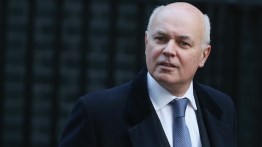
The political row over the changes to housing benefit, labelled the ‘bedroom tax’ by opponents, intensified this evening. In an open letter to the Labour leader (reproduced below), Iain Duncan Smith accuses Miliband of ‘a pathetic exercise in political point scoring and scare mongering’. In the feisty letter, Duncan Smith argues that the taxpayer is currently paying for close to a million spare rooms. He argues that taxpayers ‘should not be paying for what is effectively a benefit subsidy for empty rooms’. He also takes issue with the personal case stories that Labour are using.

Cameron in tight spot as he refuses to budge on EU Budget

From our UK edition

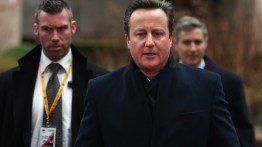
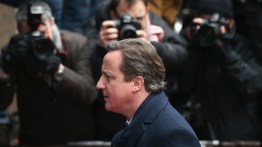
David Cameron caused a stir today by walking, yes, walking, into the meeting of European leaders in Brussels to discussed the multiannual financial framework. Other leaders arrived in their cars. Perhaps he was trying to make a point about the EU's excesses as he seeks a reduction in the spending plans currently on the table, but in case they didn't get the hint, he gave this broadcast clip on arrival, saying: 'Frankly the European Union should not be immune from the sorts of pressures that we've had to reduce spending, find efficiencies and make sure that we spend money wisely that we're all having to do right across Europe.

Mark Carney: I want a debate on inflation target

From our UK edition

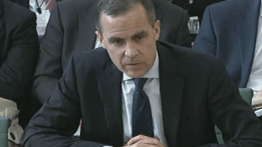
If Mark Carney had any reservations about his move to Threadneedle Street later this year, he might now add to his list regular sessions with the Treasury Select Committee. His three-and-a-half hour hearing included a quiz from Committee member David Ruffley on his ability to explain capital ratios and other terms, questions on how many mistakes he'd be happy for staff to make, whether he wanted to rename the Bank's Court, and whether he'd judge his success on the return of growth to the economy during his tenure.

Whisper it, but the British economy may in better shape than you think… – Spectator Blogs

From our UK edition

Doom and gloom is all around. This is another winter, if not of discontent, then certainly of persistent grumbling. Optimism is as rare as a Scottish victory at Twickenham and, frankly, just as fanciful a thought. That, at any rate, is today's conventional wisdom. Fleet Street looks to a Triple Dip recession and ponders what side dishes will best complement the Chancellor's broiled reputation. And yet, and yet, I wonder - hesitantly, I grant you - if all this is quite accurate. Fleet Street, like Westminster, is often fighting the last war. Worse still, it tends to presume that what has happened will continue to happen and that present trends will last forever and a day and so on. No wonder the press is always surprised when this proves to be not the case. It is almost touching.

Reducing the ‘pull factor’ for Romanian and Bulgarian migrants

From our UK edition

Whisper it but the government have a fighting chance of reaching their immigration target. The main risk now is an inflow from Romania and Bulgaria when our labour market is fully opened to them next January. That is why the issue of child benefit is important; if we continue to pay it to children left at home it could greatly encourage such migration. Opposition to the government's immigration policy is now starting to dissipate. Much of it has come from special interest groups who stand to gain from unlimited immigration. Unfortunately for them, their raucous campaigns are colliding with the facts.

Even the best laid plans of Michael Gove can go awry

From our UK edition

Coalition ministers and commentators like to study Michael Gove as an example of a successful reforming politician. The Education Secretary is most definitely man not mouse, taking on some of the most vehement vested interests in our public services, and even appearing to enjoy himself while he does it. But today's change of tack on GCSE reform shows that the best laid plans of mice and men often go awry.

Cameron’s Gay Marriage Victory Showed Him As A Real Leader – Spectator Blogs

From our UK edition

And lo, the battle for British Gay Marriage was in fact a rout. True, half the parliamentary Conservative party voted against the measure. True too, this is now being considered further evidence that David Cameron's leadership skills - or, rather, since they are not the same thing - his party management skills are less than they might be. But, for once, I think focusing on Tory divisions misses the rather bigger, simpler story. Nearly half the Conservative parliamentary party endorsed gay marriage in the House of Commons. And they did it on a free vote. That is quite a thing.