Uk politics

Planning Minister: Govt must be tough on new migrants to protect housing from more pressure

From our UK edition

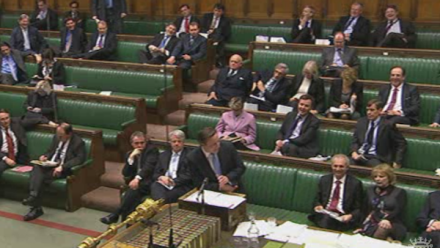
MPs' concerns about how many Bulgarian and Romanian migrants might come to this country when transitional controls are lifted aren't going away any time soon, by the looks of things. There were six questions on the order paper from Conservative MPs about the matter at Home Office questions yesterday, for starters. But I've also spoken to a minister who is uneasy about the impact that the end of the controls will have on his own sector.
Briefing: What is the government doing to inheritance tax?

From our UK edition

The Death Tax has risen again. The government estimates that its proposals for social care funding will cost the Treasury £1 billion a year. That will be met through a combination of not compensating government departments for the higher National Insurance contributions they will have to pay under the new single-tier state pension and freezing the level at which inheritance tax kicks in at £325,000 until 2019 - the source of the 'death tax' accusations today. Freezing the inheritance tax threshold The inheritance tax threshold (or ‘nil-rate band’) is the amount of an estate that is not taxed. It rose in both cash- and real-terms throughout the Labour years, but in 2009 Alistair Darling decided to freeze it at £325,000 for 2010-11.

Barwell wins bill battle against mental health discrimination

From our UK edition

Gavin Barwell's bill to end discrimination against those suffering from mental illnesses received its third reading in the House of Lords this afternoon, which means it is just a small hop, skip and jump from becoming an Act of Parliament. The legislation will end automatic blocks on those receiving regular treatment for any mental health disorder from sitting on a jury and from continuing to work as a company director, as well as repealing the section of the Mental Health Act 1983 which automatically removes an MP from their seat if they have been sectioned for more than six months.

Tory poll weaknesses show why an Eastleigh win is so important

From our UK edition

The latest ICM poll for The Guardian is interesting because it highlights the weakness in both the Tory and Labour positions. The Tories are 12 points behind on 29, doing appallingly with women voters—trailing Labour 25-51, and haven’t managed to halt UKIP’s momentum. But Labour’s position is not as strong as the headline figures suggest. A plurality of voters still places the blame for the economic slowdown on Labour’s ‘unsustainable spending’. Polls in mid-term do not tell us that much. But the more bad news they bring for the Tories, the grimmer the mood on their benches will become. This is one of the things which makes Eastleigh so important for Cameron.

A long overdue counterblast to the Left’s thinking on Islamists

From our UK edition

A three year open sore within the human rights community will be closed this evening when Gita Sahgal officially launches her new organisation, the Centre for Secular Space, at Toynbee Hall. Sahgal will also be launching the group’s first report, ‘Double Bind: The Muslim Right, the Anglo-American Left, and Universal Human Rights’ highlighting the ongoing scandal of the left’s promiscuous embrace of radical Islamists. The story of Gita Sahgal has been covered before but is worth revisiting. A lifelong human rights activist, Sahgal worked on issues relating to women’s rights, religious extremism, and racism before heading up the Gender Unit at Amnesty International.

Social care reforms: clever politics, bad government

From our UK edition

Judge a Government on its priorities.  And then its priorities within priorities.  Amidst the clamour for rapid and credible deficit reduction, the dawning reality that green shoots won’t sprout unaided, Iain Duncan Smith’s welfare reform and Michael Gove’s education revolution, social care did make the hastily compiled Coalition to-do list. But a Government’s Parliamentary programme is a game of two halves, and within weeks of Andrew Dilnot’s radical report in 2011, it became clear that any such reform would be a second half priority. Today, after months of cross-party Whitehall wrangling and internal Coalition debate, the Health Secretary proudly unveils the Government’s offer.

Social care reforms: the good and bad news

From our UK edition

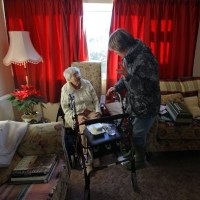
Jeremy Hunt is unveiling the government's long-awaited reforms to the funding of social care today. This is the next announcement in the government's mid-term review series, and while it addresses a serious issue, it's probably the biggest disappointment to date, and not just because it doesn't match the ambition of the reforms proposed by Andrew Dilnot. The good news is that no-one will have to pay more than £75,000 for the costs of their social care: that is the personal help, washing, and clothing, but not the cost of accommodation or food.

Ed Davey sounds more enthusiastic about Nick Clegg than Nick Clegg himself

From our UK edition

It took a while for Nick Clegg to confirm that he would stay with his party to 2015, but today his colleague Ed Davey did him a favour (or perhaps not) and confirmed on his behalf that Clegg would stay not just through the next election, but would lead his party into the 2020 election. He told Andrew Neil on the Sunday Politics: 'I'm really very supportive of what Nick has been doing, I think he's the best leader we've ever had and I think he's going to lead the party not just into the next election but into the one after that.' Ed Davey is obviously trying to fend off accusations that he's abandoning the club sandwiches and aiming for the leadership himself, but he managed to make himself sound more enthusiastic about Clegg as leader than Clegg himself.

Labour’s Eastleigh by-election fight

From our UK edition

The Eastleigh by-election machine is well and truly up and running this weekend, with ministers starting to make their way down to the Hampshire constituency to start campaigning. The focus is on the two coalition parties who have now both chosen their candidates, but it's also interesting to see what Labour's up to in the constituency. Labour came second in the 1994 by-election, but as the graph below shows, the party then embarked on a slide which saw it poll third in the four subsequent elections. What's interesting, though, is that though the party hasn't yet announced its candidate, it's had a stall down in the town for two weeks already, when there wasn't even a by-election on the cards until last Monday.

Where’s the outrage?

From our UK edition

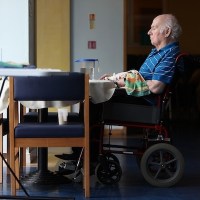
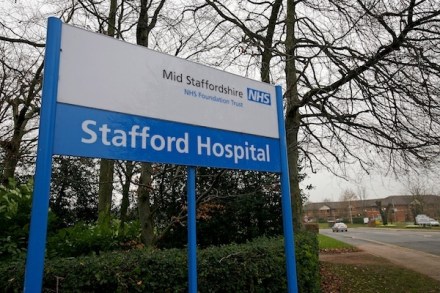
There’s normally no shortage of outrage in our politics. In Britain today, we specialise in working ourselves into a bate. This is what makes the lack of outrage at what happened at Mid Staffs all the more peculiar. If the government had received a report detailing such appalling behaviour in any institution other than an NHS hospital and responded so meekly, there would have been a series of angry front pages denouncing Whitehall complacency. The government is considering changing the law of the land because of what happened at the care home Winterbourne View, which was appalling but nowhere near as serious as what happened at Mid Staffs. But when it comes to the NHS, we all suspend our critical faculties.

Jeremy Hunt’s promising path as Health Secretary

From our UK edition

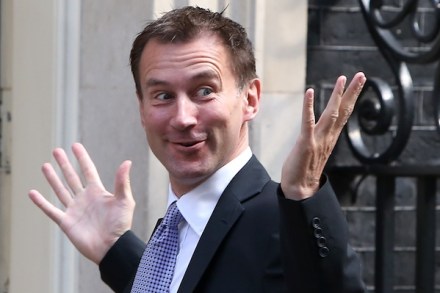
When Jeremy Hunt became Health Secretary last September, the Google Alert I set up against his name would spew forth a regular stream of contemptuous comment on the new appointment. Invariably accompanied by an unflattering photo – quite often that one (above) where Hunt arrives in Downing Street looking less ready for a Cabinet meeting than as the stand-in children's entertainer – the pieces conformed to an ordained boiler-plate. They would focus either on his Murdoch-stained record in office, or on the certainty that he was about to privatise the NHS out of existence or, failing that, on the general observation that here was another public school twit, capable of getting lost in the back of his own ministerial car.

Victorious PM paints himself as Camileo the EU heretic

From our UK edition

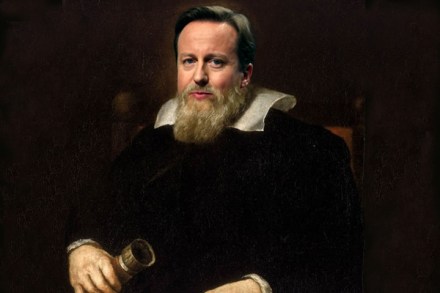
In his victory address after the successful EU Budget deal this afternoon, David Cameron sought to paint himself once again as a Galileo-style EU heretic who spoke truth to power. This was all about what Cameron himself had achieved: his press conference statement was full of first person references to what he had 'slashed' and 'achieved'. At one point he even said 'at last someone has come along' to sort the EU's 'credit card', again clearly referring to himself. This echoes the Prime Minister's Europe speech last month where he talked about Europe's 'experience of heretics who turned out to have a point'. Today he was Camileo, the heretic who did have a point and won the argument.

Tories use Chris Huhne as Eastleigh by-election weapon

From our UK edition

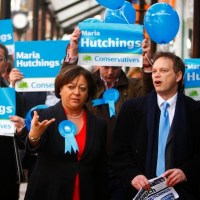
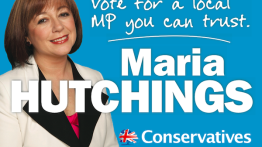
The Conservatives have just published their poster for the Eastleigh by-election. Like most campaigns, they're capitalising on the fact that the Tory candidate, Maria Hutchings, is local. But in their slogan they've also told voters that she's the one constituents can trust. This shows that, even though Nick Clegg argued in the Q&A after his speech yesterday that the contest shouldn't be about Chris Huhne, the party wants to make as much of the former Energy Secretary's exit as they possibly can in this bloody battle. UPDATE, 17.40pm: A rather sardonic Lib Dem source tells me: 'I have to say, campaigning against Chris Huhne when he's not a candidate is an intriguing idea.

Briefing: Everything you need to know about Eastleigh

From our UK edition

After Chris Huhne's resignation, the by-election campaign in Eastleigh is already well underway. James explains the political significance of this Lib Dem-Tory battle in this week's Spectator, but here are some quick facts about the state of play in Eastleigh, including the first poll results: A brief history Eastleigh constituency started out as a Tory-Labour marginal in 1955. Conservative David Price was its first MP, elected with a majority of just 545. By the time he retired in 1992, it had become a fairly safe Tory seat and Stephen Milligan was elected to replace him with a majority of 17,702. But when Milligan died in 1994, the Liberal Democrat by-election machine swept in to action and David Chidgey was elected with a 9,239-vote majority.

EU budget victory: What does Cameron do next?

From our UK edition

The Haribo they were eating all night clearly worked: European leaders have just agreed on the first budget cut since the EU's formation. All credit to David Cameron for getting more than even he'd imagined was possible. But what does the Prime Minister do next? Well, he could do what he did after his historic EU speech, which is to make a rather paltry attempt at capitalising on the excellent mood in the Conservative party by organising an afternoon Commons debate with William Hague congratulating his leader on being so eurosceptic and poking fun at Labour.

Cameron closes in on EU Budget success

From our UK edition

The news coming back from Brussels is all pretty good for David Cameron, as Isabel noted this morning. He’s not isolated and looks set to succeed in his fight to see a cut in the overall EU Budget. Admittedly, the British contribution will still go up—a result of deals Tony Blair struck at the time of enlargement. But it is still a good result, and one that will please all but the most truculent members of his parliamentary party. Even better for Cameron, is the idea that the European Parliament might veto the deal in a secret vote. Now, this idea is so absurd that it is hard to believe that it is anything other than a Brussels rumour. But if it does happen, it will sum up the kind of spendthrift, opaque, unaccountable Europe that Cameron is opposed to.

Yes, Gove has lost a battle. But he’s winning the education war

From our UK edition

Michael Gove's enemies will have savoured his defeat yesterday, and enjoyed every second of his Commons speech admitting that his pet project, the EBacc, was ‘a bridge too far’. Gove is fighting a war on many fronts — and he lost a battle. It doesn't happen often, which is precisely why it's memorable. I look at this in my Telegraph column today. Here are my main points: 1. The passion of Gove — and Adonis. Gove is just as passionate about the transformative power of education as Andrew Adonis and, I suspect, for the same reason. Both were born in modest circumstances: Adonis to a single father in Camden, Gove to a woman in Edinburgh who gave him up for adoption. Both had the very unusual opportunity of a first-class education.

Historic EU Budget cut on the cards for Cameron

From our UK edition

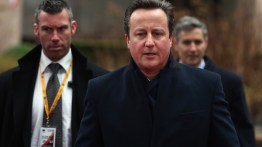
EU leaders have just left their negotiations over the EU budget for a two hour break and so far it's looking very, very positive for the Prime Minister. Perhaps David Cameron should pick a bracing walk rather than a car into every summit from now on because in the early hours of this morning, EU president Herman Van Rompuy tabled a package that would answer Cameron's demands for a reduction in spending. This €34.4 billion cut for the spending limits in the multi annual financial framework billion would be the first cut in the budget in the EU's history. As I said yesterday, the PM was in a tight spot, not wanting to irritate EU leaders too much, or come back to his own parliament empty handed.