Uk politics

Lib Dems get worked up about a vote that doesn’t matter

It seems I rather underestimated Labour when I said their forthcoming Opposition Day vote on the mansion tax would be boring and unlikely to attract any Lib Dem support. The Staggers reported last night that Labour sources were planning to make the vote as amenable as possible to the Lib Dems by dropping any awkward references to 10p tax rates or any other wheeze that the junior coalition partner disagrees with. Meanwhile Lib Dem sources are saying they are waiting to see the wording before ruling anything out. But the point that this is not a crunch vote that will interest the public still stands, so why are the Lib Dems even bothering to wait for the motion?

Why liberal conservatism isn’t dead

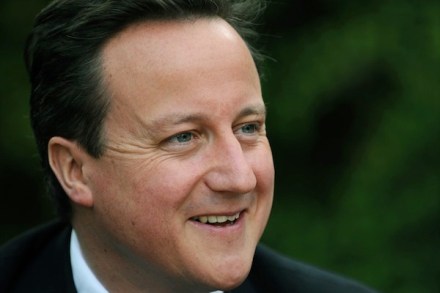
David Cameron led the Conservatives out of the political wilderness by pursuing the modernisation of the Tory brand, which had become associated with reactionary social attitudes and a dog eat dog economy. In today’s tricky economic climate, the Tories need to focus on challenging perceptions that they are the 'party of the rich', offering policies that ease the cost of living and improve public services for those on low- to middle-incomes.

Europe’s defence budgets may not be noble, but they are at least rational

Gideon Rachmann is unhappy that european defence budgets are still falling: Since 2008, in response to the economic downturn, most big European countries have cut defence spending by 10-15 per cent. The longer-term trends are even more striking. Britain’s Royal Air Force now has just a quarter of the number of combat aircraft it had in the 1970s. The Royal Navy has 19 destroyers and frigates, compared with 69 in 1977. The British army is scheduled to shrink to 82,000 soldiers, its smallest size since the Napoleonic wars. In 1990 Britain had 27 submarines (excluding those that carry ballistic missiles) and France had 17. The two countries now have seven and six respectively.

The Myth of the Immigrant Benefit-Moocher, Part Two

I am afraid, dear reader, that I have misled you. Yesterday's post on immigrants and benefit-claimants contained an inaccuracy. I repeated a claim I'd seen in the Telegraph that there are almost 14,000 Polish-born people claiming unemployment benefit in Britain. This is not the case. The true picture of Polish benefit-dependency is very different. There are, in fact, fewer than 7,000 Poles claiming the Job Seekers' Allowance. Indeed, there are fewer than 13,000 JSA claimants from the "Accession Eight" countries (Poland, Czech Republic, Hungary, Slovakia, Lithuania, Latvia, Estonia and Slovenia). Whatever else these eastern europeans have been doing in Britain, they've not been mooching off the benefits system. And it is a lie - dirty and simple - to suggest they are.

The Tories take tips from Obama in Eastleigh

Eastleigh could be a turning point in by-election history. Not because the Tories are looking like they may well lose, as the Times (£) suggests this morning, but as the moment the party woke up to the possibilities of digital campaigning. Online election adverts in UK politics are nothing new – the 2012 London Mayor race saw both Ken and Boris plaster websites (including this one) with a variety of colourful attack messages. What is different in Eastleigh is the drive for data gathering. Take some of the adverts CCHQ are running on the websites of two local papers — the Southern Daily Echo and Hampshire Chronicle: The main purpose of these adverts is not to encourage voter turnout, nor to get them voting Tory, but to complete the survey.

Maria Hutchings says what she thinks. But is she thinking what Eastleigh voters are thinking?

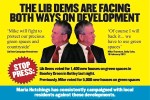
One of the key strands of the Conservative campaign in Eastleigh is trust: not just because campaigners can remind voters about Chris Huhne, but thanks to a contrast they can draw between Maria Hutchings and Lib Dem candidate Mike Thornton. The party's latest poster underlines this: it accuses the Lib Dems of 'facing both ways on development' and contrasts quotes from Thornton on protecting green spaces and his voting record. The bottom of the poster says: 'Maria Hutchings has consistently campaigned with local residents against these developments.

On tax policy, to govern is to maintain the status quo

To govern is to choose, wise people like to say when talking about policies which annoy voters but which might make good sense. Today we have another example of what happens when governments don't choose. The Public Accounts Committee has published another one of its fierce reports on tax, arguing that tax avoidance companies 'run rings around HMRC'. There's plenty of criticism in it for HMRC, with the committee finding that HMRC doesn't know how much it spends tackling tax avoidance, or whether the work that it does do is effective. But the tax system itself, unsurprisingly, doesn't get a good review either.

Lessons from Ronnie and Maggie

Ramesh Ponnuru has written a splendid op-ed for today's New York Times. Splendid, not because it is new or especially original, but because, alas, it's central message needs repeating until, eventually, even the more dunderheaded class of Republican Congressman hears the message. And it is a simple message. Namely, that asking 'What would Ronald Reagan do?' is almost about as useful as mining Martin van Buren, George II or Charlemagne for policy advice that will help solve today's problems. I exaggerate of course, but only for effect. We are not now as we were then. Or, as Mr Ponnuru puts it: Republicans are very good at tending the fire of Ronald Reagan’s memory but not nearly as good at learning from his successes.

Newcastle Labour leader founds a big society

Labour's Nick Forbes is a great pioneer of austerity. As leader of Newcastle City Council he bravely decided to shut half the city's libraries, close two respite centres for disabled people and cut 100 per cent of funding to arts institutes. He said he had to do it, because the Government had reduced the council's funding (though the city still gets more per household than most areas) and he needed to protect services for vulnerable people. Forbes wrote a letter to The Observer predicting 'the break up of civil society'. Some of us wondered though – did he really need to cut 100 per cent of the arts funding and close the libraries? Were the numbers more flexible than he suggested? Forbes was amazed at our cynicism.

The Myth of the Immigrant Benefit-Scrounger

The Sunday Express is at it again. It is outraged that Britain's prisons contain some inmates who were not born in this country. Of course, everyone is hopping aboard the immigrant-bashing bandwagon these days. Immigration, it sometimes seems, is something to be feared, not valued. I understand the political calculation behind all this. The restrictionists have carried the day and there are few votes in seeming "soft" on immigration these days. Which is a shame. But there you have it. Nevertheless, the immigration brouhaha increasingly bears more than a passing resemblance to a moral panic. As tends to be the case, such fears are not utterly groundless but they are hyped and exaggerated to a point at which they become irrational and, even, nonsensical.

Will Nick Clegg take advantage of Britain’s growing EU and immigration anxiety?

Today’s Financial Times paints a poor picture for pro-Europeans: half of those polled want to leave the EU and just a third want to remain in. Plus, 41 per cent of those in favour of a Brexit will ‘definitely’ vote no even after a renegotiation, which suggests a tough challenge for the In campaign to swing some opinions. However, it’s also worth noting that the EU only ranks 15th on the FT’s list of important issues; healthcare and education are at the top of the list, with immigration coming in at eighth. YouGov has recently carried out some polling on immigration, with some interesting findings in the European context.

Mr Micawber Goes to the Treasury

John Rentoul draws attention to a new ComRes poll that goes some way towards explaining George Osborne's predicament when it comes to managing government finances. Put simply, the public is not interested in public spending cuts. On the contrary, British voters want to see public spending increase. Sure, they might agree that, all things being equal and in the broader scheme of matters, it might be a good idea if the government balanced the books but all things are rarely equal and as soon as you get into the narrow, particular view of these matters it becomes clear that, actually, the only departmental budget voters want to decimate is that small portion of government spending devoted to foreign aid.

The taxing question Labour can’t answer

The details of Labour’s mansion tax proposal remain, to put it politely, sketchy. Here’s the exchange between Andrew Neil and Sadiq Khan on the Sunday Politics on how Labour would work out which homes are worth more than two million pounds: AN: Do you rule out a re-evaluation of all properties? SK: There are a number of options to look into. AN: Do you rule out a re-evaluation?

Horsemeat scandal: four key questions

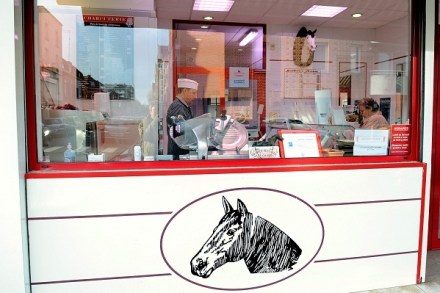
The ongoing horsemeat scandal has opened up a hugely complicated web stretching across the EU, highlighting the difficulty of tracing the origins of the meat on sale in this country. Even now, almost a month after it was announced that horse could be in beef products, no one is entirely sure of how the horses entered the food chain. There are other big questions, too: here are four that need answers: •       The matter of dodgy horse passports – which I wrote about last month - is something that still hasn’t been fully investigated. It has now emerged that up to 7,000 unauthorised passports have been in circulation in the UK since 2008, highlighting the chaotic state of the passport system.

Selling RBS

The state owning banks is not a good thing. It is, as the annual row over bonuses at RBS demonstrates, very difficult to keep politics out of the running of the business. So, it’s encouraging news that the Treasury is moving to sell the government’s 82 percent stake as soon as possible. Today, the Mail and The Independent report that George Osborne is considering simply handing over the shares to taxpayers, who would then be able to sell them when they at a time of their choosing. As I wrote earlier this month, Osborne is very keen to avoid a row over RBS bonuses in February 2015, just three months before the general election.

Labour’s mansion tax debate won’t be a crunch vote (or very interesting)

So Labour is going to force a vote in the House of Commons on the mansion tax. It's the key announcement trailed as part of Ed Miliband's visit to Eastleigh today, and yet it's the sort of thing that only really excites people who look forward to hearings of the Public Accounts Committee rather than the average voter who has a more normal perspective on life. The idea behind these Opposition Day debates is that Labour flushes out any rebels or unhappy Lib Dems, or that its MPs can later tweet 'Lib Dems voted against their own policy in the Commons tonight #evil #nevertrustalibdemagain'. Miliband says that very thing today: 'And what about the Lib Dems? There could be a majority in the House of Commons when it votes on our proposal. But only if the Liberal Democrats vote with Labour.

Exclusive: MPs could debate controls for Bulgarian and Romanian migrants

So far, MPs have only been able to raise concerns about the effects of the end of transitional controls for Bulgarian and Romanian migrants in departmental questions in the Commons. But one Tory is calling for a full backbench debate on the issue after recess. I understand that Mark Pritchard wants the government to extend transitional controls beyond 2013. He has applied for a debate, and tells me: 'I am pleased that the government is looking at the pull factors that will draw thousands of Bulgarian and Romanian migrants to the UK. However, time is running out and action rather than words are required. There also needs to be a recognition that there are also push factors and reducing pull factors alone will not be sufficient.

Make your mind up, Tory MPs tell Cameron

At the moment, the Tories intend to head into the next election with the worst of all airport policies. They won’t have announced where the much-needed extra runway capacity in the south east will be. But neither will they be ruling out extra runways at various existing airports or an entirely new airport. The risk for the Tories is that voters under the Heathrow flight path assume that they are going to build a third runway there. Meanwhile those close to Stansted fear that it is going to be turned into a four-runway airport. Seventeen Tory MPs in the south east have now written to David Cameron protesting about the policy not to have a policy.