Uk politics

Sir John Hoskyns: the Margaret Thatcher I knew

From our UK edition

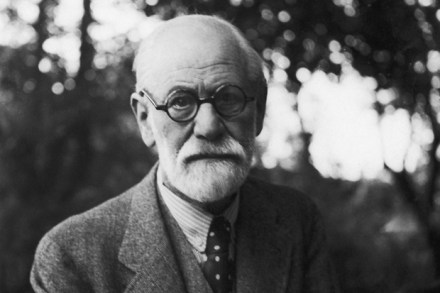
Sir John Hoskyns was head of Margaret Thatcher's Policy Unit from 1979 to 1982. In a Q&A with The Spectator, he describes what it was really like to work with her, and how David Cameron could learn from the late Prime Minister. In 1977, you wrote the Stepping Stones Report, which looked at the fundamental problems holding Britain back in the pre-Thatcher era. If you were to write a sequel, what would you focus on? There’s no snap answer – at least from a bystander. Stepping Stones, and our ‘Wiring Diagram’ were written for  a particular crisis for the British economy. I had been working on an analysis of the problem since since the mid-seventies with the nuclear physicist and one-time head of the MoD think-tank, Terry Price.

David Cameron: We’re all Thatcherites now

From our UK edition

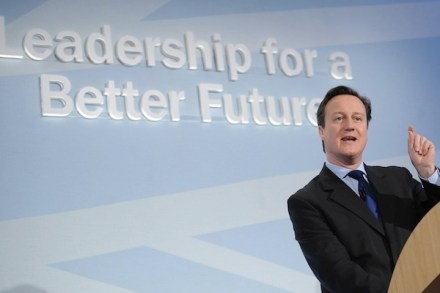
David Cameron is giving a reading at Margaret Thatcher's funeral later today, but this morning he gave his eulogy on the Today programme. He made the quite striking observation that 'we're all Thatcherites now'. In one sense this is quite an obvious comment: as countless commentators have observed over the past week and a half, Margaret Thatcher didn't just change the way the Conservative party viewed economics and the state, she also changed the way Labour sold itself as a party. Cameron said: 'I think in a way we're all Thatcherites now because - I mean - I think one of the things about her legacy is some of those big arguments that she had had, you know, everyone now accepts.

Exclusive: George Osborne on GOV.UK winning Design of the Year

From our UK edition

One of the government’s lesser known reforms, the GOV.UK website, has just been named as the 2013 Design of the Year. Before the coalition, the public sector was represented online by nearly 1,000 websites. Under the auspices of the Government Digital Service — a newly recruited band of nerds based outside of Whitehall — GOV.UK has been an attempt to reboot the government’s web presence with a slicker site under a single unifying brand. This award suggests that the project has been a success. Up against tough competition from the Shard and Olympic cauldron, the win is a triumph for the GDS.

Michael Gove the evil overlord strikes again

From our UK edition

Michael Gove is at it again. Today he's taken it upon himself to 'heap further misery' onto teachers with 'reckless' plans that would damage children's education. At least, that's what the NASUWT teaching union would have you believe. The Education Secretary has in fact published advice for schools on performance-related pay, which they can use from September of this year. It means that coasting teachers won't get automatic pay rises based solely on length of service, and that good teachers who put extra effort in will get pay rises. So the unions appear to be outraged not on behalf of their entire membership, but on behalf of those teachers who aren't going to get pay rises: in other words, they're annoyed that the game is up for poor performers.

Maria Miller and Oliver Letwin’s perfect press regulation

From our UK edition

There was a curious meeting of the Culture, Media and Sport Select Committee this morning. The MPs took evidence from Oliver Letwin and Maria Miller, and then from Harriet Harman, on press regulation. An evidence session with Oliver Letwin is curious enough anyway, as the Minister for Government Policy does tend to speak as though he's reading from a will, complete with codicils. But what was really rum was that everyone in the room seemed to be talking about quite different systems of press regulation. Miller and Letwin were eerily cheery, repeatedly telling committee chair John Whittingdale that they were 'the optimist in this case', and that their plans were not statutory regulation. Miller even objected to the idea that the industry might not be keen.

Planning ‘love-in’ fails to rouse good feelings

From our UK edition

So it doesn't look as though last night's 'love-in' that I reported went particularly well. Cheryl Gillan described planning minister Nick Boles last night as 'completely unmoveable'. Meanwhile, Zac Goldsmith, leader of the rebels on the extensions row in the Commons, was on the Today programme this morning calling it an 'odd policy' and 'very bad, clumsy politics'. He argued that there were other ways of using construction to promote growth: 'There are alternatives: we could relax the planning system without undermining democracy, without going against everything we said in opposition about localism, protecting back gardens and so on. We could easily have a sort of default green light for developments that aren't opposed by neighbours.

Increasing the minimum wage ignores economic realities

From our UK edition

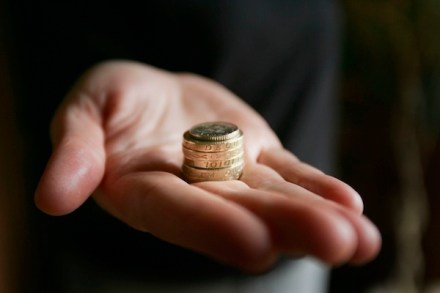
In economically uncertain times, we should strive to remove all blockages to employment, not create more. The national minimum wage is one such blockage. Whilst forced pay hikes may privilege those in work, they make it much harder for those outside the labour market to get their feet on the employment ladder. In times of plenty, the impact of pricing employees out of the labour market were less dramatic, but in harder times, it becomes a considerable barrier to employment. This is a real problem, and today the government raised the rate by 12p an hour to £6.31 for adults. Employers, especially smaller businesses with fewer resources, will often be unable to pay the minimum wage.

MPs invited to planning ‘love-in’

From our UK edition

Parliament's only just back from Easter recess and already there's a threat of rebellion in the Commons. The Growth and Infrastructure Bill returns to the Commons tomorrow afternoon for 'ping-pong', and a number of MPs are agitated about an amendment that passed as a result of a rebellion in the Upper Chamber. In March, the Lords passed an amendment from Tory peer Lord True which would allow councils to opt out of a policy giving homeowners the right to extend their homes without planning permission. The government is naturally seeking to overturn that amendment, but Tory MPs aren't convinced.

Tax transparency: Cameron says relax

From our UK edition

When dolphins hunt fish, they gang up on them as a school, chasing them into the shallows. So it happens at the daily lobby briefing: when a morsel of a story appears and someone lets down their guard, the whole pack of journalists jumps in. Today the Prime Minister's official spokesman was chased into the shallows on the plan, which appears rather dead in the water, to publish ministers' tax affairs. The plan had been for the most senior members of the Cabinet to do this, and David Cameron, George Osborne, Nick Clegg and Vince Cable had agreed on it last spring. But nothing has happened.

A tale of two benefit cuts

From our UK edition

The first four pilots of the government's £26,000 benefit cap for workless families launches today. While there's a bit of debate today about the rights and wrongs of this particular benefit cut, it's worth comparing it with another policy that has grabbed many more headlines. The benefit cap is, as James reported recently, one of the most popular policies pollsters have ever encountered. It was launched as a flagship policy by the Chancellor at the 2010 Conservative autumn conference, with a snappy name. Most backbench Tory MPs report that the only thing that annoys their constituents about the cap is that it's still too high: Chris Skidmore told me in the autumn that he wished it could be dropped to £15,000.

Do racing correspondents really have an anti jump racing agenda?

From our UK edition

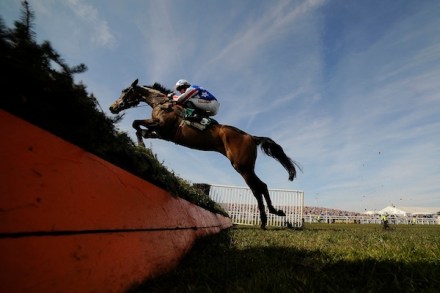
This year’s Grand National meeting attracted an exceptional amount of press attention, much of it due to a number of changes which were introduced in a bid to make the race safer. As a reaction to calls from animal welfare charities such as the RSPCA and Animal Aid – the latter of whom run a ‘racehorse death-watch’ website – Aintree organisers changed the cores of the fences from wood to flexible plastic, levelled out a number of the landings on jumps, and moved the start of the race away from the crowds. So did the changes make a difference to the race? Saturday’s Grand National race was for many an unqualified success, and fortunately no horses died -which indicates that the race was indeed safer than in previous years.

The Blairites bite back | 14 April 2013

From our UK edition

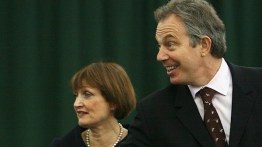
Ed Miliband may have politely told Tony Blair what to do with his advice about the direction of the Labour party, but the former Labour Prime Minister's allies aren't quite so keen to let his New Statesman piece disappear into the party recycling bin just yet. On today's political programmes, they popped up to drive home their belief that Blair should jolly well be listened to, not ignored. Tessa Jowell was so keen to make this point on Murnaghan that she managed to turn the discussion on Margaret Thatcher around to how much Blair had to offer politics twice.

Grant Shapps on the Tories and Thatcher

From our UK edition

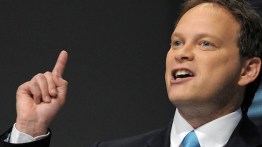
It is one of the paradoxes of modern British politics that in the post-war era the power and hold of political parties have declined and our system has become more presidential. But the two most electorally successful leaders of this era have both been deposed by their respective parties. This has created problems for both parties, as today’s Sunday Politics with Andrew Neil demonstrated. After John Reid had been on to discuss Tony Blair’s comments on Ed Miliband, Grant Shapps was up to be questioned on Margaret Thatcher’s legacy for the Tories. Shapps was reluctant to declare that the Tories are a Thatcherite party. Trying to suggest that it is but only to the extent that it is also a John Major party.

No battle at Trafalgar in the name of Margaret Thatcher

From our UK edition

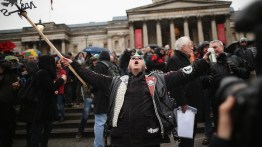
Ever since the Poll Tax riots and Margaret Thatcher’s exit from Downing Street, the Iron Lady’s most fervent opponents have been talking about how they'd descend on Trafalgar Square the first Saturday after her death. Although a washout only in the literal sense, last night's ‘celebration’ to mark the end of Thatcherism was nothing like the carnage of the 1990 protest. The crowd consisted of the usual few troublemakers, bemused observers, hurt miners and the anti-everything brigade. At the gathering’s peak (~7:30pm) roughly 2,000 seemed to be present: Like the impromptu Brixton party, on which I dropped in earlier this week, many of the attendants were simply there to mess about and have a party. Dancing, drums and drink were in copious supply.

Where are today’s titanic Cabinet battles?

From our UK edition

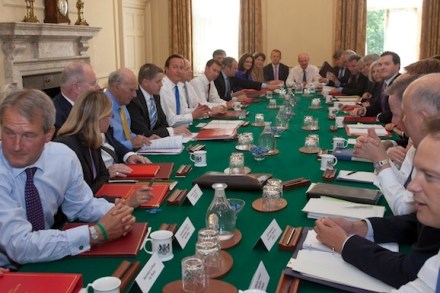
Reading Norman Fowler’s recollections of the Thatcher years in the Telegraph, whose coverage this week has been simply superb, is to be reminded of how much debate there was in her Cabinet. Take Fowler’s account of the pre-Budget Cabinet in 1981: “Jim Prior described the proposals as ‘disastrous’, adding that they would do nothing for growth and send unemployment figures above three million. He was supported by the so-called economic ‘wets’, such as Ian Gilmour and Peter Walker, who on this occasion were joined by Francis Pym and Christopher Soames. Even Keith Joseph had his doubts as he argued for more private investment in public industries.

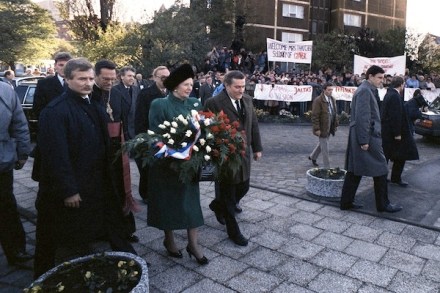
What Margaret Thatcher did for Eastern Europe

From our UK edition

When Václav Havel first visited the United Kingdom as Czechoslovak President in March 1990, Margaret Thatcher hosted a dinner in his honour at 10 Downing Street. By then, Havel’s team, populated partly by chain-smoking dissidents, had been in active politics for only a couple of months. The Prime Minister did not hesitate to use the opportunity to coach the group of unlikely Czechoslovak leaders. 'She was very direct in giving us advice about economic transition, about what we should and should not be doing,' remembers Havel’s former press secretary, Michael Žantovský, who is currently serving as the Czech Ambassador in London.

Seven awkward questions for the Tories

From our UK edition

Tony Blair asked Labour seven awkward questions this week, ranging from issues that everyone's talking about to rather more quirky ones that the former Prime Minister would like everyone to talk about, like using advances in DNA to fight crime. It's the mid-term, when parties start to wonder what they can tell voters they stand for in the next general election, what problems they believe the country is facing, and, more importantly, whether they think they've got a hope of solving them. I've spent most of today talking to Tory MPs about what they think the seven awkward questions for their own party might be, and here they are, in all their awkward and quirky glory: 1. How do the Tories address public concern on immigration while continuing to be a globalised economy?

Snooper’s charter faces rocky road

From our UK edition

We're only a few weeks away from the Queen's Speech, yet there's one significant piece of legislation from this session which has yet to be resolved. It has already caused one big row, and will certainly cause another one when it is published. The Snooper's Charter, better known to the ministers as the Communications Data Bill, was supposed to be published before this session ended, but it's looking like the government is going to have to re-announce it in the Queen's Speech instead.

Tory local election broadcast focuses on cost of living

From our UK edition

The Tories have released a local election broadcast, to be shown on the TV tonight. Unlike previous ones, it doesn't have any awkward confusion between debt and deficit, preferring instead to focus on people looking a bit confused as they try to remember what the government has or hasn't done on council tax, income tax and the cost of living, accompanied by some cheesy guitar music. It's actually quite a snappy piece of work as it sells the party's key achievements at a national level to voters in a rather understated way, partly by admitting that not all of them have noticed what's going on, then driving home the key messages in capital letters across the screen. It also features David Cameron at the start and finish, underlining how important he is to the Tory brand.