Uk politics

No battle at Trafalgar in the name of Margaret Thatcher

From our UK edition

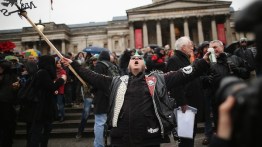
Ever since the Poll Tax riots and Margaret Thatcher’s exit from Downing Street, the Iron Lady’s most fervent opponents have been talking about how they'd descend on Trafalgar Square the first Saturday after her death. Although a washout only in the literal sense, last night's ‘celebration’ to mark the end of Thatcherism was nothing like the carnage of the 1990 protest. The crowd consisted of the usual few troublemakers, bemused observers, hurt miners and the anti-everything brigade. At the gathering’s peak (~7:30pm) roughly 2,000 seemed to be present: Like the impromptu Brixton party, on which I dropped in earlier this week, many of the attendants were simply there to mess about and have a party. Dancing, drums and drink were in copious supply.

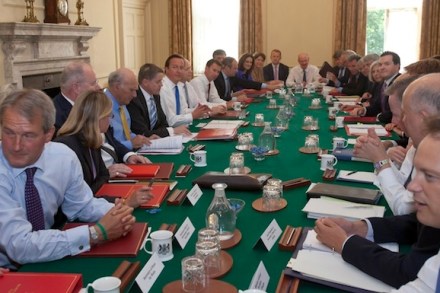
Where are today’s titanic Cabinet battles?

From our UK edition

Reading Norman Fowler’s recollections of the Thatcher years in the Telegraph, whose coverage this week has been simply superb, is to be reminded of how much debate there was in her Cabinet. Take Fowler’s account of the pre-Budget Cabinet in 1981: “Jim Prior described the proposals as ‘disastrous’, adding that they would do nothing for growth and send unemployment figures above three million. He was supported by the so-called economic ‘wets’, such as Ian Gilmour and Peter Walker, who on this occasion were joined by Francis Pym and Christopher Soames. Even Keith Joseph had his doubts as he argued for more private investment in public industries.

What Margaret Thatcher did for Eastern Europe

From our UK edition

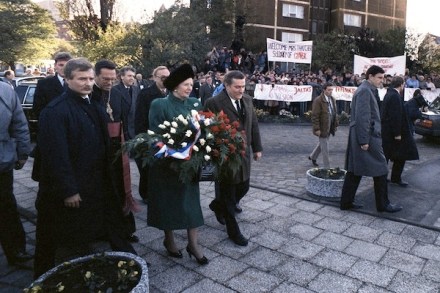
When Václav Havel first visited the United Kingdom as Czechoslovak President in March 1990, Margaret Thatcher hosted a dinner in his honour at 10 Downing Street. By then, Havel’s team, populated partly by chain-smoking dissidents, had been in active politics for only a couple of months. The Prime Minister did not hesitate to use the opportunity to coach the group of unlikely Czechoslovak leaders. 'She was very direct in giving us advice about economic transition, about what we should and should not be doing,' remembers Havel’s former press secretary, Michael Žantovský, who is currently serving as the Czech Ambassador in London.

Seven awkward questions for the Tories

From our UK edition

Tony Blair asked Labour seven awkward questions this week, ranging from issues that everyone's talking about to rather more quirky ones that the former Prime Minister would like everyone to talk about, like using advances in DNA to fight crime. It's the mid-term, when parties start to wonder what they can tell voters they stand for in the next general election, what problems they believe the country is facing, and, more importantly, whether they think they've got a hope of solving them. I've spent most of today talking to Tory MPs about what they think the seven awkward questions for their own party might be, and here they are, in all their awkward and quirky glory: 1. How do the Tories address public concern on immigration while continuing to be a globalised economy?

Tory local election broadcast focuses on cost of living

From our UK edition

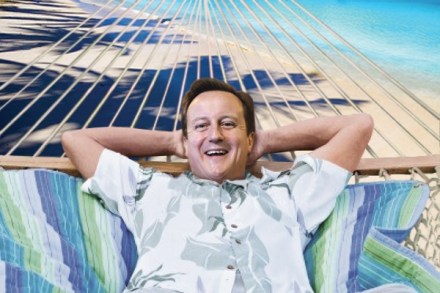
The Tories have released a local election broadcast, to be shown on the TV tonight. Unlike previous ones, it doesn't have any awkward confusion between debt and deficit, preferring instead to focus on people looking a bit confused as they try to remember what the government has or hasn't done on council tax, income tax and the cost of living, accompanied by some cheesy guitar music. It's actually quite a snappy piece of work as it sells the party's key achievements at a national level to voters in a rather understated way, partly by admitting that not all of them have noticed what's going on, then driving home the key messages in capital letters across the screen. It also features David Cameron at the start and finish, underlining how important he is to the Tory brand.

For 79p a download you can outrage the Establishment!

From our UK edition

During the period when Ireland  had its own sort of censorship, a version of the Vatican’s Index of Forbidden Books, there was an ugly rush by publishers and writers to get their books onto it. The novelist Flann O'Brien used to complain that the chances of literary success for a book that hadn’t been banned were very slim. The lesson seems not to have been learned by some of Lady Thatcher’s friends, the ones who are urging the BBC not to broadcast 'Ding Dong the Witch is Dead' if it gets to the top of the charts. For some reason it’s been doing awfully well since her death. Headlines in the Daily Mail and Telegraph have helpfully reinforced the sense that buying the thing is an excitingly subversive thing to do. Just think!

Is UKIP posing as the new party of the British working class?

From our UK edition

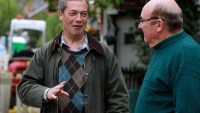
How seriously should we take Nigel Farage? He’s an exceptional politician but when UKIP did so well at Eastleigh I suspected they may have peaked. I went along to test my theory at a UKIP rally in Worcester last week, expecting to find a few hardline Eurosceptics huddled together in a room and I wondered how the audience would compare with that of the old BNP rallies. What I found was quite different: it was mobbed, Farage spoke very well – speaking about housing, unemployment, school places – essentially, UKIP is trying to reposition as a patriotic party of the working class. I write about this in my Telegraph column today. Here are my main points. The Worcester rally’s popularity... My plan was to sneak in half an hour early for the 7pm rally, but by 6.

Thatcher knew the Tories had to be the anti-establishment party. Does David Cameron?

From our UK edition

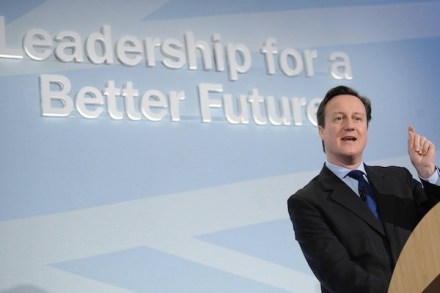
What lessons can today’s Tories learn from Margaret Thatcher is one of Westminster’s discussion points this week. In terms of detailed policy prescriptions, not that much: current circumstances are too different from those of 1979. But they can learn an awful lot from the spirit of Thatcherism. One thing that Thatcher grasped was that deference was dead, that the Tory party couldn’t be the political wing of the establisment. Instead, it needed to be an anti-establishment force: siding with the citizen against over-mighty government, rejecting corporatist stitch-ups and redistributing power. As I say in the politics column this week, today’s Number 10 could learn a lot from this. It has, at times, an overly-establishment mindset.

The ‘Thatcher should quit’ splash that never was

From our UK edition

When Prime Minister, Mrs Thatcher did not have a great deal to do with The Spectator. She was not hostile, but slightly suspicious and perplexed. ‘This is Charles Moore,’ I remember her saying edgily as she introduced me to the Turkish prime minister at a reception. ‘He supports us some of the time.’ After the sinking of theBelgrano in May 1982, Ferdinand Mount, then the political editor, wrote a column deploring the incident and calling for a ceasefire. The then editor Alexander Chancellor, who had incited the piece when Ferdy had really wanted to fall silent altogether, put it all over the cover.

Cameron confident of common ground with Merkel

From our UK edition

David Cameron is setting off with his children to visit Angela Merkel on Friday. It's part of his EU reform mission that started and was thrown off course on Monday following the death of Margaret Thatcher. As I blogged back then, the circumstances aren't perfect, and one of the reasons for that is that France and Germany recently snubbed an invitation to be involved in the UK's 'balance of competences' review. But today Cameron tried to play down the significance of this. He told Adam Boulton: 'Our review of competences was always and will be a British exercise. We didn't particularly, that story was… anyone's free to feed into our review, but that piece of work is a British piece of work. For years people said you'll never have the European budget cut, I've got it cut.

Blair’s warning to Miliband about the policy abattoir

From our UK edition

Nothing like a former PM poking their nose into your business, eh? John Major experienced what Daniel Finkelstein this week delicately described as 'sub-optimal' behaviour from Margaret Thatcher when he was in office, and today Ed Miliband has his own helpful little missive from his own former leader, telling him that if only he were just like Tony Blair, then everything would be OK. Blair's piece in the New Statesman isn't surprising in many ways as it articulates the former Prime Minister's firm belief that his party must engage with the centre of politics as it is at the moment, rather than trying to move that centre in the direction it would prefer.

Nimbyism? That’s not even the half of it.

From our UK edition

Pity the poor Nimbys. Not only has the government's horrible new planning regime come into force, but last week we heard the pro-HS2 lobbyists describing them as 'posh people standing in the way of working-class people getting jobs'. Even Isabel blames them for wanting to preserve the idyllic views from their breakfast room window. Being a nimby is so last century. Alas, calling the naysayers nimbys simply glosses over one of the biggest problems facing our society, namely how government deals with the built environment. This has little to do with preserving greenfields, areas of outstanding natural beauty, Jerusalem - or indeed nimbyism. It is simply that building houses in the countryside inherently designs significant expense into people's lives.

‘We insisted on making it easier for her’: How the Left helped Thatcher succeed

From our UK edition

The eulogies and condemnation following Baroness Thatcher’s death are coalescing into two clear truths. The first is that her legacy will always be contested: the nationwide reaction to Margaret Thatcher’s death – if viewed honestly – is one of embittered polarisation. The second is that the British Left must always recognise the pivotal role it played in enabling Thatcher to succeed and prosecute a political programme that damaged so many of the people that progressive politics exists to serve. The lessons of Labour’s failures during the dominant Thatcher period are as relevant today as they were during her time in office. The British Left fostered, enabled and created Thatcher’s premiership.

Olli Rehn bosses George Osborne around

From our UK edition

Olli Rehn, the European Commissioner who is in charge of economic affairs, called in the Brussels press corps this afternoon to announce the conclusion of his ‘in-depth review of the macroeconomic imbalances in 13 member states.’ I sat through the launch, and the questions and answers, noting that at no time did Rehn or any of the reporters approach the fundamental question: what exactly is a macroeconomic imbalance and why do we think that Rehn – whose full title includes European Commissioner for the Euro – is the man anyone would trust with analysis of anything macroeconomic? And before you ask, the reason I didn’t ask is that I ration any questions that I know the spokesmen who run these press conferences will consider obnoxious.

‘She was Steve Jobs, Richard Branson, Lady Gaga; all rolled into one’ – Steve Hilton on Margaret Thatcher

From our UK edition

Tomorrow's Spectator includes a three-page symposium on Margaret Thatcher from a selection of her friends colleagues, admirers and sparring partners. Here's the full version of what Steve Hilton - No.10's strategy officer from 2010-2012 - has to say about our first female Prime Minister. I was lucky enough to meet Mrs Thatcher (as I will always think of her) on a few occasions, and one in particular stood out. We talked about Communism, and my family’s experience in Hungary. I was feeling incensed at the time because of the way in which the ruling elite dabbled in capitalism for their own personal enrichment, but denied the opportunities of enterprise to most people. 'Yes!” she exclaimed, 'I hate that. Hate it. That’s how elites always behave!

Margaret Thatcher in six graphs

From our UK edition

With the debate swirling about Margaret Thatcher's legacy and her government's record, it's worth taking a look at what the cold, hard economic data has to say about her time in office. Of course, growth rates and unemployment figures can't tell us everything about a period, but they can at least provide a bit of substance to mix with the well-worn rhetoric. 1. Average growth. Under Thatcher, GDP rose by 29.4 per cent — an average of 0.6 per cent growth per quarter. (That's the same as the average growth rate from 1955 to 2013.)   2. Manufacturing jobs lost, but more service jobs created. A net of 1.6 million jobs were created under Thatcher. The manufacturing industry lost 1.9 million, while the services sector grew by 3.6 million.   3.

Cutting and running from Afghanistan

From our UK edition

MPs on the Defence Select Committee made a similar warning this morning about the UK's withdrawal from Afghanistan as Con Coughlin made in The Spectator last month. He wrote that Britain's 'attempt to undertake a dignified retreat from Kabul has all the makings of yet another Afghan disaster'. You can read the full piece here, but here are the main points that it makes, followed by the main warnings from the select committee's report: 1. Is the ANSF ready to take over? Because of a failure to defeat or reach a political settlement with the Taleban, the withdrawal plan depends on trusting Afghan troops 'who have already shown a worrying ability to switch sides'. Coughlin outlined a trend of 'green on blue' killings in recent months.