Uk politics

The date George Osborne’s vultures are circling over

From our UK edition

It was only last week that a Tory MP was warning Coffee House of the dangerous impact that high levels of public debt can have on growth. Today that theory is fighting for its life, with the authors of the Harvard paper that developed it in the first place in the firing line for an error in a spreadsheet. If you haven't been following the Reinhart and Rogoff row, here's a quick catch-up: a paper from two professors and a doctoral student at the University of Massachusetts published this week argues that Carman Reinhart and Kenneth Rogoff of Harvard were wrong to reach the conclusion they did about a 90% debt to GDP ratio seriously affecting the growth of a country's economy.

Margaret Thatcher’s funeral was the right funeral

From our UK edition

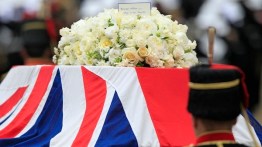
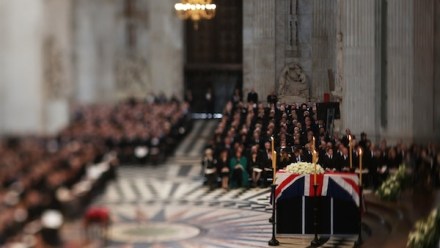
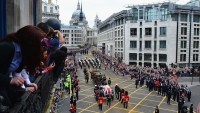
Today was a moment in our island story. The longest serving Prime Minister of the 2oth century was laid to rest with due ceremony. Watching the coffin move down to St Paul’s and the service itself, I was struck by how right it was that it was a ceremonial funeral. A private affair would not have done justice to the legacy of our first, and only, female Prime Minister. It was noticeable that the much talked-about protests along the route failed to materialise. But it should be stressed that today’s service was not a political affair. The eulogy was not about her policies but her faith and her understanding of it. Margaret Thatcher now passes into history. I suspect that her name will live on in the way that Gladstone and Disraeli have.

Has the jobs recovery stalled?

From our UK edition

The number of people in work in December to February was 29.698 million — lower than last month's 29.732 million and representing a very slight 2,000 quarter-on-quarter fall — according to today's figures from the Office for National Statistics. Of course, 2,000 is just a 0.008 per cent drop, and since the margin of error for that change is ±139,000, the quarter could yet turn out to have been one of reasonable jobs growth. But in today's figures, the lack of employment growth, while the economically active population continued to expand, meant that the unemployment level rose by 70,000 — its biggest quarter-on-quarter rise since September to November 2011. The unemployment rate, which had fallen from 8.4 per cent in late-2011 to 7.

Margaret Thatcher’s funeral unites the political class

From our UK edition

Where there has been discord, Mrs Thatcher’s funeral brought harmony. From my seat in the gods at St. Paul’s, I watched as Westminster’s lesser mortals gathered in front of the altar to shoot the breeze in the hour before Lady Thatcher’s coffin arrived. Gordon and Sarah Brown were first to arrive. They plonked themselves down, but soon jumped up to chat to a passer-by. Quick as a flash, Ed Miliband and his wife Justine pinched the Browns’ vacated chairs. Time rolled by, and Miliband found it impossible to shake the shadow of his old master as he walked around the nave. How’s that for art imitating life? The pews soon filled up with cabinet ministers.

Lion-hearted crowds cheer the Iron Lady

From our UK edition

When I arrived at St Paul's at 6 o'clock this morning, a line of people, around 40-strong, had already set up camp with union flags (and one Canadian flag, too) opposite the church courtyard. The police officer drawing to the end of his night shift told me they had been there all night. Later, as the hearse left the Palace of Westminster, the pavements opposite were packed. Yes, there were some people who turned their backs, and others who held placards decrying Thatcher's legacy. This video from the Guardian shows some of them chanting 'waste of money!' as the procession approached. As Thatcher's friend Conor Burns has been repeatedly saying for the past week and a half, the late Prime Minister would have seen that as a tribute in kind as well.

Sir John Hoskyns: the Margaret Thatcher I knew

From our UK edition

Sir John Hoskyns was head of Margaret Thatcher's Policy Unit from 1979 to 1982. In a Q&A with The Spectator, he describes what it was really like to work with her, and how David Cameron could learn from the late Prime Minister. In 1977, you wrote the Stepping Stones Report, which looked at the fundamental problems holding Britain back in the pre-Thatcher era. If you were to write a sequel, what would you focus on? There’s no snap answer – at least from a bystander. Stepping Stones, and our ‘Wiring Diagram’ were written for  a particular crisis for the British economy. I had been working on an analysis of the problem since since the mid-seventies with the nuclear physicist and one-time head of the MoD think-tank, Terry Price.

David Cameron: We’re all Thatcherites now

From our UK edition

David Cameron is giving a reading at Margaret Thatcher's funeral later today, but this morning he gave his eulogy on the Today programme. He made the quite striking observation that 'we're all Thatcherites now'. In one sense this is quite an obvious comment: as countless commentators have observed over the past week and a half, Margaret Thatcher didn't just change the way the Conservative party viewed economics and the state, she also changed the way Labour sold itself as a party. Cameron said: 'I think in a way we're all Thatcherites now because - I mean - I think one of the things about her legacy is some of those big arguments that she had had, you know, everyone now accepts.

Exclusive: George Osborne on GOV.UK winning Design of the Year

From our UK edition

One of the government’s lesser known reforms, the GOV.UK website, has just been named as the 2013 Design of the Year. Before the coalition, the public sector was represented online by nearly 1,000 websites. Under the auspices of the Government Digital Service — a newly recruited band of nerds based outside of Whitehall — GOV.UK has been an attempt to reboot the government’s web presence with a slicker site under a single unifying brand. This award suggests that the project has been a success. Up against tough competition from the Shard and Olympic cauldron, the win is a triumph for the GDS.

Michael Gove the evil overlord strikes again

From our UK edition

Michael Gove is at it again. Today he's taken it upon himself to 'heap further misery' onto teachers with 'reckless' plans that would damage children's education. At least, that's what the NASUWT teaching union would have you believe. The Education Secretary has in fact published advice for schools on performance-related pay, which they can use from September of this year. It means that coasting teachers won't get automatic pay rises based solely on length of service, and that good teachers who put extra effort in will get pay rises. So the unions appear to be outraged not on behalf of their entire membership, but on behalf of those teachers who aren't going to get pay rises: in other words, they're annoyed that the game is up for poor performers.

Maria Miller and Oliver Letwin’s perfect press regulation

From our UK edition

There was a curious meeting of the Culture, Media and Sport Select Committee this morning. The MPs took evidence from Oliver Letwin and Maria Miller, and then from Harriet Harman, on press regulation. An evidence session with Oliver Letwin is curious enough anyway, as the Minister for Government Policy does tend to speak as though he's reading from a will, complete with codicils. But what was really rum was that everyone in the room seemed to be talking about quite different systems of press regulation. Miller and Letwin were eerily cheery, repeatedly telling committee chair John Whittingdale that they were 'the optimist in this case', and that their plans were not statutory regulation. Miller even objected to the idea that the industry might not be keen.

Planning ‘love-in’ fails to rouse good feelings

From our UK edition

So it doesn't look as though last night's 'love-in' that I reported went particularly well. Cheryl Gillan described planning minister Nick Boles last night as 'completely unmoveable'. Meanwhile, Zac Goldsmith, leader of the rebels on the extensions row in the Commons, was on the Today programme this morning calling it an 'odd policy' and 'very bad, clumsy politics'. He argued that there were other ways of using construction to promote growth: 'There are alternatives: we could relax the planning system without undermining democracy, without going against everything we said in opposition about localism, protecting back gardens and so on. We could easily have a sort of default green light for developments that aren't opposed by neighbours.

Increasing the minimum wage ignores economic realities

From our UK edition

In economically uncertain times, we should strive to remove all blockages to employment, not create more. The national minimum wage is one such blockage. Whilst forced pay hikes may privilege those in work, they make it much harder for those outside the labour market to get their feet on the employment ladder. In times of plenty, the impact of pricing employees out of the labour market were less dramatic, but in harder times, it becomes a considerable barrier to employment. This is a real problem, and today the government raised the rate by 12p an hour to £6.31 for adults. Employers, especially smaller businesses with fewer resources, will often be unable to pay the minimum wage.

MPs invited to planning ‘love-in’

From our UK edition

Parliament's only just back from Easter recess and already there's a threat of rebellion in the Commons. The Growth and Infrastructure Bill returns to the Commons tomorrow afternoon for 'ping-pong', and a number of MPs are agitated about an amendment that passed as a result of a rebellion in the Upper Chamber. In March, the Lords passed an amendment from Tory peer Lord True which would allow councils to opt out of a policy giving homeowners the right to extend their homes without planning permission. The government is naturally seeking to overturn that amendment, but Tory MPs aren't convinced.

Tax transparency: Cameron says relax

From our UK edition

When dolphins hunt fish, they gang up on them as a school, chasing them into the shallows. So it happens at the daily lobby briefing: when a morsel of a story appears and someone lets down their guard, the whole pack of journalists jumps in. Today the Prime Minister's official spokesman was chased into the shallows on the plan, which appears rather dead in the water, to publish ministers' tax affairs. The plan had been for the most senior members of the Cabinet to do this, and David Cameron, George Osborne, Nick Clegg and Vince Cable had agreed on it last spring. But nothing has happened.

A tale of two benefit cuts

From our UK edition

The first four pilots of the government's £26,000 benefit cap for workless families launches today. While there's a bit of debate today about the rights and wrongs of this particular benefit cut, it's worth comparing it with another policy that has grabbed many more headlines. The benefit cap is, as James reported recently, one of the most popular policies pollsters have ever encountered. It was launched as a flagship policy by the Chancellor at the 2010 Conservative autumn conference, with a snappy name. Most backbench Tory MPs report that the only thing that annoys their constituents about the cap is that it's still too high: Chris Skidmore told me in the autumn that he wished it could be dropped to £15,000.

Do racing correspondents really have an anti jump racing agenda?

From our UK edition

This year’s Grand National meeting attracted an exceptional amount of press attention, much of it due to a number of changes which were introduced in a bid to make the race safer. As a reaction to calls from animal welfare charities such as the RSPCA and Animal Aid – the latter of whom run a ‘racehorse death-watch’ website – Aintree organisers changed the cores of the fences from wood to flexible plastic, levelled out a number of the landings on jumps, and moved the start of the race away from the crowds. So did the changes make a difference to the race? Saturday’s Grand National race was for many an unqualified success, and fortunately no horses died -which indicates that the race was indeed safer than in previous years.

The Blairites bite back | 14 April 2013

From our UK edition

Ed Miliband may have politely told Tony Blair what to do with his advice about the direction of the Labour party, but the former Labour Prime Minister's allies aren't quite so keen to let his New Statesman piece disappear into the party recycling bin just yet. On today's political programmes, they popped up to drive home their belief that Blair should jolly well be listened to, not ignored. Tessa Jowell was so keen to make this point on Murnaghan that she managed to turn the discussion on Margaret Thatcher around to how much Blair had to offer politics twice.

Grant Shapps on the Tories and Thatcher

From our UK edition

It is one of the paradoxes of modern British politics that in the post-war era the power and hold of political parties have declined and our system has become more presidential. But the two most electorally successful leaders of this era have both been deposed by their respective parties. This has created problems for both parties, as today’s Sunday Politics with Andrew Neil demonstrated. After John Reid had been on to discuss Tony Blair’s comments on Ed Miliband, Grant Shapps was up to be questioned on Margaret Thatcher’s legacy for the Tories. Shapps was reluctant to declare that the Tories are a Thatcherite party. Trying to suggest that it is but only to the extent that it is also a John Major party.