Uk politics

With ‘glutinous emollience’, Boris Johnson tries to win the House round

From our UK edition

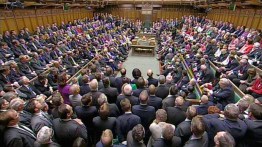
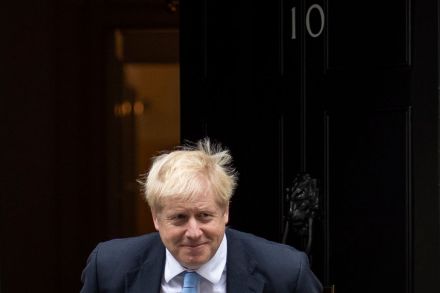
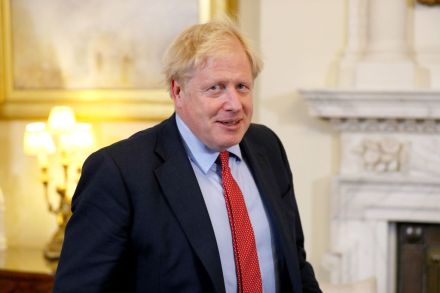
Boris Johnson is in ‘glutinous emollience’ mode today. His opening statement in the debate was not combative but an attempt to cajole and persuade. He said that he would draw on the talents of the whole House in the next stage of the negotiations. In response to Philip Hammond, he accepted the Nandy / Snell amendments which would enable parliament to set the government’s approach to the next stage of the negotiations with the EU. Even when calling on Oliver Letwin not to move his amendment—which threatens to muddy the waters today as Katy explains—he stressed that he thought Letwin was motivated by good intentions. But if the Letwin amendment does pass later, then I think Number 10—if not Johnson’s—tone will change.
Letwin amendment threatens to derail ‘Super Saturday’

From our UK edition

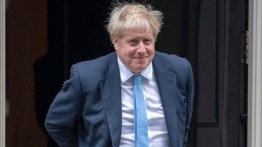
Those expecting MPs to finally make a decision on Brexit today may be left disappointed. This afternoon MPs are due to vote on a government motion – on what has been dubbed 'Super Saturday' – to signal their approval of the Prime Minister's deal. The numbers are tight but there is optimism on the government benches that they could do it. This morning Steve Baker told his European Research Group colleagues that they ought to back the deal (for further updates see The Spectator's list of MPs backing the deal). However, MPs may not even get to this vote. John Bercow has this morning accepted Oliver Letwin's amendment to the government motion. The Letwin amendment seeks to withhold approval for Johnson’s deal until the legislation implementing it becomes law.

Will the Brexit deal get a majority?

From our UK edition

The numbers will be tight today. As I say in The Sun this morning, one minister believes that things are so close that there is a real chance that the Speaker John Bercow may end up having to break a tied vote. Though if the Letwin amendment passes, the vote this afternoon will lose some of its clarity. It is remarkable that Boris Johnson is so close to getting a majority for his deal despite having lost the support of the DUP. Cabinet Ministers are increasingly optimistic that the government might just pull this off. When Cabinet met yesterday afternoon, the Chief Whip Spencer ‘scrupulously avoided giving any numbers’, according to one of those present.

I’d vote for Boris Johnson’s Brexit deal in a heartbeat

From our UK edition

As the only person ever to have been elected for Ukip in a General Election, if I was in the House of Commons today I would not just vote in favour of Boris Johnson's deal. I would do so cheerfully in the knowledge that this is pretty much what I have spent much of my adult life campaigning for. Firstly, UK law will become supreme in the UK. No longer will we be under the jurisdiction of the EU courts.  Nor will we be bound by EU regulation. There’s none of Theresa May’s nonsense about a ‘common rule book’. We will be free to determine our own standards. Who knows, we might even start to use elections to decide such things, restoring purpose to our derelict democracy in the process?

Brexiteers are making a mistake backing Boris Johnson’s deal

From our UK edition

There is an understandable desire among some Brexiteers to accept Boris Johnson’s deal. Everyone is battle weary. But it is precisely at this point that Brexiteers must, at the very least, be wary of what is presented to them – and vote down the deal. Why? First, the Withdrawal Agreement has been altered, but only in one substantive way, with respect to Northern Ireland. The backstop is gone and has been replaced with a protocol which theoretically brings NI into the UK’s new customs area but, in all practical aspects, leaves it within the EU’s customs union. The result is that NI would be subject to swathes of EU laws, including full regulatory alignment and with the ECJ as its supreme court. There would, in effect, be a border down the Irish sea.

The DUP is caught on the horns of a Brexit dilemma

From our UK edition

There is a magnificent paradox – the Taj Mahal of paradoxes, let's hope NOT the RMS Titanic of paradoxes – in the opposition of Northern Ireland's DUP to Boris Johnson's Brexit. Johnson's replacement to the backstop, by design, keeps the province much more closely aligned with the tax and business rules of the EU than would be true of Great Britain. It does so in order to keep the border between Northern Ireland and the Republic of Ireland free of friction and free of opportunities for smugglers and terrorists to return to their toxic ways of yore. For the DUP, this alignment introduces a fat new border between NI and GB, in the form of customs and regulatory checks in the Irish Sea. And of course it is wholly understandable that any such border will trouble unionists.

For the EU, it’s this deal or no deal

From our UK edition

Having reached a deal with the EU, Boris Johnson's task is now to find a majority in the House of Commons. This is complicated by the rejection of the deal by the DUP. There is also a serious question whether the Prime Minister can convince not only the MPs supporting his government but also the Conservative rebels and a sufficient number of the opposition. One of the issues is the Benn Act. Having the possibility to avoid a no-deal situation by another extension might tempt many MPs to vote against a deal that will contain a range of difficult provisions, as well as providing a tempting opportunity to defeat Johnson yet again. What is the rational response from an EU27 perspective?

The key changes in Boris Johnson’s Brexit deal

From our UK edition

Boris Johnson has agreed a new Brexit deal with the EU. Here are the key differences between the old and new protocols for Ireland and Northern Ireland. Strikethrough = text removed; Red = new text - Green = moved to a different place ARTICLE 1 Objectives and relationship to subsequent agreement This Protocol is without prejudice to the provisions of the 1998 Agreement regarding the constitutional status of Northern Ireland and the principle of consent, which provides that any change in that status can only be made with the consent of a majority of its people. This Protocol respects the essential State functions and territorial integrity of the United Kingdom.

Boris Johnson ‘very confident’ MPs will back his deal

From our UK edition

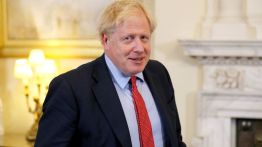
Boris Johnson has just given a very upbeat press conference about his Brexit deal, despite the DUP being clear that they will not back it. The Prime Minister hinted that he would be seeking the support of MPs across the Commons instead, saying: 'I'm very confident that when MPs of all parties look at the deal, they will see the merit of supporting it, getting Brexit done on October 31st, honouring the promises that were made repeatedly and giving us all the chance to move on'. Downing Street is working hard on Labour, independent and ex-Tory MPs to try to garner their support, and Johnson tried to address some of the concerns set out by Jeremy Corbyn about protections for workers and the environment. He told journalists that the government had made 'commitments gladly' on these issues.

The shifting Tory dynamics behind the party’s Brexit deal dilemma

From our UK edition

It is not currently looking hopeful that Boris Johnson's Brexit deal will pass in the Commons. The Prime Minister will need to convince a good number of Labour MPs and independents in order to get over his lack of a majority and the DUP's current refusal to support the government. There are also a number of internal Tory dynamics at play here. The European Research Group has not yet announced its official position on Boris Johnson's Brexit deal, but already there is a strong chance it could diverge from the DUP. The Brexiteer group was split at the third vote on Theresa May's deal, with dozens of its members voting with the government rather than following the DUP into the 'No' lobbies.

Jean-Claude Juncker: ‘There is no need for a prolongation’

From our UK edition

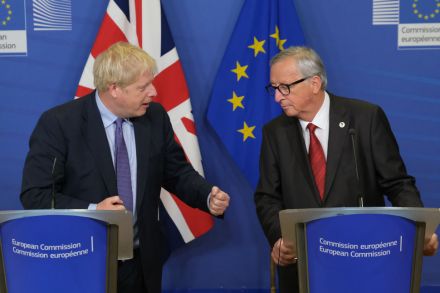
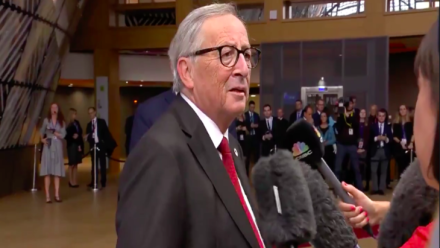
How can Boris Johnson pass a deal without the support of the DUP? The answer could lie in comments this afternoon made by Jean-Claude Juncker. The EU Commission president appeared to rule out an extension being offered to the UK if no deal is agreed. Speaking to the BBC, Juncker said there ‘must be no prolongation – it has to happen now'. He made similar comments to Sky News – suggesting that Boris Johnson's deal was the only option they would be putting forward: Sky News: Will you rule out an extension? Juncker: If we have a deal. We have a deal. There is no need for a prolongation. That’s not only the British view it is my view as well As James revealed earlier today, No. 10's hope has been that the EU simply refuse to offer an extension.

Six MPs who doubted Boris Johnson would do a Brexit deal

From our UK edition

Boris Johnson has got a new Brexit deal. It's true that the Prime Minister has some way to go if he is to get the agreement over the line, not least in trying to persuade the DUP to back it. But Mr S remembers a time not too long ago when plenty were claiming the PM wouldn't – and didn't even want to – get this far. Here are six MPs who claimed Boris Johnson was never serious about reaching a new agreement with the EU: Philip Hammond The former chancellor claimed last month that Boris Johnson was surrounded by ‘radicals’ who had no intention of doing a deal.

The EU might tell MPs: it’s this deal or no deal

From our UK edition

Both the UK government and the EU are now saying that a Brexit deal has been done. There is both a revised withdrawal agreement and political declaration.  However, the DUP are not yet on board. This makes it very hard to see how this deal can pass the Commons. At Cabinet yesterday, Chief Whip Mark Spencer went through the numbers and his calculations suggested a majority of one. His assumption was that every Tory MP who still has the whip would back it, as would 15 of the 21 Tory rebels and the DUP. The government could also rely on the support of the nine Labour or independent MPs who had previously voted for a withdrawal agreement.

Will Labour MPs do anything now Louise Ellman has quit?

From our UK edition

Another female Jewish MP has left the Labour party, apparently bullied out of the movement she has worked in for decades. Louise Ellman, MP for Liverpool Riverside, announced in a letter last night that she 'cannot advocate a government led by Jeremy Corbyn' because he 'is not fit to be Prime Minister'. She complains that 'anti-Semitism has become mainstream in the Labour Party' and that the leader 'has attracted the support of too many anti-Semites'. It is a damning letter, and one that has widely been tweeted by the colleagues Ellman has left behind as proof that something needs to change in the party. The problem is that we've seen this before: the same MPs made the same sort of comments when Luciana Berger quit earlier this year.

DUP rejects Boris Johnson’s Brexit deal – what next?

From our UK edition

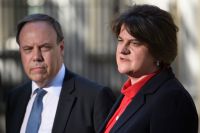
Here we go. As Boris Johnson heads to Brussels today for the EU council summit, hope inside government that Johnson will be able to pass a provisional deal in the Commons this Saturday is fading. Despite progress in talks between the UK, Brussels and Ireland, the Prime Minister is yet to successfully convince his confidence and supply partner – the DUP – to back what is being proposed. In a statement released this morning, Arlene Foster and Nigel Dodds said: 'As things stand, we could not support what is being suggested on customs and consent issues, and there is a lack of clarity on VAT.

Boris Johnson must still keep no deal firmly in his mind

From our UK edition

The Irish backstop and the arrangements to replace it are now the focus of the eleventh-hour Brexit talks. Their importance is not because of Ireland, but because of the battle for the UK’s constitutional freedom to decide the laws that govern this country’s economy and trade. Will the UK’s economic system break free of EU law allowing both an independent trade policy and the UK’s laws to diverge from the EU’s? ‘That is the point of our exit,’ as Boris Johnson told Donald Tusk in August. Or will there be continued subjugation or an eventual UK return to the bloc?

Watch: Mark Francois rebukes ‘stop Brexit’ protester

From our UK edition

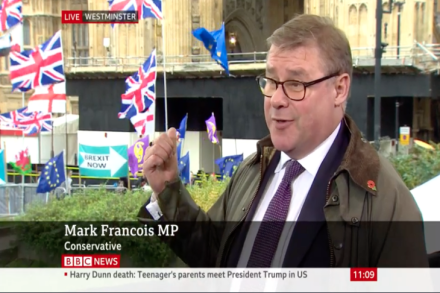
We're still waiting to hear what Mark Francois – and the rest of the ERG – make of Boris Johnson's Brexit deal. But while Westminster waits with bated breath, Francois has delivered a withering verdict on SW1's noisiest inhabitant: the 'stop Brexit' protester. Francois was about to give his answer during an interview on the BBC only to be loudly interrupted with yells of 'stop Brexit' and 'revoke Article 50'. The Tory MP's response? 'If we leave it will be delightful that this idiot will shut up'. Mr S isn't so sure that will happen...

Nicola Sturgeon’s Brexit bounce

From our UK edition

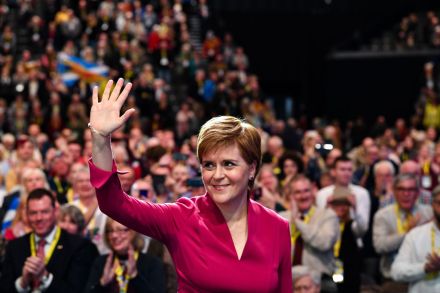
There was a fairytale quality to Nicola Sturgeon’s speech to the SNP conference this afternoon. On the one hand, she demanded a second referendum on independence next year; on the other, almost no-one in Scottish politics really believes there will be a referendum next year. In tandem with this rallying call for national liberation – an emancipation made ever more urgent by the looming Brexit fiasco – there ran another line of argument: conference delegates, like the wider nationalist movement, must be careful and canny and patient. Which is another way of saying that, whatever the headlines suggest, it’s probably not happening. At least not yet.

Is hate crime really on the rise?

From our UK edition

The Guardian ran a story on its website today headlined: ‘Hate crimes doubled in England and Wales in five years.’ Alarming if true, but is it? The story is based on some data released by the Home Office today which, on the face of it, does appear to show the number of hate crimes increasing. The number of hate crimes recorded by the police in England and Wales in 2018-19 was 103,397, up from 94,121 in 2017-18, a rise of ten per cent. But drill down into the report, and the picture becomes more hazy. The word doing most of the work here is ‘recorded’. Yes, the number of recorded hate crimes has increased year-on-year, but how do we know that isn’t due to the police being more likely to record hate crimes?