Uk politics

William Hague: Case for changing arms embargo on Syria ‘compelling’

From our UK edition

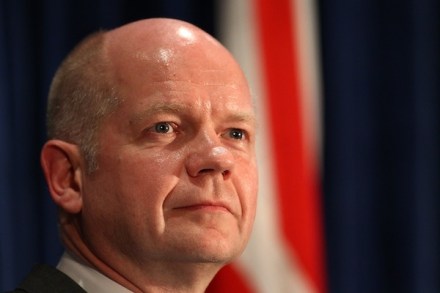
William Hague set out the government's latest thinking on the horror in Syria to MPs in the Commons today. He explained that if the UK were to consider arming the rebels, it would be under three conditions: A decision in co-ordination with other nations. Carefully controlled circumstances. In accordance with obligations under national and international law. Hague said: 'The EU should give strong support to this diplomatic process, including by agreeing further amendments to the arms embargo, without taking any decisions at present to send arms to the Syrian opposition. 'The case for further amendments to the arms embargo on Syria is compelling, in order to increase the pressure on the regime, and to give us the flexibility to respond to continued radicalisation and conflict.
Will civil partnerships kill the gay marriage bill?

From our UK edition

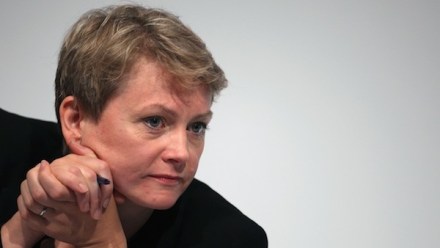
There's a conspiracy theory doing the rounds in Westminster that the 'wrecking amendment' for the gay marriage bill is a nifty way of the government dropping the legislation because it is unaffordable, and blaming Labour for backing a reckless proposal. At the morning lobby briefing, the Prime Minister's official spokesman wouldn't directly speculate on what might happen if the amendment does pass, simply saying 'the government has a legislative programme' and reiterating Maria Miller's point that 'there are a number of complexities'. I've spoken to a government source, though, who insists that even if the suggested £4bn price tag for pension liabilities as a result of heterosexual civil partnerships is correct, the government would still want to see the bill pass into law.

Maria Miller on defensive against gay marriage ‘wrecking amendment’

From our UK edition

The final stages of the Same Sex marriage bill in the House of Commons were never going to be easy, but it is still an odd situation when the minister guiding the legislation through Parliament is pleading with the opposition party to reject an amendment which ostensibly makes things a lot fairer. Maria Miller thinks that an amendment tabled by the most unlikely group of MPs could significantly delay the introduction of gay marriage itself. This proposal, signed by Tim Loughton, Caroline Lucas, Craig Whittaker, Stewart Jackson, Mark Durkan, Greg Mulholland, Charlotte Leslie, Christopher Chope, Steve Baker, John Hemming and Simon Hughes, removes the phrase 'of the same sex' from Part 1 of the Civil Partnership Act 2004.

UKIP, Pierre Poujade and a political class that’s seen to be “out-of-touch”.

From our UK edition

Parliament is a "brothel". The state is an enterprise of "thieves" engaged in a conspiracy against "the good little people" and the "humble housewife". Time, then, for a party that will stand up for "the little man, the downtrodden, the trashed, the ripped off, the humiliated". Not, as you might suspect, the most recent UKIP manifesto but, rather, the sentiments expressed by Pierre Poujade during the run-in to the 1954 elections to the French National Assembly. Poujade's party, the Union to Defend Shopkeepers and Artisans,  shocked France's political elite by winning 2.5 million votes and sending 55 deputies to Paris.

The Liberal Democrats, the natural party of government?

From our UK edition

If four years ago, a Liberal Democrat politician had attempted to portray the Lib Dems as the natural party of government we all would have laughed. But that is just what Danny Alexander tried to do on The Sunday Politics. Being interviewed by Andrew Neil, he implicitly contrasted Lib Dem steadiness with Tory in-fighting. He said: “You know some people at the time in 2010 said that it would be difficult to keep a coalition going because one party might not be able to remain united and disciplined. Let me reassure you and your viewers that Liberal Democrats will make sure that this government continues to be strong and stable enough to be able to take the difficult decisions in the years to come, no matter what’s happening in other parties.

Lord Mandelson gives Miliband two big tasks

From our UK edition

There is always something quietly devastating about a pronouncement from Lord Mandelson. Today more polls reveal the Labour party is failing to make headway when the Tories are in an almighty flap, and the New Labour peer gave his tight-lipped, politely-delivered prescription on the Marr Show for how Ed Miliband can salvage things: 'I think that Ed Miliband has two tasks. He has one, to continue building up his economic credibility and confidence people have in Labour's ability to manage the public finances and people's own money. He has made a very good start at doing that.

The swivel-eyed loons in the Conservative party are revolting. And they are right to revolt.

From our UK edition

Clearly it is not a good idea for the Prime Minister's chums to call members of the Conservative party "swivel-eyed loons". No, not even at a "private dinner party". I suspect that the identity of the "senior Conservative" who is "socially close" to David Cameron will be out by close of play Sunday and that he - it seems most unlikely it is a she - will, as James says, be removed from whatever position of responsibility he currently enjoys. I also suspect most voters will have no idea who this man is even once his name is revealed. That doesn't matter. Adrian Hilton wrote a good piece at ConservativeHome last year detailing his experiences with falling Tory membership in Beaconsfield.

Top Tory calls party activists ‘mad swivel-eyed loons’

From our UK edition

Insulting your own side is a dangerous thing to do in politics and in the current circumstances for any prominent Tory to do it is positively incendiary. But one ‘senior figure, who has strong social connections to the Prime Minister and close links to the party machine’ is quoted on the front of The Telegraph and The Times describing Tory activists as ‘mad swivel-eyed loons.’ Given the row the Tories have had over Europe and are about to have over gay marriage, the timing could hardly be worse. James Kirkup, Sam Coates and James Lyons — the three journalists who broke the story — have started a major row which, if Number 10 is not careful, could come to define the relationship between Cameron and his party.

Hammond on manoeuvres? The other Tory MPs who fancy a crack at the leadership

From our UK edition

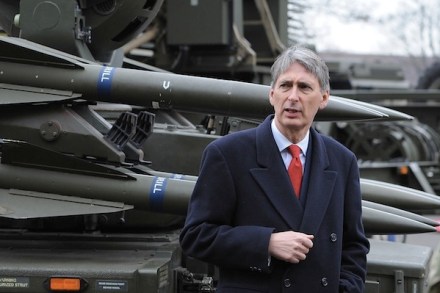
There's plenty of speculation in Westminster today that Philip Hammond is busy positioning himself as a future leadership contender. Last night he had some pretty strong words about the Government's proposals for same-sex marriage, saying: 'There is a real sense of anger among many people who are married that any government thinks it has the ability to change the definition of an institution like marriage.' Meanwhile the FT identifies him as a reluctant cutter of his own department's spending in its report about George Osborne's £9bn black hole.

Why was Nigel Farage so rattled on the radio?

From our UK edition

Nigel Farage seemed rather rattled when discussing his Edinburgh escapade on Good Morning Scotland today. You can listen to the full clip below, which culminates in the Ukip leader announcing 'I wouldn't have met with such hatred as I'm getting from your questions and frankly, I've had enough of this interview, goodbye.

Nate Silver on predicting the 2015 general election

From our UK edition

I've interviewed one of the heroes of last year's US elections — forecasting expect Nate Silver — for the books blog, but I thought CoffeeHousers might be interested in what he had to say about UK elections. Silver's attempt to predict the 2010 election didn't fare so well (his model significantly underestimated Labour and overestimated the Lib Dems) and he explained the difficulties facing those who try in 2015: the lack of constituency polls, the multi-party system and tactical voting. Here's what he told me: ‘I think you'll have a big increase in the number of poll-driven forecasts here. We need more polling here. If you don't know what's happening in individual constituencies that's a bit tricky.

Nigel Farage Comes to the Brave New Scotland

From our UK edition

I am not quite sure I understand why Nigel Farage opted to launch UKIP's Aberdeen by-election campaign in Edinburgh. Then again, UKIP are a puzzling party. In any event, it all went rather well. Not just because forcing Nigel Farage to "flee" and take "sanctuary" in a pub is the kind of hardship up with which the UKIP leader can fondly put, but rather because the sight of Mr Farage being jostled and shouted down by left-wing "radicals" is one of the few things liable to provoke some measure of sympathy for UKIP north of the border. UKIP thrives on farce and chaos. The goons from something calling itself the "Campaign for Radical Independence" ensured that a visit that would otherwise passed almost un-noticed received plenty of coverage. Heckuva job, lads.

Turnips, bread-throwing and public weighing: the life of an MP

From our UK edition

MPs don't always enjoy the best of reputations with the voters they represent. In fact, if an MP is notorious and disliked, then at least they are doing better than their colleagues: the Hansard Society found this week that barely 20 per cent of voters can name their MP. So if a politician doesn't fancy sparking a row with the whips by flying to the jungle to make a name for themselves, how do they connect with their constituents? I've written a piece in today's Telegraph that explores some of the bizarre and humiliating rituals that MPs have to endure in their constituencies.

Ministers aren’t just preparing for Coalition divorce, they’re organising arguments with their partners too

From our UK edition

Reports today that the Conservatives are wargaming end-of-Coalition scenarios in the event of the Lib Dems leaving early won't come as a surprise, given the bickering over the past few weeks on snooping, childcare and Europe. But in the interim, ministers are also trying to work out how both parties can practise a sensible differentiation policy without appearing to squabble endlessly for another two years. Nick Clegg spoke about the need for sausage machine government before Christmas, with a call for honesty about the difference between the two parties on policies as they were being developed. He has annoyed Theresa May something rotten by sticking to that principle on the Snooper's Charter (and the Times reveals some angry letters that flew between the two on this).

What does Cameron actually want back from Brussels?

From our UK edition

If you ask what’s the problem with David Cameron’s European strategy, a cacophony of voices strike up. But it seems to me that most of their complaints are tactical when the fundamental problem is strategic: what does Cameron actually want back from Brussels? Some of those involved in preparation for the renegotiation tell me that this is the wrong question to ask, that what Cameron is seeking is a systemic change in the way the European Union works. But I’m still unclear on what their strategy for achieving this is. One insider tells me that inside Number 10 they’re ‘terrified of detail’. One can see why. Nearly all Tory MPs can get behind renegotiation but they have very different views on how extensive it should be.

Sandcastles, lettuce and a big train: where Ukip won and why

From our UK edition

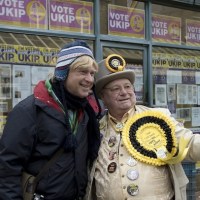
Anyone who watched the latest episode of Mary Queen of the High Street will have been mildly amused to see the retail diva encounter the good burghers of Margate. Urbane, fabulous and witty, with a mission tinged an air liberal imperialism, as if ‘to explore strange new worlds’. One can almost imagine her government reports: ‘It's commercial life, Prime Minister, but not as we know it.’ Suffice to say, much as some of the animosity was no doubt hammed up for the cameras, not every inhabitant of Planet Thanet welcomed Portas with open arms. What project more symbolises the Cameroon 'big society' effete tofu-laden conservatism than Operation Portas? And how is the once-bustling holiday destination of the Isle of Thanet responding to the Prime Minister's affections?

The Tory Blame Game

From our UK edition

Who is to blame for last night's Tory uprising on Europe? It's more entertaining to pin the blame on everyone, rather than one person, and in this case, it's wrong to insist that the leadership is entirely to blame for the confusing fiasco of the past week. So here are the many, many different options for pinning blame on someone for 114 Tory MPs telling the Prime Minister that they regretted his failure to introduce an EU referendum bill in the Queen's Speech. Coffee Housers can choose their favourites. 1. Blame the leadership (Part I) David Cameron should have had a proper strategy to deal with the ongoing demands of his backbenchers for a bill guaranteeing the 2017 referendum.

Refusing to bang on about Europe has brought about even more banging on than before

From our UK edition

The BBC loves nothing better than a narrative in which Tory anti-European eccentrics split their party, and a bewildered public votes Labour. It is certainly the case that some of the Tory sceptics are half-crazed by dislike of David Cameron. But the reason the subject keeps coming up is because it matters, and it remains unresolved. The Tory rebels understand this in straightforward electoral terms: the rise of Ukip threatens their seats, so they must do something about it. What is maddening is not so much Mr Cameron’s actual policy on Europe, but his patent longing to avoid the subject. His refusal to ‘bang on’ about Europe has brought about more banging on than ever. This is an extract from Charles Moore's Spectator's Notes in this week's magazine.