Uk politics

Don’t privatise justice

From our UK edition

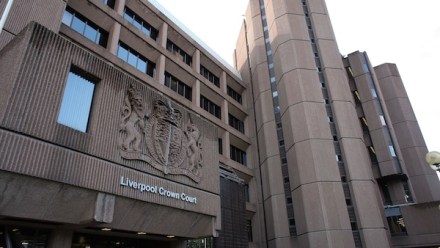
Privatisation has been a hugely successful policy over the past 30 years. Unfortunately, though, the government seems to have learned the wrong lesson from it. The proposal to sell the Courts Service’s buildings, and transfer some of its staff to the private sector, promises to bring out the worst aspects of the policy: it gives a desperate government a chance to raise cash in a hurry, relieving the taxpayer of assets at a knockdown price. Meanwhile, it does nothing to replicate what has been good about privatisation: that it has opened up lazy state monopolies to competition. Claims that the measure will save the public purse £1 billion a year should be taken with a pinch of salt. Similar claims were made when the NHS handed over hospitals to private finance consortia.

Grant Shapps’ peacemaking letter to Tory grassroots

From our UK edition

Largely because of events, the febrile atmosphere in the Tory party has gone as damp as the weather after weeks of bickering. A combination of the Woolwich killing and recess have turned attention elsewhere, but that doesn't mean things aren't still bubbling away under the lid. As any MP will remind you, parliamentary recess isn't holiday but more time in the constituency. And time in the constituency means time with your party members, who are particularly unhappy at the moment. So MPs aren't necessarily going to return on Monday with relaxed, sunkissed faces: more furrowed brows after awkward chats with constituency chairs. Which is why the Tory leadership is busying itself with a measure it hopes will cheer backbenchers up when they return from recess.

Boris Johnson is ‘absolutely increasingly confident’ of Cameron 2015 win. How reassuring.

From our UK edition

Boris Johnson is 'absolutely increasingly confident' that David Cameron will win in 2015. This was the Mayor's attempt at responding to Andy Coulson's suggestion that he's desperate for the PM to fail so he can cycle in and save the party, a blond messiah. Attempt is perhaps the wrong word, as it suggests Boris made those remarks off the cuff when the Mayor gives every impression that he scripts each remark with as much care as he puts into his newspaper columns. He told 5 News' Andy Bell: 'I'm always grateful to Andy Coulson for his career advice but I'm backing David Cameron who I am absolutely increasingly confident is going to win.' This is damning praise.

Forget coalition: forcing a Snooper’s Charter would be poor politics overall

From our UK edition

Optimists might think that a wariness on the part of senior Tory ministers to push through the Communications Data Bill without the Lib Dems' consent is at least a sign the parties are starting to appreciate the practical limits of Coalition. They clearly listened to the party when the row about an EU referendum bill flared earlier this month. Then, a Lib Dem source told Coffee House: ‘If you are going to start saying well the different parties in the Coalition can now bring forward any bills they like, then enjoy the mansion tax and 50p votes. That sort of thing would be of no benefit to either party in the Coalition or to the government.

William Hague tries to reassure on ‘naive’ Syria arms plan

From our UK edition

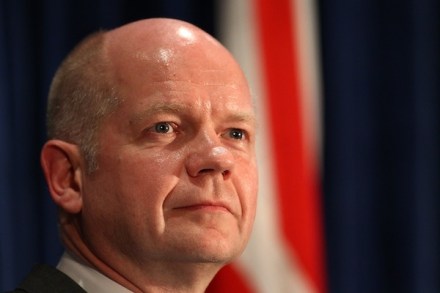
Should the UK arm the Syrian rebels? William Hague thinks so, but it turns out neither his MPs nor the public are convinced. YouGov polling earlier this month found on 17 per cent of voters supported sending arms, and 56 per cent opposed the measure. Tory MPs such as John Redwood, John Baron and Julian Lewis today said the plan 'might make it worse rather than better', would 'escalate the violence and escalate the suffering' and that it was 'naive'. Hague himself insisted that no decision to supply arms had yet been taken, and that the EU decision to not renew the arms embargo was a way of putting pressure on all sides to attend a peace conference next month.

Free Caledonia: a land of opportunity (and corporate welfare) for Big Business?

From our UK edition

It is not unusual to hear dark warnings of what might happen if Scotland votes for independence. Big Business is flighty. It is rather more unusual to hear leading business figures suggest they might leave Scotland if the country does not vote for independence. But that's what Jim McColl, the chief executive of Clyde Blowers Capital, has done. Scotland, he suggests, is held back by the fact that UK economic policy is dictated by the needs of the City of London and the south-east of England. I fancy there are plenty of folk in the north of England, Wales and Northern Ireland who might agree with that diagnosis. Independence is actually, I think, McColl's second-choice preference.

George Osborne rules out further welfare cuts as IDS offers solution to spending review stalemate

From our UK edition

George Osborne's broadcast tour this morning served two purposes. The first was to reward those ministers who aren't playing hard to get in the spending review negotiations by praising their readiness to settle. The second was to prod Labour a bit. Osborne's love of 'weaponising' policy can irritate his colleagues at times, but the spending review is a welcome opportunity for the Chancellor to focus voters' minds on whether they really want to trust Labour with the economy again in 2015. He told BBC News: 'The British people will decide who's the government in 2015 but the financial year starts before the general election, so we have to set out spending plans like any organisation. 'You have to give departments a budget for the rest of the year.

Ed Balls tries to shake off child in a sweetshop spending image

From our UK edition

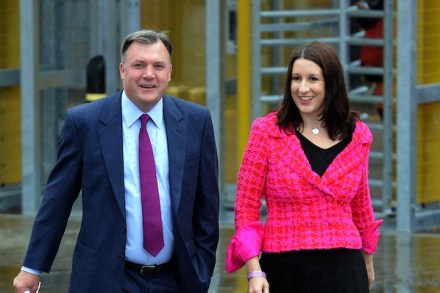
Anyone reading Sam Coates' interview with Ed Balls in today's Times might be forgiven for chucking their newspaper on the floor with a chuckle, muttering about the hypocrisy of a Labour shadow Chancellor lecturing George Osborne on borrowing. Balls warns that the government's plans to offer Royal Bank of Scotland shares to the public will add billions to the deficit. He tells the newspaper: 'A giveaway or loss-making firesale at the current share price would and billions to the national debt at a time when poor economic growth already means borrowing isn't coming down.' But this is an attempt by Balls to appear fiscally responsible while making the case for 'good borrowing' elsewhere.

Snooper’s Charter battle returns, and it’s going to be even messier than before

From our UK edition

David Cameron warned in his Downing Street statement on the Woolwich killing against forming 'knee-jerk responses' to the atrocity. But it was inevitable that there would be many knees flying in the air over a piece of legislation that some say could either have prevented the killing, or made it easier to piece together the evidence. The Communications Data Bill - better known as the Snooper's Charter - is back in the spotlight after everyone had assumed that Nick Clegg had kicked it into the next Parliament at least. Alan Johnson called it a resigning issue on the Marr Show, Lord Carlile accused his own party of blocking the legislation for political reasons, and Sadiq Khan said that a new bill with more proportionate powers was something Labour would support.

Can any government really expect to carry out ambitious reform?

From our UK edition

That Universal Credit is one of the government projects at risk of failing is not a surprise, especially not if you're a Spectator reader. We warned back in September 2012 that the Whitehall machine was already trying to put the brakes on the project. Officials did try their very best yesterday to avoid a big fuss about the danger this project, and others, is in, by publishing the Major Projects Authority's annual report late on a Friday afternoon with as little fanfare as possible. It was a cynical thing to do, and also underestimated the ability of journalists following the progress of Universal Credit to read a press release properly. The attempt to bury bad news was a poor one.

Norman Lamont’s diary: Green shoots, George Osborne and Mark Carney

From our UK edition

I was surprised to be told, by the editor of this magazine, that next week will mark the 20th anniversary of my standing down as Chancellor. The anniversary had entirely passed me by. I was asked this week why, if the economy was turning, George Osborne didn’t announce that he had spotted ‘green shoots’, as I observed in 1991. Although my remark, much rubbished at the time, turned out to be surprisingly prescient, I think Osborne is right to be cautious. Economic statistics are revised so often, trying to steer the economy as Chancellor is, as Harold Macmillan observed, like trying to catch a train using last year’s timetable. The best comment on green shoots was that of my then wife: ‘You don’t get green shoots in the autumn.

Why it’s not the 1990s all over again for the Tories

From our UK edition

The last twenty four hours have been a reminder of David Cameron’s poise as a national leader. He has the ability to project a sense of resolve and calm. Before this vile attack in Woolwich, all the talk in Westminster was of Cameron’s difficult relationship with his own party. Despite a fortnight of good economic news, the headlines were all about Tory tensions over Europe and splits over gay marriage. To many Tories, including some Cabinet ministers, it feels horribly like the 1990s all over again. But there are two crucial differences with then. First, there’s been no Black Wednesday. However far off his deficit reduction plan he may be, George Osborne has never been forced to admit his economic policy is wrong.

PM avoids knee-jerk response to Woolwich attack

From our UK edition

It goes without saying that when it comes to serious national tragedies, David Cameron is the right man to give a statement from Downing Street. His response today to the Woolwich killing underlined how good he is at producing sensitive and thoughtful speeches which, though written swiftly, avoid any knee-jerk reaction. He should be commended for taking special care to insist that yesterday's attack 'was also a betrayal of Islam an of the Muslim communities who give so much to our country' and that the fault for the killing 'lies solely and purely with the sickening individuals who carried out this appalling attack'. His statement contained a long section on why there was nothing in Islam that justified this atrocity.

You’re going to lose. It is only you against many.

From our UK edition

If, in the aftermath of an act of would-be terror, the people refuse to be terrorised does it still remain a terrorist act? Perhaps but there's a sense, I think, in which we should not grant yesterday's guilty men the title "terrorist". Murderers, surely, will suffice? There is no need to grant them the war they so plainly desire. This murder in Woolwich was an uncommon act of barbarity; the product too of a kind of mental illness. That does not excuse the act, far from it, and there's no need to be sparing in our condemnation. But, appalled as we may be, it seems important to recognise and remember just how unusual these acts remain. There will, quite properly, be consideration of whether the security service could have done more.

David Cameron’s statement on the Woolwich attack

From our UK edition

What happened yesterday in Woolwich has sickened us all. On our televisions last night, and in our newspapers this morning, we have all seen images that are deeply shocking. The people who did this were trying to divide us. They should know something like this will only bring us together and make us stronger. Today our thoughts are with the victim and with his family. They are grieving for their loved one and we have lost a brave soldier. This morning I have chaired a meeting of Cobra and I want to thank the police and the security services for the incredible work they do to keep our country safe. There are police investigations and security service operations underway, so obviously there is a limit on what I can say.

The chancellor survived the IMF report, but there’s another challenge ahead

From our UK edition

George Osborne has got through the IMF’s report on the UK economy. It is far from a ringing endorsement of his approach but, as Isabel notes, its criticisms are couched in such opaque language that I doubt they’ll have much political impact. I also suspect that the Treasury is not unhappy about being told that it needs to get on with returning RBS and Lloyds to the private sector. Selling even a tranche of these bank shares before 2015 would be politically powerful, aiding the Tories in their attempt to argue that they’ve been clearing up the mess that Labour left behind. The next challenge for the Treasury is the spending review.

Cameron leaves the goal open for Clegg and Miliband on tax avoidance

From our UK edition

It's fashionable to say Downing Street isn't very good at strategy. So fashionable, in fact, that sometimes journalists worry they're being unfair to the Tory leadership. But today we saw yet another example of the Prime Minister leaving an open goal for not just the opposition party but also his own Coalition partners to score. On Monday, Google's Eric Schmidt visited Downing Street for the regular Business Advisory Group meeting. He was allowed to leave by the back door, and the Prime Minister's aides were adamant that David Cameron wouldn't 'confront' the Google boss on his company's tax arrangements. All he planned to do was to take the group through his agenda for the G8, they said. So today, Nick Clegg and Ed Miliband jumped into the void left by Cameron's reluctance.

IMF verdict on the UK economy: the good, the bad, and the ugly

From our UK edition

The International Monetary Fund published its long-awaited Ofsted report on the UK economy this afternoon. As usual, the written assessment contains enough to keep everyone on all sides of the debate happy, but while avoiding telling the government to abandon Plan A, it does instruct George Osborne to invest in supply-side measures to boost growth, warning that 'planned fiscal tightening will be a drag on growth'. Here's a summary of the good bits from the IMF's concluding statement, the awkward bits, and the downright bad news. You can read the full concluding statement here. The Good The Government's 'essential' plan for cutting the deficit has earned it credibility, the IMF said.