Same Sex Marriage Bill: how MPs voted
From our UK edition
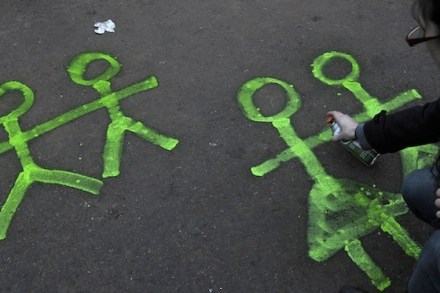
This is the full Hansard of list of how MPs voted on tonight's third reading of the Marriage (Same Sex Couples) Bill. It was a free vote, and the Bill passed 366 to 161.
From our UK edition
This is the full Hansard of list of how MPs voted on tonight's third reading of the Marriage (Same Sex Couples) Bill. It was a free vote, and the Bill passed 366 to 161.
From our UK edition
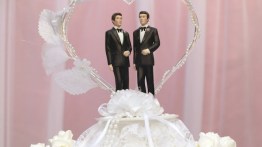
After all the parliamentary back and forth yesterday, gay marriage passed third reading by the comfortable margin of 366 to 161. Tory sources are briefing that fewer of their MPs voted against at third reading than second reading, though we’ll have to wait for the division lists to confirm that. We probably now have only a couple more Commons votes left on this; there’ll be on any amendments made to the bill by the House of Lords. The atmosphere in the House as the result was read out did not seem particularly historic. There was some clapping from the Labour front bench, but the Treasury bench didn’t join in and it rather petered out. But, I suspect, that in years to come this will be remembered as one of the more significant things that David Cameron did in office.
From our UK edition
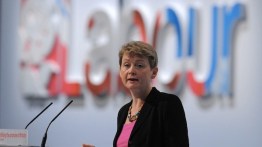
Some might say it was rather audacious of Yvette Cooper to send an email to Labour activists this evening urging them to tweet something along these lines: I'm proud to be part of @uklabour today and proud that we're one step closer to #equalmarriage in Britain. — Sheila Gilmore (@SheilaGilmoreMP) May 21, 2013 I feel privileged to be a @uklabour MP today helping to bring #equalmarriage in Britain one step closer — Chris Williamson (@ChriswMP) May 21, 2013 I'm proud to have played a small part in helping #equalmarriage come a little closer with @kategreensu — Chris Bryant (@ChrisBryantMP) May 21, 2013 But then why not, if the man who has invested a great deal of personal capital in the legislation isn't making any effort to claim credit?
From our UK edition
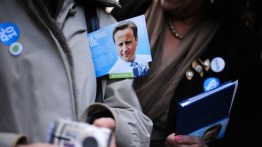
David Cameron's letter to party members added insult to injury after a week of headlines about 'Loongate' and the Tory leadership's decision to bulldoze through the Same Sex Marriage Bill with the help of Labour. He suggested that 'you change things not be criticising from your armchair but by getting out and doing'. Who does he think is knocking on doors week after week, taking the flak for his unpopular lurch from ill-conceived policy to ill-conceived policy? Many of us have been involved in the fight for conservatism all our lives. But under Cameron's watch we are seeing a crisis in conservatism and polling results which would have been unthinkable a few years ago. Iain Martin says today that it 'feels like the Right has split irrevocably'.
From our UK edition
The combination of complacency and incompetence that seems to have afflicted the Conservative Party is a wonder to behold. Janet Daley wrote at the weekend of her frustration at David Cameron saying he is 'relaxed' about the situation. She is right that welfare, education and the criminal justice system are in need of reform, although I am not convinced this government is going about it in the right way or with the right personnel. The competence factor is becoming a huge issue for this government, across individual departments, in the management of the parliamentary party and the wider membership (swivel-eyed or staring straight into the headlights).
From our UK edition
Health Service Journal has a great scoop this afternoon that NHS boss Sir David Nicholson will retire in March 2014. The man who was in charge of the Mid-Staffordshire NHS Trust when the serious failings in care took place had long been considered a busted flush, but his departure seems to be set for a great deal later than those pushing for it had hoped. I've spoken to Conservative MP Charlotte Leslie, who has long been after Nicholson's scalp. She says: 'I don't think it's soon enough and he should go immediately. If you want to oversee a massive culture change from the bullying and stifling of whistleblowers, then you start at the top. He seriously misled the Public Accounts Committee and the Health Select Committee.
From our UK edition
Whether or not Lord Feldman made his 'mad, swivel-eyed loons' comments, the story has given the Conservative grassroots the perfect opportunity to tell David Cameron, via the media, how unhappy they are with the way they're treated. On the World at One, Conservative Grassroots chair Robert Woollard complained about 'some very derogatory comments from some of [Cameron's] Praetorian Guard'. He said: 'I’m not going to repeat them here. You’ve heard about the ‘mad, swivel-eyed loonies’ – it doesn’t surprise me at all because some of us, not just us in Conservative Grassroots but some in constituencies that we talk to are quite used to this treatment and, frankly, there is a complete disconnect between No 10, CCHQ and the grassroots of the party.

From our UK edition
The Scottish government published a paper on the national economy today that, according to Alex Salmond and Nicola Sturgeon, makes the case for independence. You can read the pamphlet here or the BBC's summary of it here. Most of it was relatively uncontroversial. As Salmond himself said "even" Unionists agree Scotland could survive and perhaps even prosper as an independent nation state. It would be depressing if this were not the case after 300 years of Union.

From our UK edition
Andy Burnham summoned Jeremy Hunt to the Commons this afternoon for a shouty hour about who loves the NHS more. The Health Secretary's answer to Labour's urgent question on the government's plans for changes to the GP contract and the crisis in Accident and Emergency departments was largely a direct attack on decisions the opposition took when it was in government. He decried Labour's 'disastrous changes to the GP contract' which had led to a significant rise in the number of patients visiting A&E, and 'the disastrous failure of Labour's IT contract'. He also told Burnham that his government had failed to address the disconnect between social care and the health service.
From our UK edition
Today's drop in inflation is good news for the government. The Consumer Prices Index grew by 2.4 per cent in the year to April 2013, down from March's 2.8 per cent, with the biggest falls in transport costs, particularly petrol and air fares. Prices for food, alcoholic drinks and tobacco saw the biggest rises, with a 0.7 per cent rise for food, and a 2.3 per cent hike for booze and fags. A continuing rise in the cost of the former is less reassuring. But this marks the first time growth in inflation has slowed since the autumn of 2012. While ministers will hope that this continues, they also know that as prices continue to rise faster than wages, voters may still not be thanking them just yet for a slowing in the cost of living.
From our UK edition
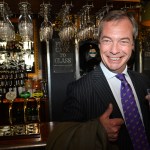
Yesterday's Survation poll reported that UKIP (22%) are, for the moment, just two points behind the Tories (24%) and therefore and given the margin of error in these things possibly tied or even ahead of the senior governing party. Blimey! It is understandable, therefore, that the idea we are on the brink of a Great Realignment in British (or rather English) politics is popular today. See Iain Martin's Telegraph column for an excellent example of this. He says it feels as though the right has split irrevocably. He may be right! British politics has been extraordinarily stable since the Labour party supplanted the Liberals. Nothing, really, has changed. At least, nothing of real importance and at least not in England. That can't continue forever.
From our UK edition
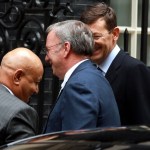
David Cameron didn't spend yesterday wringing his hands in Downing Street about the progress of his gay marriage bill: he was meeting his business advisory group. He allowed Google CEO Eric Schmidt to sneak out via the No 10 back door, a rather awkward metaphor for the company's tax arrangements. The Prime Minister is well aware of rising public anger about tax avoidance, and the rise of Margaret Hodge, who has a Calvinist preacher tendency in her role as chair of the Public Accounts Committee.
From our UK edition
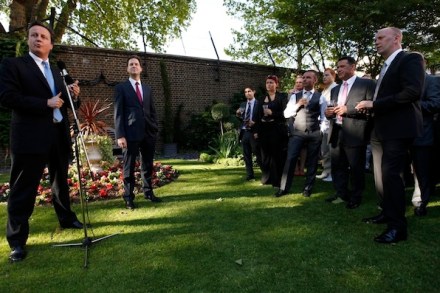
MPs have just defeated Tim Loughton's 'wrecking amendment' to the Same Sex Marriage Bill by 375 votes to 70, after approving the Government and Labour amendment (more on how that works here) which will introduce a consultation on heterosexual civil partnerships. Those in favour of gay marriage will, if this Bill does make it out of Parliament and into law (and we still have all the stages in the Lords to go through) give David Cameron credit for continuing to push when many faces were set against him. But Labour has played a very impressive game today, appearing to save the legislation by making a tweak to an existing government amendment. Meanwhile David Cameron is starting his damage limitation exercise with the Tory grassroots following this week's allegations about Lord Feldman.
From our UK edition
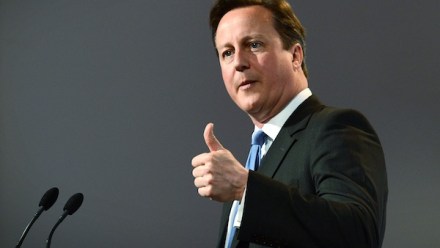
David Cameron’s approach to the gay marriage debate inside his own party has been to take a low profile. The passion and eloquence he displayed on the subject in his first conference speech as leader, has been replaced by a strategy of keeping his contributions on the matter to a minimum. This is, I think, a pity. There is no better Conservative advocate of the case for it than the Prime Minister. The crucial point about Cameron’s position, and why he might have been able to carry some more socially conservative minded people with him, is that he starts from the position that marriage is one of the most important, and best, institutions in our society.
From our UK edition
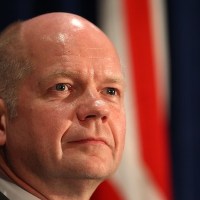
William Hague set out the government's latest thinking on the horror in Syria to MPs in the Commons today. He explained that if the UK were to consider arming the rebels, it would be under three conditions: A decision in co-ordination with other nations. Carefully controlled circumstances. In accordance with obligations under national and international law. Hague said: 'The EU should give strong support to this diplomatic process, including by agreeing further amendments to the arms embargo, without taking any decisions at present to send arms to the Syrian opposition. 'The case for further amendments to the arms embargo on Syria is compelling, in order to increase the pressure on the regime, and to give us the flexibility to respond to continued radicalisation and conflict.
From our UK edition
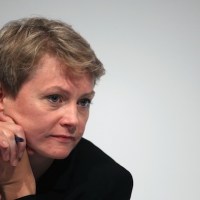
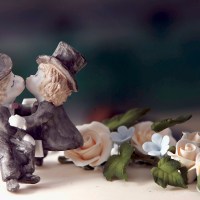
This morning, Labour was facing a rather awkward choice on the Same Sex Marriage Bill. This afternoon, the opposition party has turned the situation around so that it appears to be on the front foot. Initially the party needed to decide whether it would back Tim Loughton's 'wrecking amendment' to introduce heterosexual civil partnerships, or whether to take heed of Maria Miller's pleas and reject it. The first would have demonstrated that Labour does want equality in civil partnerships as well as in marriage. The second would have demonstrated that the party doesn't want to delay the first gay wedding any longer.
From our UK edition
There's a conspiracy theory doing the rounds in Westminster that the 'wrecking amendment' for the gay marriage bill is a nifty way of the government dropping the legislation because it is unaffordable, and blaming Labour for backing a reckless proposal. At the morning lobby briefing, the Prime Minister's official spokesman wouldn't directly speculate on what might happen if the amendment does pass, simply saying 'the government has a legislative programme' and reiterating Maria Miller's point that 'there are a number of complexities'. I've spoken to a government source, though, who insists that even if the suggested £4bn price tag for pension liabilities as a result of heterosexual civil partnerships is correct, the government would still want to see the bill pass into law.
From our UK edition
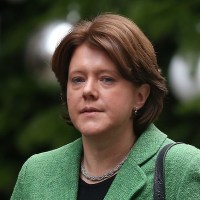
The final stages of the Same Sex marriage bill in the House of Commons were never going to be easy, but it is still an odd situation when the minister guiding the legislation through Parliament is pleading with the opposition party to reject an amendment which ostensibly makes things a lot fairer. Maria Miller thinks that an amendment tabled by the most unlikely group of MPs could significantly delay the introduction of gay marriage itself. This proposal, signed by Tim Loughton, Caroline Lucas, Craig Whittaker, Stewart Jackson, Mark Durkan, Greg Mulholland, Charlotte Leslie, Christopher Chope, Steve Baker, John Hemming and Simon Hughes, removes the phrase 'of the same sex' from Part 1 of the Civil Partnership Act 2004.
From our UK edition
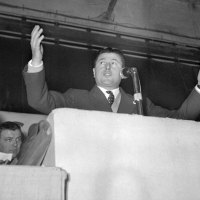
Parliament is a "brothel". The state is an enterprise of "thieves" engaged in a conspiracy against "the good little people" and the "humble housewife". Time, then, for a party that will stand up for "the little man, the downtrodden, the trashed, the ripped off, the humiliated". Not, as you might suspect, the most recent UKIP manifesto but, rather, the sentiments expressed by Pierre Poujade during the run-in to the 1954 elections to the French National Assembly. Poujade's party, the Union to Defend Shopkeepers and Artisans, shocked France's political elite by winning 2.5 million votes and sending 55 deputies to Paris.
From our UK edition
If four years ago, a Liberal Democrat politician had attempted to portray the Lib Dems as the natural party of government we all would have laughed. But that is just what Danny Alexander tried to do on The Sunday Politics. Being interviewed by Andrew Neil, he implicitly contrasted Lib Dem steadiness with Tory in-fighting. He said: “You know some people at the time in 2010 said that it would be difficult to keep a coalition going because one party might not be able to remain united and disciplined. Let me reassure you and your viewers that Liberal Democrats will make sure that this government continues to be strong and stable enough to be able to take the difficult decisions in the years to come, no matter what’s happening in other parties.
