Uk politics

Prism controversy will deepen coalition divisions over the snooper’s charter

From our UK edition

GCHQ’s use of the US monitoring system Prism is threatening to turn into a major political row. Douglas Alexander is demanding that William Hague come to the House of Commons to explain what GCHQ was doing and what the legal basis for it was. But this controversy is going to have an effect on coalition relations too. It is going to intensify Liberal Democrat opposition to the measures included in the Communications Data Bill. This comes at a time when David Cameron has decided, as he made clear in the Commons on Monday, that the measures in it are needed. In the United States, the Obama administration is pushing back against criticism of the programme.


Let’s get fracking

From our UK edition

Great news on the fracking front. A company called IGas says it’s sitting on a huge shale gas reserve deep below Cheshire. Given the company’s ‘most likely’ estimate of 102 trillion cubic feet of gas, and a potential extraction rate of around 15 per cent, that could fulfil five years of UK gas demand, which runs at three trillion cubic feet per year — half of it currently imported. The other leading player in this field, Cuadrilla, has already claimed reserves of 200 trillion cubic feet in Lancashire, so all told (and subject to lots of caveats) that could be 15 years’ worth of fuel to keep us going until new nuclear stations get built and someone designs a wind turbine that works in the lightest of English breezes.

The snoopers’ error

From our UK edition

Eeek! The snooper’s charter is back from the dead! And still, for some reason, its advocates don’t seem able to grasp that the objections stem not from what they want to do, but from the manner in which they wish to do it. It’s not about your web history, they say, or your browsing habits or anything like that. Rather, again and again, they use the analogy of telephones. The idea is that the law currently facilitates monitoring when terrorists or criminals ring each other, but not when they Skype each other or send emails. And, as Theresa May keeps telling us, all they want to do is bring the latter into line. I believe her. But internet communications traffic is not distinct from other internet traffic.

David Cameron is no longer more popular than his party

From our UK edition

For the first time, David Cameron is trailing behind his party, according to the latest polling from Lord Ashcroft. Labour has long struggled with this problem, but as the charts below show, voters now also feel more favourable towards the Conservatives than they do to Cameron himself: The PM's allies within the party have long argued he is their greatest electoral asset, and this would make any attempt at removing him a folly. Now this is no longer the case, the dissenters have a whole new round of ammunition to fire at the leadership. Cameron need not utterly despair — he’s still the preferred option to Miliband as Prime Minister at 57 per cent. Just 30 per cent would to see prefer Miliband living at No.10.

Ed Miliband’s welfare plans will hit young people. Here’s how he could fund them fairly

From our UK edition

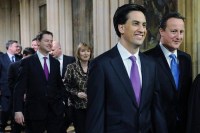
Ed Miliband thinks a contributory principle in welfare is the way to show voters that his party supports a 'something-for-something' approach. Yesterday he proposed to restore that principle, with higher entitlements for those with good records. This was at the heart of the Beveridge settlement, but has been diluted by successive governments, the current one included. Labour has to show that it can pay for this sort of system, though, and Miliband's answer is to raise the hurdle for contributory welfare, so that claimants must have worked longer than the current two-year period to qualify for the contributory benefit. The implication is that more people will go straight through the means test. Fewer people will be eligible, so the system can afford to be more generous.

Childcare for all: a necessity not a luxury

From our UK edition

How many small children do you think you could look after? Three? Four? Maybe not even one without someone else on hand? It’s a question Liz Truss says she is asked regularly, although as she points out, no one asks her Department of Health colleagues whether they could perform keyhole surgery. That’s the problem with the current debate around childcare: it’s too emotional. Tired parents, nerves frayed from watching their brood run riot throughout the house ask themselves 'how could anyone look after a group of small children all day?' Feeling overtakes fact, which makes reasoned discussion impossible. Take this comment by Justine Roberts, Mumsnet Founder and CEO: 'There's a lot of concern among Mumsnet users about the Government's plans to relax childcare ratios.

Labour’s localism epiphany

From our UK edition

Just because Labour has been taking a big dose of reality this week doesn't mean the party is now refusing to make the most of any botch job by the Coalition. So we've come to the funny situation where the Opposition party famed for its centralised approach to planning which failed to build enough homes in any year is taking the high ground on housebuilding. The Telegraph reports that Shadow Communities and Local Government secretary Hilary Benn now believes 'local communities should decide where they want new homes and developments to go and then give their consent in the form of planning permission' and that 'we have to make localism work'. Labour would tear up the Coalition's hated National Planning Policy Framework, Benn told the newspaper. This is extraordinary.

How Ed Miliband avoided open warfare on welfare

From our UK edition

For months, right-wing politicians and commentators have been licking their lips waiting for the Labour party to face up to reality. We all assumed that the sort of speeches delivered by Ed Balls and Ed Miliband this week, in which the two men abandoned the party's commitment to universalism and promised to cap welfare spending, would send Labour into orbit. There was even a revolt in the Commons which appeared to be a harbinger of doom about Labour and welfare. So where's the open warfare? Sure, Peter Hain spent most of Monday having a grump into various cameras and microphones about the winter fuel payment. But the party has stayed remarkably peaceful. The answer is the amount of groundwork that Ed Miliband and his team did for this speech.

Pay: the next big Tory row

From our UK edition

'This has done for our pay rise, hasn't it?' one MP muttered earlier this week after the lobbying scandal broke. I suggested on Monday that yet another row over politicians behaving badly will make it even more difficult for David Cameron to endorse a pay rise for MPs. This is a row that is just waiting in the wings to join the Central School of Conservative Drama, so here's how things are likely to play out. Ipsa is currently compiling its recommendations on MPs' pay. It was expected to report this month, but I hear there is a delay, and publication could be much closer to the start of Parliamentary recess, which begins 19 July.

This poster is why Number 10 is so confident Clegg will stay solid on union curbs

From our UK edition

Given all the coalition tensions over Clegg supposedly reneging on his promise to back childcare reform, it is surprising how confident Number 10 is that he’ll stay the course on the curbs on the trade unions in the lobbying bill. When I asked one senior figure there why they were so sure that the Lib Dem leader wouldn’t change his mind, I was told to remember that every time Clegg went back to Sheffield and his constituency he was met by a Unison-backed poster branding him as ‘Cleggzilla’. This source continued, ‘If you’re on the receiving end of that you’re all too aware of union power. That pain is very real.

How Equality will do for the Right in the end

From our UK edition

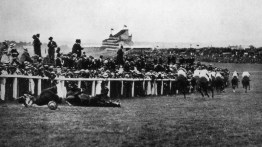
As the Same Sex Marriage result shows, the doctrine of Equality now carries all — family, religion, tradition, freedom — before it. Lots of Conservatives prate in favour of it without realising that Equality is the most essentially left-wing of all doctrines and will do for them in the end. Watching the Derby on television on Saturday, I found myself treated to ten minutes of how wonderful Emily Davison was for throwing herself under the King’s horse at Epsom 100 years ago. Dr Helen Pankhurst, of the suffragette dynasty, was interviewed at the racecourse by Clare Balding.

Syria: What has changed to make western intervention a necessary or realistic policy?

From our UK edition

Peter Oborne is back in his David-Cameron-is-not-Disraeli-he's-mad mode this week. He accuses the Prime Minister of losing the plot over Syria. As always, the ghosts of Iraq stalk this debate even though the two problems are scarcely comparable. For that matter, I'm not sure it is fair on Cameron to suggest that, after Libya, the Prime Minister has become war-crazy. Yet I was also struck by something the estimable Tim Shipman reports today: Mr Hammond was recently present when backbenchers suggested that the Tory leadership could do with ‘a small war’ to distract attention from party discontent over Europe and gay marriage. ‘It had better be a very small war,’ the Defence Secretary said. Needless to say, this is a very silly way of talking. Even in jest.

Childcare row becomes more about Coalition and less about the policy itself

From our UK edition

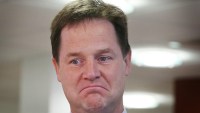
It is not an enormous surprise that Nick Clegg has confirmed that he will block the government's plans to relax ratios for childcare providers. The Tories working on the plans seemed entirely resigned to losing them a month ago. But what is interesting is that this row is becoming the new boundary reforms for the Coalition. It might not have long-reaching political effects like the demise of those changes to constituencies, but this is now an argument about process, who-did-what-when, and who-definitely-didn't-say-that-at-all. The Tories are annoyed, once again, that the Lib Dems are briefing the demise of these proposals before the whole package to reduce the cost of childcare has been finally agreed.

‘Sometimes a single event will soar out of its immediate context’ — 50 years since the Profumo affair

From our UK edition

Fifty years ago, John Profumo resigned as Secretary of State for War following revelations of an affair with Christine Keeler — who was allegedly also involved with a Soviet spy. At the time, the affair was seen to represent the pinnacle of sleaze and contempt for the British establishment, and turned out to be hugely damaging to the Conservative government led by Harold Macmillan. Digging through the archives in the basement of Old Queen Street, The Spectator's leader from the 13 June 1963 issue, entitled 'What are we?', perfectly portrays the shock of the Profumo affair.

Want to know what the next election will be like? We saw this week…

From our UK edition

Tory MPs were in buoyant mood as they dashed off to the 7 p.m. vote on Monday night. They shouted out hearty greetings to each other, slapped backs and had a spring in their step. They were buzzing in the way a fielding team does just after the fast bowler has hit a star batsman a painful blow on the body. The cause of this excitement: No. 10’s display of brute political force over the lobbying bill. When news first broke of Patrick Mercer’s troubles, the Cameroons could barely conceal their schadenfreude. They were not going to mourn the political demise of Cameron’s most vituperative backbench critic. But the headlines were still about Tory sleaze. Labour began demanding to know why the government had abandoned plans for a statutory register of lobbyists.

Take it from a former barrister: Chris Grayling is right to reform legal aid

From our UK edition

Shakespeare took it a little far in Henry IV, Part II, when Dick the Butcher said, ‘Let’s kill all the lawyers.’ Chris Grayling hasn’t made the same proposal but you could be forgiven for thinking otherwise, listening to the howls of anguish and indignation coming from the Inns of Court. Grayling, the first non-lawyer to be made Lord Chancellor since the 17th century, has simply said he wants to make some savings in the legal aid bill. To the lawyers, unaccustomed to having their privileges and subsidies challenged by anyone, this means war. Already, 90 millionaire QCs — poor, impoverished Cherie Blair among them — have written a letter to the Telegraph attacking legal aid cuts for judicial review cases.

How social media helps authoritarians

From our UK edition

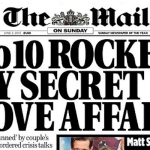
Have you heard? Do you know? Are you, as they say, ‘in the loop’? When the Mail on Sunday said a ‘sensational affair’ between ‘high profile figures’ close to Cameron had ‘rocked’ No. 10, did you have the faintest idea what it was talking about? I did, but then I’m a journalist. Friends in the lobby filled me in on a story which had been doing the rounds for months. I even know which law stopped the Mail on Sunday  following the basics of journalism and giving its readers the ‘whos’, ‘whats’, ‘whens’, ‘whys’ and ‘hows’. (Although with most affairs the ‘whys’ are self-evident.

Why did my old friend Patrick Mercer fall for a sleaze sting? I’m pretty sure I know

From our UK edition

It’s sleaze time again in Westminster. A few good stings by the broadcasters and the press and we see his lordship ‘Nuclear’ Jack Cunningham coining it by asking for £12,000 per month to make use of his extensive contacts and also his ability to get a table on the terrace of the Lords. £12,000 a month! His dad, Alderman Andrew Cunningham, did three years in chokey for his role in the Poulson affair, back in the 1970s. Two other members of the Upper House were filmed similarly grasping at the loot on offer from the Sunday Times. And then there’s Patrick Mercer MP, who has resigned the government whip and will not be standing again in Newark.