Uk politics

Civilising the civil service

From our UK edition

Is Universal Credit on the brink of disaster? It's rather too early to tell whether this mammoth reform of the benefits system really is doomed, in spite of last week's warning from the Major Projects Authority. But whether it sinks or swims will not be because of the current structure of the Whitehall machine. I've written about the problems with the civil service, and how reforming ministers have to perform bypass surgery just to get things done in this week's magazine. But it's worth considering the five things that would make a big difference to the ability of the machine to deliver big projects. They are: 1. Responsibility. As Bernard Jenkin explains in the piece, private sector workers can make one project their entire career. In the civil service, officials move around.

The Chilcot Inquiry is a pointless endeavour. Tony Blair’s critics will never be satisfied.

From our UK edition

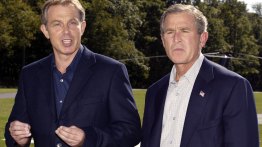
I never really saw the point of the Chilcot Inquiry and nothing that has happened in the years since it first sat has persuaded me I was wrong to think it liable to prove a waste of time, effort and money. Dear old Peter Oborne pops up in today's Telegraph to confirm the good sense of these suspicions. Chilcot, you see, is most unlikely to satisfy Tony Blair's critics, far less provide the "smoking gun" proving that the Iraq War was a stitched-up, born-again conspiracy promoted by George W Bush and eagerly, even slavishly, supported by Anthony Charles Lynton Blair. This is not an argument about truth. If Chilcot fails to deliver a report confirming the existence of this kind of plot then this will be taken as proof that plot really existed.

European Commission makes the case for curtailing its own power

From our UK edition

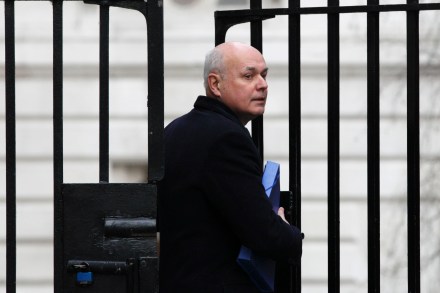
If anyone pushing for reform of Britain's relationship with Europe was hunting for an example of why there needs to be a renegotiation, they would have struggled to find a more perfect one than that served up by the European Commission. The Commission is taking the UK to the European Court of Justice, claiming its tests for EU nationals applying for benefits break EU law. Announcing that he will 'not cave in' to Brussels must have been one of the more satisfying moments of Iain Duncan Smith's career. What must have been even more satisfying to listen to was the exchange between Peter Lilley and rights adviser Adam Weiss on Radio 4 this morning in which Weiss ended up telling Lilley that the UK had asked for this sort of interference from Europe because the UK was part of the EU.

Why Ukip is a party of extremists

From our UK edition

Last Saturday I wrote for my newspaper a column whose drift was that it was time for the sane majority of the Conservative party to repel those elements on the Tory right who plainly wish the Prime Minister and the coalition ill, and who would never be satisfied with his stance on Europe, however much he tried to adjust it to please them. I dealt at some length with Ukip, explaining why I and many like me would never support a Conservative candidate who made any kind of a deal with these people. The same went (I said) for the party nationally: ‘I will never support a Conservative party that has made any kind of national agreement with Ukip. Blackmailed by extremists, it could be blackmailed again.

What Labour wishes the OECD said about Plan A – and what it actually said

From our UK edition

Labour is apparently thrilled with the OECD's assessment of the UK economy, released today. The think tank cut its growth forecasts from 0.9 per cent to 0.8 for 2013 and from 1.6 per cent to 1.5 per cent for 2014, while warning of 'strong headwinds' from the eurozone. So Chris Leslie, the Shadow Financial Secretary to the Treasury seized on the report, saying: 'The OECD has once again cut its growth forecasts for the UK economy, warning that youth unemployment is too high and that weak growth means wages are not keeping up with price rises.' His colleague Rachel Reeves said it was 'time for the government to listen and act on growth'. If you're the sort of person who gets their news from Labour press releases, you might be dancing around your sitting room shouting 'Plan A isn't working!

The go-slow route to High Speed 2 may turn the Tories against the flagship modernisation project

From our UK edition

Earlier this week the Major Projects Authority gave High Speed 2 an amber-red flag, informing the government that the project (along with the MoD's two new aircraft carriers) is looking 'unachievable'. To its detractors, the warning confirms HS2 remains little more than a pipe dream. In last week’s Spectator, Rory Sutherland bemoaned the 20-year time frame as reason enough to abandon the project and focus our energies somewhere more immediate. But it didn't have to be like this. HS2 remains in the doldrums thanks to a lamentable amount of faffing by the government. When the coalition came to power, most of the plans for HS2 were ready to roll.

Grant Shapps’ peacemaking letter to Tory grassroots

From our UK edition

Largely because of events, the febrile atmosphere in the Tory party has gone as damp as the weather after weeks of bickering. A combination of the Woolwich killing and recess have turned attention elsewhere, but that doesn't mean things aren't still bubbling away under the lid. As any MP will remind you, parliamentary recess isn't holiday but more time in the constituency. And time in the constituency means time with your party members, who are particularly unhappy at the moment. So MPs aren't necessarily going to return on Monday with relaxed, sunkissed faces: more furrowed brows after awkward chats with constituency chairs. Which is why the Tory leadership is busying itself with a measure it hopes will cheer backbenchers up when they return from recess.

Boris Johnson is ‘absolutely increasingly confident’ of Cameron 2015 win. How reassuring.

From our UK edition

Boris Johnson is 'absolutely increasingly confident' that David Cameron will win in 2015. This was the Mayor's attempt at responding to Andy Coulson's suggestion that he's desperate for the PM to fail so he can cycle in and save the party, a blond messiah. Attempt is perhaps the wrong word, as it suggests Boris made those remarks off the cuff when the Mayor gives every impression that he scripts each remark with as much care as he puts into his newspaper columns. He told 5 News' Andy Bell: 'I'm always grateful to Andy Coulson for his career advice but I'm backing David Cameron who I am absolutely increasingly confident is going to win.' This is damning praise.

Forget coalition: forcing a Snooper’s Charter would be poor politics overall

From our UK edition

Optimists might think that a wariness on the part of senior Tory ministers to push through the Communications Data Bill without the Lib Dems' consent is at least a sign the parties are starting to appreciate the practical limits of Coalition. They clearly listened to the party when the row about an EU referendum bill flared earlier this month. Then, a Lib Dem source told Coffee House: ‘If you are going to start saying well the different parties in the Coalition can now bring forward any bills they like, then enjoy the mansion tax and 50p votes. That sort of thing would be of no benefit to either party in the Coalition or to the government.

William Hague tries to reassure on ‘naive’ Syria arms plan

From our UK edition

Should the UK arm the Syrian rebels? William Hague thinks so, but it turns out neither his MPs nor the public are convinced. YouGov polling earlier this month found on 17 per cent of voters supported sending arms, and 56 per cent opposed the measure. Tory MPs such as John Redwood, John Baron and Julian Lewis today said the plan 'might make it worse rather than better', would 'escalate the violence and escalate the suffering' and that it was 'naive'. Hague himself insisted that no decision to supply arms had yet been taken, and that the EU decision to not renew the arms embargo was a way of putting pressure on all sides to attend a peace conference next month.

Free Caledonia: a land of opportunity (and corporate welfare) for Big Business?

From our UK edition

It is not unusual to hear dark warnings of what might happen if Scotland votes for independence. Big Business is flighty. It is rather more unusual to hear leading business figures suggest they might leave Scotland if the country does not vote for independence. But that's what Jim McColl, the chief executive of Clyde Blowers Capital, has done. Scotland, he suggests, is held back by the fact that UK economic policy is dictated by the needs of the City of London and the south-east of England. I fancy there are plenty of folk in the north of England, Wales and Northern Ireland who might agree with that diagnosis. Independence is actually, I think, McColl's second-choice preference.

George Osborne rules out further welfare cuts as IDS offers solution to spending review stalemate

From our UK edition

George Osborne's broadcast tour this morning served two purposes. The first was to reward those ministers who aren't playing hard to get in the spending review negotiations by praising their readiness to settle. The second was to prod Labour a bit. Osborne's love of 'weaponising' policy can irritate his colleagues at times, but the spending review is a welcome opportunity for the Chancellor to focus voters' minds on whether they really want to trust Labour with the economy again in 2015. He told BBC News: 'The British people will decide who's the government in 2015 but the financial year starts before the general election, so we have to set out spending plans like any organisation. 'You have to give departments a budget for the rest of the year.

Ed Balls tries to shake off child in a sweetshop spending image

From our UK edition

Anyone reading Sam Coates' interview with Ed Balls in today's Times might be forgiven for chucking their newspaper on the floor with a chuckle, muttering about the hypocrisy of a Labour shadow Chancellor lecturing George Osborne on borrowing. Balls warns that the government's plans to offer Royal Bank of Scotland shares to the public will add billions to the deficit. He tells the newspaper: 'A giveaway or loss-making firesale at the current share price would and billions to the national debt at a time when poor economic growth already means borrowing isn't coming down.' But this is an attempt by Balls to appear fiscally responsible while making the case for 'good borrowing' elsewhere.

Snooper’s Charter battle returns, and it’s going to be even messier than before

From our UK edition

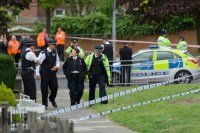
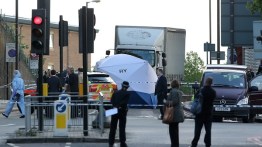
David Cameron warned in his Downing Street statement on the Woolwich killing against forming 'knee-jerk responses' to the atrocity. But it was inevitable that there would be many knees flying in the air over a piece of legislation that some say could either have prevented the killing, or made it easier to piece together the evidence. The Communications Data Bill - better known as the Snooper's Charter - is back in the spotlight after everyone had assumed that Nick Clegg had kicked it into the next Parliament at least. Alan Johnson called it a resigning issue on the Marr Show, Lord Carlile accused his own party of blocking the legislation for political reasons, and Sadiq Khan said that a new bill with more proportionate powers was something Labour would support.

Can any government really expect to carry out ambitious reform?

From our UK edition

That Universal Credit is one of the government projects at risk of failing is not a surprise, especially not if you're a Spectator reader. We warned back in September 2012 that the Whitehall machine was already trying to put the brakes on the project. Officials did try their very best yesterday to avoid a big fuss about the danger this project, and others, is in, by publishing the Major Projects Authority's annual report late on a Friday afternoon with as little fanfare as possible. It was a cynical thing to do, and also underestimated the ability of journalists following the progress of Universal Credit to read a press release properly. The attempt to bury bad news was a poor one.

Norman Lamont’s diary: Green shoots, George Osborne and Mark Carney

From our UK edition

I was surprised to be told, by the editor of this magazine, that next week will mark the 20th anniversary of my standing down as Chancellor. The anniversary had entirely passed me by. I was asked this week why, if the economy was turning, George Osborne didn’t announce that he had spotted ‘green shoots’, as I observed in 1991. Although my remark, much rubbished at the time, turned out to be surprisingly prescient, I think Osborne is right to be cautious. Economic statistics are revised so often, trying to steer the economy as Chancellor is, as Harold Macmillan observed, like trying to catch a train using last year’s timetable. The best comment on green shoots was that of my then wife: ‘You don’t get green shoots in the autumn.

The friendless Help-to-Buy scheme

From our UK edition

Is there anyone left who thinks the Government's Help to Buy scheme is a good idea? This week's Spectator splashes on the risks of this property bubble wheeze. Merryn Somerset Webb warns that the scheme, which underwrites mortgages, will lead to rising house prices. She argues that 'if anyone other than the government manipulated a market to this extent, it would be illegal': The latest is the one that worries even the king of stimulus himself, Sir Mervyn King.

Why it’s not the 1990s all over again for the Tories

From our UK edition

The last twenty four hours have been a reminder of David Cameron’s poise as a national leader. He has the ability to project a sense of resolve and calm. Before this vile attack in Woolwich, all the talk in Westminster was of Cameron’s difficult relationship with his own party. Despite a fortnight of good economic news, the headlines were all about Tory tensions over Europe and splits over gay marriage. To many Tories, including some Cabinet ministers, it feels horribly like the 1990s all over again. But there are two crucial differences with then. First, there’s been no Black Wednesday. However far off his deficit reduction plan he may be, George Osborne has never been forced to admit his economic policy is wrong.

PM avoids knee-jerk response to Woolwich attack

From our UK edition

It goes without saying that when it comes to serious national tragedies, David Cameron is the right man to give a statement from Downing Street. His response today to the Woolwich killing underlined how good he is at producing sensitive and thoughtful speeches which, though written swiftly, avoid any knee-jerk reaction. He should be commended for taking special care to insist that yesterday's attack 'was also a betrayal of Islam an of the Muslim communities who give so much to our country' and that the fault for the killing 'lies solely and purely with the sickening individuals who carried out this appalling attack'. His statement contained a long section on why there was nothing in Islam that justified this atrocity.