Uk politics

The Syrian quagmire

From our UK edition

What will it take before the UK decides to supply the Syrian rebels with arms? Many are cautious about whether this measure would really make the conflict any better, but William Hague has made it clear that he believes there is a strong case for at least threatening to do so. Further evidence of chemical weapons usage by the regime against the Syrian people suggested again this week that the 'red line' for action has definitely been crossed, but today Number 10 tried to spell out the thinking behind an apparent delay in acting. The Prime Minister's official spokesman said that the decision to not renew the EU arms embargo was part of a 'very clear, concerted approach that is designed to send a clear and unambiguous signal to the Assad regime.

The political centre just moved, to the right

From our UK edition

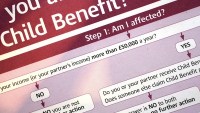
Today must count as one of the most encouraging days for the centre right in British politics in recent times. Labour’s apparent abandonment of universal child benefit is a massive blow to the 1945 settlement. It is akin in significance to when Labour began to accept the privatisations of the Thatcher era. Now, there’s no intellectual difference between declaring that better off pensioners won’t receive winter fuel payments and that better off mothers won’t receive child benefit. But in symbolic terms, the difference is huge. The winter fuel payment is a recent addition to the welfare state, introduced by the last Labour government. It is not fundamental to it.

Prime Time for Nationalists: STV screens a 60 minute advert for the SNP

From our UK edition

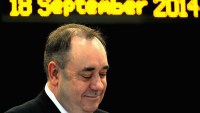
Until now, television coverage of Scotland's independence referendum has largely been confined to news bulletins and specialist, late night, political programmes unwatched by most of the general public. In that sense, then, the campaign has hardly actually begun. It has not yet found a mass audience. But it will and moving the campaign to prime-time will change it too. That process began last night as STV broadcast the first episode of a three part documentary titled Road to Referendum (viewers in England can watch it here). It offered a potted political and social history of Scotland from 1945 to 1974. (The next episode will focus on the Thatcher Dragon and the final part, one supposes, upon Holyrood's short history.

How Labour’s change of heart on welfare will help the Tories

From our UK edition

That Labour wouldn't scrap the Coalition's cuts to child benefit for higher earners isn't a surprise. It is just one of the many admissions that the party will need to make in the next few years about policies it has bitterly opposed. This week's admissions that the party couldn't safeguard winter fuel payment and that it will also introduce a cap on AME welfare spending don't just represent an attempt to face up to reality, and to show voters that it is prepared to do so. They are also an attempt to see how far the rest of the Labour party can be pushed before the open revolt that everyone has been muttering darkly about begins. So far, the response hasn't been too bad.

Peers reject gay marriage ‘fatal’ motion

From our UK edition

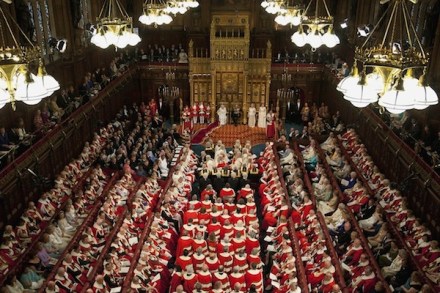
So peers have backed the second reading of the marriage (same sex couples) bill, and against an amendment from Lord Dear calling for the legislation to be dropped. Dear's attempt to kill the bill was defeated 390 votes to 148, and the second reading passed without a vote. I've blogged before that the House of Lords may yet prove to be a more liberal place than it seems on this issue, but those in favour of gay marriage shouldn't breathe a sigh of relief just yet. The defeat for Dear's amendment is a blow for opponents of equal marriage, but committee stage and report stage will offer plenty of opportunity for them to table wrecking amendments: remember it was at report stage in the Commons that Tim Loughton's amendment was considered such a threat to the Bill's security.

Government the easy way: blame the people, not the system

From our UK edition

There's something about taking on a government role that makes even the most sensible man fancy himself as a vicar. It's easy to get confused: you find yourself lurking around Parliament, which looks a bit like a church, you can give speeches that drone on a bit like sermons, and in the Commons, prayers are held at the start of each sitting. You end up preaching a little bit, not about how you want to reform the system, but about how people should run their own lives. The confusion even seems to extend to those unelected 'tsars' that modern governments love appointing, with James Caan starting his job as social mobility tsar by giving parents a lecture about how to bring up their children.

The Mike Hancock imbroglio

From our UK edition

Mike Hancock last night resigned the Lib Dem whip to fight a court case that includes serious allegations about his conduct. He resigned after a meeting with the chief whip and the party's deputy leader Simon Hughes about the claims, which he strenuously denies. A party spokesman said last night: 'Mike Hancock strenuously denies the allegations made in the civil case and intends to clear his name in court.' But as The Spectator reported, the party has been aware of allegations about Hancock's behaviour for a number of years.

Michael Gove gets his way with GCSEs…in the end

From our UK edition

You just can’t keep Michael Gove down. After beating a very public retreat by u-turning on plans to replace GCSEs earlier this year, he’s announced today the all-new I-level qualifications. I-Levels will be graded 1-8 — with a current A* roughly equal to a 7 — and will take on much of his English Baccalaureate plans, including a greatly reduced significance on coursework and limited resits. The Baccalaureate was a rare defeat for the most fervent of cabinet ministers. Back then, he told the Daily Mail his exam reforms were a ‘step too far’, but it now appears Gove was still determined to get his own way. Following the GCSE English marking disaster last summer, the secondary exam systems has been waiting for a radical rethink and toughening up.

Why is the NHS spending public money on inferior treatment, and why don’t patients know about it?

From our UK edition

The NHS reform debate remains fixated with money. Budgets, we are led to believe, are directly related to the quality of treatment a patient receives. But in too many areas the same spending in comparable areas is producing widely differing results. Most patients remain in the dark, thinking that if a treatment is available locally, then a national service will deliver similar outcomes. Yet the NHS' own data shows this is untrue. Take mental health. Both North Tyneside and Gateshead have similar health characteristics. They spend similar sums per head on a course of treatment -£214 in North Tyneside and £215 in Gateshead - both above the national average of £205.

The political battle over A&E will get nastier before the problem is solved

From our UK edition

Today's row about Accident and Emergency has little to do with the issue itself, and far more about one party trying to prove a point about the other. Those rows are the most vitriolic, the most hard-fought, and to the outside world, the most pointless. The King's Fund today finds waiting times are at their worst level for nine years. What's going wrong? Each side has its own theories. But what's significant is that each side is trying to use this row to steal that coveted 'party of the NHS' title. This was abundantly clear from Andy Burnham's response to the report, written in what appears to be a spitting rage.

Mike Hancock resigns from Lib Dems

From our UK edition

Lib Dem MP Mike Hancock has resigned from the party to fight 'very serious allegations' about his conduct. He took the decision to do so after a meeting with the chief whip. The party this evening released a statement saying: 'Mike Hancock has chosen to resign the party whip while he defends himself against very serious allegations in a High Court civil action. Mike Hancock strenuously denies the allegations made in the civil case and intends to clear his name in court.' In a letter to party chief whip Alistair Carmichael, Hancock wrote: 'I can assure you that I will continue to vigorously defend my position and that I completely refute the allegations made against me. I'm doing this in the best interests of the party nationally and in Portsmouth and for my family.

Lobbying Bill: Govt tries to solve one problem by tackling another

From our UK edition

This morning, the government's plans for a register of lobbyists were 'ongoing'. This afternoon, they're well on their way to becoming law. Number 10 has announced that it will be bringing forward a lobbying bill after all, and before the summer recess. Next time we hear the word 'ongoing', perhaps we won't all be so cynical about a bill's trajectory. Ministers have clearly decided to use a scandal about lobbying to crack down on the influence that trade unions hold over the Labour party, which is a non-sequitur. The weekend's allegations were about MPs and peers behaving badly, not trade union influence, and the government may find that its desire to seize the moment on this issue makes life a bit awkward as the legislation progresses.

Even a limited snooping bill is causing the Home Office trouble

From our UK edition

David Cameron is giving a statement in the Commons this afternoon on, among other things, the Woolwich killing. He may well find himself answering questions afterwards about whether the government is planning to resurrect the Communications Data Bill, after a fierce debate in recess over whether it would have made any difference to the security and police services ability to stop the attack or to the investigation in the aftermath. The Lib Dem line remains that the party will not allow this legislation, and will only consider the very narrow issue of IP addresses. But there have been some interesting negotiations taking place behind the scenes, I hear. One is that the Home Office is struggling to find a way of getting the data it needs from mobile phone browsers.

Lobbying scandal could threaten MPs’ pay rise plan

From our UK edition

Sleaze scandals will crop up in politics from time to time, but what makes the latest round of allegations particularly damaging is that the government has had two opportunities to at least address faltering public mistrust in politicians, and hasn't. Those pushing for the power to recall MPs and a register of lobbyists have had rocket boosters fitted to their campaigns in the past few days, and inevitably those who appear to have either blocked or at least dragged their feet on these two policies are now facing criticism for doing so. This morning, Francis Maude insisted that the register of lobbyists wouldn't have stopped the alleged behaviour reported over the weekend.

Primaries and recall elections may be nice ideas, but they won’t transform British politics

From our UK edition

Say at least this for those twin gadflies Douglas Carswell MP and Daniel Hannan MEP, they are optimists in a political scene often dominated by a certain brand of dreary pessimism.  Their faith in the bracing refreshment of a reformed democracy is as palpable as it is touching. Their article in today's Telegraph, repeating their long-pressed arguments for open primaries and recalling errant MPs. Neither idea is without merit. Even so, it is hard to avoid the suspicion that neither measure would have quite the transformative impact Messrs Carswell and Hannan suggest. They argue, for instance, that open primaries would put an end to safe seats. And they insist that introducing the power of recall would reduce the likelihood of parliamentary corruption.

Ed Balls steels himself for spending review battle

From our UK edition

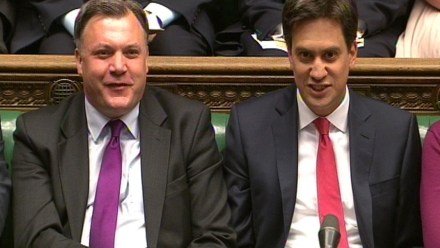
Ed Balls has had plenty of warning about how politically dangerous this month's spending review will be for him. James reported in April that George Osborne planned to use the settlement (when he eventually gets it) to prod the Labour party. But perhaps it's also the party's inability to make polling hay from the Tories in crisis over the past month that has provoked not one but two big policy speeches from the Labour leadership this week. The concession that Balls will give in today's speech about universal benefits no longer being automatically justifiable has attracted the most attention.

Coalition shifts position after a weekend of sleaze, lobbying register now coming in

From our UK edition

Today is not a good day for politics or parliament. The latest, depressing sleaze revelations are only going to increase public cynicism about politics and parliament. It seems that a statutory register of lobbyists will now be coming in. Francis Maude, in a striking shift from the government’s post Queen’s speech position, told Andrew Neil on The Sunday Politics ‘we are going to do this.’ But it is hard to see how a statutory register of lobbyists would stop MPs and peers from doing what Panorama, the Telegraph and The Sunday Times appear to have caught them doing. My instinct is that no set of regulations or regulators will be able to eliminate every opportunity of wrongdoing. Money, like water, can always find a way through.