Uk politics

Theresa May’s Reform speech: full text

From our UK edition

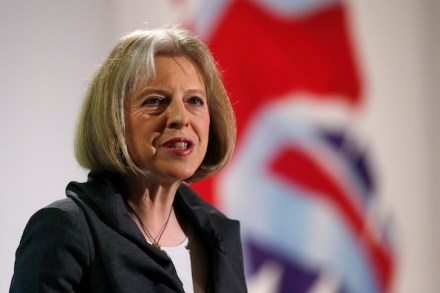
This is the full text of a speech delivered this week by Home Secretary Theresa May to the Reform think tank. We’re delivering more with less – so let’s have the courage of our convictions Thank you.  A year or two ago I appeared on ‘Question Time’, and before the filming Shirley Williams introduced me to somebody.  “This is Theresa May,” she said, “our first female Home Secretary.”  I pointed out to Shirley that Jacqui Smith was Home Secretary in 2007, three years before me.  So Shirley immediately looked at her friend and said, “This is Theresa May, our first tall female Home Secretary.” Thank you, Chris, for your more conventional introduction.
Tories toast Labour abstention plan for EU bill

From our UK edition

From being all over the shop in the past few months when it came to message discipline, the Tories have gone into overdrive in the last two days after the launch of the Let Britain Decide website on James Wharton's EU referendum bill. It's now difficult to see the wood for the tweets on how the Tories are the only ones who will #letBritaindecide, and that has got a great deal worse now that Guido has published a leak of Labour's whipping arrangements for the vote. He’s too weak and he’s too scared to #LetBritainDecide @ed_miliband orders Labour to abstain from EU referendum vote letbritaindecide.

Michael Gove is vindicated by Ofsted – our brightest kids are being let down

From our UK edition

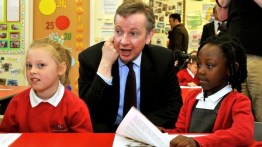
Ofsted has provided an independent boost for Michael Gove today. Just days after his plans to toughen up GCSEs were finally confirmed; a survey lambasts non-selective secondary schools for systematically failing thousands of bright children. Instead of challenging their abilities, Ofsted says the most intelligent pupils are being left to ‘tread water'. The numbers in the report back up these disturbing claims. After surveying 41 schools and observing 2,000 lessons, Ofsted says 65 per cent of high-attaining pupils at primary school failed to achieve an A* or A grade in non-selective secondary schools. A quarter of pupils (27,000) previously classified as high attaining did not achieve a B grade in GCSE English or Mathematics.

Europe will end David Cameron’s political career

From our UK edition

Poor old David Cameron has never been blessed with attractive options on the European front. But for a while it was possible to suppose that it might not ruin his career to anything like the degree it helped to scupper the ministries of John Major and Margaret Thatcher. That pretence is over, however. There's a storm coming and Cameron will be shipwrecked on the Belgian coast and that will be that. A few months ago I suggested that all the talk of Tory "unity" on the European question was so much hogwash. The best that could be said was that all these clever ploys and stratagems for renegotiating Britain's membership of the EU had bought Cameron a little time.  But only a little.

To transform schools, sack bad teachers and hire great ones. It’ll transform education – and the economy

From our UK edition

The Labour years can, in retrospect, be seen as a massive experiment into the link between cash and education. Gordon Brown almost doubled spending per pupil over the past decade, the biggest money injection in the history of state schooling. But as he did so, England hurtled down the international league tables. It now languishes in 18th place, according to the Organisation for Economic Co-operation and Development (OECD). The plan didn’t work. Only now is the full cost of that failure becoming clear. In an age when ‘work’ is increasingly something done with the head rather than the hands, education standards determine the wealth of nations. There is now enough data to draw a direct relationship between the two and put a price on it. Smarter nations are richer nations.

The Tory party are finally going to have to decide about Europe. It’ll break them

From our UK edition

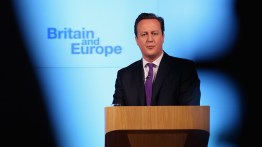
By the time the G8 is next held in this country, the United Kingdom may well have left the European Union. In the next eight years, the question of whether Britain is in or out will be settled. We know that if David Cameron is Prime Minister after the next election, that decision will be made in 2017. But whoever is in No. 10, a referendum is coming. When it comes, the Tory party will have to decide whether it is for exit or staying in. Either way, it is hard to see the party staying together. On Monday, we had a preview of the coming argument. David Cameron gave a speech declaring that EU membership ‘is not some national vanity; it is in our national interest’. This would have been relatively uncontroversial even during the bitterest period of John Major’s leadership.

George Osborne’s Lloyds sale will be all about votes – just as Mervyn King warned

From our UK edition

When a politician’s speech is spun ten days in advance, you know there’s trouble behind the scenes. Next week’s Mansion House dinner will be seen by City attendees principally as a farewell to Sir Mervyn King — and journalists present (including your columnist) will be timing the ovation to see how it compares with Eddie George’s full five minutes in 2003. But we learn that the Chancellor is ‘poised’ to use the occasion to ‘signal’ a public offer of Lloyds Banking Group shares that could raise up to £17 billion and mark a turning point in the post-crisis clean-up of the banking sector. By giving discounts to small investors, it might also swing votes away from Ukip.

Energy special: It’s decision time on shale gas

From our UK edition

‘UK shale Eldorado just off the M62’, declared the Financial Times, reporting a huge gas find below Cheshire. Shale gas is natural gas trapped in beds of underground shale; it can be released by hydraulic fracturing, or ‘fracking’, which means pumping water, sand and chemicals into the shale under high pressure. That much we know for sure — but we also know that Eldorado, the city of gold lost in South America’s rainforests, turned out to be one of the world’s great myths. Had the FT forgotten, or was it issuing a coded warning? Either way, it provided a reminder that the scale, viability and dangers of the ‘shale gas revolution’ are still surrounded by forests of myth and counter-myth.

Stephen Hester’s departure: who would want the RBS job?

From our UK edition

I do not envy the search committee tasked with finding a new CEO for RBS after Stephen Hester’s departure. The bank is an anomaly, publicly owned but supposedly run at arms’-length from government. However, when banking controversies hit, as they so often do, they hit RBS hardest as it is majority-owned by the taxpayer. I suspect that everyone approached for the job will be acutely aware that Hester has had to twice forego his bonus under political pressure. Hester has long argued privately that selling off a tranche of RBS shares would be a good thing, sending a signal that the bank would soon be returned to private ownership and relative normalcy. He will now depart before that happens.

Cameron wins PMQs… or does he?

From our UK edition

Well, that was an easy Prime Minister's Questions for David Cameron, wasn't it? Sometimes the PM just turns up for work and knocks it out of the park. It helped, of course, that for once he had his own team cheering him along, with backbencher after backbencher leaping up to ask loyal questions. The whips will be toasting a win in their office this afternoon. The Prime Minister had some very good retorts to Ed Miliband indeed. If Labour had a good week on welfare last week, the happy feelings will have evaporated today as Cameron managed to ridicule them not just on the detail of their spending pledges - while hinting that he's not quite as open to movement on pensions spending as she might have hoped - but also on their attitude.

Conservatives to take Labour and Lib Dem MPs with them to EU renegotiation talks

From our UK edition

Tories preparing the ground for David Cameron's renegotiation of Britain's relationship with Europe are to take MPs from other parties with them as they visit European cities, Coffee House has learned. The Fresh Start Project, made up of Conservative MPs campaigning for reform of the European Union, has already visited Prague, Warsaw and Berlin to hold preliminary meetings setting out the need for change. Its next round of visits will include members of the All Party Parliamentary Group for European Reform, which is co-chaired by Fresh Start's Andrea Leadsom and Labour's Thomas Docherty. The Conservative MPs organising the visits think including other parties will help them secure more meetings and also advance the case for reform in other Westminster parties as well.

Tories pressure Labour and Lib Dems on EU bill

From our UK edition

Credit where credit's due to the Tory spin machine for following up a good idea and putting pressure on Labour and the Lib Dems. This doesn't happen very often, so it's noteworthy. The party has launched a website called Let Britain Decide, which asks the public to back James Wharton's private member's bill for an EU referendum. It asks visitors to sign up to the campaign, lobby their MP, write to their local paper and brandish posters supporting the bill. A clever little paragraph on the site reads: 'Currently, only one of the main three political parties believes the British people deserve a say on Europe: the Conservatives. They are bringing forward a draft bill to legislate for an In-Out referendum before the end of 2017, following a renegotiation.

The backbench hunt for Sir David Nicholson’s scalp continues

From our UK edition

Today's hearing of the Public Accounts Committee is going to be real box office stuff. Sir David Nicholson is giving evidence, supposedly on the NHS IT programme, but he'll find himself confronted by Tory committee member Steve Barclay, who, armed with freedom of information evidence of 52 gagging orders in the NHS, will demand that the health service boss step down immediately. This is what Nicholson told the Health Select Committee when he gave evidence on 5 March (full transcript here): Barbara Keeley: What do you think, as chief executive of the NHS, of a loophole like that existing-where £500,000 of taxpayers’ money could be used to gag somebody who wanted to talk about patient safety?

Forget the spies: councils want the Snooper’s Charter, too

From our UK edition

The Tories aren't giving up just yet on the Communications Data Bill, and Keir Starmer's intervention, reported in the Sun this morning, will help their cause. The Director of Public Prosecutions' letter was written before Nick Clegg announced he was blocking the legislation, and argues that 'communications data is so important that any reduction in capability would create a real risk to future prosecutions'. The problem for the Home Office is that it needs to make the case for this legislation not just in the face of cynicism that it is really needed, which has only increased following the revelations about the NSA's Prism programme.

Diane Abbott, darling of the reforming Right

From our UK edition

Perhaps the Bilderberg conference has had a lasting effect on Parliament, after all. Today we saw what can only be a conspiracy between the Labour left and Michael Gove's band of reforming right-wingers. As the Education Secretary unveiled his plans to reform GCSEs, he was accosted by Diane Abbott, rarely knowingly in agreement with much of what the Coalition is doing. But the Labour MP didn't want to tell Gove he was wrong. She wanted to say he was right. She asked Gove whether he agreed that 'an emphasis on rigorous qualifications and an emphasis on attaining core academic subjects is not, as is sometimes argued, contrary to the interests of working-class children, and black minority ethnic children?

How should Labour deal with the teaching unions?

From our UK edition

While dealing with the teaching unions is a simple stand-off for Michael Gove, spare a thought for poor old Stephen Twigg, Labour's shadow education secretary, who has to work out how on earth to deal with the NUT and NASUWT habit of opposing everything. There is a palpable sense of frustration on the Labour frontbenches about the way the two largest unions in particular behave. Twigg has made clear that he does not support strike action planned over a general raft of discontent over many different issues, and he has opposed the work-to-rule industrial action promoted by these unions too. On performance-related pay, the unions behave as though Voldemort is coming soon to a school near you, while Labour is merely unconvinced that it's the great saviour of educational excellence.

Teaching unions: don’t reform exams, you might upset someone!

From our UK edition

Critics and fans of Michael Gove alike accept that sometimes the Education Secretary can be a little too pugnacious. He often encourages the pantomime boos that accompany him, and will throw himself into any fight with gusto. But then the representatives of the leading teaching unions pop up to criticise his reforms, and it becomes very clear how Gove ended up like this. Christine Blower's interview on the Today programme was one notable example. The NUT general secretary argued that grades hadn't necessarily been devalued, and that the reforms might devalue the achievements of those children who have already passed their exams. She said: 'We think this is slightly rushed and also it tends to demean the achievements of students who have got GCSEs in the past.