Uk politics

Spending review: the dividing lines

From our UK edition

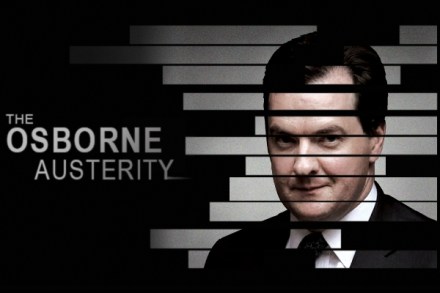
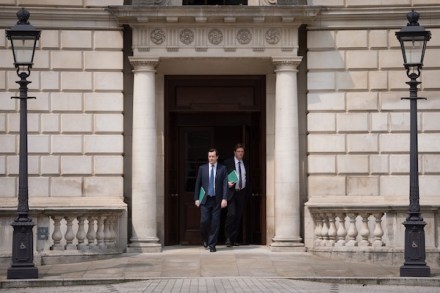
listen to ‘Spending review 2013: the Coffee House analysis’ on Audioboo George Osborne loves a good dividing line: he sees it as his job to 'weaponise' policies in a way that benefits his party. So what were the key divisions that he set out in today's Spending Round statement? 1. The full package Clearly the Chancellor wanted to make Labour as uncomfortable as possible as he set out the cuts for each department. Once Ed Balls finished his response, the Chancellor started prodding him on whether Labour would match the package. 'Hands up on the Labour benches who wants to match our spending cuts?' he cried. Ed Balls suddenly became strangely interested in his water carafe and in an urgent conversation with Ed Miliband.
Spending review dividing lines: who and what to watch

From our UK edition

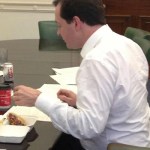
One set of businesses are already feeling the pain from the successful completion of the spending review. Westminster pizza outlets have come to rely on large orders from the Treasury the night before a spending review or Budget announcement, but the deal was sealed on Sunday night, and so all was calm last night in Westminster. George Osborne still snuck in a cheeky burger and chips (and thought it a good idea to tweet a slightly unappetising picture of himself tucking in), but that was as he made his finishing touches to the speech itself, rather than an attempt to keep going through last-minute negotiations with an angry Cabinet colleague. Parliament will be buzzing, but we're unlikely to get much more detail today beyond how much each department will cut.

Tory Wreckers Will Shipwreck David Cameron on the Coast of Belgium

From our UK edition

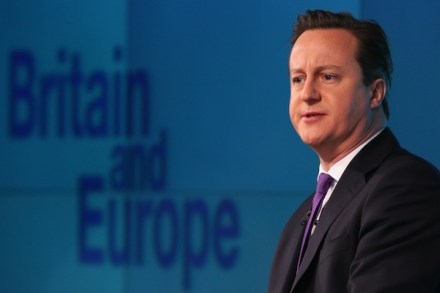
Do you understand what David Cameron's Europe policy is supposed to achieve? If so, you're way ahead of me. I've said before that I think Europe will cripple Cameron unless Ed Miliband gets there first and nothing has happened since to change my mind. Isabel's scoop published today, revealing the results of the Tory party's internal consultation help make the folly of Cameron's policy even clearer. With some understatement Isabel concludes that the results "underline how big the expectations are on Cameron to bring about big change in Europe". Indeed they do. Tory members are telling the Prime Minister that the European parliament should be abolished. This may not be the worst idea in the world but it is one of the most fanciful.

Exclusive: partisan EU referendum campaign dampens Labour support

From our UK edition

The Tories are putting off Labour MPs from backing their Private Member's Bill on an EU referendum with an overly partisan campaign, Coffee House has learned. John Cryer, who chairs Labour for a Referendum, tells me that he won't be voting for the Bill because the Conservatives have turned it into a party political campaign to shore up their own position, rather than one that genuinely promotes a referendum. He says: 'I'm not voting for it, I'm abstaining. I think the way the Tories have approached it is very party political. I can understand it in a way because they want to be in a position where they are offering people a choice, they want to try to push other parties on that policy.

Conservative members send ministers EU reform shopping list

From our UK edition

David Cameron will come under increasing pressure in the next few months to publish his 'shopping list' of reforms he wants from a renegotiation of Britain's relationship with Europe. Even those who want to know what the Prime Minister is really thinking accept that this is not a good idea, as he would neither satisfy the spectrum of views across his party, nor impress them when he returned with only 14 out of 20 demands granted (even if those 14 reforms were very impressive ones). But the Tory party has been consulting its members on the powers that they would like to see returned to national governments. I've got hold of the results, which underline how big the expectations are on Cameron to bring about big change in Europe.

Tories use Let Britain Decide campaign to hunt voters’ data

From our UK edition

The Tories have earned rare praise for their LetBritainDecide campaign for James Wharton's Private Member's Bill. Everyone accepts that the slick website and social media campaign are (surprisingly) impressive. But there's another — largely unnoticed — aspect to this campaign which has a lot less to do with change in Europe and more to do with change in CCHQ's campaigning methods. The clever 'co-sponsorship' option allowing anyone to add their names to the bill doesn't just create hype, it also allows CCHQ to build a large database of the names, email addresses and postcodes of voters with a particular interest in European affairs. Why is this important? The data allows CCHQ to target voters with specific campaign messages that interest them personally.

Most opinion polls are junk: blame the ignorant general public for that.

From our UK edition

One of the very good things about Lord Ashcroft is that he is happy to commission large-scale opinion polls. Sometimes these are mischievous. Take today's example, for instance. It is always useful to be reminded that most members of the public can only recognise a handful of politicians. One would expect David Cameron and Boris Johnson to be at the top of the public recognition table. They are the only politicians in Britain recognised - and correctly identified - by more than 90% of those surveyed. 89% of respondents claim to recognise Ed Miliband but only 77% can actually identify him (some think he's actually his brother which, given David has been out of the public eye for the best part of three years does not say much for Ed).

Sir Mervyn King to Mark Carney: You’re Worth It!

From our UK edition

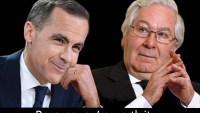
Sir Mervyn King held an emotional farewell with the Treasury Select Committee this morning ahead of his move from the Bank of England to the House of Lords. Committee chair Andrew Tyrie was as keen to recruit him as a supporter of banking reforms going through Parliament in the future as he was to grill the outgoing Governor: in fact, all the of the MPs on this often incisive committee were reasonably gentle with the man known as Merv the Swerv. As part of his farewell, he gave some advice to his successor which sounded a little bit like a L'Oréal advert: 'Well, I have no intention of giving public advice, but if you really insist, really insist… it's very simple: he should be himself.

Snooper’s Charter could resurface after 2014 Budget

From our UK edition

There's talk this morning of the intelligence budget taking a cut in tomorrow's spending review announcement, but what about the legislation that the spooks say they really need to do their jobs properly? The row about the Communications Data Bill has calmed a little in the past week or so, but that's not to say that those pushing the proposals have given up. I understand that though the bill's Conservative proponents accept that Nick Clegg really will not be moved, they don't think this is the end of the road for the legislation in this Parliament. Instead, figures close to the talks are mulling introducing it after the 2014 Budget. Why then? 'It's the last chance the Lib Dems would have to introduce a mansion tax that would come in for this Parliament,' explains one source.

David Laws fires first shot in Lib Dems’ anti-Labour offensive

From our UK edition

David Laws’ decision to hand Liam Byrne’s infamous ‘there’s no money’ note to ITV  is intriguing. It suggests that the Liberal Democrat leadership intend to escalate their attacks on Labour. Laws must know the power of this image. For when he first mentioned it at an early Osborne/Laws press conference, Andy Coulson pushed hard for an image of the actual note to be released. Coulson calculated that the note would have made nearly all the front pages and established the image of Labour profligacy in the public’s mind. But Laws, slightly taken aback by the level of interest in the note, refused to hand it over. At the time, friends of Laws said that he felt that putting the actual note itself out there would have been a bit below the belt.

Doctors pass motion of no confidence in Jeremy Hunt. Good.

From our UK edition

The health service that employs you is under more scrutiny than ever before, with shocking cases of bad care, 'never events' and serious lapses crawling out of the woodwork. The regulator that was supposed to keep an eye on all of this is under attack, not just for missing it, but also for apparently deciding not to publish what details it did know, and then deciding to withhold key names implicated in a 'cover-up'. So what, in its eternal wisdom, does the trade union representing you do? The British Medical Association, which has always managed a veneer of respectability over and above many other public sector unions, today passed a motion of 'no confidence' in Jeremy Hunt as Health Secretary.

Leaked letter shows ministers trying to calm tensions on marriage tax breaks

From our UK edition

Ministers are clearly mindful of the potential damage that Tim Loughton's amendment to the Finance Bill calling for tax breaks for married couples could cause. This is one of those issues that could become a rebellion if it is poorly-managed by the leadership, or equally could be a bit of a damp squib if enough backbenchers are reassured and feel they should show loyalty to George Osborne. David Gauke has sent out a letter to Tory MPs trying to do just that. This 'dear colleague' message, which I've been passed, tells backbenchers that the Chancellor will announce the details of a transferable tax allowance 'in due course', which is what the Chancellor himself told a recent Cornerstone dinner.

Tories must tread carefully in NHS battle

From our UK edition

It is clear now that we have reached a tipping point where it is no longer enough to repeat 'I love the NHS' or swear allegiance to Danny Boyle's Olympic caricature of the health service. So what now? Labour and the Tories are scrapping over who still really, truly loves the health service: the latest round of revelations about the Care Quality Commission have allowed the Conservatives to ask questions about the culture and attitudes of both the health service and of the Labour government that led it. Labour, meanwhile, points out that Andrew Lansley is also alleged to have leaned on a whistleblower, something the former Health Secretary denied yesterday.

Cable talks going to the wire

From our UK edition

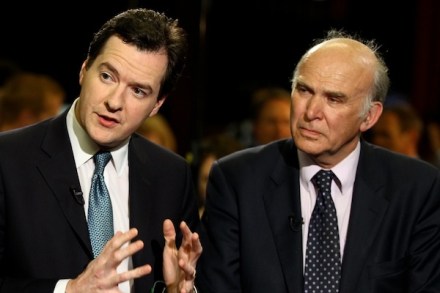
The Treasury is keen to downplay any sense of drama surrounding the spending review. On Marr this morning, George Osborne declared that he was ‘confident’ that he and Vince Cable would agree the BIS budget ‘in short order.’ He emphasised that the differences between them were not that large. Indeed, I’m informed that the differences between Treasury and BIS are over capital not current spending, making them easier to resolve. Osborne and Cable have only begun to speak directly in recent days. Up until Thursday, Osborne had been leaving the negotiations to Danny Alexander. Despite Osborne’s protestations, it looks like the BIS budget will go down to the wire. Cable is out of town tomorrow and its extremely unlikely a deal will be struck before then.

All three parties should publish ‘red lines’ for 2015 coalition negotiations

From our UK edition

Both Ed Miliband and Nick Clegg delivered speeches to their party faithful today about being realistic about 2015. Miliband's speech, briefed as 'tough', was the latest in his series of attempts to tell voters that they can trust him: he wouldn't borrow more than this government… well, no more 'day-to-day spending', which is his way of saying he would actually borrow more for capital projects. Clegg wanted to tell his councillors that they can't see May 2015 as the month when they all get to breathe a sigh of relief and return to their local authority fiefdoms without any of the inconvenience of their party being in national government too.

Borrowing figures and what really keeps politicians awake at night

From our UK edition

There was a moment in the last Budget statement where George Osborne revealed that the deficit was - just - lower in the year to April 2012 than the previous 12 months. He made it by a whisker. Today, the statisticians have revised their opinion and said borrowing for that financial year was  is up slightly - by £300m to £118.8bn. It's a tiny change, well within a rounding error. And, of course, could easily change again. The extra borrowing was £12.7bn in May, down from £15.6bn last May. Factor in the £3.6bn transferred from the Quantitative Easing programme, and the deficit can be knocked down to £8.8bn. It all depends on how you cut the figures.