Uk politics

Ed Miliband is wrong: we need more, not less rail competition

From our UK edition

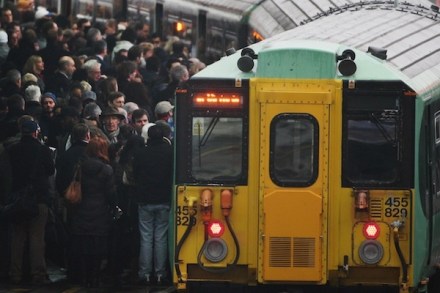
Last month the Labour party moved two debates in the Commons pushing for Government to keep running the important East Coast Main Line (ECML) rail franchise between London King’s Cross, Newcastle and Scotland. The state has run this service since National Express East Coast was hit by the downturn in 2008 when it became unable to make the necessary government repayments for operating the franchise. Tory ministers want to quickly see the franchise back in private hands. Labour’s more vocal stance on rail has important undertones; the party is increasingly echoing the left-wing rail unions and the TUC in its policy towards the sector.
EU referendum plotting meeting: exclusive details

From our UK edition

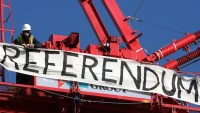
As trailed on Coffee House yesterday, MPs in favour of an EU referendum met today to discuss how to advance James Wharton's private member's bill and how to pressure Labour and the Lib Dems to change their stance on the issue. I hear colleagues from all parties agreed with Wharton's warning that amendments in the Commons could endanger the Bill, while the Stockton South MP also suggested that though trouble looms in the Lords, any attempts to wreck the legislation there could provide a nice opportunity for a debate about the legitimacy of the Upper Chamber turning down legislation sent up from the Commons. As with gay marriage, dark mutterings about what could happen to this Bill once it reaches the Lords could prove unfounded.

The curious case of Durand boarding school

From our UK edition

The Durand boarding school project is a wonderfully ambitious attempt to give children from one of the most deprived parts of London the kind of education that has traditionally only be available to a privileged few. But earlier this week, the National Audit Office criticised the Department for Education for handing over money for the project without sufficiently assessing the risks. Margaret Hodge, chair of the Public Accounts Committee, followed up with a letter to the parish council questioning the financial sense of the project. However, as a letter from the school’s head Sir Greg Martin reveals, Hodge had not spoken to Durand before writing the letter.

How the Spectator blew the whistle on the International Health Service

From our UK edition

At Prime Minister's Questions today, backbencher Philip Lee ambushed David Cameron on the subject of health tourism. He asked: 'As a doctor who once had to listen incredulously to a patient explain, via a translator, that she only discovered she was nine months’ pregnant on arrival at terminal 3 at Heathrow, I was pleased to hear the statement from the Secretary of State for Health today on health tourism. Does the Prime Minister agree that although the savings are modest, the principle matters? The health service should be national, not international.' The Prime Minister replied: 'My hon. Friend makes a very important point. This is a national health service, not an international health service. British families pay about £5,000 a year in taxes for our NHS.

How Peter Mandelson’s HS2 intervention will change the debate – and how it won’t

From our UK edition

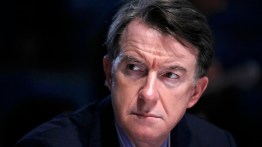
Peter Mandelson's surprise rejection of high-speed rail in this morning's FT is another sign that the wheels are coming off this project. But while the project's critics on the backbenches - particularly those on the Tory side such as Cheryl Gillan and Michael Fabricant who are campaigning vociferously against the plan - will be thrilled, the continuing cross-party consensus means you won't hear Cameron being probed on this at Prime Minister's Questions, for instance, or Maria Eagle castigating Patrick McLoughlin at the next departmental question time in the Commons. But Mandelson's concerns about the project are about its spiralling cost, not the impact on one MP's constituency (or their majority, for that matter).

Theresa May’s modernising moment on stop and search

From our UK edition

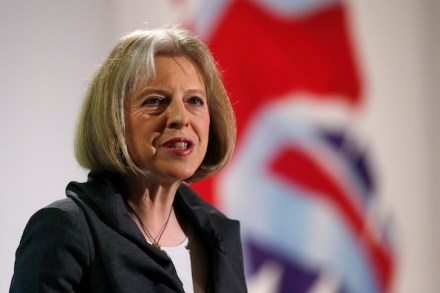
Theresa May’s statement in the Commons today on stop and search strikes me as an important moment. Here, we had a Tory Home Secretary standing up and saying that she understood why some communities felt that stop and search was used unfairly and announcing a review of it. This is, as I said on Sunday, is quite a change in Tory attitudes. William Hague, who was Tory leader at the time, criticised the Macpherson report for making police reluctant to use stop and search. Just five years ago, David Cameron was emphasising the need to ‘free the police to do far more stopping and far more searching’. Now, May doesn’t want to scrap stop and search. But her concerns about its use are a reminder that Tory modernisation is not finished yet.

‘Weak, weak, weak’ Labour will have to avoid looking panicked on any referendum pledge

From our UK edition

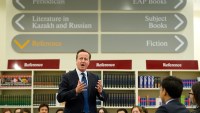
David Cameron's statement on the European council was another example of how easy it is at the moment for the Tories to portray Ed Miliband as a weak leader. He made it perfectly clear what he wanted those watching to take away by stealing Tony Blair's 'weak, weak, weak' line in 1997 when attacking John Major (which is well worth watching again). Today the PM told the Commons that Ed Miliband's position on Europe could be summed up in three words: 'weak, weak, weak'. He said: 'What I thought was interesting about the right hon. Gentleman’s response was that we heard not a word about the referendum that we are going to discuss and debate on Friday. I think I know why. The right hon.

The next Spectator Debate: too much immigration, too little integration?

From our UK edition

When David Cameron announced ‘state multiculturalism has failed’, the chattering classes gasped in disbelief. Here was a Prime Minister, bull dozing his way into  the tricky area of immigration — one his predecessors had shied away from. The speech was praised by the right, and lambasted by those on the left — including his coalition partners. David Goodhart received a similar reaction with the publication of his book  The British Dream. In it, he examines the success and failures of post-war immigration in Britain. On the right, the book was welcomed as a thorough examination into multiculturalism.

Max Hastings, Mind-Reader

From our UK edition

Max Hastings is one of the foremost military historians in the English-speaking world. His multi-volume history of the Second World War is magnificent. Until recently, however, I had not known that he counted soothsaying among his many accomplishments. How else, however, to explain his article in today's Daily Mail in which the old boy outs himself as a first-class mind-reader. Hastings is responding to a presentation Alastair Campbell gave to an audience of PR types in Australia in which Mr Blair's communications wizard, perhaps rather too glibly, noted that Winston Churchill frequently and deliberately peddled untruths during the Second World War. And yet his reputation remains higher than that of poor old Tony!

Alex Salmond Drives into a Muirfield Bunker

From our UK edition

Unlike some politicians who profess an interest in sporting matters, Alex Salmond's enthusiasm for golf, tennis and horse racing is genuine. He even supports the right football team. Nevertheless, the First Minister has bunkered himself this week. This is the subject of my latest Think Scotland column: Which brings me to the summer stramash of Alex Salmond and the Honourable Company of Edinburgh Golfers. The First Minister has let it be known - nay, has trumpeted – the fact that he will not attend this year's Open Championship because it is being held at Muirfield and Mr Salmond will not break bread with an organisation that excludes the good women of Scotland from membership.

‘Who governs Labour?’ is perfect new Tory attack line on Miliband’s weakness

From our UK edition

A row in Labour over union influence that doesn't benefit the Tories in some way is as rare as hen's teeth. But the latest revelations about Unite's attempt at 'transforming Labour' (as reported by Rachel Sylvester in her explosive Times column) are even more of a gift to the Conservative party than usual because they feed perfectly into the line of attack the party has chosen. As Coffee House reported recently, Lynton Crosby told Tory MPs that he wanted to focus on Miliband's weaknesses as leader, identifying clear weak spots rather than the 'he makes the coffee' line. That the unions are enjoying such success in stitching up the selection process contributes to that impression of weakness, particularly if Miliband finds himself unable to do anything decisive.

Pro-referendum MPs to plot for Labour and Lib Dem manifesto commitment

From our UK edition

MPs from all parties who want a referendum are meeting this week to discuss how to get a pledge into the Labour and Lib Dem manifestos, I hear. The All-Party Parliamentary Group for an EU referendum will meet tomorrow, partly to look ahead to James Wharton's Private Member's Bill on Friday, but also to draw up a strategy for a referendum commitment from the other two parties. Speaking alongside Wharton at the meeting will be Labour's Kate Hoey and Lib Dem John Hemming, who backed John Baron's Queen's Speech amendment. Labour donor John Mills, who the Times reports this morning as warning that his party could lose the next election because it hasn't offered voters a choice, will also speak.

What can we expect from Mark Carney?

From our UK edition

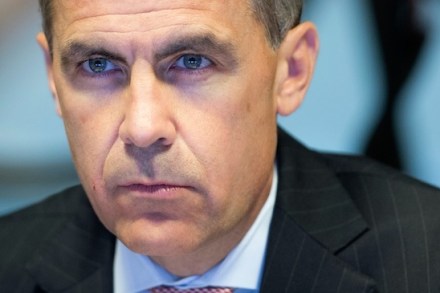
What the Mark Carney era may offer is a little bit more predictability on monetary policy. Under Mervyn King the main guidance came from the Bank’s quarterly Inflation Report press conferences, MPC minutes, and speeches by committee members. Under the Bank’s new remit, set by the Chancellor in the March budget, it’s likely that Carney, like Bernanke, will seek to link interest rates and monetary policy directly to growth and jobs targets There will be subtle changes but no one, as economists at HSBC have noted, is expecting ‘shock and awe’. The big question for Carney is which indicators to use as targets. The runners are unemployment (as in the US), real GDP, or the measure preferred by many economists: nominal GDP.

Why Nick Clegg is so keen to talk to the media

From our UK edition

Liberal Democrat leaders are used to having to do more to get noticed than the other party leaders. But it is still striking just how much the Deputy Prime Minister is doing to try and inject himself into the national conversation. Joining Nick Clegg's weekly phone-in on LBC is a monthly press conference. One of the reasons Clegg is doing all this is to try and drain away the anger created by the compromises of coalition and, specifically, the broken promise on student fees. After 23 press conferences, even the lobby will tire — or so the Lib Dems hope - of asking Clegg about the U-turn on tuition fees, the shifting position on the EU referendum and the rest.

Cross-party EU referendum campaign aims to counter partisan problems

From our UK edition

The Tory campaign on James Wharton's EU referendum bill has been very slick but very partisan - I examined some of the problems with this last week when eurosceptic Labour MP John Cryer announced he had been put off by the Let Britain Decide campaign and would abstain on the bill. So today campaigners in favour of a vote launched a cross-party campaign called I Support a Referendum. They hope that their emphasis on the referendum itself rather than the party politics will help bring MPs from other parties into the fold where previously they felt excluded. Wharton was present at the launch, and he insisted that he was keen for MPs from any party to back his legislation.

Will Tory party calm survive MP pay row?

From our UK edition

Coffee House readers will be unsurprised by the interest taken by the newspapers and the Today programme in MPs' pay: this blog predicted that it could be the next big row in the Conservative party at the start of June. It is politically sensible for the Prime Minister to say that he disagrees with a pay rise recommended by Ipsa if it raises overall costs, even if he has no formal veto over a raise. All he can do is send a formal response to the pay consultation. But he will need to work hard to keep his party behind him, and so will the other party leaders.

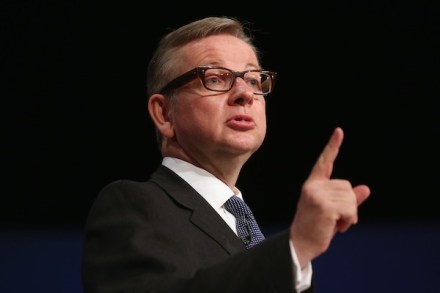
The Gove guide to composition

From our UK edition

Michael Gove is not the only minister to be frustrated by the poor quality of letters drafted for his signature. One minister was horrified to find his reply to the Prime Minister starting ‘Good to here from you’. Another complains that his name is still spelt wrong, three years after he started in the job. But Gove is, probably, the only one who would send a memo to his ministers and civil servants urging them to read ‘George Orwell and Evelyn Waugh, Jane Austen and George Eliot, Matthew Parris and Christopher Hitchens’ to improve their prose.’ The memo contains, what he dubs, Gove’s Golden Rules for writing a letter which I’ve reproduced in my Mail on Sunday column. But the introduction to these rules is also well worth reading.

‘What’s more important obeying a Brussels directive or keeping the lights on?’

From our UK edition

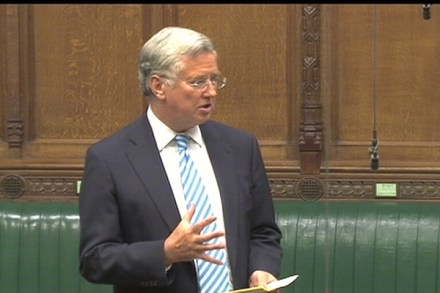
Andrew Neil’s interview of Michael Fallon on The Sunday Politics was a reminder of just how much of UK energy policy is determined by EU rules. When pressed on why there’s such a capacity crunch that there’s a risk of blackouts in the winter of 2015-16, Fallon explained that this was because a whole series of ‘dirtier’ plants are coming off-stream because of EU rules. If this wasn’t happening, there wouldn’t be a problem. Intriguingly, when asked ‘what’s more important obeying a Brussels directive or keeping the lights on?’ Fallon responded that ‘Keeping the lights on is the job of the government’. But he stressed that the government was ‘not planning to break any particular laws’.