Uk politics

How fracking could be sent packing by a poor offer for locals

From our UK edition

After the noisy protests over oil drilling in Balcombe, you might be forgiven for thinking that there are just two groups in the fracking debate: the Caroline Lucases, who oppose the technique outright, and then those who think shale gas is the best thing we ever discovered, better even than sliced bread. But there is a third group, which is quieter than the others, yet yields a great deal of power over how impressive this country's shale gas revolution will really turn out to be. I introduce this group of worried locals, still unconvinced by the incentives currently on offer from the government, in my Telegraph column today.

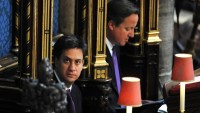
Is Ed Miliband a) hopeless, b) on course to become Prime Minister or c) both?

From our UK edition

I have never quite understood Ed Miliband's appeal. He always reminds me of Cuthbert Cringeworthy from The Bash Street Kids. I find it hard to imagine him becoming Prime Minister. Something just feels wrong about that. I'm not alone in wondering about this. Brian Wilson, the former energy minister, wrote yesterday that Miliband still has a kind of credibility problem. People just don't think he's quite ready for the top job. They may not be able to say exactly why they're unimpressed by Miliband; they just know they are. Not so fast my friend, responds John McTernan today. Ignore all the chattering and blethering about Labour's slide in the polls and focus on the core picture: Miliband is still likely to be leader of the largest party after the next election. Everything is fine.

Welfare failures that are costing us dear

From our UK edition

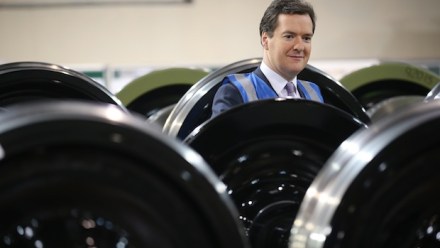
I'm told there's a joke that does the round in Whitehall, that to err is human, but if you really want to foul things up you need Iain Duncan Smith. I'm afraid a casual glance at DWP's delivery record explains why. On every single one of DWP's five big reforms things are going badly wrong. The human cost of this colossal bodge job is impossible to calculate. But the fiscal cost could be as high as £1.4 billion. Let's start with reform of disability benefits. A vital reform that needs tremendous care. The test itself needs fast and fundamental reform (my speech on the subject is here). But the government's contractor, Atos is running rings around the Government. Anyone taking the test is eight times more likely to end up in a tribunal than in a job.

Labour’s over-fussing problem

From our UK edition

Opposition is underrated. You can spend your whole time pointing at Expensive Things and complaining that the Government Should Do Something about their cost, and grumbling about other things you don't like either, like a mother-in-law wearing a party rosette. What's not to like about being a professional complainer? The problem is that at some point you have to stop just pointing at things and complaining about them, and instead actually give a sense of what you would do instead. And if you've been too fussy to begin with, you end up disappointing people who thought you really were going to do something about everything you complained about to begin with. The Tories know this, and so are having a little bit of fun today with Liam Byrne's welfare speech.

Men and women should be paid the same – end of story

From our UK edition

The gender pay gap should not exist. But it does, as we were reminded today by the Chartered Management Institute report on corporate pay. It is simply unacceptable for a man to get paid more than a woman for doing the same job. The government has taken steps to support equal pay by making pay secrecy clauses illegal and by giving tribunals the power to force employers that break equal pay laws to carry out equal pay audits. The government can do more to highlight the need for gender equality; but, ultimately, businesses decide their workers’ pay. CEOs, HR executives and remuneration committees must root out unfair pay practices because there is no excuse for sustaining them in this day and age.

Liam Byrne’s pitch to keep hold of his job

From our UK edition

It can hardly be a coincidence that one of the few Labour figures to bother giving a speech on policy in the middle of Tumbleweed Time is a shadow minister who looks increasingly likely to get the chop. Liam Byrne's speech today was partly his attempt to get a good last-minute appraisal from the media and Labour party itself before Ed Miliband embarks on his autumn reshuffle, and partly an attempt to lift the party itself out of the doldrums by talking about what Labour would really do. While Labour clearly needs to move on from lying in wait for the government to muck up now that green shoots are poking up all over the place, Byrne suspects there is more to be gained from waiting for a few disasters on his patch.

The political divide over David Miranda’s detention

From our UK edition

The political fallout from the detention of David Miranda is as interesting as the rights and wrongs of the case itself, as it exposes a fault line in the Conservative party between civil libertarians who are instinctively wary of state power, and those on the other side who think the state did exactly the right thing in this instance and that the laws applying to Miranda's detention are right too. In the civil liberties corner is Dominic Raab, writing in the Telegraph that 'on terrorism, as with so many of Labour’s laws, well-intentioned but overly broad powers have been stretched to cover wider purposes, exposing ordinary people to arbitrary interference'. Raab argues that 'a power to protect airports from attack has morphed into a shield to save governments from embarrassment'.

How the Lobbying Bill may accidentally bring down political bloggers

From our UK edition

Is the Lobbying Bill another erratic attempt to censor bloggers? In a similar fashion to the Crime and Courts Act, which almost put blogs under the same umbrella as newspapers for fines, the Transparency of Lobbying, Non-party Campaigning and Trade Union Administration Bill has potential implications for charities and 'third sector' groups, not just political parties and bog standard lobbyists. As Mark Ferguson pointed out on LabourList, any campaigning classed as 'political' in an election year will be subject to a £32,000 limit, more paperwork and potentially, permission from a political party to actually take place if they exceed that limit.This new regime, unless clearly defined in the bill, could affect political blogs.

Mili no mates

From our UK edition

If David Blunkett fancies being a kindly older mentor for the current Labour shadow cabinet, perhaps he could start by getting them all on television a little more, if only to say how great they think Ed Miliband is as party leader. As the summer has worn on and the Labour leader's troubles have thickened like a sauce, the shadow cabinet seems to have evaporated, according to this analysis of the last time any of them pitched up on the airwaves: · Maria Eagle appeared on BBC News (13 August 2013) · Caroline Flint appeared on Daybreak (9 August 2013). · Owen Smith appeared on the Today Programme (7 August 2013) · Sadiq Khan appeared on The World at One (1 August 2013) and the Andrew Marr Show (28 July 2013).

David Blunkett: Give me a job

From our UK edition

listen to ‘Blunkett on Miliband’ on Audioboo David Blunkett gave an odd interview on the Today programme this morning. It rather mirrored the problem with Labour: he clearly knew what he really thought, but wasn't sure whether he should say all of it, so ended up letting really interesting little snippets out in dribs and drabs in between chunks of praise for the current state of the party. So his position on whether the current Labour leadership should think a break with New Labour is a good thing was a combination of acknowledging that the party does need to move on, and reminding anyone who really does want to move on that New Labour was pretty darn good at winning elections.

Caroline Lucas’ fracking arrest won’t worry ministers, but here’s what will

From our UK edition

Caroline Lucas' arrest this afternoon at the Balcombe fracking protest might be quite useful for the Green MP, but it's hardly going to give ministers a sleepless night. Lucas' presence is actually rather distracting from a real problem that ministers do need to address: ensuring that communities feel they have a stake in the shale gas exploitation taking place on their doorstep. David Cameron rather got their hopes up recently when he, by a slip of the tongue, promised that communities would get a £1 million incentive for accepting drilling on site when the figure was actually £100,000.

Briefing: Advice today for Ed Miliband

From our UK edition

Certain Labour types like to argue that this summer season of discontent for Ed Miliband is just a media mirage, made up mostly of journalists talking to each other. That might have a grain of truth: the corridors of Parliament are dusty and echoey at this time of year, and the only people found wandering them are bewildered lobby hacks and bored policemen. But the problem is that all this talk of the problems facing Ed Miliband has offered an opportunity for those in Labour party who think there is a problem to come out of the woodwork. And that there are more and more big names coming out - rather than the slightly worried backbenchers who started the grumbling - is the real problem. This summer has been an opportunity for nerves about the party's prospects to come to the fore.

David Cameron denies he’s planning another coalition. Good.

From our UK edition

I'm just back from three weeks away to find the summer momentum very strongly behind the Tories. A ComRes poll suggests that the majority of Labour supporters think Ed Miliband is doing badly, and things are going so strongly for the Tories (as George Trefgarne writes) that the odds on a Tory majority are shrinking rapidly. So why would Cameron be planning for another coalition, as my colleague James Kirkup writes in his Telegraph splash today? His piece has struck a nerve in No. 10, which is strongly denying that the Prime Minister is thinking of anything other than a Conservative majority in 2015. There are, I'm told, no plans to change any rules to make coalition more doable after the next election. Of course, you may say, Cameron would say this anyway.

Two nations, two cultures? Britain is divided by the Trent, not the Tweed.

From our UK edition

Of the many certainties those Scots in favour of independence hold to be self-evident two in particular stand out. First that Scotland and England are fundamentally different places whose political cultures are so divergent  they can no longer sensibly be expected to live together. Secondly that the British state is moribund and impervious to practical reform. They are nice theories. They persuade Yes voters that independence is both necessary and virtuous. The only wonder is why so many Scots seem so stubbornly hesitant about accepting these obvious truths. This may have something to do with the fact that neither of them is actually true. At least not obviously true. Take the second article of faith.

What would Frank Field do for Labour?

From our UK edition

The latest tranche of advice for Ed Miliband contains pleas for the Labour leader to think the unthinkable and hire Frank Field as his welfare adviser to how that Labour was 'serious' about reforming the welfare system. This would represent quite a change of direction for the party, and would be what commentators like to call a 'bold move', partly because Field is known to be quite difficult to work with, while also offering an expert understanding of benefits and poverty. I interviewed Field for Coffee House in May, and it's worth revisiting some of his remarks now for an indication of what a Labour welfare policy would look like if he were in charge: 1.

Alan Duncan is wrong about ‘token women’

From our UK edition

It takes a courageous individual to brave the threats to their person that public utterances on gender seem to attract these days. Undeterred, Alan Duncan is among them. (This is a man who once made a citizen’s arrest after protestors flung paint bombs at the Tory Party chair, after all). Last week the international development minister reportedly cautioned the prime minister against promoting ‘token women’ in his next cabinet reshuffle. Duncan rests his argument, in part, on his experiences as the Conservative Party’s first openly gay MP, telling the Financial Times: ‘I never wanted to be a token gay and now things have progressed so there is no need for it. Nobody should want to be a token woman; it should all be based on merit.

David Miranda’s detention shows that the state is not only malevolent but stupid too

From our UK edition

The problem is less that the state is malevolent but that it is stupid. And that stupidity means that a lack of malevolence may be a matter of luck, not policy. Or, if you wish to be more generous, the state has the power to crush liberties and its failure to do so on a more consistent, wider, basis is a matter of forebearance or inefficiency more than anything else. That, at any rate, is one theory to explain why David Miranda, the partner of Guardian journalist Glenn Greenwald, was detained at Heathrow airport for nine hours. If the state wants to fuck you up, as Larkin didn't quite write, it can. And will. This is not something unique about the British state (unrestrained by oversight though it be).

The quiet Miliband wants to turn up the volume

From our UK edition

Ed Miliband has already managed to steal a big pile of clothing from the Tories by pinching the One Nation tagline for his own party. But this weekend Chuka Umunna offered the beleaguered Labour leader another Tory tag that he might not be quite so keen on. Trying to defend the party, the Shadow Business Secretary said: 'The Shadow Cabinet and the leader of the Labour party are doing a huge amount already to sell Labour to the electorate which is why we've won back almost 2,000 councillors since Ed Miliband became leader of the party and of course as we move to the general election we will be turning up the volume even louder than it has already been in order to ensure that we form a majority at the next general election.' Oh dear.