Uk politics

PM optimistic about Immigration Bill as rebels stay stubborn

From our UK edition

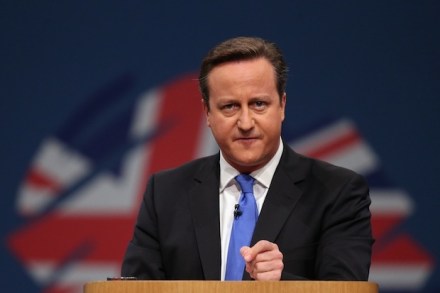
David Cameron was very upbeat for a Monday morning when he popped up on the Today programme a few minutes ago. Perhaps it was partly down to a not-particularly aggressive interview, or perhaps it was because the Prime Minister wants to continue the theme of his New Year's message and be upbeat about the prospects for the economy and living standards where Labour continues to be pessimistic (that optimism, of course, is easier to find when you decide to release figures showing take home pay improving that do not take into account the effect of benefit cuts or tax rises, but there we go). He repeatedly said he was an optimist, particularly when confronted with Nicky Morgan's comments about the Conservative message.
How the Conservatives should respond to Ed Balls’ 50p tax pledge

From our UK edition

This weekend Ed Balls made it clear he wants to tax Britain more.It won't stop at 50%, and it wont be confined to the highest earners over 150,000. In that sense low tax Comservatives have much to thank Ed Balls for as he really has set out clear blue water between Labour and the Conservatives for the next election. Nevertheless, let's not celebrate too quickly. Labour will know, and as Ed Balls all but acknowledged on the Marr show this weekend, that this tax commitment is little to do with economic policy and more to do with their own electoral strategy. A 50% top rate of income tax will raise little extra money if any at all. The HMRC calculates that at best 100 million, at worse it produced a negative effect on tax receipts. So why do it? Simple.

Taking offence and freedom of speech

From our UK edition

The row about Lib Dem candidate Maajid Nawaz continues, with some confusion over whether or not one of his critics has a meeting with the party leadership to discuss the matter. While that unravels a little more, it's worth thinking very briefly about the implications of this row. The protagonists want Nawaz removed as a candidate for Hampstead and Kilburn because he has done something that offends other members of his religion. In doing so, they are arguing that freedom of speech comes with responsibility. Yet oddly, those who make these arguments for curbs on freedom of speech so that no-one gets upset never do so when it comes to their own beliefs. All religious groups benefit from freedom of speech, because their beliefs have the power to offend others.

Ed Balls: Labour’s public spending was not a problem before the crisis

From our UK edition

Ed Balls and Ed Miliband have a funny old approach to convincing voters that they should be handed back the keys to the car. They pen pieces about how tough Labour is on welfare spending and make careful (and carefully-worded) references at every opportunity to their promise not to borrow more for day-to-day spending. The Shadow Chancellor prevaricates over HS2 to give the impression that he's fiscally responsible. He did that again today when he appeared on the Andrew Marr Show, but he also said this: 'But do I think the level of public spending going into the crisis was a problem for Britain? No, I don’t, nor our deficit, nor our national debt – what happened was a global financial crisis which pushed up the deficit. The question then was ‘who can get the deficit down?

Immigration Bill set for two serious rows

From our UK edition

The row over the past few weeks over the Immigration Bill has been rather ironic given it was introduced in part to calm Tory backbench nerves. Those nerves were over two issues: Bulgarian and Romanian migrants, and deportation, and while the Mills amendment which addresses the former remains on the order paper, albeit with some rival amendments aimed at siphoning off support, there is another big revolt on the way on the latter. Dominic Raab has tabled another amendment which has the support of more than 100 MPs on deportation. It is essentially a repeat of the amendment he tabled to the Crime and Courts Bill, and means that foreign criminals can only avoid deportation if they risk being killed or tortured on their return.

Why Ed Balls is deceiving us about his plans, and the 50p tax

From our UK edition

Now and again, you have to ask: why did Gordon Brown get away with that massive government overspending that bequeathed such a calamitous deficit? The answer is that he dressed up his profligacy with technical-sounding language, and fooled everyone. Ed Balls thinks he can fool us again. He has told the Fabian Society today that he'd balance the 'current' budget – but that's only one part of government spending. (Investment is the other part, and he'd happily borrow for this.) But this caveat doesn't appear to have been explained to those reporting on his speech, and today's news reports wrongly declare that Balls would balance the books overall. (Only George Osborne has made this commitment.) So Balls gets the headlines, without having to make the commitment. Result!

Ed Balls commits to return of 50p rate

From our UK edition

The overnight briefing of Ed Balls' speech to the Fabian Society's annual conference was that the Shadow Chancellor would make a binding fiscal commitment to balance the books, deliver a surplus on the current budget and get the national debt falling in the next Parliament. Which sounded like a mighty eleventh-hour repentance until you looked at the detail. Ed Miliband has spent the past few months trying to sound like a dry old bean counter by saying Labour wouldn't borrow more for day-to-day spending, which really means Labour won't borrow any more for revenue spending but can splurge all it likes on capital expenditure. And so Ed Balls has done the same today: the 'surplus on the current budget' is the same as 'day-to-day spending': it's the revenue, not the capital budget.

Parliament itself shouldn’t drag MPs down

From our UK edition

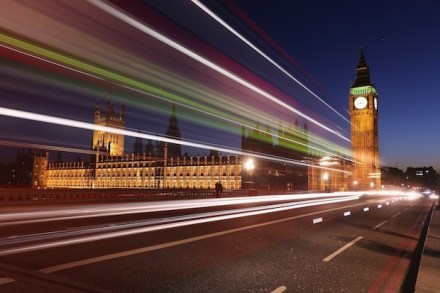
The conventional image of Parliament is of a grand, imposing building packed with ancient traditions. The reality for those who work in it isn't quite so glamorous: mouse-infested offices, administrative chaos, and weeks of camping in committee rooms when you first arrive as an MP. Even though Parliament has been around for much longer than modern companies, it still has the internal feel of a start-up that just accidentally spiralled into something much bigger, with MPs fending for themselves when it comes to employing and managing their staff, for instance. I write about the way that this chaos makes the job of an MP just that bit less attractive to continue doing in my Telegraph column today.

Watch and read: Nigel Farage launches Ukip’s 2010 election manifesto

From our UK edition

Does Nigel Farage really have no idea what was in Ukip’s 2010 election manifesto? Yesterday, he claimed on the Daily Politics he had never seen or heard of many of the policies the party stood for. But if you take a look at the video above, Farage was one the main speakers when the manifesto was launched in April 2010. The low-grade staging is again a sign of how far Ukip have come in the last three years, but their message hasn’t changed much. Farage claims: ‘The choice the public has is not about a change of government but a change of management’ Always the outsider, and who offers the solution? Ukip of course: ‘It’s time for some straight talk about who governs Britain.

The Tories’ economic tightrope

From our UK edition

When things were going pretty badly for the Conservatives, ministers reassured one another that soon they'd be able to start hitting back at Labour with statistics. They're doing that now - and are hitting as often as possible, even when it's Labour's turn to say something. Today the party has released figures to back up David Cameron's claim at PMQs this week that people are better off, and they show that most people's earnings are increasing by more than inflation. Now, Labour is quibbling the stats themselves, pointing out that they don't involve benefit cuts and tax rises. But while Labour is overall losing in the battle of stats, there is one attack that its ministers have been making this morning that is more dangerous than a stat attack.

What the NHS owes the Tories

From our UK edition

[audioplayer src='http://traffic.libsyn.com/spectator/TheViewFrom22_23_January_2014_v4.mp3' title='James Forsyth discuss the NHS with Charlotte Leslie MP' startat=1430] Listen [/audioplayer]Pinned to the wall of Jeremy Hunt’s office in the Department of Health is an A1 piece of paper detailing that week’s ‘Never Events’. It catalogues the mistakes that have been made in NHS hospitals that should never have happened: people having the wrong leg amputated, swabs being left inside patients after surgery and the like. This grim list is a rebuke to the glib, Danny Boyle-style rhetoric which dominates all political debate about the NHS and treats any attempt to examine the failings of British health care as heresy.

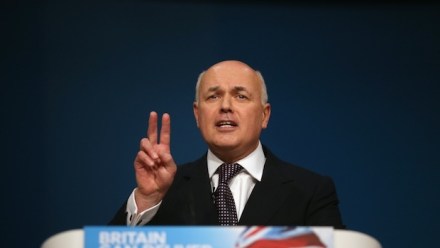
Iain Duncan Smith’s speech on welfare reform – full text

From our UK edition

The Work and Pensions Secretary was speaking to the Centre for Social Justice this morning. Introduction It is a pleasure to be hosted today by the Centre for Social Justice – setting out a vision for Britain’s welfare state alongside the organisation where, in a sense, it all started. Within their critique, the CSJ set out a plan for reform for Government, and today I want to look at that. But in 2010, we inherited an economy which had entered the worst recession in living memory, with the deficit rising, costs spiralling, and GDP shrinking. People were losing their jobs and feared for the future.

Tory rebels table more troublemaking changes to Immigration Bill

From our UK edition

Andrew Lansley will shortly announce the return of the Immigration Bill to the Commons. I hear from impeccable sources that its report stage will be next Thursday. As I wrote yesterday, the whips have failed to persuade Nigel Mills to withdraw his amendment on reintroducing transitional controls for Bulgarian and Romanian migrants. He has already re-tabled it, simply with some tweaks to keep it up to date. But another crop of amendments from Tory backbenchers has just gone down as well. Tabled by Stephen Phillips, one of the signatories to the Mills amendment, the new clauses call for the Home Secretary to take action to limit EU migration if the Migration Advisory Committee finds it is having a damaging effect on the UK economy.

Iran, Saudi Arabia, and the Middle East’s 30 year war

From our UK edition

[audioplayer src="http://traffic.libsyn.com/spectator/TheViewFrom22_23_January_2014_v4.mp3" title="Douglas Murray discuss Islam's 30 year war with former solider Thomas Tugendhat"] Listen [/audioplayer]Syria has fallen apart. Major cities in Iraq have fallen to al-Qa’eda. Egypt may have stabilised slightly after a counter-coup. But Lebanon is starting once again to fragment. Beneath all these facts — beneath all the explosions, exhortations and blood — certain themes are emerging. Some years ago, before the Arab ‘Spring’ ever sprung, I remember asking one top security official about the region. What, I wondered, was their single biggest fear? The answer was striking and precise: ‘That the region will clarify.

Mike Hancock suspended from Lib Dems

From our UK edition

Mike Hancock has been suspended this afternoon as a Liberal Democrat councillor following the leak of the report into his conduct. The report, which was published in a redacted form, does not make comfortable reading at all, with some very unpleasant allegations from the constituent about his behaviour towards her, including that he forcibly kissed her, 'asked for a wank or a quick suck' and that he asked to be 'the first one to road test drive' her after a hysterectomy operation. You can read the report, sections of which have been redacted, here. Its author, Nigel Pascoe QC, has already expressed his concern about the redaction: 'I have now seen for the first time the redacted version of my report, Public and Private Conduct, concerning Mr Michael Hancock MP.

Immigration Bill ‘to return to Commons’

From our UK edition

After those crisis talks in Downing Street that I reported yesterday, I hear that the government plans to bring the Immigration bill back to the Commons with amendments. Number 10 is insisting that nothing has yet been confirmed but suggestions that it could return on Tuesday may be incorrect. Doubtless those government amendments are designed to calm backbenchers down sufficiently for them to withdraw their amendment. But I've just spoken to Nigel Mills, who tabled the amendment, and he is going to press it. He says: The government amendments are not unhelpful but don't tackle the already existing issues of immigration from the EU being too high and leaving us a long way from the tens of thousands promise.

Theresa May’s stop-and-search battle and the feverish Tory party

From our UK edition

As predicted, Labour did make use of the Times's story about Theresa May's row with the Prime Minister over stop-and-search at PMQs today, using a backbench question from Steve Reed, who explicitly linked to Cameron's 'fear of Nigel Farage'. David Cameron gave a rather mollifying answer, telling the Commons that 'stop-and-search does need reform' and that 'what's really important is that stop-and-search is used properly but we don't add to the burdens of the police'. listen to ‘PMQs: Does Cameron's fear of Farage mean he'll block stop-and-search reform?

Jobs figures suggest Cameron and Osborne have survived their 364 economists moment

From our UK edition

What is Ed Miliband going to ask David Cameron about at Prime Minister's Questions today now that the latest employment figures show the biggest quarterly increase since records began, and the biggest quarterly fall in unemployment since 1997? Actually, there is quite a lot that he can talk about that means he can entirely avoid the subject - Nicky Morgan's warning to the Tories about 'hate', Aidan Burley, the row between Number 10 and Home Office about stop-and-search and Syria - but the Prime Minister will make jolly well sure that he shoehorns it into any question that's asked of him, even if it's a backbench one about the welfare of horses in Cumbria. Here are the figures. Unemployment fell by 167,000 between September and November to 2.32m (7.1%).