Uk politics

Rennard row weakens Lib Dem ‘we make govt better’ line

From our UK edition

It's been a while since the Liberal Democrats commanded quite so much media attention or quite so much space on the front pages. If all publicity were good publicity, the volume of coverage that the party is receiving from the Rennard scandal would do wonders for its poll rating. But that's not how it works, and particularly not when your top brass has spent months trying to tell voters that the Lib Dems are so very grown up, mature and thoughtful that they'd make any government better.

Tories yet to select candidates to fight Lib Dem top dogs

From our UK edition

The Tories have always denied rumours that they might give their coalition colleagues an easier ride at constituency level in the 2015 general election. But even though all three parties are very much on an election war footing now, the Conservatives have, strangely, yet to select candidates to fight two of their favourite ministers. The constituencies for Nick Clegg and Danny Alexander currently have no candidates, along with 28 others (including MPs the Tories aren't quite so keen on working with in Coalition, such as Lynne Featherstone), while the other 27 have candidates in place. Alexander is easy to work with in the Treasury (I reported before Christmas that he'd been scolded by Lib Dem high command for using the Tory term 'global race').

Lib Dems: Rennard will not get the whip back and faces new investigation

From our UK edition

As the bell announcing the afternoon sittings in Parliament rang across Westminster, the Lib Dems  announced that Lord Rennard will have his membership of the party suspended pending a new disciplinary procedure for failing to apologise to the women who he allegedly behaved inappropriately towards. A spokesman said: 'Nick Clegg made clear last week, and again this morning, that it would be inappropriate for Lord Rennard to resume the Liberal Democrat whip unless he apologises. Lord Rennard has refused to do so. 'The Regional Parties Committee, which oversees disciplinary procedures under the English Party membership rules, today decided to suspend Lord Rennard’s membership of the party pending a disciplinary procedure.

Why announcing a tough new welfare policy isn’t as tough as it seems for Rachel Reeves

From our UK edition

Rachel Reeves is setting out Labour's tough new benefits policy today. The Tories don't need to be unduly worried, given the poll lead they enjoy on welfare matters, but just in case, Iain Duncan Smith and Theresa May have penned a joint op-ed in the Daily Mail accusing Labour of a 'shameful betrayal' on welfare reform and controlling immigration. They list the party's failures in government, saying: 'With one hand, Labour doled out millions of pounds for people to sit on benefits. With the other, they opened the door to mass migration, with those from abroad filling jobs which our own people didn't want or couldn't get.

Ed ‘Teddy’ Miliband: Labour is the party of competition

From our UK edition

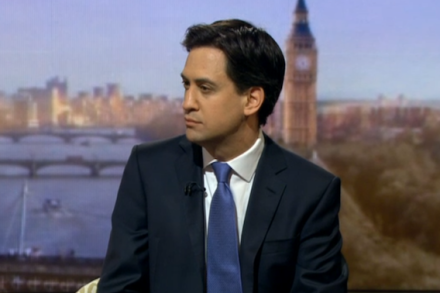
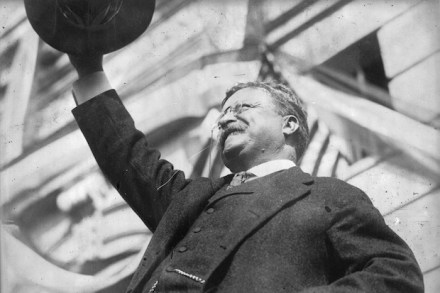
Ed Miliband tends to enjoy success when he's either stealing someone else's clothes or offering a possibly unworkable policy that sounds catchy. This morning on the Andrew Marr Show he tried both tactics. Having nicked One Nation from the Tories and repeated the phrase so often that they probably don't want it back, Miliband is now trying to ape a Republican president, Theodore Roosevelt. His close colleague Lord Wood sets out why Labour thinks this is a space it can jump into in a piece for Coffee House. listen to ‘Ed Miliband on the Andrew Marr Show’ on Audioboo The catchy line from this Roosevelt-style crusade is that Labour is now the party of competition, with Miliband planning to appoint consumer groups such as Which?

Ed Miliband is better placed than the Tories to follow Roosevelt

From our UK edition

On Friday, Ed Miliband pledged to introduce greater competition in our banking market. Last September, he pledged to freeze energy prices for 20 months while our broken energy market is reset to expand competition and consumer choice. Reforming broken markets to increase competition and address the long-term sources of our cost-of-living crisis might seem an unusual theme for Labour to champion. In fact it is an approach that has learnt from a progressive conservative tradition, one that understands the importance of reform to ensure that markets remain open and competitive. Noone understood this idea better than the American President Theodore Roosevelt – a passionate believer in free enterprise, and a tenacious advocate of market reform.

Ukip councillor blames floods on Cameron and gay marriage

From our UK edition

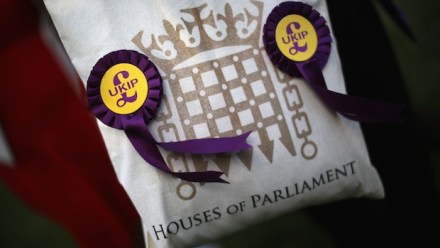
With just 124 days till European election polling day, you’d expect Ukip to be working tirelessly to professionalise the party’s operations and hide away any controversial opinions. They don’t appear to be doing a very good job so far. David Silvester, a Ukip councillor in Henley-on-Thames, has written to his local newspaper explaining how Britain’s recent spates of floods are David Cameron’s fault — because he has angered God with the Same Sex Marriage Bill: ‘The scriptures make it abundantly clear that a Christian nation that abandons its faith and acts contrary to the Gospel (and in naked breach of a coronation oath) will be beset by natural disasters such as storms, disease, pestilence and war.

Nick Clegg begins to flex muscles over Rennard

From our UK edition

Nick Clegg has in the past few minutes made clear that unless Lord Rennard apologises for his behaviour towards women in the party, he will not regain the Liberal Democrat whip. A party spokesman said: 'Nick Clegg is of the view that as long as Lord Rennard refuses the very reasonable request from Alistair Webster QC to apologise that it is inappropriate for him to rejoin the Liberal Democrat group in the House of Lords. Nick has communicated this to the Chief Whip and Leader of the House of Lords group. 'In addition, a growing number of party members have come forward to make representations to the party that Lord Rennard's refusal to apologise in itself brings the party into disrepute.

Ed Miliband’s tricky second album

From our UK edition

Ed Miliband has spent the past few months celebrating the success of his conference pledge to freeze energy prices. He was so pleased with the disruption that this caused that he referenced it in his speech on banking reform today. He is right to be pleased with that pledge. It was a hit. It's just that today's speech, built up by the Miliband camp as the sequel to the price freeze, was the political equivalent of a difficult second album. You could see what he was trying to do. Sections of the speech were straight from the Obama playbook, just as his conference speech was, with appeals such as 'Britain can do better than this' and lines such as 'we believe we can tip the balance away from struggle and towards hope'. But the playbook lines weren't played very well.

Miliband’s big speech challenge isn’t Mark Carney

From our UK edition

Even though Labour is quite clearly rather peeved by George Osborne's minimum wage announcement, it is, in one way, a compliment to Ed Miliband that the Chancellor felt it strategically important to try to sabotage the Labour leader's speech on banking, which he will deliver shortly. The Conservatives are aware that even if Miliband has a knack of coming up with policies that sound potty, he also has a knack of framing them in a way that disrupts the political debate. Thus a pledge by a party leader in the autumn to control prices in a market where he has no control of worldwide wholesale markets still managed to cause significant trouble.

A minimum wage rise will show the Conservatives are a party for all working people

From our UK edition

The Chancellor’s announcement that he’s recommending an above average increase in the minimum wage is very welcome news. It’s something Renewal has been campaigning for since our launch in July. Wages have fallen behind prices for almost a decade now. The prosperity of Blair’s boom didn’t reach the low paid and it was the working poor who were hardest hit by the recession, meaning that the minimum wage is worth £1,000 less now than it was in 2008. Now that the economy is firmly on the road to recovery it’s the right time to raise the minimum wage. We have to ensure that prosperity and the benefits of the free market reach everybody in society and this increase is an important step towards that goal.

Any other business: Oh dear… perhaps Standard Chartered isn’t as dull as it looks

From our UK edition

The cautionary tale of the Co-operative Bank, its black hole and its naughty chairman has recently taught us that if a financial institution has the reputation of being dull, earnest and set in its ways, it probably isn’t. The collapse last year of Switzerland’s oldest private bank, Wegelin & Co — whose boss once claimed that being small and provincial made it ‘easy to avoid the deadly emotions of greed and fear’ — was another example. Attention now turns to Standard Chartered, an overseas commercial bank that has long had the reputation of sticking cautiously to the mode of business in which it has historic roots, notably in Asia, and has seen off repeated takeover approaches from others jealous of its franchise.

When trolling pressure groups cause real harm

From our UK edition

My grandmother, Nanny Nancy, is 99 and going strong. But it can’t be denied that while she’s all there mentally, physically she’s not the lithe young thing she was in her 1920s adolescence. I mean no disrespect to my beloved grandmother, but if we’re honest, when Michael Bay is casting his next blockbuster and it’s a choice between her and Megan Fox for the female lead, well… . It’s not just me who has noticed this: the kids have even more so. When they were younger, especially, and I asked them to kiss their great-grandmother they’d react — as so many children do when confronting their older relatives’ decrepitude — as if I’d invited them to snog a bird-eating spider.

Cameron’s mission for 2014: stay out of third place

From our UK edition

European elections are normally an afterthought in British politics. As even David Cameron admits, most of us struggle to remember who our MEPs are. Two-thirds of us don’t even bother to vote for them. But this year, the European elections are threatening to dominate politics. Talk to Tory ministers and MPs about the year ahead, and they all look nervously towards May, because they know that the Conservative party is in real danger of coming third in a nationwide election for the first time in its history. In and of itself this need not matter too much. The trouble is that a third place finish would send the party into a panic from which it might not recover before the general election.

Osborne rains on Miliband’s parade with wage announcement

From our UK edition

What an odd coincidence that on the eve of what's being billed as a major economic speech by Ed Miliband, George Osborne sticks up his periscope and makes a big fat announcement on the minimum wage. The Chancellor and his colleagues have been mulling this increase for months, and have been making confusing but supportive noises over the past few weeks, and this evening would have seemed an odd time for the Chancellor to give an interview to the BBC on the subject if Osborne weren't famed for being such an enthusiastic strategist.

Will a Euro election defeat for Cameron lead to a Tory-Ukip pact?

From our UK edition

The Conservative party has never come third in a nationwide election. But as today’s YouGov poll in The Sun shows, they are on course to be beaten into third place by Ukip in the European elections: Now, European elections are normally an after-thought in British politics. As even David Cameron admits, most of us can’t remember who our MEPs are and almost two-thirds of us don’t bother to vote for them. But as I say in the column this week, coming third behind Ukip will send the Tory party into a panic. In the weeks after the result, there’ll be calls for an electoral pact with Nigel Farage and his party, demands for a move to an explicitly ‘outist’ European policy and for a string of more distinctively right-wing policies.

Labour’s minimum wage attack flops

From our UK edition

Labour's minimum wage debate in the Commons last night was designed mainly to humiliate the Conservatives about their past opposition to it and to remind voters that only the Labour party cares about those on low wages. But it failed on two counts. The first was that Rachel Reeves fell into the easy trap of accusing someone of missing a vote without double-checking whether this had been for a good reason (all the more surprising given the party's recent rage over a Sun article describing Lucy Powell as 'lazy' when she had in fact been away on maternity leave).

Will 2014 be the year of the populist party?

From our UK edition

With Ukip widely expected to win big in May’s elections, 2014 may well be the year of the populist party. Not easily categorised as left or right wing, populist parties across Europe pit the good, honest, ordinary voter against the out of touch, liberal, mainstream political elite. The populists claim to represent the former against the latter, an authentic and honest voice in a world of spin and self-interest. Nigel Farage is not the only one to be surfing the wave of widespread disillusionment, with politics in general and politicians in particular. In Italy, Beppe Grillo straddles both left and right.