Uk politics

A. C. Grayling interview: being hated, the need for private universities and celebrity academics

From our UK edition

Professor Anthony Clifford Grayling is on top of the world. Well, Bloomsbury. Sitting in his office overlooking Bedford Square, the Master of the New College of Humanities can barely contain his self-satisfaction. ‘We have been more successful than anybody could have guessed,’ he informs me. Two years ago, ‘one of the most hated men in academia’ was the target of eggs, smoke bombs and insults when he announced a new £18,000-a-year private university. His aim was to marry the tutorial teaching model with a challenging liberal arts course — with the help of some celebrity friends. Academics, foes and friends all rounded against Grayling and willed his experiment to fail.


To fix the north-south divide, revive the Council of the North!

From our UK edition

These, ranked from first to tenth, are the urban areas in Britain with the highest average weekly earnings in 2012: London, Reading, Crawley, Aldershot, Edinburgh, Cambridge, Milton Keynes, Aberdeen, Southend, Brighton. That's from the latest, fascinating, report (pdf here) published by the Centre for Cities. It can be summarised easily: if you want to make it, head to London or the south-east of England. Or to Scotland. London, as Jeremy Warner observed this morning, is still driving the British economy. Financial services remain vital both to economic recovery and the country's long-term future. Strengthening other sectors remains important; so does the City. But strengthening Britain's other cities is - or should - also be at the top of the agenda.

Tories demand immigration investigation into Labour campaign guru

From our UK edition

Gurus are dangerous beasts in politics mainly because they tend to say awkward things (something Ed Miliband, who has Lord Glasman as his on-off guru, can attest to more than others). But the row over Arnie Graf's immigration status, sparked by the Sun's front page today, shows that gurus are dangerous in many, many ways. Like the Church of England discovering it was investing in Wonga while also crusading against it, it's surprising that the Labour party didn't think to make sure all was tickety-boo on the immigration status front before launching a tougher strategy in this area. Still, it has given the Conservative attack machine something to do, with Priti Patel writing to the UK Border Agency to demand an investigation into whether Graf is working here illegally.

George Osborne: Labour is ‘anti-the British people’

From our UK edition

Quite naturally, there were rather more Conservative than Labour MPs in the House of Commons for Treasury Questions this morning. And quite naturally, George Osborne and colleagues on the Treasury front bench spent most of the session goading their Labour opponents about this morning's growth figures. Deputy Chief Whip Greg Hands and Ed Balls had a wonderful extended session of heckling one another across the Chamber as the exchanges went on, with Hands mocking Balls' flatlining gesture. Other MPs, though, were kept waiting rather longer to do what they'd turned up to do: jeer the Shadow Chancellor when he eventually stood up. But when he eventually stood up, 50 minutes into the session, the Conservative benches went wild with roars.

Strong sympathy for Tory rebel deportation call

From our UK edition

How will the row over the Immigration Bill pan out? Number 10 was trying to be as emollient as possible yesterday, saying it would look at all amendments, while I understand that Dominic Raab's deportation amendment has strong private support at Cabinet level. Ministers do, though, understand that Theresa May is starting to worry that she won't get her Bill through the House of Commons and House of Lords in time for it to become an Act, and so are leaving her be on the deportation side of things, but there could still be a scenario where PPSs demand to be able to support it, as they did last time. It is difficult to find anyone in the Conservative party who doesn't support it (although Ken Clarke is keeping quiet).

Poll shows Yes camp are within striking distance of victory

From our UK edition

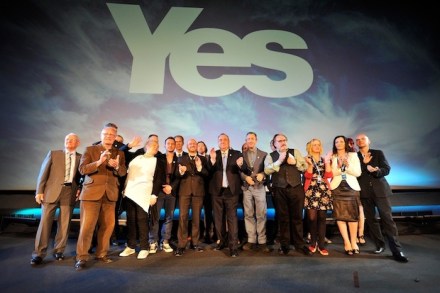
'It has given us a good, old-fashioned kick up the backside,' said one member of the 'No' camp yesterday. He was being charitable. It could end up being an awful lot worse than that. The ‘it’ in question was the new ICM poll which, suddenly and unexpectedly, has put the Yes campaign right back in the hunt for Scottish independence. At a stroke, all those complacent certainties about the No camp wiping the floor with the Nationalists have been discarded and, this morning at Holyrood, the talk is of little else. 'It is game on,' said one Nationalist with a smile. Just to emphasise how important this new poll for The Scotsman newspapers is, here are the figures: Yes 37 per cent (up from 32 per cent in September) No 44 per cent, down from 49 per cent in September.

Former ministers, 1922 chair and Labour grandees back rebel deportation call

From our UK edition

The list of MPs supporting Dominic Raab's amendment on deportation to the Immigration Bill has now been published, and as predicted, it contains some very big names indeed. Andrew Mitchell has signed, along with 1922 Committee chairman Graham Brady, former policing minister Nick Herbert, former justice minister Crispin Blunt, and Labour grandees such as David Blunkett and Hazel Blears. There are currently 104 MPs signed up to support the amendment: the majority of them Conservative. It calls for foreign criminals to only avoid deportation if they risk being killed or tortured on their return. The last time this amendment was due to be debated as part of the Crime and Courts Bill, PPSs demanded to be able to support it without getting into trouble.

Labour and the Conservatives are both wrong about income tax

From our UK edition

Never interrupt your opponent when he is making a mistake. On the other hand, when your opponent has made a mistake try not to match him by making an equal blunder of your own. That's not how Westminster politics works, of course. For reasons that presumably make sense to the respective parties, Labour and the Conservatives have each managed to cock-up their tax policies. Specifically, they are both wrong on the politics of the 50% rate of income tax. That is, the Tories should never have cut the rate of tax paid by those few Britons earning over £150,000 and Labour should not be promising to restore the 50% rate. This is not an argument about finances but about signalling.

PM optimistic about Immigration Bill as rebels stay stubborn

From our UK edition

David Cameron was very upbeat for a Monday morning when he popped up on the Today programme a few minutes ago. Perhaps it was partly down to a not-particularly aggressive interview, or perhaps it was because the Prime Minister wants to continue the theme of his New Year's message and be upbeat about the prospects for the economy and living standards where Labour continues to be pessimistic (that optimism, of course, is easier to find when you decide to release figures showing take home pay improving that do not take into account the effect of benefit cuts or tax rises, but there we go). He repeatedly said he was an optimist, particularly when confronted with Nicky Morgan's comments about the Conservative message.

How the Conservatives should respond to Ed Balls’ 50p tax pledge

From our UK edition

This weekend Ed Balls made it clear he wants to tax Britain more.It won't stop at 50%, and it wont be confined to the highest earners over 150,000. In that sense low tax Comservatives have much to thank Ed Balls for as he really has set out clear blue water between Labour and the Conservatives for the next election. Nevertheless, let's not celebrate too quickly. Labour will know, and as Ed Balls all but acknowledged on the Marr show this weekend, that this tax commitment is little to do with economic policy and more to do with their own electoral strategy. A 50% top rate of income tax will raise little extra money if any at all. The HMRC calculates that at best 100 million, at worse it produced a negative effect on tax receipts. So why do it? Simple.

Taking offence and freedom of speech

From our UK edition

The row about Lib Dem candidate Maajid Nawaz continues, with some confusion over whether or not one of his critics has a meeting with the party leadership to discuss the matter. While that unravels a little more, it's worth thinking very briefly about the implications of this row. The protagonists want Nawaz removed as a candidate for Hampstead and Kilburn because he has done something that offends other members of his religion. In doing so, they are arguing that freedom of speech comes with responsibility. Yet oddly, those who make these arguments for curbs on freedom of speech so that no-one gets upset never do so when it comes to their own beliefs. All religious groups benefit from freedom of speech, because their beliefs have the power to offend others.

Ed Balls: Labour’s public spending was not a problem before the crisis

From our UK edition

Ed Balls and Ed Miliband have a funny old approach to convincing voters that they should be handed back the keys to the car. They pen pieces about how tough Labour is on welfare spending and make careful (and carefully-worded) references at every opportunity to their promise not to borrow more for day-to-day spending. The Shadow Chancellor prevaricates over HS2 to give the impression that he's fiscally responsible. He did that again today when he appeared on the Andrew Marr Show, but he also said this: 'But do I think the level of public spending going into the crisis was a problem for Britain? No, I don’t, nor our deficit, nor our national debt – what happened was a global financial crisis which pushed up the deficit. The question then was ‘who can get the deficit down?

Immigration Bill set for two serious rows

From our UK edition

The row over the past few weeks over the Immigration Bill has been rather ironic given it was introduced in part to calm Tory backbench nerves. Those nerves were over two issues: Bulgarian and Romanian migrants, and deportation, and while the Mills amendment which addresses the former remains on the order paper, albeit with some rival amendments aimed at siphoning off support, there is another big revolt on the way on the latter. Dominic Raab has tabled another amendment which has the support of more than 100 MPs on deportation. It is essentially a repeat of the amendment he tabled to the Crime and Courts Bill, and means that foreign criminals can only avoid deportation if they risk being killed or tortured on their return.

Why Ed Balls is deceiving us about his plans, and the 50p tax

From our UK edition

Now and again, you have to ask: why did Gordon Brown get away with that massive government overspending that bequeathed such a calamitous deficit? The answer is that he dressed up his profligacy with technical-sounding language, and fooled everyone. Ed Balls thinks he can fool us again. He has told the Fabian Society today that he'd balance the 'current' budget – but that's only one part of government spending. (Investment is the other part, and he'd happily borrow for this.) But this caveat doesn't appear to have been explained to those reporting on his speech, and today's news reports wrongly declare that Balls would balance the books overall. (Only George Osborne has made this commitment.) So Balls gets the headlines, without having to make the commitment. Result!

Ed Balls commits to return of 50p rate

From our UK edition

The overnight briefing of Ed Balls' speech to the Fabian Society's annual conference was that the Shadow Chancellor would make a binding fiscal commitment to balance the books, deliver a surplus on the current budget and get the national debt falling in the next Parliament. Which sounded like a mighty eleventh-hour repentance until you looked at the detail. Ed Miliband has spent the past few months trying to sound like a dry old bean counter by saying Labour wouldn't borrow more for day-to-day spending, which really means Labour won't borrow any more for revenue spending but can splurge all it likes on capital expenditure. And so Ed Balls has done the same today: the 'surplus on the current budget' is the same as 'day-to-day spending': it's the revenue, not the capital budget.

Parliament itself shouldn’t drag MPs down

From our UK edition

The conventional image of Parliament is of a grand, imposing building packed with ancient traditions. The reality for those who work in it isn't quite so glamorous: mouse-infested offices, administrative chaos, and weeks of camping in committee rooms when you first arrive as an MP. Even though Parliament has been around for much longer than modern companies, it still has the internal feel of a start-up that just accidentally spiralled into something much bigger, with MPs fending for themselves when it comes to employing and managing their staff, for instance. I write about the way that this chaos makes the job of an MP just that bit less attractive to continue doing in my Telegraph column today.

Watch and read: Nigel Farage launches Ukip’s 2010 election manifesto

From our UK edition

Does Nigel Farage really have no idea what was in Ukip’s 2010 election manifesto? Yesterday, he claimed on the Daily Politics he had never seen or heard of many of the policies the party stood for. But if you take a look at the video above, Farage was one the main speakers when the manifesto was launched in April 2010. The low-grade staging is again a sign of how far Ukip have come in the last three years, but their message hasn’t changed much. Farage claims: ‘The choice the public has is not about a change of government but a change of management’ Always the outsider, and who offers the solution? Ukip of course: ‘It’s time for some straight talk about who governs Britain.

The Tories’ economic tightrope

From our UK edition

When things were going pretty badly for the Conservatives, ministers reassured one another that soon they'd be able to start hitting back at Labour with statistics. They're doing that now - and are hitting as often as possible, even when it's Labour's turn to say something. Today the party has released figures to back up David Cameron's claim at PMQs this week that people are better off, and they show that most people's earnings are increasing by more than inflation. Now, Labour is quibbling the stats themselves, pointing out that they don't involve benefit cuts and tax rises. But while Labour is overall losing in the battle of stats, there is one attack that its ministers have been making this morning that is more dangerous than a stat attack.