Uk politics

Now Scots know: an independent Scotland won’t be Salmond’s ‘same-but-slightly-different’ vision

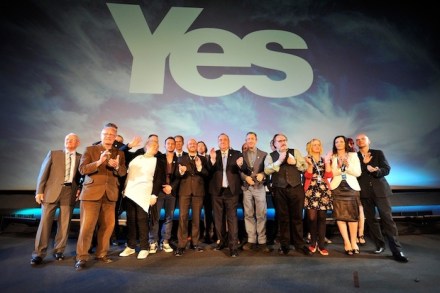
Personally, I’m now waiting for the Queen to get involved. After all, there’s not much left of Alex Salmond’s independence-but-not-independence blueprint that is left intact. First it was his ‘we’re going to share the pound in a Sterling zone’ claim. That was ruled out by George Osborne (and Ed Balls and Danny Alexander) last week. Then it was his ‘independence in Europe’ claim, and that was dismantled by Jose Manuel Barroso today. The only pillar of Salmond’s grand ‘everything’s-going-to-remain-the-same-only-different’ scheme which remains in place is a shared monarchy. So it can’t be long before Her Majesty also intervenes and says: ‘Do you know what? I don’t much like the idea of being

Jose Manuel Barroso: “Extremely difficult, if not impossible” for a separate Scotland to join the EU

Jose Manuel Barroso has said before that Scotland would have to apply separately to join the EU if it became independent. But his remarks today on the Andrew Marr Show were far more pessimistic about the prospects of that application being successful. After the three main Westminster parties blew a hole in the reassuring argument that Alex Salmond has been making so far that Scotland could keep the pound, Barroso effectively reminded Scots this morning that a ‘Yes’ vote won’t just mean ‘Yes’ to independence, it will mean ‘Yes’ to leaving the EU too. He said: ‘First of all, I don’t want now to go into hypothetical questions. What I

Tory Wythenshawe response suggests inertia over blue collar vote

The Conservatives were never going to win the Wythenshawe and Sale East by-election. But the way the party has spun its third place is slightly depressing. The Times today quotes a party source saying: ‘This is a safe Labour seat with the largest council estate in Europe. It’s not on our marginal list.’ Now, this is an understandably pragmatic way of viewing a by-election. It wasn’t expected, as it was prompted by the tragic and untimely death of a respected Labour MP, Paul Goggins. So the Conservatives were not embedded in the constituency in the way that they were in Eastleigh, for instance. Labour moved the writ for a short

MP tries to remove the poison from the food debate

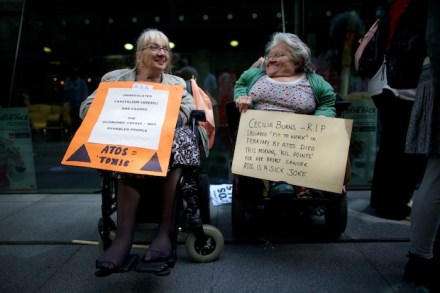
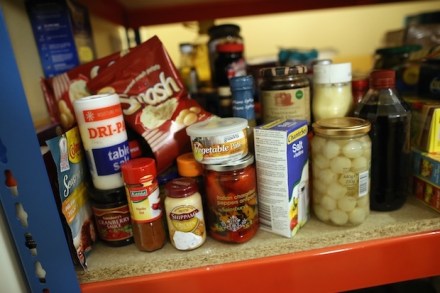
One of the more unpalatable news stories of the week was the survey by West Yorkshire councils that seemingly innocuous food was made up of all sorts of things that either weren’t what they claimed to be, or weren’t very much like food at all. It’s another sign of the food problems that this country faces, on top of food banks and poor diet. Recently, though, the food debate has become as poisoned as vodka made from antifreeze, with politicians using food banks in particular as a political football to prove their own points, rather than bothering to examine the complex problems behind them. But one of the MPs who

Boris and ballots: what might happen to the Tory party in 2015

What are Boris Johnson’s real chances of becoming Tory leader? I examine the Mayor of London’s standing with Conservative MPs in my Telegraph column today – and it is fascinating how polarised opinion is about the Mayor in the Tory party. His supporters insist he is the only hope for the Conservative party, while those who don’t want him to lead really, really don’t want him to lead and display a fair bit of personal hatred when talking about the Mayor. But the problem that those in the anti-Boris camp have is that they can’t see who else from the current group of well-known leadership hopefuls would enjoy the same

Ukip beats Tories in Wythenshawe as Labour hold seat

So Ukip did come second in the Wythenshawe by-election (and Labour won, of course). David Cameron says the 4,301 votes (17.95% of the vote and a 14.5% swing) that John Bickley won wasn’t ‘the sort of break through that people were talking about’. The Prime Minister, who saw his own party pushed into third place with 14.5% (3,479 votes), did also say that ‘obviously messages are sent, and signals are sent and protests are made and governments should always listen to those things and I always do’. Now, the usual caveat that you can’t extrapolate very much from a by-election in one constituency applies. But Ukip can reasonably claim that

If David Cameron can’t get the floods right, all his hopes will wash away

[audioplayer src=”http://traffic.libsyn.com/spectator/TheViewFrom22_13_February_2014_v4.mp3″ title=”James Forsyth and Isabel Hardman on how the floods will define the PM’s legacy” startat=1218] Listen [/audioplayer]It is all hands to the pump in Downing Street. The entire No. 10 operation from the Prime Minister down to the Policy Unit is focused on the floods. ‘We are all on a war footing,’ declares one official. David Cameron is spending his time poring over maps of the affected areas. ‘It is quite remarkable,’ says one minister who attends the Cobra meetings on the floods, ‘to hear the Prime Minister asking Gold Command about individual farms.’ Cameron knows that the floods will be a defining moment for his government. If

Britain needs small government, not weak government. That means strong flood defences

[audioplayer src=”http://traffic.libsyn.com/spectator/TheViewFrom22_13_February_2014_v4.mp3″ title=”Christopher Booker discusses the failures behind the floods” startat=61] Listen [/audioplayer]There is nothing inevitable about the by now familiar sight of residents being towed away from flooded homes, of shops and businesses submerged, and all the misery and economic turmoil which follows. A short hop across the North Sea is a country which has been having much the same weather as we have recently and has even more low-lying land vulnerable to flooding. Yet there has been a remarkable lack of footage of Dutch homeowners being forced to gather their possessions and flee their homes. Why? After a devastating storm surge in 1953, the Dutch made huge investments

Cheat sheet: George Osborne’s speech on the pound

‘If Scotland walks away from the UK, it walks away from the pound’, the Chancellor said this morning. In a speech aiming to blow a hole in the SNP’s campaign, George Osborne has set out why sharing the pound isn’t on the cards for an independent Scotland. Here are the key points from his speech, the reactions and why a currency union with the rest of the UK won’t happen 1. The Tories, Lib Dems and Labour have united on a technical fight It’s very rare that George Osborne, Ed Balls and Danny Alexander can find something to agree on. The fact they’ve publicly united against a currency union with

Theresa May turns to deaths in custody after stop-and-search row

One of the risks for Theresa May in her battle with Number 10 over reform of stop-and-search powers is that the Home Secretary loses some of the capital she has built up with BME voters over the plans. Last summer, black newspaper The Voice ran an edition suggesting that Labour could be losing the black vote and specifically pinpointed May’s work on stop-and-search as a sign that the Tories were starting to appeal to groups they’d previously alienated. But this week May is back in The Voice with an op-ed on deaths in custody. You can click on the image to view the article in full. It is significant, though,

Osborne nixes currency union; Salmond hops around claiming it’s only a flesh wound

An interesting day, then. As I suggested yesterday, George Osborne has ventured across the border on a punitive raid. Nothing like a spot of rough wooing to get you through the winter. The reaction from Scottish nationalists has been interesting, to say the least. Some seem most affronted. Who the hell does George Osborne think he is, anyway? He’ll no be telling us what currency we may use. Perhaps not but he – or Ed Balls – is certainly entitled to set out his view of what may be in the best interests of the rest of the United Kingdom. And if that view differs from the Scottish view then tough.

Podcast: Somerset vs. the Environment Agency, the politics of flooding and being a dirty old man

Did the people of Somerset see the floods coming? On this week’s View from 22 podcast, the Sunday Telegraph’s Christopher Booker discusses why the Environment Agency was so ill prepared for the floods and ignorant towards the Somerset Levels. Was European Union regulation at fault? Would more dredging have totally prevented the floods? And has the Agency been as careless with their attitude towards the River Thames? Cosmo Landesman also debates Mary Wakefield on whether he is a dirty old man. What now defines a ‘dirty old man’? Is it creepy for older gentlemen to compliment younger women? Are there more 50+ men who are remaining sexually active? Is it

Revealed: how green ideology turned a deluge into a flood

[audioplayer src=”http://traffic.libsyn.com/spectator/TheViewFrom22_13_February_2014_v4.mp3″ title=”Christopher Booker explains how the EA failed to prepare for the floods ” startat=60] Listen [/audioplayer]It has taken six long weeks to uncover the real hidden reasons why, from the West Country to the Thames Valley, the flooding caused by the wettest January on record has led to such an immense national disaster. Only now have the two ‘smoking guns’ finally come to light which show just how and why all this chaos and misery has resulted directly from a massive system failure in the curious way our country is governed. Because I live in Somerset, I first became aware that something very disturbing was going on back

Westminster attack on Scottish currency union shows jitters about referendum result

It might be bullying but, I suspect, it will be effective. The Tories, Labour and the Liberal Democrats ruling out Scotland sharing sterling after independence—as Nick Watt reported this morning — is designed to hole below the waterline the SNP’s attempt to reassure voters that even after independence they could still share a currency union with the rest of the Union. (Alex Massie does a very good job of taking apart the SNP’s response). The potency of this argument is a reminder of what a disaster the Eurozone crisis has been for the SNP. It has made the Euro a far less attractive alternative currency than it was a decade

Boris labels Vince Cable’s comments about London ‘cretinous’ – exclusive details

Boris Johnson spoke to the 301 group of largely pro-Cameron Tory MPs last night. The meeting was open to all, but I hear that around 48 MPs turned up in the end. One MP present mutters that ‘it wasn’t a huge turnout. The all-party parliamentary beer group attracts more attendees’. Naturally, Boris was late. My sources tell me that Boris spoke about his achievements as London mayor, including the number of French citizens who have moved to london, crime statistics, air quality, Crossrail, driverless trains, jobs and affordable housing. But he also made the case for London as a powerhouse for the rest of the country, saying that ‘what’s good

Betting on the future of Scotland — Parris vs. Massie

How would you bet on the outcome of the Scottish independence referendum? With Ladbrokes offering odds of 1/5 on a ‘No’ vote, its a much better return than any savings account. But should writers put a wager on something they can possibly influence? Matthew Parris discussed how he might bet with Alex Massie on our podcast last week — a conversation that has stuck in his mind. This was what Parris says on the matter in his Times column today (£): ‘Something came over me. Last Wednesday, in the middle of a debate about Scottish independence with Alex Massie, a Scottish columnist who writes for The Spectator and The Times,

Money turns out to be more of an object for floods than Cameron suggested

This week is offering quite a lesson in how politicians answer difficult questions. Yesterday Philip Hammond said people like him didn’t ‘do’ yes-no questions, and today Patrick McLoughlin, the latest victim of the floods rota that sees a new minister trying to make sense of the whole thing each day, showed us how you can say ‘no’ to a question but using many, many more words. Asked on the Today programme whether David Cameron’s claim that ‘money is no object’ meant new money for transport infrastructure, McLoughlin said: I think what you’ve got to look at is what we’re spending anyway. We’re about to embark on a new five year

PMQs needs reforming but it shouldn’t be toned down

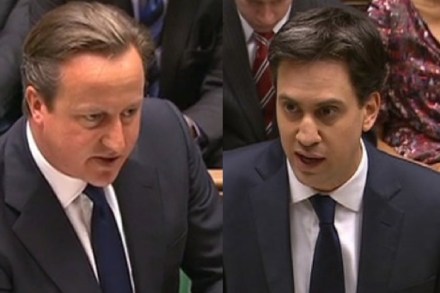
To anyone in Westminster, Prime Minister’s Questions is terrific fun and a good measurement of how the leaders are doing every week. But what does the rest of the country think of this rip roaring event? The Hansard Society has released a new report Tuned in or Turned off? Public attitudes to Prime Minister’s Questions to find out whether the nation enjoys the session as much as the keen political watchers do. The report suggests that PMQs are seen a ‘cue’ for wider perceptions of Parliament, most of which are negative. The public dislikes the pantomime atmosphere, the political point scoring and general behaviour of MPs — which is likened