Uk politics

Tory call to rebrand National Insurance is politically smart

The government’s legislative programme is pretty light at present. But the Bill that is going to spark the most interest this week is destined to go nowhere at all. It’s a Ten Minute Rule Bill, introduced by Tory MP Ben Gummer this Tuesday, and calls for National Insurance to be renamed the ‘Earnings Tax’. What’s in a name? Well, there are two good reasons why this Bill which won’t go anywhere (Ten Minute Rule motions are simply used as a way of making a point and drawing attention to an issue) has, as I understand it, already gained a great deal of attention and sympathy at the highest levels of

Ed Miliband: Children behave better than MPs at PMQs

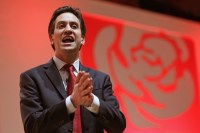
A rite of passage for any Opposition leader these days is to promise to make politics more decent and connected to people’s lives. One recent Opposition leader said this, for example: ‘And we need to change, and we will change, the way we behave. I’m fed up with the Punch and Judy politics of Westminster, the name calling, backbiting, point scoring, finger pointing.’ David Cameron, who said this in his leadership acceptance speech in 2005, now has a team of MPs who help heckle Labour in the Commons during Prime Minister’s Questions. This was mainly in response to Labour being much better at heckling, with Ed Balls gesticulating and sledging

Would ending unpopular benefits test contract really solve the problem?

What will happen to the much-maligned contractor that carries out the government’s work capability assessments which determine whether a sick or disabled person is fit for work or needs long-term disability benefit? Atos Healthcare is reported to be seeking an early end to its contract with the Work and Pensions department, which certainly won’t dismay ministers who have been privately unhappy with the company’s performance for a while. Although DWP isn’t commenting beyond the statement below, it now looks as though it won’t be difficult to end the contract mutually. ‘Atos were appointed the sole provider for delivering Work Capability Assessments by the previous government in 2008. In July last

Who would benefit from a ban on FOBTs?

I wrote a piece about the Fixed Odds Betting Terminals uproar in the magazine this week, and it has prompted some angry responses by email and over social media. I’m told that I didn’t treat problem gambling with sufficient seriousness. I’m not sorry about that, I’m afraid: I think it’s silly to be too serious about the vices of others. My point was that the political and the media classes are having something of a moral panic about FOBTs  — and as always with moral panics, the political and media classes don’t really know what they are talking about. I doubt Ed Miliband or Tom Watson, who both seem dead against FOBTs, have ever spent more than

Food banks: What would Labour do?

Was the church right to intervene in the debate about food banks and benefit cuts? I argue in my Telegraph column today that it was – but that the way the 27 bishops (more have since spoken out to support the letter to the Mirror – and Justin Welby has agreed with their argument that benefit cuts are pushing up food bank demand) intervened says a number of interesting things about the Church of England today. But there is another interesting question worth asking, which is not what would Jesus do but what would Labour do? As I explained earlier in the week, the party finds these attacks from church

He said ‘yes’! Farage agrees to debate Clegg on EU

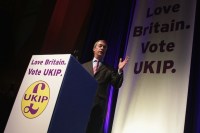
He asked… and Nigel said yes. The Ukip leader and his party colleagues had whipped Westminster into a state of great suspense in the 24 hours between Nick Clegg’s phone-in on LBC and Nigel Farage’s own appearance on the station. And Farage took his time to say ‘yes’ to the Lib Dem leader’s challenge to a live debate on the EU ahead of the European elections. He said: ‘I nearly choked on my bacon roll when I heard Nick Clegg say he wanted to have a debate about the big European question because this was the guy three years ago advocating an in/out referendum who now says there shouldn’t be

Nick Clegg to challenge Nigel Farage to a head to head debate on Britain’s EU membership

I understand that Nick Clegg is to challenge Nigel Farage to a debate on Britain’s EU membership ahead of the European Elections this May. The Liberal Democrat leader will issue this challenge imminently. Clegg’s decision to challenge Farage to a debate is all part of his party’s effort to try and turn the European Elections into a contest between the Liberal Democrats, championing In, and Ukip, who are for out. Those close to Clegg hope that a head to head debate between these two will highlight this contrast. They alos expect that it will put pressure on the Tories and Labour to be clearer about where they stand on the

The Church should be employing its moral outrage to greater effect

Part of the role of the Church is to give the poorest in society a voice. It should be front and centre of the public debate about welfare reform, but the most recent intervention by Archbishop Nichols seems directed at the wrong target. The current disincentive for work in the welfare system is indefensible. It is telling that no voice has been heard in the debate on any side suggesting that it is a good idea to have a situation where people can earn more than the average wage on benefits or that moving to Universal Credit (a simpler system with a reduced disincentive to work) isn’t, at least in

Why bishops are useful for the Left – for now

Even though, as I said earlier, it makes sense for David Cameron to come out fighting in favour of his party’s welfare reforms after they were slammed by the Archbishop of Westminster, there’s a point worth considering about how useful these criticisms from leading lights both in the Catholic Church and Church of England are for the Left. Nichols has since said that the government’s cuts and reforms are ‘perfectly understandable’, but that ‘what is beyond my understanding is why a programme of reform needs to result in people who, when they are given some food, burst into tears because they haven’t eaten in three days’. This is precisely the stance

Want to make welfare a ‘moral mission’? Stop toting it as a weapon.

Quite naturally, a piece from the Prime Minister claiming that welfare reform is ‘at the heart… of our social and moral mission in politics’ is provoking hilarity from those who’ve never backed that moral mission in the first place. David Cameron is writing in the Telegraph as a response to the Archbishop of Westminster Vincent Nichols’ comments in the same paper at the weekend that the government’s welfare reforms were a ‘disgrace’. He argues: ‘Of course, we are in the middle of a long and difficult journey turning our country around. That means difficult decisions to get our deficit down, making sure that the debts of this generation are not

Who are the real bullies in the Scottish independence debate?

Stewart Hosie, the SNP’s finance spokesman at Westminster, said something unwittingly revealing last night. Taking part in the latest of BBC Scotland’s referendum debates (you can catch it here), he observed that: There is a plan from the Scottish government and the Yes side… What we don’t have is a plan a from the No people about what happens in the event of a No vote. So I want them to explain to you today when are they going to cut £4bn from Scotland’s budget? […] There is precisely nothing from the No camp to explain what they’re going to do to Scotland in the event of a no vote.

How much does a degree improve your lifetime earnings?

What do you say to an arts graduate? Hamburger and fries, please. It’s an old joke but one that still rings true as students consider the value of a university education. A new survey from the graduate recruitment site Totaljobs.com today suggests that 40 per cent of graduates are still looking for work six months after graduating, whilst a quarter are still unemployed a year later. The news isn’t much for those who manage to bag a job – the latest ONS’ employment figures suggest that nearly half of graduates who have found work are in jobs that don’t require degrees. But even if the student of today takes the

Cooper’s stop-and search intervention shows danger of giving ground

David Cameron and his political aides are reportedly stalling over reform of stop-and-search powers because they fear it will dilute the Tories’ tough-on-crime message. But this means that Labour, circling like vultures for any waft of political roadkill, have swooped. Yvette Cooper has written to Theresa May offering Labour’s support in getting reform of the powers. Cooper says: ‘I hope that you will not give in to the Prime Minister’s opposition to change. Everyone agrees that the police need to have powers to stop and search individuals suspected of crime or to prevent a serious threat. Intelligence-led targeting of suspected criminals helps to cut knife crime and youth killings. This

Why Nick Clegg is so keen to pick a fight with Nigel Farage

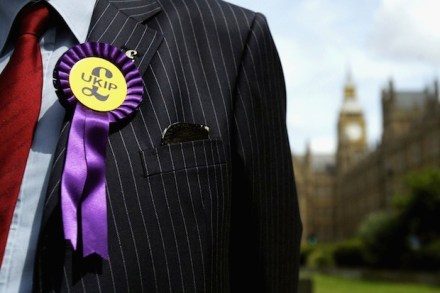
Before the European Elections in May, don’t expect either David Cameron or Ed MIliband to engage with Nigel Farage. Both the Tory and Labour leaders think that the best strategy for dealing with Ukip and its leader is to deny them the oxygen of publicity. Nick Clegg, by contrast, is desperate for a scrap with the Ukip leader. Clegg’s rationale is that the more fights he can pick with Farage, the more he can turn the European Elections into a fight between In—led by Clegg and the Liberal Democrats—and Out, championed by Farage and his party. Clegg hopes that this polarised contest will prevent a total wipeout of Lib Dem

Tory candidate: Conservative party not doing enough to convince minorities it is not racist

Is the Conservative party doing enough to attract ethnic minority voters? We’ve reported previous pushes by Chairman Grant Shapps and Home Secretary Theresa May to appeal to groups who have centre-right values but are turned off the Tories. But the FT today suggests that the top of the party is struggling to show enthusiasm, with one party insider claiming that Lynton Crosby feels it ‘muddies the message’ to move away from economy, jobs, welfare and immigration. The party’s candidate in Dudley North, Afzal Amin, agrees that the Conservatives are failing to communicate properly with ethnic minority voters. He told Coffee House: ‘What’s very clear to me is that in the

Alex Salmond attacks ‘campaign rhetoric’ with a ‘George Tax’

After a couple of weeks of something frightening and bad called ‘campaign rhetoric’ from Westminster politicians, Alex Salmond today tried to reassure Scots that everything would be OK if they did vote for independence. ‘The rest of the UK will never be foreign’ to an independent Scotland, he insisted, sounding rather in favour of another aspect of the Union (alongside the Queen, the pound and so on). And this ‘campaign rhetoric’ about the currency union was wrong – and dangerous to the rest of the UK, said Salmond. Employing something that was of course nothing like campaign rhetoric at all, the First Minister warned that ruling out a currency union

Revealed: the Salmond-Osborne Tapes

A recording of a conversation between Alex Salmond and George Osborne has been leaked* to The Spectator. An edited extract follows: Alex Salmond: Scotland and England are different countries. So different, in fact, that we should no longer live together. Our interests have diverged and so must our futures. George Osborne: I do not think that is the case. Nor, by the way, do I hope it is. Alex Salmond: But it is! George Osborne: [wearily] Perhaps you are right. Very well; if our interests and futures diverge then perhaps, as you suggest, present arrangements will no longer prove as satisfactory as once we thought they were. Alex Salmond: I knew

Nick Clegg softens his language on Labour

Nick Clegg’s comments on Radio 4 about the possibility of a coalition deal with Labour in 2015 are significant, not because the Deputy Prime Minister is airing the possibility of the Lib Dems striking a deal with the left rather than the right, but because of his shift in rhetoric. Clegg was perfectly clear in his ‘No, no, no’ speech at the party’s 2013 autumn conference in Glasgow that the Lib Dems could do a deal with either party and would tone down the excesses of a Tory or Labour-led government. But his language back then annoyed some people. He said: ‘Labour would wreck the recovery. The Conservatives would give