Uk politics

Does Boris Johnson really want to see Tony Blair tried for war crimes?

What are we supposed to make of Boris Johnson? I mean, are we supposed to pay attention to what Boris actually says? Or is he permitted to play the game of politics by different rules? That is, the sort of stuff that applies to other politicians does not apply to Boris because the Mayor of London is a great entertainer and thus granted some kind of relief from the usual rules of responsibility. Just asking, you know. Consider his recent remarks about Tony Blair and the Iraq War. During an appearance on LBC last week, the Mayor appeared to endorse the fashionable daft idea that Mr Blair should be tried

Gove uses urgent question on free schools to trumpet his achievements

Even though the row over free schools has nothing to do with the Labour party, it took a reasonable bet that it would benefit from joining the fray by asking an urgent question on the allegation that Michael Gove diverted £400 million from basic need funding to the free schools project. In the Commons this afternoon, Tristram Hunt accused the Education Secretary of lacking ‘self-control and focus’ and paying for ‘pet political projects in expensive, half-empty, underperforming free schools’. He demanded that Gove confirm that he did indeed re-allocate this funding, asked him to accept the National Audit Office figures showing free school places had been allocated outside of areas

The Lib Dems no longer support school choice

Throughout this latest, blazing Coalition row over Michael Gove – which is spreading like fire over dry heath and has now ignited the normally harmonious Treasury – the Liberal Democrats have insisted that they support free schools. They argue that it is simply Gove’s ‘zealotry’ in transferring £400 million from the basic need allocation to the free schools project, not the principle of free schools. They are indeed mostly needled by years of working with a man who they find difficult to work with, and whose enthusiasm for certain aspects of education, whether it be free schools or the history curriculum, irritates them. They were also needled by the way

Will voters feel Cameron’s confidence about European reform?

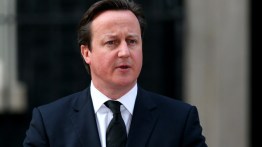
Why is David Cameron so confident that he’ll get what he wants from his renegotiation of Britain’s relationship with Europe? Today on the Andrew Marr Show he managed to advocate Britain voting ‘yes’ in the 2017 referendum before he’s even started changing the terms of the membership voters would be backing. His reasoning for this was firstly that ‘I’m someone who has a very positive, optimistic plan for this country’ (a convenient contrast with Ukip), and secondly because he has a good track record of getting what he wants in Europe. listen to ‘David Cameron on the Andrew Marr Show’ on Audioboo

The Axe man cometh

David Axelrod jets into London this week for the first time since signing up to help Labour in 2015. Axelrod, who friends admit is no expert on UK politics, will have two days to try and get his head round the shape of the next election campaign. This trip will mark the first time that Axelrod and Miliband have met face to face. Up to now, they have only spoken on the telephone. Axelrod will also address a specially convened meeting of the shadow Cabinet. There’s no doubt that having the man who helped Obama get to the White House in town will be a boost to Labour morale. But

Ed’s one-way ticket

Miliband has also been busy ‘looking at options’ for renationalising Britain’s railways at the end of current franchise contracts. This is yet another of what I have called Labour’s ‘targeted tweets’ designed to please trade unions and pick off loose voters — in this case disgruntled south–eastern commuters. What it’s not is a credible, costed policy. Even Ed Balls is said to be distancing himself from such a retrograde idea, while Martin Griffiths, chief executive of the Stagecoach transport group, rightly called it ‘a one-way ticket to higher taxes’ and others in the industry point out that there could be no quicker way to kill existing plans for investment in

Where is Labour’s intellectual self-confidence?

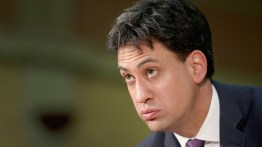
What a funny, contradictory week it has been for Labour’s campaign machine. First Ed Miliband told the Evening Standard that he had greater intellectual self-confidence than the Prime Minister – and won praise in the Spectator’s leading article for being someone who does indeed have the courage of their political convictions these days. Then he seemed so confident of his policies that he chose to needle David Cameron with one of them at Prime Minister’s Questions. But then he seemed to have a crisis of confidence and decided to produce a party-political broadcast that, er, didn’t mention anything Labour is up to at all. When I blogged about this latest

David Cameron gets bullish on European elections: but what’s his clean-up plan?

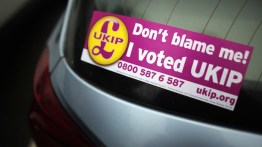
David Cameron has now decided that rather than pretend Ukip don’t exist, he’s going to attack them, and do so repeatedly. This morning on BBC Breakfast, the Prime Minister remarked that ‘we’ve seen some extraordinary statements from Ukip financial backers and candidates and I think it does go to the issue of the competence of the party: what on earth are they doing selecting people and allowing people like this to be in their party’. listen to ‘David Cameron: voters should ‘think about the competence’ of euro election candidates’ on Audioboo

What is David Cameron’s big idea?

[audioplayer src=”http://traffic.libsyn.com/spectator/TheViewFrom22_8_May_2014_v4.mp3″ title=”James Forsyth and Isabel Hardman look forward to the general election next year” startat=766] Listen [/audioplayer]In almost a decade as Conservative leader, David Cameron has tended to avoid talking about his political philosophy. He has presented himself as a pragmatist, suspicious of anything ending in ‘-ism’ — and the very opposite of a swivel-eyed ideologue. There is something to be said for this, but it raises the great question: what is a Conservative government for? There was no clear answer at the last election and so no clear result from that election. Voters had turned away from Labour, but were not quite sure how their lives would be

It’s not up to Cameron whether he survives a ‘Yes’ vote in Scotland

David Cameron may well have privately resolved that there is no cause for him to step down if Scotland votes for independence in a few months’ time, as per James Chapman’s scoop today. But the problem is that it is not in the Prime Minister’s gift to make that decision. He may well say that he isn’t going to resign, but that would have no effect on the number of letters that would be sent to 1922 Committee chairman Graham Brady demanding a leadership contest. It’s not as though the Tory party will reel from the shock of Scotland leaving, then wait to see what the Prime Minister says and

Today in #middleclassproblems: worrying how your lamb was killed

It doesn’t matter. It really doesn’t. At least not very much. The notion, apparently scandalous, that the Great British food market is being contaminated – sorry, infiltrated – by meat slaughtered according to traditional religious practices is the most #MiddleClassProblem of the year. I mean, you know it’s serious when Waitrose is in the dock. Waitrose! Now I can see that there is a case for requiring meat slaughtered without the animal being stunned to be labelled as such. But, as Melanie McDonagh concedes, the proportion of livestock slaughtered in this fashion is tiny. Perhaps 10% of sheep but only 3% of cattle and 4% of poultry. A reasonable person

Podcast: the gilded generation, one year countdown to the election and rise of the bores

Is it fair to describe today’s youth as the ‘gilded generation’? On this week’s View from 22 podcast, James Delingpole discusses this week’s Spectator cover feature with The Economist’s Daniel Knowles. With rising house prices, increasing levels of debts and a highly competitive jobs market, is the notion that the young have never had it so good a myth? Were things better for young people in the 1970s? And will today’s young generation witness a fall in living standards, compared to their elders? James Forsyth and Isabel Hardman also look forward to the general election, which is exactly one year today. At this stage, who is looking most likely to ‘win’, whether it is another coalition or being the

The 2015 conundrum

One of the striking things about the next election is how what is going on at the macro level looks so different from what is happening at a micro level. On the macro front, things seem to be moving the Tories’ way. The economy is growing at a good clip and that is set to continue until polling day and David Cameron has a considerable advantage on the question of who would make the best Prime Minister. But to return to the micro, it is easier to see seats where Labour might gain from the Tories rather than the other way round. Ask even the most optimistic Tories what constituencies

Five things you need to know about the Myners Co-op report

The Myners Report into the Co-operative Group (pdf) has been published today, and it doesn’t make for pleasant reading. Following the discovery of a £1.5 billion black hole in their finances, followed by the Paul Flowers ‘crystal Methodist’ scandal, the Co-op commissioned the former City Minister Paul Myners to look into the group’s problems and put together a restructuring plan to make it sustainable and properly governed. Here are the key things you need to know from the 180-page report: 1. The Co-op group is still ‘manifestly dysfunctional’ Lord Myners is not impressed with the current state of the Co-op Group and warns it needs to radically change ‘soon’ or

Exclusive: Leaked Lib Dem letter reveals changes to controversial ‘stateless’ plan

The debate on the Immigration Bill has just begun in the Commons. Many MPs are still trying to decide how to vote on the proposal to render foreign-born terror suspects ‘stateless’. In an attempt to persuade his party to vote with the government, Lib Dem Home Office minister Norman Baker has sent out a ‘dear colleague’ letter to MPs, leaked to Coffee House, in which he says he has amended the legislation to the extent that there is a ‘major shift’ from the Home Secretary. This ‘major shift’ means the Home Secretary must believe the suspect being deprived of their citizenship will be able to secure alternative citizenship from another

Labour aims squarely for its base with witty class war broadcast

Labourites are very pleased with their latest party election broadcast, featuring the ‘un-credible shrinking man’, Nick Clegg, growing smaller and smaller at the Cabinet table as the Tories around him hatch various evil plans to ruin poor people’s lives through the bedroom tax, cuts to the NHS and tuition fees. If you are already inclined to think the Tories are evil and Nick Clegg a bit of a weakling, you’ll enjoy this video. Which suggests that Labour is entirely playing to its base here. It’s not even Ed Miliband’s cost-of-living crisis pitch to hardworking families up and down the country who are a bit cheesed off that their lives don’t

Tories and ethnic minorities: lessons from George W Bush

Dan Hannan makes many good points in today’s Telegraph as he considers the Conservatives’ grim failure to attract support from black and ethnic minority voters. This isn’t merely a problem for the Tories, it is a crisis. As I pointed out yesterday, the Tory share of the BME vote in 2010 was exactly the same as their share of the vote in Scotland: 16%. True, this was an improvement on 2005 when only 11% of BME voters endorsed Conservative candidates but that’s a matter of only modest solace for Tory modernisers. Naturally (this being British politics) there is a thirst to look elsewhere for examples or lessons that might point

Busy afternoon for whips as would-be rebels mull controversial stateless plan

The Immigration Bill pops back up in the Commons today and MPs will have a second chance to scrutinise the government’s plans to deprive foreign-born terror suspects of their citizenship. In reality, it’s their first chance as these proposals were slapped into the legislation by ministers at report stage, and no-one really understood what they meant. Tory MPs were promised a briefing on it after the vote, so they trooped through the lobbies hoping for the best. Now they’ve had a few months to mull what the plans mean, they get a chance to vote again after the Lords amended the bill to make the stateless proposals subject to a

With one year to go, Cameron has won over his internal swing voters – for now

It’s a year to go until the longest election campaign finally finishes. Ed Miliband thinks he has more intellectual self-confidence than David Cameron, which since his 2013 autumn conference speech where the Labour leader finally found the courage of his convictions. But David Cameron has more confidence about his own party sticking by him for the campaign at least. The Prime Minister has mended some relationships, and others are more cordial and banging the Tory drum simply because they want their party to win next year. But it’s fair to say that for the time being the PM has got the contingent of swing voters amongst his own MPs –