Uk politics

The confusion of Ukip’s immigration policy

From our UK edition

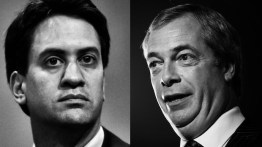
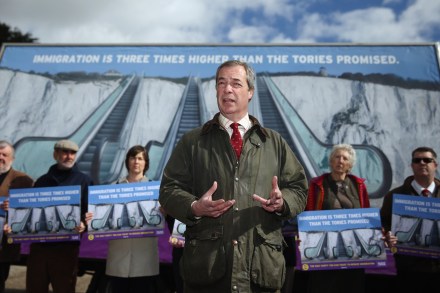
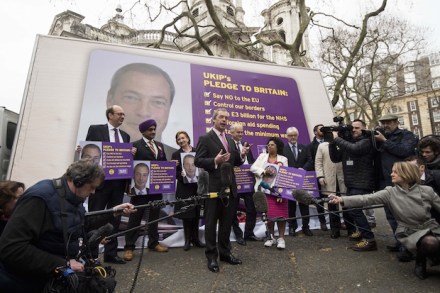
Immigration is a pretty important driver for voters who turn to Ukip. So you would have imagined that the party might have spent a while really making sure that its own policy on the matter is crystal clear. This morning in Dover, Nigel Farage said ‘I’m saying a net level of about 30,000 a year is roughly what we had for 50 years from 1950 almost until the turn of the century’. This seemed to be a bit of an about-turn from the Ukip leader’s decision earlier this month to ditch the 50,000 cap on the number of migrants arriving in the UK each year. Farage dropped the 50,000 target live on the Today programme just days after his immigration spokesman Steven Woolfe set it out at the Ukip conference.

Westminster sneers at Joey Essex because it is a closed shop of know-it-alls

From our UK edition

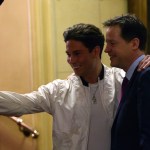
Well, at least Joey Essex has given bored pundits something to talk about today. He pitched up at a press conference with Nick Clegg, and took a selfie with the Deputy Prime Minister, which will certainly add to Clegg’s collection of useful props he hopes might win him a few more votes. The Guardian’s Jonathan Jones says this is an ‘image of the crisis in our political system’. Perhaps it does make Clegg appear rather desperate. But much of the tone has been sneering at a figure so apparently stupid as Essex wandering about in Westminster at all. I should declare an interest as I’m one of the journalists who Essex has been talking to about his programme, which sees him trying to work out why he should vote and how Westminster works.

Cameron: Je ne regrette rien

From our UK edition

David Cameron doesn’t regret the Lansley reforms that have done so much to damage any chance that the Tories could be trusted again by voters on the NHS. That’s what he told the Today programme this morning, saying: ‘The reforms were important and they were right… Of course [I stand by the changes]. If you’re saying to me: “Would you rather have 20,000 more bureaucrats and 9,000 fewer doctors?” Of course not.’ listen to ‘Today: David Cameron defends hostile campaign focus on Labour and Ed Miliband’ on audioBoom It’s difficult to find many Tories who privately share his view.

Nick Clegg’s women problem

From our UK edition

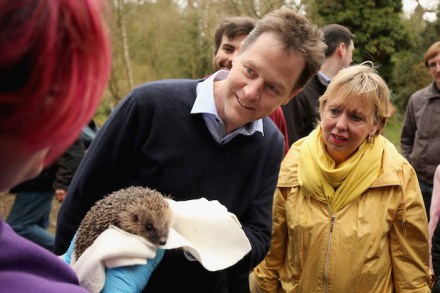
Nick Clegg ain't done yet, and as if to prove how deadly serious he is about winning this election, the Deputy Prime Minister visited a hedgehog sanctuary on his first campaign stop. Probably his least prickly public encounter since 2010. The Liberal Democrats have focussed their initial onslaught focusing on women, with Monday's Guardian reporting that it was 'his mission to win over female voters in a number of his party’s target constituencies': 'Party strategists believe that winning over the female vote will be crucial to their chances of success across a range of key battleground constituencies.' All of which is a little embarrassing when you consider just how poor Clegg's party's record is when it comes to women.

All aboard the election battle bus

From our UK edition

Now that David Cameron and Nick Clegg have had their final audiences with the Queen at Buckingham Palace, they can get on the road. Their shiny battle buses are waiting to accompany them on the campaign trail. The Lib Dems are charging hacks who want to clamber aboard their bus £750 per person per day, which is rather a lot for a bus journey, even if it does take you from seat to seat. You’d expect a champagne breakfast personally served by Tim Farron every morning for that fee. Still, the Tories have only invited certain people on their bus, and those certain people seem to be broadcast journalists rather than print hacks. Unfairly or not, Number 10 tends to view the latter as more troublesome.

Cameron: It is me or Miliband

From our UK edition

It is rare for politicians to mention their opponents by name - don’t give them the publicity is the normal approach. But standing in Downing Street just now to announce the start of the election campaign, David Cameron pointed at the door of Number 10 and said ‘The next Prime Minister walking through that door will be me or Ed Miliband’. There’s a method to the Tory approach. They believe that one of their trump cards in this election is that the public just can’t see Ed Miliband as Prime Minister. They want to force voters to confront the choice that one of Miliband or Cameron will be Prime Minister after the election and that the only way to make sure it isn’t Miliband is to vote Tory.

Miliband in the middle as TV debate line-up set

From our UK edition

The order in which the party leaders will stand in this Thursday’s televised debate has been set as follows: Natalie Bennett, Nick Clegg, Nigel Farage, Ed Miliband, Leanne Wood, Nicola Sturgeon and David Cameron. So Ed Miliband will be in the middle, and David Cameron and Nigel Farage will be sufficiently far apart from one another to thwart Ukip’s ambition for their leader to land a good run of blows on Cameron. Still, Farage is next to Miliband, which means he’ll have a chance to land some blows on the leader of a party he’s trying to take votes from too. The standing order does matter a little, but what all the party leaders will be more worried about is how they use the very short amount of time they will have available to speak.

Will we learn anything from this election campaign?

From our UK edition

Will we learn anything from any of the parties in this election campaign? And will the polls tell us anything either? Yesterday Labour was excited that it had a four-point lead over the Tories in a YouGov poll. Today the Tories are excited that they’re four points ahead in a ComRes poll. The polls are certainly moving, but only like a pendulum, swinging back and forth, at present. Meanwhile Labour’s frontbenchers are struggling to explain how they’d cut the deficit, the Tories don’t want to explain how they’d cut £12bn from welfare, and the Lib Dems are still explaining why they do/don’t want a referendum on Britain’s membership of the EU, depending on which way you look at it. It all sounds rather repetitive.

Alex Salmond invades the stage and appeals to the cultish side of the SNP

From our UK edition

Alex Salmond has been oddly absent from the SNP’s spring conference this weekend. Although the former First Minister’s only official positions are as the MSP for Aberdeenshire East and the PPC for Gordon, it's puzzling why one of the party's most prominent figures wasn't given a prime speaking slot. But that didn’t stop him from trying to steal the show. A small stage was setup in the hall for a Q&A session to promote his new book at lunchtime today. But as soon as Salmond arrived, a combination of sound issues and the ecstatic crowd led him to give up on the side stage and invade the main platform. As the video shows, he had no qualms about strolling into the limelight. Incredible - Alex Salmond quits the small Q&A stage to take to the main stage.

Lucy Powell confirms: debt-addicted Labour has no plan to balance the books

From our UK edition

'You aren't listening to what I'm saying,' said a rather rattled Lucy Powell, Labour's election chief, whom the party put up for BBC Sunday Politics today. I suspect that, by now, she'll have wished that we weren't listening. Because in a commendable moment of candour, she admitted that the Labour Party intends to keep debt rising should it win power – and has no real deficit reduction strategy. Ms Powell dispensed with Ed Balls tricksy language and told it how it is. Here she is, talking to BBC Sunday Politics (11 mins in, after complaining about a 'Paxo-style interview'). 'Andrew Neil: You would borrow more, wouldn't you? Andrew Neil: To bridge the deficit you have to borrow more.

Stakes raised ahead of Thursday night’s debate

From our UK edition

The stakes have been raised, at least psychologically, for Thursday night’s debate. Today’s YouGov poll has Labour four points ahead, in contrast to a two point Tory lead in their last survey. This is being seen in Westminster as a Paxman bounce for Miliband. If this Labour leads is still in place at the end of the Easter weekend, Tory nerves will begin to fray. Thursday’s debate will be a crowded affair with seven leaders on stage. Despite it being a two hour debate, there’ll only be time for four questions. As I say in the Mail On Sunday, the debate will almost certainly turn into Cameron versus the rest as they all try and go after the sitting Prime Minister.

YouGov/Sunday Times poll puts Labour 4 points ahead. Be afraid.

From our UK edition

Just two weeks ago, senior Conservatives were saying that 'crossover' had been reached: that the Tories were ahead in the polls and that the lead would slowly build. Last week, the lead evaporated. Tomorrow, a YouGov/Sunday Times poll puts Labour four points ahead. Cameron's bizarre pre-resignation on Monday and a rather lacklustre performance in what passed for the television debate on Thursday seems to have had an effect. Sure, they were watched by only 3 million people vs. 10 million for the 2010 debates - but the word gets out. Jeremy Paxman performed very well, Ed Miliband quite well, Cameron less well. And yes, that's the Cameron already talking about his retirement, as if he has already mentally checked out.

Nicola Sturgeon’s speech in Glasgow highlights the similarities between the SNP and Ukip

From our UK edition

Is Nicola Sturgeon trying to channel Nigel Farage? Scotland’s First Minister regaled the 3,000-strong crowd at the SNP’s spring conference today with some nuggets of policy, more demands for Ed Miliband and even a swipe at Margaret Thatcher. But she also positioned herself as part of a UK-wide movement seeking to 'shake up' Westminster in the name of 'ordinary people'. You might add: the Ukip of the north. SNP folk loathe being compared to Ukip. In fact, when I was writing this piece in a bar at the conference centre, I was berated by a group of Nats who spotted the headline and took me to task. But let’s face it: both are populist-nationalists who love to rail against the Westminster elite.

David Cameron: ‘This is a high stakes, high risk election’

From our UK edition

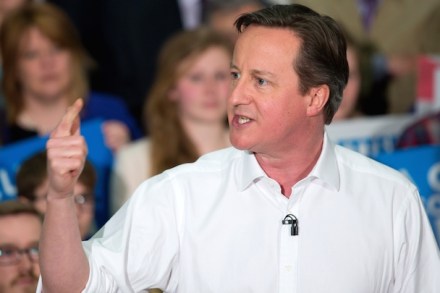
The Tories want to frame this election as a straight choice between David Cameron and Ed Miliband. So, today Cameron delivered some of his most direct attacks on Miliband yet. Anticipating criticism, he said, ‘Some might say “don’t make this personal” but when it comes to who’s Prime Minister, the personal is national.’ Cameron warned that Labour could reverse everything that has been achieved in this parliament, the ‘painstaking work of the last 5 years – they could undo in just 5 months.’ He attacked Labour as ‘the welfare party’ and derided Miliband as a ‘Hampstead Socialist’.

Listen: The Spectator’s verdict on the Cameron/Miliband Q&A

From our UK edition

According to the snap polls, David Cameron was victorious in the first TV 'debate' — but Ed Miliband didn't do too badly either. In this View from 22 podcast special, James Forsyth, Isabel Hardman and I discuss the televised Q&A session with Cameron and Miliband yesterday evening. Did the Labour leader exceed expectations? How did the Prime Minister cope with an interrogation from Jeremy Paxman, as well as questions from the audience? And what affect, if any, will the outcome have on the election campaign?

Despite Cameron’s win, Labour will be happy with Ed Miliband’s Q&A performance

From our UK edition

David Cameron won tonight’s TV head to head with Ed Miliband according to an instant ICM poll. The poll for the Guardian gives the evening to Cameron 54-46. Though, it is worth noting that this 8 point margin is smaller than Cameron’s usual lead on the leadership question. Cameron started with a grilling from Jeremy Paxman, who pinned the Tory leader to the crease with a series of fast, hostile deliveries. Cameron just about kept the ball out. But he was visibly uncomfortable at points. However, there was no killer moment. Cameron was more comfortable with the questions from the audience and with them he repeatedly pivoted to the Tories’ key campaign message that you can only have more spending on public services with a strong economy.

Is the era of stable government over?

From our UK edition

Everyone agrees: the outcome of this election is impossible to predict. But are we witnessing the end of the stable, two-party system of government we’ve become used to? On Monday, the Spectator posed this question to a panel of political experts for their thoughts on whether this election will mark the beginning of a series of coalitions. James Forsyth, the Spectator’s political editor pointed out that ‘you don't need a single party government for stable government’. He thinks that after polling day, the next government is unlikely to be similar to the current arrangement.

Parliament finishes in uproar over Speaker vote

From our UK edition

Well, after months of Parliament appearing boring, tired and without things to discuss, the zombie seems to have woken up. MPs are currently in uproar in the Chamber over William Hague's proposal to make the re-election of the Speaker at the start of the Parliament a secret ballot. Naturally, those who really dislike Bercow are very happy with the proposal, but it's not just Labour MPs who have expressed their distaste for what's going on. Passionate supporters of Parliament as an institution, including Jacob Rees-Mogg, have criticised the move as one that undermines the House. Rees-Mogg called this 'jiggery-pokery' motivated by grudges against Bercow. It was not presented in the usual way at Business Statement last week and instead was snuck in at the very last minute last night.