Uk politics

Tory rebels wait for first chance to pounce

From our UK edition

That some Tory MPs wouldn’t like the idea of Michael Gove scrapping the Human Rights Act has been known for some time, but there is something else worth keeping an eye out for in the next few weeks as the Tories draw up their proposals. Some Conservatives, like Dominic Grieve, have long been opposed to this sort of reform. But many others are waiting to see the detail before they react - and are still minded to rebel on the legislation. Depending on what Gove and his team produce, they could find themselves with a group of rebels considerably larger than the majority of 12 the government has, who will enjoy the support of Labour and the SNP (oh, and the Lib Dems, but they won’t be necessary, really, will they?) in blocking the legislation.

Making Labour work

From our UK edition

[audioplayer src="http://rss.acast.com/viewfrom22/thelastdaysofmiliband/media.mp3" title="Dan Hodges and Andrew Harrop discuss the final days of Miliband" startat=34] Listen [/audioplayer]The Labour party is in a worse position today than after its defeat in 1992. Then, the electorate sent Labour a clear and simple message: move to the centre, don’t say you’ll put taxes up and select a more prime ministerial leader. This time, the voters have sent the party a series of messages, several of which are contradictory. The reasons Labour failed to win Swindon South are very different from why it lost Morley and Outwood and the reasons for that defeat are different again in Scotland, where almost all seats fell to the nationalists.

How the polls got it so wrong

From our UK edition

Not all the pollsters got it wrong. On the morning of the election, a set of strikingly accurate predictions was slapped on David Cameron’s desk. They had been compiled by Jim Messina and Lynton Crosby, the strategists who had been running a campaign derided as dull and repetitive. But, as their research showed, it was also effective. Messina is now back in his office in Washington DC. ‘We predicted 312 seats that morning to Lynton,’ he says. This was in line with the exit poll (316 Tory seats) that shocked Westminster. Yet, every day of the campaign, the polls had the Tories and Labour neck and neck. Did he ever doubt his methods? ‘No, not at all,’ he says. Crosby carried out daily tracker polls and Messina was conducting analytics.

Miliband’s downfall

From our UK edition

Ed Miliband was writing his victory speech on election night when the nation’s broadcasters announced the exit poll. He remained convinced — as he had been all along — that he was destined for No.10. In his defence, most people in Westminster thought the same. But within his ranks, a rebellion had already broken out. At 2 p.m. that afternoon, a member of his shadow cabinet had resigned — fearing not defeat, but the debacle that would follow Miliband’s success. ‘I was being briefed by Ed’s team about their post-election plans,’ the shadow minister told me. ‘It was nuts. They were explaining how there would be “no concessions”, no “tacking towards the centre”, nothing.

Having a leader won’t solve all of Labour’s problems

From our UK edition

The Labour party has decided on a medium-length campaign to elect its new leader, the Press Association reports, with the announcement on 12 September. This is slightly odd, given NEC members were still on their way to the meeting where they’ll vote on the timetable, but there you go. If that date is approved, it is a halfway house between the short campaign that some were arguing would stop the party from descending into lengthy navel-gazing while the Tories got away with introducing policies that weren’t properly scrutinised by the Opposition, and the long campaign that the unions wanted so they could sign up more members - and that some of the less well-known candidates wanted too in order to establish themselves.

Steve Hilton returns to the British political scene

From our UK edition

In 2012, Steve Hilton quit his role as David Cameron’s senior adviser in frustration at the compromises of coalition and the slow pace of reform. Since then, he has maintained an almost total vow of silence on British politics. He had no desire to say anything that could be turned into a tricky headline for the Tories. But with the Tories having won the election—and with a majority—Hilton is dipping his toe back in the British political water. As well as doing various events to promote his new book More Human, he is also joining the Cameroon think tank Policy Exchange as a visiting scholar.

Rory Stewart’s mysterious promotion to Defra

From our UK edition

One of the stranger appointments of this reshuffle so far has been Rory Stewart being sent to Defra. The former chair of the Defence Select Committee does represent a rural constituency, but the obvious choice given his service in Iraq and Afghanistan would have been the Ministry of Defence. Perhaps this wasn’t possible given his passionate arguments in favour of maintaining defence spending at 2 per cent of GDP, which the Tories have refused to do. But another obvious choice would have been the Scotland Office, given his passion for the Union - and the location of his seat. During the referendum campaign, Stewart organised his own event called ‘hands across the border’, which involved building a large cairn of painted stones in honour of the Union.

Chuka Umunna confirms he will stand for Labour leader

From our UK edition

In the last few minutes, Chuka Umunna has confirmed that he will be standing for the Labour leadership. The Streatham MP made the announcement in a video on his Facebook page while in Swindon - presumably to start undoing any claims his rivals will make that he is a candidate who only appeals to Londoners. He said: ‘I’m pleased today to be announcing that I will be standing for the leadership of the party. I think we can and we should be winning in seats like in Swindon. North, South, East, West we can absolutely do it as a party.’ Umunna added that he didn’t have much truck with the idea that Labour now needed to take 10 years to rebuild.

Blue collar Conservatism is essential but difficult for the Tories

From our UK edition

David Cameron is holding the first all-Tory Cabinet meeting since 1997 today, and he is expected to emphasise his mission for this Government to be characterised by 'blue-collar Conservatism' in which the Tories become the natural party of working people. It is, some hope, David Cameron's chance to show, finally, what he stands for in politics. Previously when the Tory leader focused on a defining brand and a moral mission, it seemed a bit wishy-washy and insincere, with a lot of hugging of dogs and green trees. Then in this election campaign Cameron ended up being brutally pragmatic, not so much giving voters a reason to vote Conservative, but a reason to stop the SNP holding sway over a Labour government.

No Cabinet job for Grant Shapps

From our UK edition

The party chairman in a general election winning campaign can normally expect a plum job as a reward, especially when that victory was against the odds. Tonight, though, Grant Shapps finds himself not in the Cabinet but a Minister of State at the Department of International Development. Shapps’ treatment is, at first, puzzling. After all, the Team 2015 network that he created appears to have done a decent job in neutralising the supposed advantage that Labour’s ground operation was meant to give it But those around the Tory leader, say that David Cameron simply became fed up with the odd allegations that kept popping up about Shapps. So, the fairness—or otherwise—of his treatment depends on whether these stories are true or not.

Breaking: Nigel Farage to remain Ukip leader until the end of time

From our UK edition

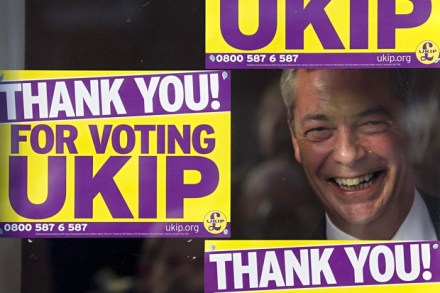
Well, when Nigel Farage said he might come back as Ukip leader, we didn't expect it would be quite so soon. Today the party's NEC unanimously rejected Farage's resignation, on the basis that the Ukip membership did not want him to go. Steve Crowther, Chairman of UKIP, said: 'The NEC also concluded that UKIP's general election campaign had been a great success. We have fought a positive campaign with a very good manifesto and despite relentless, negative attacks and an astonishing last minute swing to the Conservatives over fear of the SNP, that in these circumstances, 4 million votes was an extraordinary achievement. On that basis Mr Farage withdrew his resignation and will remain leader of UKIP.

How will SNP MPs operate in Parliament?

From our UK edition

Most of the new SNP MPs celebrated their party’s amazing result in the general election today with a photo call outside Parliament. They certainly looked an impressive bloc of parliamentarians, illustrating just how different this Parliament will look and feel from the last. But one of the interesting questions is how much freedom will these new MPs have to pursue their own interests, or whether they will be expected to operate as a bloc, and not outside the bloc. Many backbench MPs take up personal campaigns on a matter affecting constituents, or a small issue where they hope they can effect a change in the law. Some do this when it is not their party’s policy, in the hope that they can change the party too.

Iain Duncan Smith to stay at Welfare

From our UK edition

News has just broken that Iain Duncan Smith is to remain as Secretary for State for Work and Pensions. Now, normally a Cabinet Minister remaining in post would not be news but there had been repeated rumours that IDS would be shuffled out of this job. The fact that IDS is staying tells us, I think, two things. First, that even with £12 billion more of welfare cuts needed, Cameron wants the policy to be as much about saving lives as money. Second, the decision not to shuffle IDS shows a sensibly cautious approach to party management. Moving IDS, a former leader, from the job he loves doing would have caused upset. By keeping him in place, Cameron ensures the continued loyal presence round the Cabinet table of someone trusted on the Eurosceptic right of the party.

How David Cameron will manage his Tory coalition

From our UK edition

Up until Thursday night, everything that David Cameron and George Osborne had done in government had had to be agreed by the Liberal Democrats. Every policy had to go through the ‘Quad’, the coalition government’s decision making body made up of Cameron, Osborne, Clegg and Alexander. That doesn’t have to happen anymore. As one Downing Street figure says: ‘It is all completely different now, we can power forward with what we want to do. There’s no need for everything to be watered down. It’s invigorating’. Not having to manage a coalition, also frees up huge amounts of time for both Cameron and the Number 10 operation. It would be well advised to spend a good chunk of this time, say half, on managing the party.

Revenge of the Blairites

From our UK edition

Lord Mandelson and his protégé Chuka Umunna ended up sitting next to one another on the Marr sofa at the end of the programme. Both had spent their interviews setting out what Labour had been doing wrong for the past five years, though Mandelson was markedly more savage than Umunna. The Labour peeer was particularly keen to make the point that New Labour had been too quickly discarded in favour of an ‘experiment’. He said that ‘the awful, shocking thing about this election is Labour could have won it’, adding: ‘The reason we lost it and lost it so badly is in 2010 we discarded New Labour, rather than revitalising it and re-energising it and making it relevant for the new times, the new policy challenges that we faced. That was a terrible mistake.

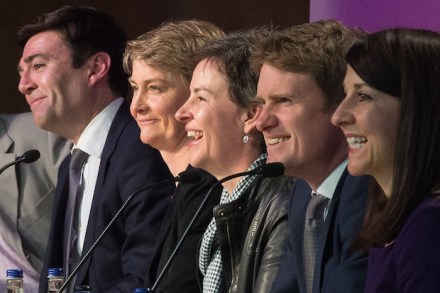
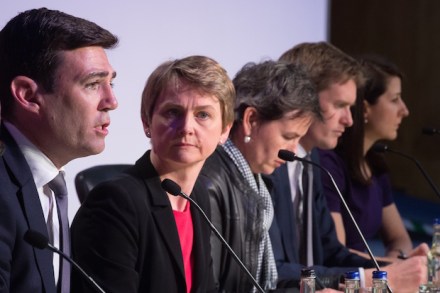
Starting gun fires on Labour leadership contest as candidates set out their stall

From our UK edition

Inevitably, the Sunday papers are full of pieces by Labour leadership hopefuls dissecting why their party did so badly and offering their initial prescriptions. They are actually all rather slow out of the blocks as David Lammy said this morning that ‘certainly for people like me it’s absolutely time to step up into a leadership role’. So in the Observer we have Chuka Umunna, positioning himself, unsurprisingly, as the Blairite candidate. He says the party had ‘too little to say to the majority of people in the middle’ and that ‘we need a different, big-tent approach’ (referencing the master).

Justice for Michael Gove

From our UK edition

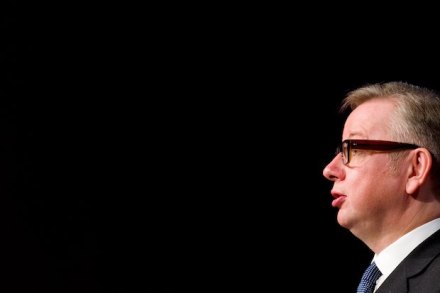
Michael Gove is the new Justice Secretary and Lord Chancellor, Downing Street has just announced. Chris Grayling will move to become Leader of the House. Number 10 is also confirming that, as David Cameron promised during the election campaign, Nicky Morgan will continue as Education Secretary. Becoming Justice Secretary marks a return to Gove running a big department after his service as chief whip in the run up to the general election. I suspect that there will be two things that Gove concentrates on. First, sorting out Britain’s relationship with the ECHR. Grayling had already committed the Tories to withdrawing from the Convention if parliament and courts here could not veto a judgement from the European Court of Human Rights applying in this country.

Is satire a dying art?

From our UK edition

I appeared on Radio 4 a couple of weeks ago to discuss the age-old question of whether political satire is dead. I don’t think it is, but it has lost a good deal of vitality in recent years and the role of satire in the general election campaign is a case in point. There has been no shortage of ‘satirical’ television programmes, but none of them have cut through. The only sign of life has been the flurry of photoshopped images on Twitter that have followed each misstep of the parties’ campaigns, such as Ed Miliband’s decision to carve Labour’s election pledges on to an eight-foot stone slab. If Stanley Kubrick was still alive he’d be suing people for illegally reproducing images from the opening scene of 2001: A Space Odyssey.

Revealed: the party with the most negative election campaign

From our UK edition

Which party is the most negative in this election campaign? All of them have spent a great deal of time being negative about their opponents’ apparent negativity, claiming that only their own party is running a positive campaign about the future for this country, and so on. But it’s easy to make grand claims, and even easier not to measure up to them at all. To give us an answer, academics at British Election Leaflet Project at the University of Nottingham have analysed leaflets from the parties in this campaign. They looked at 1,300 pieces of election literature from nearly 300 constituencies. All the leaflets were uploaded on electionleaflets.org. Their findings are quite surprising.