Uk politics

Speaker Bercow: Corbyn will need to stick with new PMQs tone for months

From our UK edition

John Bercow has long made clear that he would like MPs to behave a little better at Prime Minister’s Questions, which he believes is so rowdy that it upsets voters. Well, he seems to have got what he wants, or at least for the first week of Jeremy Corbyn’s leadership of the Labour party. Last night, at a lecture to the think tank Policy Exchange, he was asked about the session, and whether he thought it would improve permanently. The Speaker said he didn't believe 'that a huge amount of additional work is required in terms of creative construction of the session', though he added that the session could be longer, or have a mix of open and substantive questions from MPs, if they wanted that.

CCHQ will remain neutral during EU referendum campaign

From our UK edition

The Conservative Party board has agreed that CCHQ will remain strictly neutral throughout the EU referendum campaign, Coffee House understands. Sources report that this afternoon's meeting concluded that it was in the best interests of the party that its campaign machine be inaccessible to either side in the campaign. MPs had warned of a split if Tory party resources had been made available, particularly if they were made available for the side of the campaign that David Cameron ends up backing, which is expected to be 'In', while many Tory members are in favour of leaving. Earlier, Coffee House revealed that David Cameron was in favour of neutrality. But there will now be questions about the definition of neutrality. Does this include no data being shared with either camp?

Jeremy Corbyn should forget railways if he wants Labour to be a success

From our UK edition

Jeremy Corbyn’s first policy pronouncement as Labour leader hasn’t been all that surprising: he wants a ‘People’s Railway’ that will bring the railways back into public ownership line by line. He will have noticed the excited noises that party members made at hustings whenever he mentioned rail renationalisation - and the impatient sighs from the same audience when his rivals for the leadership were cool on the issue. But as Peter Kellner explains today, even though this individual measure is popular, unless Corbyn is able to deal with the public’s fundamental lack of trust in Labour over the economy, he could promise voters every single retail offer they’ve ever dreamed of and they still wouldn’t back his party.

David Cameron backs calls to keep Tory party neutral during EU referendum

From our UK edition

David Cameron will today support calls from his MPs to keep the Conservative party neutral during the EU referendum campaign, Coffee House understands. The Times reports this morning that the Conservative party board will meet to discuss whether or not the party machine should remain strictly neutral. This would mean the campaign to stay in the EU, which the Prime Minister is expected to support, could not use campaign data gathered by CCHQ, or organise activists using the party’s structures. A Number 10 source tells me that Cameron will be represented at the board, and that his view is that the party should be neutral during the referendum.

Diary – 17 September 2015

From our UK edition

With four days to go until the result of Labour’s leadership election, a call from the Sunday Times. Would I like to write a piece, along the lines of the opening chapter of my 1980s novel A Very British Coup, about the first 100 days of a Corbyn government? Anything up to 3,000 words, he says. I am sceptical that the sense of humour of the censors at Murdoch HQ will stretch to the prospect of a Corbyn government, however fanciful. Especially since any such government is likely to be interested in breaking up the concentration of media ownership. What they are really looking for, I suspect, is tale of chaos, mayhem and a breakdown of the social order. Nevertheless he is bursting with enthusiasm. After nailing down terms I decide to give it a go.

LISTEN: John McDonnell apologises for IRA comments

From our UK edition

Appointing John McDonnell as his Shadow Chancellor made Jeremy Corbyn's first few days as Labour leader much harder than they needed to be. This was mainly because the Hayes and Harlington MP made some deeply distasteful comments about the 'bravery' of the IRA. In 2003, McDonnell told a gathering to commemorate IRA hunger striker Bobby Sands: ‘It’s about time we started honouring those people involved in the armed struggle. ‘It was the bombs and bullets and sacrifice made by the likes of Bobby Sands that brought Britain to the negotiating table.’ The most serious part of this week's PMQs was when the DUP's Nigel Dodds raised the comments, and David Cameron branded them as 'shameful'.

Jon Cruddas sets up new group to save Labour

From our UK edition

How does Labour solve the greatest crisis in its history? In this week’s Spectator, I interview party thinker and former Miliband policy chief Jon Cruddas about where his party goes next. Cruddas doesn’t think Jeremy Corbyn is Labour’s problem: he’s just the symptom of an identity crisis that the party would have suffered from whoever got elected leader. The Dagenham MP’s response to this crisis is not, like some of his colleagues, to join the frontbench, but to set up a new group that he hopes will be the crucible for a new Labour ideas that win it the 2020 election, in the same way as Labour recovered from the 1992 election to win in 1997 as New Labour.

David Cameron is taking a gamble on the Stormont crisis: will it work?

From our UK edition

Northern Ireland is in crisis - one anyone familiar with politics here will find eerily familiar. The same faces that dominated news bulletins in the 1980s and 1990s are still in place, albeit slightly more wrinkled and weary.  But one striking difference is the response, or lack thereof, from David Cameron.  Northern Irish politicians are used to British Prime Ministers immediately flying into Belfast for crisis talks, to stage joint press conferences side by side and attend photo calls with furrowed brows and concerned looks. Yet Cameron has so far dodged any particular involvement in the talks and bluntly refused to concede to the DUP’s demands to suspend Stormont.

What holds Jeremy Corbyn’s frontbench team together

From our UK edition

Jeremy Corbyn surfaced last night to do his first round of broadcast interviews since becoming Labour leader. The two key lines were on Europe and Trident, and though the interviewers were interested in these issues, Corbyn also had an interest in being as clear as he possibly could be on them as they play a large part in holding his Shadow Cabinet together. Labour MPs spent a lot of time chatting with one another and debating whether it was the right thing to join the Corbyn frontbench as he assembled it on Sunday night.

Podcast: the death of the left and Jeremy Corbyn’s first few days as leader

From our UK edition

What has happened to the left-wing of British politics? On this week’s View from 22 podcast, Nick Cohen discusses his Spectator cover feature with Fraser Nelson on why he is resigning from the left, following the election of Jeremy Corbyn as Labour leader. Why have some activists become intolerable of views that differ slightly from their hard-left perspective? Should those who have had enough of the Labour party join the Conservatives? And is Labour's shift to the left a temporary blip or a longer trend? James Forsyth and Isabel Hardman also discuss Corbyn’s first week as Labour leader and whether his new take on PMQs is something that will stick. Has Corbyn's poor performance in his first few days shortened how long he will remain leader?

Labour’s lost thinker

From our UK edition

Shortly before the last election a group of Labour MPs approached Ed Miliband to ask him what he would do if he lost. They suggested he could provide stability by staying on as leader for a while, as Michael Howard had done, and that his last duty should be to oversee an inquiry into what went wrong at the general election. Miliband, still convinced he would win, did not entertain the idea, to the dismay of his policy chief, Jon Cruddas. After the election, Cruddas decided to go ahead and do an inquiry anyway. The results will infuriate the Labour left. The inquiry found that Labour’s anti-austerity message put voters off.

The Living Wage is nifty politics – but let’s see more help for small business too

From our UK edition

What is George Osborne’s Living Wage? Is it a ploy to shift cost from the taxpayer to the employer by reducing in-work benefit claims; or a sop to Tory MPs who were bombarded with angry questions about earnings inequality during the election, as well as a neat way of turning one of Labour’s few effective lines of attack? Or is it a principled act of fairness, acknowledging that the lowest earners bore the brunt of the recent recession? Knowing how the Chancellor operates, it is probably all of the above except the last: he is, as Sir Samuel Brittan once remarked, ‘one of those people who do the right things without knowing why’. Either way, new research from the Resolution Foundation indicates that the cost of the Living Wage — £7.

The tax credit revolt has only just begun

From our UK edition

Even though the Tories got their way on yesterday’s vote on tax credits, in which they managed to get a laws-of-physics-defying majority of 35, they cannot regard this matter as settled. Indeed, there is still a serious threat of a revolt on this matter. George Osborne held individual meetings with each of the handful of Tory MPs who were seriously worried about the policy, which lowers the threshold for withdrawing tax credits from £6,420 to £3,850 and speed up the rate of withdrawal as pay rises. That strategy of wearing down each MP on their own rather than allowing them to work as a group clearly worked as in the end only David Davis - who is irreconcilable anyway - and Stephen McPartland voted against, with Andrew Percy abstaining.

PMQs sketch: Jeremy Corbyn’s master plan

From our UK edition

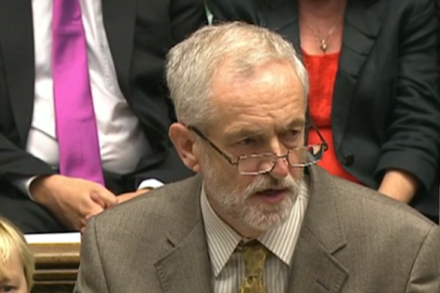
Jezza! What a genius. The master plan is clear at last. You spend four days plumbing new depths of political incompetence with bungled cabinet appointments, surly refusals to talk to reporters, tedious waffly platform-speeches and grumpy scowls during a service at St Pauls. And then, when your reputation can dwindle no lower, you spring forth and dazzle everyone with a political revolution. Cameron was grinning sheepishly before the Labour leader rose to the despatch box. He smirked sideways at his new opponent, through half-closed eyes, like a shy girl about to enter a forced marriage. Corbs looked relaxed and far sprucer than before. He might have been a civics teacher arriving for Day One at the new comp. Shiny grey tunic, off-white striped shirt, green splotchy tie.

David Cameron’s PMQs answer with £60bn price tag

From our UK edition

PMQs today was interesting for all sorts of reasons. But one answer to a question which may have a longer-lasting impact than all the new politics stuff (which though quite welcome did feel a bit like someone making a show of going to the gym in January) may have completely escaped most people’s attention. It was this, from David Cameron in response to Jeremy Corbyn’s question about cutting rents: ‘What I would say to Steven, and to all those who are working in housing associations and doing a good job, is that for years in our country there was something of a merry-go-round. Rents went up, housing benefit went up, and so taxes had to go up to pay for that.

Corbyn’s new kind of politics is going to lead to confusion

From our UK edition

Jeremy Corbyn wants to forge a new kind of politics, answering public discontent with the way things are done in Westminster. One of the things that voters often say they don’t like about politicians is the way they appear to abandon their principles in exchange for power. The idea that power acts as a sort of fire extinguisher on principles has been debated rather exhaustively through the leadership election. But Corbyn won that contest in part because people admired his ability to stick to his principles even when that appeared inconvenient. As an obscure backbencher being principled to the point of unpopularity was easy.

Government gets majority of 35 after Labour whipping shambles

From our UK edition

The government has a working majority of 16. But today it managed to win a tricky vote in the House of Commons that its own MPs were threatening to rebel on, and that the DUP had said it wouldn't help the government on. The measure was on tax credits, and the government got a majority of 35. Why didn't Labour manage to get its act together? It has a new leader and its whips are just getting to work. I understand the Labour whips sent a panicked text message in the middle of this afternoon asking their MPs if they were on the estate. But this was a bit too late, and not enough of their MPs turned out to help.

Labour defends Jeremy Corbyn’s ‘respectful silence’ during the National Anthem

From our UK edition

Labour has issued a line on why the party's leader didn't sing the National Anthem at today's Battle of Britain memorial service: 'Jeremy attended today’s event to show respect for those who fought in conflicts for Britain. 'As he said in the words issued this morning, the heroism of the Royal Air Force in the Battle of Britain is something to which we all owe an enormous debt of gratitude. 'He stood in respectful silence during the anthem.' It's not quite clear what the difference between respectful silence and stony silence is. But what this tells us is that the new Leader of the Opposition is currently prepared to display his principles even in symbolic ways that some may consider disrespectful, given the setting.