Uk politics

Tories could delay telling tax credit claimants how much money they’ll lose from cuts

From our UK edition

The Tory revolt on tax credits looks likely to dominate this autumn. Many Tories across the party now regard this as conforming to a similar pattern as the 10p tax row under Gordon Brown, and few expect the cuts, which lower the threshold for withdrawing tax credits from £6,420 to £3,850 and speed up the rate of withdrawal as pay rises, to come to fruition in their current form. There are three camps of Conservatives on tax credits. There’s the large group who think the cuts seriously undermine their claim to be the party of working people and are wrong because they take £1,300 off those on low incomes, and will be altered soon enough.

David Cameron’s conference speech shows the essay crisis Prime Minister has finally planned ahead

From our UK edition

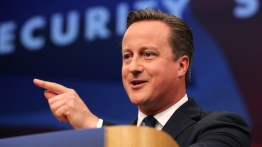
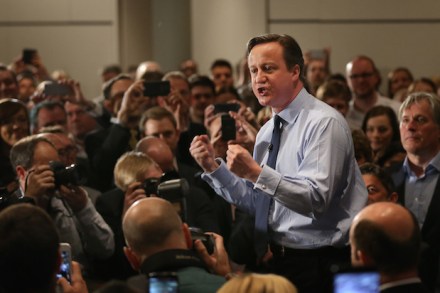
Clearly, the best thing a Prime Minister can do is announce that he doesn’t want to be Prime Minister for much longer. David Cameron has just delivered the clearest, most passionate and most authentic speech of his premiership to the Tory party conference, and all of it was founded on him not standing again as party leader in 2020. Early on, he said: ‘We’re only halfway through. For me, that has a very literal meaning. I can say something today that perhaps no Prime Minister has ever really been able to say before. I’m starting the second half of my time in this job. As you know, I am not going to fight another election as your leader. So I don’t have the luxury of unlimited time. Let me tell you: I am in just as much of a hurry as five years ago.

David Cameron makes home ownership the focus of his ‘turnaround decade’ conference speech

From our UK edition

David Cameron’s conference speech today will include plans to increase home ownership, which has become a personal mission of both the Prime Minister and the Chancellor. The Tories convinced that people are more likely to vote for them if they are homeowners, and are well aware of polling that shows most people want to own their home in this country. So David Cameron will overhaul planning rules that his advisers believe slow down development - the section 106 requirements that mean developers must include affordable homes for rent in their plans - so that more homes that people can afford to buy are built. This reform will see the Tories trying to rebrand ‘affordable housing’.

Has Boris just set an impossible bar for Cameron’s EU renegotiation?

From our UK edition

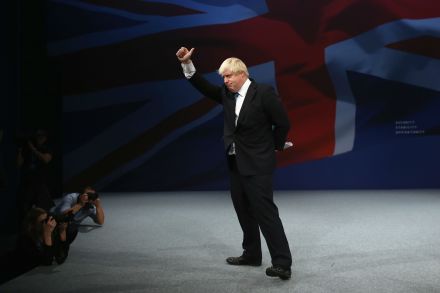
Boris Johnson’s speech today was the best that I have ever heard him give. It was a potent cocktail of political vision, humour and optimism. But the most significant line it was about Europe. He declared that: ‘It should be up to this parliament and this country – not to Jean-Claude Juncker – to decide if too many people are coming here’ It is impossible to read this as anything other than a demand that freedom of movement rules are fundamentally altered as part of the UK’s renegotiation with the EU.

Boris Johnson’s bid to get back in the leadership contest

From our UK edition

The Tory conference this year is so stage-managed that not only did the party manage the no mean feat of sending out a check-against-delivery text of Boris Johnson’s speech before he stood up, but the Mayor then stuck to that text almost entirely. That text contained new jokes, rather than recycled ones, and was the better for it. He made quite clear that he wasn’t giving up on the leadership contest, and that a difficult first term doesn’t mean he’s not a serious option to lead the party in the future. The reason Boris managed to show he was a serious option to lead the Conservative party was that he used those new jokes to show the appeal of Conservatism and the folly of the Left.

Theresa May has ‘quite a lot of explaining to do’ on immigration before the leadership contest

From our UK edition

Theresa May will today claim that high levels of immigration make it ‘impossible to build a cohesive society’. The Home Secretary will tell the Tory conference that it’s not just about building more schools and homes to deal with immigration, but about driving those numbers down too: ‘Now I know there are some people who say, yes there are costs of immigration, but the answer is to manage the consequences, not reduce the numbers. But not all of the consequences can be managed, and doing so for many of them comes at a high price. ‘We need to build 210,000 new homes every year to deal with rising demand. We need to find 900,000 new school places by 2024. And there are thousands of people who have been forced out of the labour market, still unable to find a job.

George Osborne’s local devolution revolution

From our UK edition

George Osborne is the man of the moment, the future Tory leadership contender who is riding high right now. So it was rather clever that instead of offering a showy speech to the Tory conference, the Chancellor announced a rather technical but big reform as his speech ‘rabbit’. His refrain throughout the address to conference was that ‘we are the builders’, and to underline that, he announced his National Infrastructure Commission which was trailed overnight. But he also announced reform to local government funding. This will see the abolition of the local government grant (it will be phased out), and in return councils will be able to keep all the rates they collect, with local authorities getting 100 per cent of their rates by 2020.

Low key atmosphere in Tory conference hall for low key leadership contest

From our UK edition

The cavernous hall housing the Tory conference speeches is not particularly conducive to a good atmosphere. All of the speakers so far this morning, including rising star Sajid Javid, haven't raised the roof, and the applause and standing ovations have felt rather polite and perfunctory, rather than excited and inspired. This might also be because a large number of delegates have spent a rather long time stuck in the rain waiting for someone to scan their bags in the security tent. Or it could be because none of the ministers speaking wants to appear too exciting, as too exciting means you are a threat to George Osborne, which tends to leave you in a messy place as a minister.

Major coup for Osborne as Lord Adonis resigns Labour whip to chair infrastructure commission

From our UK edition

A key theme of this Tory conference will be the party running its tanks all over Labour’s lawn while the party indulges in splendid in-fighting. And George Osborne’s speech tomorrow will contain another big tank rumbling over another part of the party’s lawn. He has persuaded Lord Adonis to resign the party whip in order to become a cross bench peer and chair an independent National Infrastructure Commission. Adonis has issued this statement: ‘Without big improvements to its transport and energy systems, Britain will grind to a halt. I am pleased to accept the Chancellor’s invitation to establish the National Infrastructure Commission as an independent body able to advise Government and Parliament on priorities.

The Tories are finally facing up to what makes Parliament too posh: but will their solution work?

From our UK edition

Lord Feldman’s announcement of a £250,000 bursary scheme for Conservative candidates shows that the Tory party is starting to face up to some of the little-discussed factors behind Parliament containing so few MPs from working class backgrounds. The cost of standing for Parliament in a seat that is considered winnable is obscene: candidates can lose £34,000 of their own money on average (that figure comes from this ConHome survey of 2005 candidates, but my own research which I am conducting currently suggests that it is roughly similar for those who stood in 2015: more on this soon). And this means that it’s impossible for some people to ever consider running.

Justine Greening shows new enthusiasm for her job and her own story

From our UK edition

Justine Greening’s brief as International Development Secretary is really quite specific. It certainly doesn’t require wide-ranging speeches about social mobility or domestic policy. And while Greening didn’t give a wide-ranging speech in her address to the Tory conference today, she did insert little snippets about her own life in a way that suggested she isn’t keen to remain International Development Secretary for ever. For instance, she said: ‘Wherever you are in the world, young people tell me they want the same thing, a job and the dignity of work. I know that the toughest year of my childhood in Rotherham was the year my dad was unemployed.

David Cameron: Tories won’t alter tax credit cuts

From our UK edition

One of the rows that the Tories are starting their conference with is over tax credits. A growing number of MPs, including Boris Johnson, have expressed concern about the changes, which lower the threshold for withdrawing tax credits from £6,420 to £3,850 and speed up the rate of withdrawal as pay rises. But today on the Andrew Marr Show, David Cameron made clear that there wouldn’t be a review of these cuts. He was asked if George Osborne might change the plans in the Autumn Statement: ‘No. We think the changes we put forward are right and they come with higher pay and lower taxes.

Will Nicky Morgan be the next Prime Minister?

From our UK edition

When David Cameron announced that he wouldn’t serve a third term, he made it inevitable that Westminster would spend much of his second term wondering about who would succeed him. Well, in the new Spectator, Nicky Morgan becomes the first Cabinet Minister to make clear that she is interested in standing when Cameron steps down. She says that ‘A lot of it will depend on family’ but makes clear that she believes there needs to be a female candidate in the race and hopes ‘that, in the not too distant future, there will be another female leader of a main Westminster political party’. What I was most struck about when interviewing Morgan was how, when I asked her what her pitch for the top would be, she didn’t shy away from the question.

Owen Paterson interview: My plan to find the next Tory leader

From our UK edition

One evening early in this autumn term in Parliament, Tory MPs crowded excitedly into a parliamentary office for drinks and nibbles. It wasn’t a particularly unusual event: there were many more people than could fit in the room, though MPs surged in and out like the tide as the division bell rang. But in between votes, the host gave a speech that marked this out from all the other drinks events that MPs throw for one another. That host was Owen Paterson, and he told the room, which was made up mainly of right-leaning eurosceptic Conservatives, that he would be writing a set of policy papers for a future leadership contender to take over from David Cameron.

Corbyn’s Trident comments spark end-of-conference row in Labour

From our UK edition

Jeremy Corbyn has really pushed the button on the tensions in his party over Trident renewal. The Labour leader insists that he is just being honest when he says that he would never use nuclear weapons. But what he has done is to put his party in an impossible position. Either it respects his huge mandate and makes scrapping Britain’s nuclear deterrent official policy. Or else it votes to force the resignation of the leader. At first glance, this sounds rather confusing, and Corbyn’s team and John McDonnell have been spinning that Jeremy is just being honest about a long-held personal position. Why is this the implication of a man who has long opposed nuclear weapons saying that he would never use those nuclear weapons?

Jeremy Corbyn: I wouldn’t use nuclear weapons anyway

From our UK edition

Jeremy Corbyn doesn’t want nuclear weapons. We all know that. We also know that because he has a huge mandate (a phrase bandied about so much at this conference that it’s starting to feel like a refrain in Are You Being Served?), he’s keen to turn his views into official party policy on this area at least. But we now also know that if his party determined that it would remain committed to Trident, and if Jeremy Corbyn were Prime Minister, he wouldn’t ever use his weapons anyway. Which makes it entirely pointless to fund them at all. On the Today programme, the new Labour leader was asked if he would approve the use of Trident if he were in Downing Street.

Corbyn’s tougher line on nuclear weapons could become a resigning issue for Shadow Cabinet

From our UK edition

Jeremy Corbyn’s aim at this conference has been to keep the Labour party on an even keel. But there was one line in his speech that has unsettled some frontbenchers. He said this about Trident: ‘Today we face very different threats from the time of the Cold War which ended thirty years ago. That’s why I have asked our Shadow Defence Secretary, Maria Eagle, to lead a debate and review about how we deliver that strong, modern effective protection for the people of Britain. I’ve made my own position on one issue clear. And I believe I have a mandate from my election on it. I don’t believe £100 billion on a new generation of nuclear weapons taking up a quarter of our defence budget is the right way forward.

Labour activists loved Jeremy Corbyn’s speech. But will voters?

From our UK edition

Jeremy Corbyn’s speech was excellent. It was passionate, full of campaigning zeal, focused on issues that the MP has campaigned on for years, and well-received in the hall. The new Labour leader came across as warm, principled, personable, fun. He was introduced in a lovely, low key fashion by a member of his own constituency party, whose own life story summed up his own values. He opened with jokes about the media claiming that he was keen for an asteroid to destroy the earth (more on this and his opposition to PIGEON BOMBS here), and these went down well - both amongst the activists and the media sitting in the hall.