Uk politics

Jeremy Corbyn’s conference speech challenge

From our UK edition

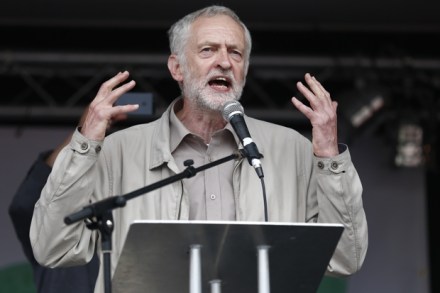
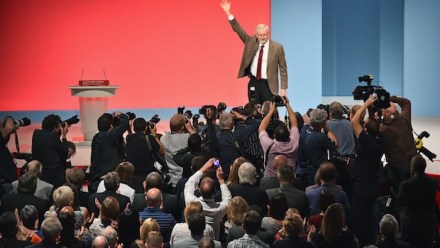
Jeremy Corbyn has, so far, had a reasonably good conference. Nothing has gone noticeably wrong. There have been no stand-up rows, no fights in the fringes, no heckling in the hall. And the atmosphere has been far better than Labour’s awful autumn conference last year, where everyone was full of gloom when the party was a few points ahead in the polls. But the Labour conference was still going to plan at this point last year, albeit in a moribund way. Ed Miliband hadn’t delivered his speech yet, and he therefore hadn’t forgotten to mention the deficit (the speech was poor, too, but the overall quality was quickly eclipsed by the discovery of his omission).

Maria Eagle: I wouldn’t have resigned over Trident vote

From our UK edition

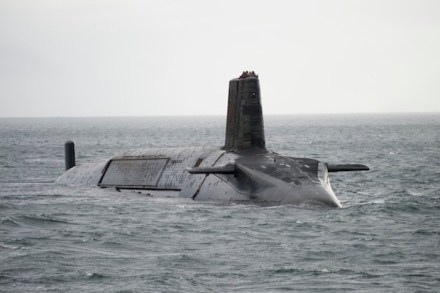
The Labour party may have avoided a divisive vote on Trident this week, but that doesn’t mean that it can always avoid working out whether it should have a new position. Last night Maria Eagle, the Shadow Defence Secretary, told a fringe that though she had made her mind in 2007 that she was in favour of the renewal of the nuclear deterrent, she wouldn’t have resigned had there been a vote that called for Trident to be scrapped at this conference.

Jeremy Corbyn: I love this country

From our UK edition

A set of headlines about a political party leader declaring that he loves his country might, in less unsettled times, be considered a sign that news desks have given up and are going to report all instances of dogs biting men. But in the man-bites-dog-world in which Jeremy Corbyn has just been elected Labour leader and John McDonnell appointed his Shadow Chancellor, it’s news. It’s also the first set of reasonably good headlines for the new leader, which is in part because his media team is working much better with the media now. (though you can't win 'em all) Corbyn is expected to say: ‘These values are what I was elected on: a kinder politics and a more caring society. They are Labour values and our country’s values.

Labour conference is surprisingly even-tempered. Why?

From our UK edition

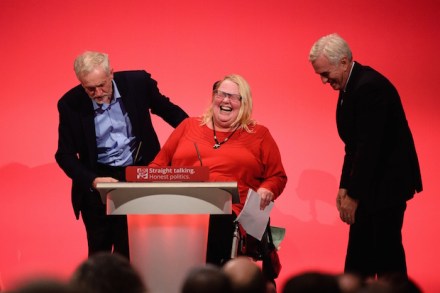
Why does Labour conference feel so even-tempered so far? In previous years the answer would be that it has been stage-managed to the hilt and all frontbenchers programmed with the lines to take. But this year the party’s conference strapline is ‘Straight talking. Honest politics’ and frontbenchers aren’t being sent daily lines to take, so even if they wanted to be on message, they couldn’t be. Of course, those frontbenchers are enjoying telling fringes that they take one view while their leader takes another, but what’s still remarkable about this conference is how good natured all the fringe meetings have been after a vicious leadership contest. Those running were abused endlessly online, as were activists who dared stray from the Corbyn line.

McDonnell: I can both oppose and support Heathrow expansion

From our UK edition

Is the Labour party right to be so worried that Jeremy Corbyn is its leader and John McDonnell is its Shadow Chancellor? Neither of them seem to be putting much effort into pushing the policies that have upset their colleagues the most. The Labour party will maintain its position on Trident after constituency party delegates decided not to debate the matter this week. Jeremy Corbyn is quite happy for his colleagues to take a different view on this issue, too. Similarly, on Heathrow, both Corbyn and McDonnell are opposed to expansion of the airport, but today the Shadow Chancellor told the Press Association that he might take one position as a constituency MP and another as Shadow Chancellor: ‘As a constituency MP I will be opposed to Heathrow.

Labour conference: John McDonnell sticks to boring

From our UK edition

The most remarkable thing about John McDonnell’s Labour conference speech was that he was delivering it at all. The new Shadow Chancellor was clearly trying to assuage fears about him by being as boring (something he'd promised) and mild as possible, announcing reviews headed by big names such as Bob Kerslake of the operation of the Treasury and and an Economic Advisory Committee that includes Thomas Piketty and Joseph Stigltiz. Reviews and committees mean you don’t have to announce as many policies, which is handy if you’re trying not to rock the boat too much early on. But to be fair to McDonnell, it’s also what all mainstream politicians do when they come into the job.

Shadow Cabinet keeps business as usual at Labour conference

From our UK edition

So far at this Labour conference, most of the fireworks have been on the Blairite side of the party, with figures such as Chuka Umunna, Ivan Lewis, Liz Kendall and John Woodcock making their displeasure known at events last night. But when it comes to Jeremy Corbyn’s frontbench, and some of the issues on which Corbyn himself has strong and controversial views, the conference has seemed surprisingly well-behaved: so far, at least.

John McDonnell tries to get voters to trust him and his party on the economy

From our UK edition

The Shadow Chancellor’s speech at Labour conference has always been the second biggest slot after the leader. But in a sense John McDonnell’s speech today, just before lunch, is the most important slot of the whole conference because he is talking about the policy area that did the most to put voters off Labour in May. A review by Jon Cruddas found that voters were well-aware of Labour’s anti-austerity message, and that they didn’t like it, even though all the retail offers on energy bills and so on were popular. But McDonnell believes that voters need to be told of the dangers of austerity, which they haven’t, and then they will come over to his way of thinking.

Jeremy Corbyn’s new look Labour leadership means he’s happy not to lead

From our UK edition

Jeremy Corbyn had a very good interview on Marr this morning. For anyone in the wider, non-Westminster world tuning in (and they do), the new Labour leader would have come across as reasonable, mild, and normal. When Marr pressed him on certain issues, Corbyn looked as though he was an academic having a good debate in his study over a glass of port (or marrow juice, maybe), rather than a politician panicking as he tried to remember the next line that he’d memorised from the spin doctor’s briefing. He even managed to get some quips about internal Labour democracy in, joking that the programme should film ‘compositing in action’.

Ukip snubs London Mayoral favourite Suzanne Evans

From our UK edition

Ukip has announced its candidate for the 2016 London Mayor elections - and it's a surprise. Peter Whittle, the party's Culture Spokesman, is the candidate, not the favourite, Suzanne Evans. This isn't as much of a surprise to Coffee House readers as it might be to others. In August we reported rumblings that Nigel Farage might be trying to stitch up the race to exclude Evans, who he regards as a threat (she was Ukip leader for a few days in between him resigning and un-resigning). The party's London MEP Gerard Batten also told Coffee House that the process was 'undemocratic' and that he wasn't getting involved in it. Whittle is well-liked in the party, but he does not have the profile that Evans does.

Shaker Aamer to be released: Jeremy Corbyn and the Daily Mail can rejoice together

From our UK edition

Shaker Aamer, the last British resident held in Guantanamo Bay, is to be released, the White House has announced. Aamer is alleged to have led a unit of Taliban fighters and have plotted with Osama Bin Laden, but he has never been charged or been on trial. His case is one that David Cameron has raised in discussions with President Obama, and one the Daily Mail and Mail on Sunday have been pressing for a good while too, on the grounds that it is indefensible to lock someone up since 2002 without charge or trial (the Mail’s argument has always been that he may be a ‘very bad man’ but that the evidence of him being a very bad man should be discussed and proven in a court of law, something we tend to lecture other countries on).

Tory MPs like Jeremy Corbyn’s PMQs style

From our UK edition

Jeremy Corbyn knows he has a lot to prove at his party’s conference, which starts on Sunday. The highlight of his leadership so far has been his new tone at PMQs, which did catch attention, even if the questions he asked rather turned the session into an opportunity for David Cameron to look Prime Ministerial. The Labour leader knows he needs to make changes from that first attempt (his first ever stint at the dispatch box), but he’s not the only one mulling how to manage the session. A number of Tory MPs have told me that they have received a good load of letters and emails since that PMQs session from constituents impressed by Corbyn’s new style.

Gloria De Piero interview: Labour let children like me down in the 1980s. It can’t do that again.

From our UK edition

Gloria De Piero is one of Labour’s most confident performers: a former television presenter who is well-liked in her party for speaking ‘normal’, she rarely seems ruffled. But when we meet in her Westminster office, the MP for Ashfield seems oddly anxious. Her party has been behaving in a similarly unsettled way ever since it started facing up to the fact that it was about to elect a backbencher as its leader, so perhaps it’s not all that surprising. But De Piero has agreed to serve in Jeremy Corbyn’s Shadow Cabinet in the rather nebulous-sounding ‘Young People and Voter Registration’ brief, so she can’t be as unsettled by his victory as some of her moderate colleagues, who have fled to the backbenches. So what’s up?

The great British kowtow

From our UK edition

Any British Prime Minister who meets the Dalai Lama knows it will upset the Chinese government — but for decades, no British Prime Minister has much cared. John Major met him in 10 Downing Street, as did Tony Blair. These were small but important nods to Britain’s longstanding status as a friend of Tibet. Of course the Chinese Communist Party disliked seeing the exiled Buddhist leader welcomed in London — but that was their problem. How things have changed. Now China is far richer and Britain is anxious, sometimes embarrassingly so, to have a slice of that new wealth. From the start of his premiership, David Cameron has been explicit about this. ‘I want to refresh British foreign policy to make it much more focused on the commercial,’ he said.

Labour would benefit from a stronger position on Europe, says former policy chief

From our UK edition

Jon Cruddas’ speech warning that Labour is lost in England has attracted plenty of attention for that line alone. But there was another section that is worth taking note of, given the former party policy chief is keen to play such a big role in rebuilding Labour after its febrile summer. Cruddas also spoke about Labour’s challenge on Europe, arguing most significantly that the party should support two categories of EU membership and take a stronger position on the renegotiation. He said: ‘We need to strengthen our pro-European politics with a clear position.

What makes a liberal? Tim Farron doesn’t seem to know.

From our UK edition

Tim Farron’s speech to the Lib Dem conference seems to have gone down well with those in the hall, which probably means that it did the trick, given this was his first conference as leader and the party’s first conference since its defeat. But given Farron wants to rebuild his party by appealing to those who no longer feel that Labour is their home, or those who worry that the Tories are going a bit further than they’d like, his speech wasn’t quite as effective as it could have been. Sure, he delivered it well - particularly when he was talking about housing and the refugee crisis, where he became passionate and angry and quite thunderous for a cheeky chappie who liked to talk a lot about his band - but some of the words that he delivered were rather poorly chosen.

Who are Jeremy Corbyn’s outriders?

From our UK edition

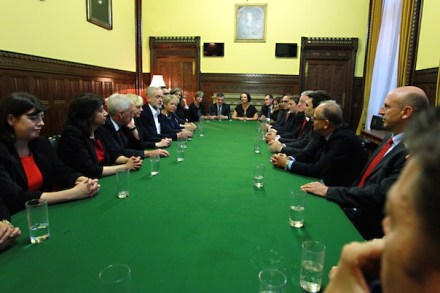
Jeremy Corbyn may have a Shadow Cabinet and a full frontbench team, but the Labour leader doesn’t have many genuine outriders even amongst those he has given jobs to. Most frontbenchers seem rather refreshed by how happy he is for them to have open discussions at meetings: yesterday’s Shadow Cabinet meeting, for instance, was quite discursive and friendly, which was quite different to its atmosphere in the Miliband years. But most of those frontbenchers have agreed to serve because they believe it is the best thing for the Labour party, not because they want to help Corbyn.

Why Britain and China should stick together

From our UK edition

Today I've been at the Shanghai Stock Exchange - the epicentre of the volatility that spooked global markets over the summer. I deliberately chose to come here because I wanted to make sure this simple message would be heard in both our country and China: through the ups and downs, Britain and China should stick together.  Indeed the constant refrain of my five-day tour - with one of the broadest, most ambitious British delegations of recent years - is that China can count on Britain to be its best partner in the West. That means Beijing choosing London as its bridge to Western financial markets, which it has demonstrated this week with groundbreaking agreements that will deepen our financial ties.

Why is Parliament debating a petition written by ‘total bigots’?

From our UK edition

Shortly after MPs return from the conference recess, they will debate a petition that orders the government to ‘close all borders and prevent more immigrants from entering Britain’ because ‘foreign citizens are taking all our benefits’ and ‘many of them are trying to change UK into a Muslim country’. It then adds that ‘there is footage of foreigners destroying British soldiers [sic] graves, which is a huge disrespect to us’. The petition has sailed past the 100,000 signature threshold and has over 185,000 names on it, which means it must be considered for debate in Parliament. MPs on the Petitions Committee have given it a Westminster Hall debate on 19 October.