Uk politics

Finally, the world has realised that George Osborne is a hottie

‘It's hard to think of a time when we didn't all fancy the Chancellor of the Exchequer,' begins George Osborne’s entry in this year’s ‘The Tatler List’ – the society magazine’s annual compilation of ‘the people who really matter’. This year Osborne is placed at number 4, trumped only by Princess Charlotte, Ant and Dec, and Prince George, and a full 13 places higher than the next politician on the list, Mayoral hopeful Zac Goldsmith. But is it really all that hard to remember a time when ‘we didn’t all fancy the Chancellor’? The magazine puts his attraction down to his ‘big brain, sexy hair cut, and control of the biggest bank account in the country’.

Why it’s better to be poor in England than in Scotland

Myths endure forever. Take, for instance, the myth that Scotland is a more equal, egalitarian, kind of place than England. It is an idea much-cherished north of the border and a stubbornly persistent one too. Helpfully, it's also resistant to evidence, allowing Scots to maintain the pretence that, as the late John Smith once (complacently) put it, 'The Scots are a more moral people'. Awkwardly, however, it's better to be poor in England than in Scotland. At least that's one conclusion to be drawn from today's Guardian report on the background of university medical students.

Is Cameron really happy to let his EU renegotiation timetable slip?

What does David Cameron mean when he says, as he did today, that he’s happy to wait a bit longer for a deal in his renegotiation of Britain’s relationship with the European Union? The Prime Minister told the Davos summit today that ‘if there isn’t the right deal, I’m not in a hurry’ and that ‘it’s much more important to get this right than to rush it’. The expectation in Westminster has been that Cameron would get a deal at the European Council summit in February, but the Prime Minister has been dropping hints that he is prepared to let the timetable slip at the same time that his colleagues are saying privately that they are confident of a deal.

Tories worry about plan to Short change opposition parties

Labour is a very poor opposition at the moment, and no amount of money could fix that. But the government is currently pursuing a policy that seems intended to weaken even decent oppositions. In the Autumn Statement, George Osborne announced a 19 per cent cut to Short money, which is the state funding for political parties to be able to do their job of representing the millions of voters who want them in parliament. The 19 per cent cut is in line the reductions made to unprotected spending departments in the spending review, and is quite easy for ministers to defend, because they can talk about reducing the cost of politics, and voters like that idea. Naturally, the opposition parties involved don’t like the idea, and have been complaining about it.

David Cameron asks business: “help me make the case for Britain to stay” in the EU

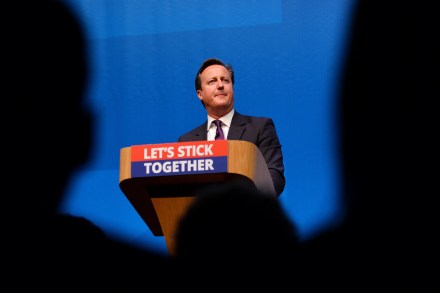
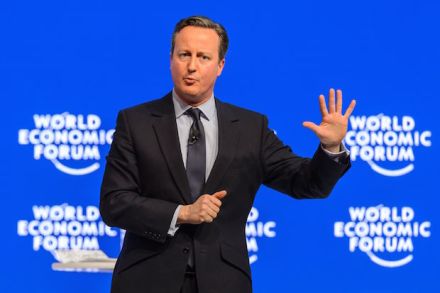
David Cameron is giving a speech in Davos later today with a message for British business: he wants to enlist them in his campaign for Britain to stay in the EU. Not that he puts it in such terms. We’re still in a phoney war where, in theory, Cameron is still negotiating, and might very well say that he wants Britain out of the EU. But in practice, the campaign has begun. He has a series of meetings with other EU leaders. He hopes for a deal next month and a referendum in June or July. Any doubt that the campaign has begun should be dispelled by the tone of his speech. Extracts released so far, he says: “The voice of business must be heard - in Britain and across the whole of the continent.

Evening Blend: Labour’s day off

This is tonight's Evening Blend email, a free round-up and analysis of the day's political events. Sign up here.  Today in brief The SNP’s Angus Robertson accused David Cameron of ‘effectively taking part’ in the war in Yemen by selling arms to Saudi Arabia. David Cameron accused Jeremy Corbyn of being prepared to ‘give away’ the Falkland Islands as the pair clashed on student maintenance grants and bursaries for nurses. Labour sources hinted at a free vote in the party on Trident renewal. Yvette Cooper called for an end to Schengen and a return to internal border controls to manage the refugee crisis. Two Tory MPs said they used the drug ‘poppers’ as the Commons voted to ban it.

PMQs sketch: Labour’s yellow submarine

A new face at PMQs becomes samey after a few months. Corbo reached that point some time ago and Cameron can now contain him without breaking a sweat. He’s not threatened by the Labour leader for the simple reason that Corbyn lacks any forensic guile. To prepare, mount or press home an attack is beyond his powers so he just reads out his set questions in a low verbal moan, like next door’s Hoover. Today they tussled over the scrapping of bursaries for trainee nurses. Cameron said this reform makes it easier to fill the wards with bustling sisters and swishing matrons. No, said Corbyn. It’s harder. Amazingly, some light was shed on this difference. It depends where they come from. Corbyn wants vacancies filled from any old place.

New Tory MPs push ministers on legal protections for children

MPs are debating the report stage and third reading of the psychoactive substances bill today, with a series of amendments from MPs on exempting poppers from the ban on legal highs (more on why the Tories might want to do that here), and one intriguing one from a group of Tory MPs on supplying drugs outside children’s homes. This amendment, tabled by Kit Malthouse, and signed by 11 other Tory MPs, all from the new intake, would make supplying psychoactive substance an aggravated offence if committed within 100 metres of a children’s home.

Beckett report will change little in Labour

Few Labour MPs had expected Margaret Beckett's report into the 2015 election loss to be the thing that saved the party. But they had hoped that it might give the current leadership pause for thought with a reasonable distance before the next election. Instead, much like an IMF report, the document contained something for everyone, with its author even describing it as a 'compilation' when interviewed about it on Today. What is odd about the report and about Beckett's own tone is that both don't really convey what many Labour MPs believe is the desperation of the situation. This might be because the party leadership doesn't think there's anything desperate about a party signing up many more members and most of those members being happy.

Beckett report into Labour’s loss is uncomfortable reading for all party factions

Labour’s report on its election defeat is finally out, and it says there are four reasons for its defeat: Failure to shake off the myth that we were responsible for the financial crash and therefore failure to build trust in the economy. Inability to deal with the issues of ‘connection’ and, in particular, failing to convince on benefits and immigration. Despite his surge in 2015, Ed Miliband still wasn’t judged to be as strong a leader as David Cameron. The fear of the SNP ‘propping up’ a minority Labour government. These are not surprising, and the report’s narrative verdict on how the party lost is far more interesting.

Mark Carney abandons even a hint of interest rate rise. Is Britain trapped in the zero era?

It's just as well that Mark Carney is Bank of England governor: he'd have made a lousy forecaster. In August 2013 he said he'd raise interest rates when unemployment fell below 7 per cent, expecting that to take three years. It took five months. Then last summer,  Carney informed us that the decision on when to make the first rate hike ‘will likely come into sharper relief around the turn of this year’. The year has turned, but the interest rate hasn't. So yet again, the expectation has been delayed. The below graph shows the story so far... And now? As Carney said in a speech at Queen Mary University of London: ‘In my view, the decision proved straightforward: now is not yet the time to raise interest rates.

Labour and pollsters confront what went wrong in May 2015

Two post-mortems into the general election come out today: the pollsters' examination of how their surveys got the election so wrong, and Labour's latest internal inquiry into how it lost that election. The first report, which is the preliminary findings of an independent inquiry set up by the British Polling Council and the Market Research Society, has more surprising information in it than the Beckett report which, when it it published later today, is expected to say that Labour lost because voters didn't trust the party on the economy, leadership, or immigration. The pollsters seem to have succumbed to 'herding', which is when individual companies alter their sampling formulae to ensure they are producing results in line with those published by others in the same field.

Labour struggles to be an Opposition as MPs mock its Trident tribulations

Emily Thornberry might not know why Jeremy Corbyn made her Shadow Defence Secretary, but she will have known that this afternoon’s departmental questions for the Ministry of Defence was going to be a difficult session. She came armed with two questions that she knew few would listen to, and delivered them well. But for the rest of the session, she had to listen to MPs on all sides of the Commons attacking not the government of the day, but the policy of the Opposition party. In fact, the government was barely scrutinised at all today, so intense was the focus on Labour and its potential U-turn on Trident.

Yes, Brexit could very easily lead to the break-up of Britain

Oh, look, it's time for another episode of Jocksplaining. That is, time to remind some people south of the wall that what's obvious to them is not at all obvious to the folk north of the wall. There has been, in recent days, a flurry of articles claiming that, look, there's no need to worry about a British exit from the EU because it will have no negative consequences whatsoever. You certainly shouldn't think that it might prompt fresh demands for a new referendum on Scottish independence (even though the SNP say it might) and you really shouldn't think such a referendum might produce a Yes vote (even though the most recent poll on the matter says it would). There's nothing to see here. Shut-up, everyone.

Will Corbyn take the nuclear option on Trident?

Jeremy Corbyn’s remarks about Trident have, unsurprisingly, been picked up everywhere this morning. The Labour leader told Andrew Marr yesterday that he could consider a ‘deterrent’ in which submarines continued to patrol the seas, but just without any nuclear warheads.

Might Britain vote to leave the EU only to find out that there’s no real exit?

If Britain were to vote to leave the EU, we'd promptly set about agreeing our own trade deals as a sovereign nation. But what about our new trade deal with the EU itself? What conditions would this wounded beast set, and might we end up accepting the diktats and red tape that drove us mad in the first place? I look at this in my Daily Telegraph column yesterday. Take Norway: in 1994 it voted to stay out of the EU yet has ended up with plenty of the problems that drive Britain up the wall now. If anything, things are worse there: it has ended up paying almost as much, per capita, to the EU. It had to accept free movement of people as part of its deal with the EU.

What’s the hold up with the British Bill of Rights?

Before the election, the Tories talked about introducing a British Bill of Rights in their first 100 days in office. But eight months on from the election, the government hasn’t even started consulting on it yet. Some of this delay is understandable. When Michael Gove was made Justice Secretary, he wanted to work out his own solution to this problem. But the timetable has just kept slipping. After the election, we were told proposals would come in the autumn. Then, it was before the end of the year. Then in December, in the New Year. Yet, we still haven’t seen these proposals—and won’t in the next few weeks either. But, as I write in The Sun this morning, the bill is now pretty much ready.

There’s nothing sweet about Boris Johnson’s sugar tax

That’s it. The nanny state has won. The nudgers and naggers are victorious. The buzzkilling, behaviour-policing new elite that sees smoking as sinful, boozing as lethal and being podgy as immoral has conquered the political sphere. Its miserabilist writ now extends even into a political zone where once it held no sway: Boris Johnson’s brain. Yes, the once nanny-slating mind that lurks beneath that world-famous mop of self-consciously untidy blonde hair has sadly succumbed to the instinct to harangue people for being fat and having fun. Yesterday Boris announced that he is introducing a sugar tax at City Hall, hiking up the price of all sugar-added soft drinks by 10p in an attempt to wean City Hall workers off the evil, fat-making fizzy stuff.

Who will reveal their Brexit plan?

George Osborne’s Newsnight interview has drawn ire from the Eurosceptics chiefly because the Chancellor used it to stamp on any suggestion that there might be a second EU referendum in which Brussels offered the UK all the changes it wanted in the first place in order to tempt it back into the European Union. But Osborne also reiterated last night that the ‘Treasury is 100 per cent now focused on achieving the renegotiation’ and wasn’t drawing up contingency plans for Brexit. The problem for ministers is that any admission or leak of such contingency plans would be written up as a Whitehall panic, or a secret desire on the part of the Prime Minister to leave the EU.

Forget Corbyn’s shambolic reshuffle: the Labour leader is winning

No amount of reports in the press that Jeremy Corbyn’s shadow cabinet-making is farcical and his party is divided should distract us from the fact that he is winning. I don’t mean that he will become prime minister, or even (though this seems quite possible) that he will survive as leader until the general election. It is just that he is gradually bringing more and more of Labour under his control, and grinding down his opponents. Besides, his public positions are coherent — in the sense of being internally consistent — and he is quite accomplished at adhering to an undeviatingly hardline, left-wing ideology while sounding mild and decent.