Uk politics

PMQs sketch: Shouldn’t ‘preventable deaths’ really be called ‘homicides due to negligence’?

From our UK edition

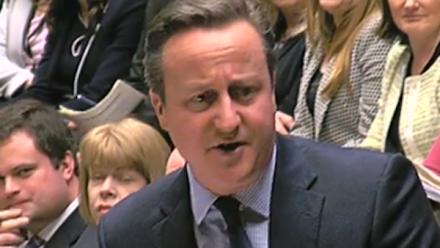
David Cameron was grilled today on plans for a ‘7-day NHS’. This is his attempt to iron out a slight kink in the NHS schedules. The trouble is that although our heroic doctors and nurses keep regular hours our deadly diseases are hopelessly unpredictable and like to smite us down whenever they feel a bit grim and reaperish. Perhaps we should write to them about it. In practice this means that NHS efficiency varies widely over the ‘7-day cycle’ or ‘week’ as it’s known. Get ill on a Tuesday and you’ll probably be at a party on Friday. Get ill on a Saturday and you’ll probably be at a funeral on Wednesday. Your own.

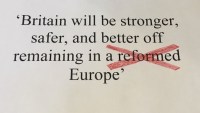
David Cameron has dropped his references to a ‘reformed’ EU. Will ‘safer’ be next?

From our UK edition

Obviously the 198 business leaders who signed a letter to the Times yesterday explaining why Britain should remain in the EU are too busy and important to read what appears under their names, but surely someone in their enormous ‘comms’ teams should have pointed out to them that they were directly repeating David Cameron’s current slogan ‘Britain will be stronger, safer and better off remaining a member of the EU’. Might it not compromise their independence as top executives if they let words be put into their mouths by a politician? Irritated, I tried to order my stockbroker to divest my portfolio of all shares in all the companies concerned, but unfortunately found that I had not got any. By the way, Mr Cameron’s slogan has already changed.

MPs brace themselves for start of boundaries row

From our UK edition

Of all the publications from the Office for National Statistics this morning, the electoral statistics for the UK doesn’t sound like the most gripping. But it is the start of a very big political row, which is the boundary review. These electoral statistics will spark the formal review by the Boundary Commissions, which will then lead to new proposals for constituency boundaries later this year. Unsurprisingly, lots of MPs are nervous about this, especially Labour MPs who would face hostile constituency parties if they apply for selection in a new seat. The Labour whips alerted their MPs earlier this week, and are sending further updates once the Commissions make their announcements.

Michael Gove attacks EU reforms as ‘not legally binding’

From our UK edition

Michael Gove’s BBC interview, in which he disagrees with his Prime Minister over whether his renegotiation deal is indeed legally binding, is a sign of how confusing the referendum campaign is going to get. The Justice Secretary is perfectly polite as he dismisses the stance of his own government, but he is still the Justice Secretary dismissing the stance of his own government, and that is only made marginally less odd by the suspension of collective responsibility. Gove said: ‘The European Court of Justice interprets the European Union treaties and until this agreement is embodied in treaty change, then the European Court of Justice is not bound by this agreement.

Who won in the fiscal framework battle?

From our UK edition

It wasn’t quite David Cameron and his down-to-the-wire talks with the EU leaders, but it’s as close as we get in Scotland. For the last eight months, the Scottish and UK governments have been trying to secure agreement over the financial settlement which will underpin the new tranche of powers to come to Holyrood – the so-called ‘fiscal framework’. After weeks of torpor and inaction suddenly, this afternoon, we got a breakthrough. Nicola Sturgeon announced the deal to the Scottish Parliament this afternoon, confirming that everything had come down to one crucial, central point. The Scottish Government favoured one model to work out Scotland’s funding from the Treasury for the future and the UK Government favoured another.

Labour faces two Trident spats

From our UK edition

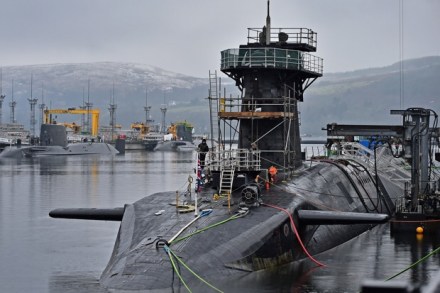
Labour’s angst over Trident has taken something of a back seat over the past few days as the party tries - relatively unsuccessfully - to revel in the split opening up in the Tories on Europe. But this evening, those tasked with developing Labour’s foreign policy, and particularly its stance on the nuclear deterrent, are holding a two-hour meeting on security and defence. This is a meeting of the International Policy Commission, which includes Hilary Benn, Emily Thornberry, Diane Abbott and Pat Glass from Labour’s frontbench, and members of the National Executive Committee including Ken Livingstone. Corbyn yesterday afternoon attacked David Cameron for ‘trying to appease—or failing to appease’ half of his party.

From Trumpmania to Euroscepticism: Revenge of the Plebs

From our UK edition

The Third Wayists are quaking in their boots. The middle-class, middle-of-the-road technocrats who have dominated politics for the best part of three decades are freaking out. These people who bristle at anything ideological, are disdainful of heated debate, and have bizarrely turned the word 'moderate' into a compliment feel under siege. And no wonder they do, for on both sides of the Atlantic their very worst nightmare — a revenge of the plebs — is becoming flesh. You can see this sometimes clumsy but nonetheless forceful reassertion of pleb power in everything from Trumpmania to the staggering back to life of Euroscepticism — or what snooty moderates call 'Europhobia', because every point of view that runs counter to their own must be a mental illness, right?

The BBC isn’t much help for navigating through the Tory EU wars

From our UK edition

Trying to navigate your way through the internecine wars in the Conservative Party over the referendum? Please allow the BBC’s Political Editor Laura Kuenssberg to help. This was her intro on the BBC website yesterday: Silence abhors a vacuum, and forgive me if you are not a fan of political conspiracy, and on a day like today you don't have to look very far for huge ideological disputes, even if they're not quite yet punch-ups. Good, glad that’s clear, then. A sentence which is a string of non-sequiturs kicked off with a remarkable image. Does silence abhor a vacuum? I suppose it might abhor a vacuum cleaner, because they can be terribly noisy. This fabulous piece of illiteracy was spotted by Jim, a friend of mine. Credit where due etc.

Tories are approaching the referendum in the wrong way

From our UK edition

David Cameron's rather pointed digs at Boris Johnson in the Commons yesterday surprised his own MPs, who had thought that they were going to be ordered to be pleasant to one another, not attack senior colleagues who had taken different stances on the European Union. At the party meeting with the Prime Minister last night, MPs including Steve Baker asked Cameron to 'be nice to Boris', not because they are particularly worried about the Mayor's spirit being crushed but because there is some dismay in the party that the referendum debate is already getting so personal. One Outer who likes Cameron observes sadly that 'he was silly letting his temper show but it was sadly typical. He finds being challenged irksome'.

Hilary Benn and Alan Johnson cheer up Labour MPs

From our UK edition

Jeremy Corbyn was still stuck in the Commons chamber when the Labour Party held its weekly meeting this evening. He had been due to attend after MPs had complained that he was avoiding them, but this has now been moved to another week. Instead, Hilary Benn and Alan Johnson gave brief speeches on the EU referendum that left some centrist Labourites in an unusual state of joy. Both performances were described as 'sparkling' by those inside the meeting, with one saying it made them 'proud to be Labour', a phrase you don't hear that often. The proud Labour MP continued: 'We were at our best tonight - all about the national interest and the seriousness of the situation.' Johnson told those present that Labour will officially sign up in support of the In campaign tomorrow.

Boris Johnson: A mixture of principle and opportunism, just like every politician

From our UK edition

Boris Johnson is a slippery fish, but I don’t think Nick Cohen quite captures him in his blog post earlier today. To accuse him of putting career before country in the EU referendum campaign, as Cohen does, is to fall into the trap of viewing politicians too dichotomously, as if they’re all either men and women of conviction or unprincipled opportunists. Boris, like every front rank politician, is a mixture of conviction and careerism, rather than one or the other. Winston Churchill and Margaret Thatcher are both cases in point. Exhibit A in the case for the prosecution is Boris’s decision to join the Leave campaign.

Cameron takes aim at Boris in pointed Commons statement

From our UK edition

The main difference between David Cameron’s statement to MPs on his EU deal and the two statements he has already given on the matter was that this one had added digs at Boris Johnson. Quite a few of them, in fact. The Prime Minister is clearly furious with the Mayor of London for his weekend announcement that he will be campaigning to leave, and inserted a number of extremely pointed lines into his feedback to the Commons that showed what he thought of Johnson’s decision. He ruled out the suggestion - one made by Boris himself - that voting Leave now would teach Europe a lesson and enable a better renegotiation before a second referendum.

Cameron fights back: his full statement on the EU deal

From our UK edition

I have spent the last nine months setting out the four areas where we need reform and meeting with all 27 other EU Heads of State and government to reach an agreement that delivers concrete reforms in all four areas. Let me take each in turn. First, British jobs and British business depend on being able to trade with Europe on a level playing field. So we wanted new protections for our economy; to safeguard the pound; to promote our industries – including our financial services industries; to protect British taxpayers from the costs of problems in the Eurozone and to ensure we have a full say over the rules of the single market, while remaining outside the Eurozone. And we got all of those things.

Cameron faces tricky day in the House of Commons over EU deal

From our UK edition

David Cameron faces MPs today after returning from Brussels with his European Union reform deal. At 3.30 in the Commons, the Prime Minister will give a statement on the outcome of the European Council meeting, and take questions from MPs, including many on his own side who think the deal is a load of tosh. It will be interesting to see how many of them choose to tell him that, and what sort of language they use. There is a risk that this referendum campaign becomes very personal and furious, even while everyone involved is pontificating about the importance of the Tory party getting along well after the vote.

Podcast special: Boris backs Brexit

From our UK edition

If Boris Johnson had behaved and backed David Cameron's ‘in’ campaign, he would have been foreign secretary by the summer. Instead, he chose to join Michael Gove in the ‘out’ campaign - informing the Prime Minister by text message at 4.40pm shortly before informing the reporters who gathered around his house shortly afterwards. So what does this mean for the race, and do we now have a Tory leadership contest running in parallel to the EU Referendum campaign? James Forsyth, Isabel Hardman and I discuss this in our latest podcast:- Listen to more episodes of the Spectator podcast here and click here to subscribe through iTunes.

This referendum is now a battle between two visions of the future

From our UK edition

George Osborne’s plan for this referendum was to turn it into a question of the future versus the past, for both the country and the Tory party. He wanted the voters to see the Out campaign as a bunch of people who wanted to take Britain back to a bygone era. Inside the Tory party, his aim was to have the talent and the ambition on the IN side with only old war horses and the passed over and bitter on the other side. But the events of the past 36 hours have blown this plan off course. Out now has one of the most popular politicians in the country on board in Boris, as well as one of the intellectual driving forces behind Tory modernisation and the party’s new social justice agenda in Gove.

Boris Johnson supplants Osborne as bookmakers’ favourite for next Tory leader

From our UK edition

The Mayor has not even filed his Daily Telegraph column yet, but Ladbrokes has announced that he is now the favourite to succeed David Cameron. As the above graph shows, his chances have been steadily increasing as George Osborne overplayed his hand: first, by posing as the heir assumptive, and then by various missteps (like praising Google's tax deal). The ‘out’ campaign is still seen as likely to lose the EU Referendum, but the next Tory leader will be selected by a Tory Party membership who will be about 70 per cent for ‘out’. Michael Gove, famously, has very little leadership ambition; Liam Fox won't stand again and Iain Duncan Smith has had enough of all that to last a lifetime.

Boris Johnson: I will be advocating Vote Leave… or whatever the team is called

From our UK edition

This is not about whether you love Europe or not. Actually, I love Brussels, I used to live in Brussels - fantastic city, wonderful place - and I love European culture and civilisation. I consider it to be the greatest civilisation this planet has ever produced, and we are all products or most of us here are products of that civilisation and it is a fantastic thing but there should be no confusion between the wonders of Europe and holidays in Europe and fantastic food and friendships and whatever else you get from Europe - with a political project that has basically been going on now for decades which Britain has been a member of since 1975 and I now think is in real danger of getting out of proper democratic control.