Uk politics

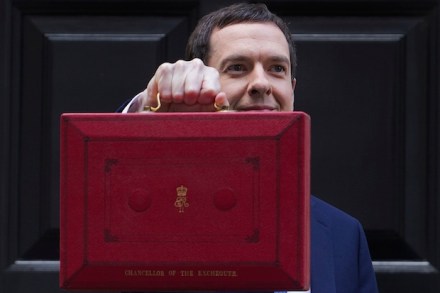
The Spectator Podcast: Why political correctness is a good thing, George Osborne’s Budget, and the end of the rave

Is political correctness a good thing or a bad thing? As Simon Barnes writes in this week’s magazine, he used to think that people should be free to use whatever words they wanted to, in pursuit of truth and meaning. But having a son with Down’s syndrome has changed his mind. Now, he has seen the benefits that political correctness bring to society. On this week’s podcast, he and Isabel Hardman discuss whether being PC is a good thing with Tom Slater, Deputy Editor of Spiked. Yesterday’s Budget held a few surprises – but not that many. What it did do, as James Forsyth argues in his column this week, was bring the political

If Wiltshire Tories regard George Osborne as a socialist, he has a problem

BBC Newsnight sent a crew to North Wiltshire today, to interview voters about the budget. Gladys Pek Yue Macrae, a former Conservative Party branch chairman, said she is fed up because she expected Tory policies to be the result of a Tory majority. Instead, she said, “I find I have a socialist Chancellor. Conservatives are for small government and each individual being responsible for their own destiny. Why do we have a sugar tax? If people should not be eating sugar, then they should not eat sugar.” As her husband, Alan Macrae, put put it: “Surely Conservatism is all about freedom of choice? It’s not about the government telling you what you should

The SNP’s ongoing war on football supporters would shame a better government

Here we go, here we go, here we [expletive of your choice] go again. Our old friend, the Offensive Behaviour at Football Act is back in the news again courtesy of an article written by its sponsor, Kenny MacAskill MSP. Booting MacAskill from office was one of Nicola Sturgeon’s first actions when she succeeded Alex Salmond as First Minister. It remains one of her best. MacAskill, you may recall, has form. It was he who cheerfully admitted that the government in which he served as Justice secretary was happy to ‘do the wrong thing’ – albeit for ‘the right reasons’ – since doing the right thing might have distracted attention from the

Budget 2016, in eight graphs

Chart 1: Growth downgraded. Not by much, but Osborne sails so close to the wind that every negative revision tends to knock him off course. Chart 2: So Osborne’s new debt target is missed already. He said the debt/GDP ratio would fall every year: a target he took right to the limit in his Autumn Statement. The ratio is rising this year – again, not by much, but this is rather embarrassing for him as made such a fuss about this target. Chart 3: Deficit picture worsens. Again. Which happens pretty much every time Osborne stands up to make a financial statement. Here’s his latest plan, versus his original. Chart 4: 2019 – mother

The OBR is relaxed about Brexit – contrary to what Osborne suggested

In his Budget speech today, George Osborne made out as if the Office for Budget Responsibility was worried about Britain leaving the EU and quoted it saying “a vote to leave in the forthcoming referendum could usher in an extended period of uncertainty”. Listening, I was amazed: how could he enlist the independent OBR on either side of the UK referendum debate? But the document itself (Box 3.4, pdf) tells a very different story. Rather than take sides the OBR explicitly says “it is not for us to judge”  – and quotes a study by Open Europe, a think tank, which… … modelled a scenario in which the UK leaves the

Full text of Jeremy Corbyn’s Budget speech

[audioplayer src=”http://rss.acast.com/spectatorpolitics/georgeosbornesbudget-2016/media.mp3″ title=”Fraser Nelson, Isabel Hardman and James Forsyth discuss the Budget”] Listen [/audioplayer]Thank you Mr Deputy Speaker. The Budget the Chancellor has just delivered is actually a culmination of six years of failure. This is a recovery built on sand and a Budget built on failure. The Chancellor has failed on the budget deficit failed on debt, failed on investment, failed on productivity, failed on the trade deficit, failed on his own welfare cap and failed to tackle inequality in this country. And today Mr Deputy Speaker, he’s announced growth is revised down. Last year, this year, every year they forecast business investment revised down, government investment revised down. It’s a very

George Osborne’s cautious, strikingly moral Budget

[audioplayer src=”http://rss.acast.com/spectatorpolitics/georgeosbornesbudget-2016/media.mp3″ title=”Fraser Nelson, Isabel Hardman and James Forsyth discuss today’s Budget”] Listen [/audioplayer]There were two striking things about George Osborne’s Budget today. The first was that having made sure that the weekend papers carried reports of all the pain that he was going to have to inflict on the nation to help it weather the economic storm that is coming, the Chancellor then barely mentioned what that pain would entail. He built up the start of his speech by lecturing the Commons on the necessity of the pain, warning that ‘we have a choice: we can choose to add to the risk and uncertainty, or we can be a

Collapse in North Sea revenues destroys the SNP’s economic argument

[audioplayer src=”http://rss.acast.com/spectatorpolitics/georgeosbornesbudget-2016/media.mp3″ title=”Fraser Nelson, Isabel Hardman and James Forsyth discuss today’s Budget”] Listen [/audioplayer]Alex Salmond had planned 24 March 2016 as his independence day and the budget he published during the Scottish independence referendum envisaged it having up to £7.5 billion of oil to spend. Today’s Budget shows that the figure will, instead be zero: precisely 100 per cent less than what the SNP had told Scots. Without it, the Scottish budget simply would not stand up. The basic point – ‘it’s Scotland’s oil!’ – has been the SNP refrain for years. There’s still oil in the North Sea but there’s no profit. The above graph shows how North Sea revenues – seen by the

Budget 2016: The biggest problem with Jeremy Corbyn’s response was that it was delivered by Jeremy Corbyn

[audioplayer src=”http://rss.acast.com/spectatorpolitics/georgeosbornesbudget-2016/media.mp3″ title=”Fraser Nelson, James Forsyth and Isabel Hardman discuss today’s budget”] Listen [/audioplayer]Jeremy Corbyn’s response to today’s Budget was fine on paper. It included a proper response to the policies that were announced, rather than the Labour leader merely ranting about what he had thought might be in the Budget when he wrote the draft a few hours earlier. He did include the sorts of lines that every Budget response from an Opposition leader and campaigning organisation must include, such as ‘it doesn’t go far enough’. But he did also welcome policies such as the sugar tax, and managed a couple of decent jokes. His opening line was that

PMQs: A session soon to be lost in the Budget smog

Normally when a Leader of the Opposition prepares for the Prime Minister’s Questions before a Budget, it comes second to the prep for the difficult Budget response and focuses on a slightly random topic. The difference between this session and a normal PMQs is usually rather marked. But when Jeremy Corbyn rose today to ask his questions, his chosen topic of air pollution wasn’t all that more eccentric than his usual range of subjects.  David Cameron’s team does have to prepare a wider range of topics – albeit in less detail – for PMQs now that Corbyn is Labour leader. But even they hadn’t thought of air pollution: Cameron had

What to expect from today’s Budget

The art of delivering a good Budget – in a political sense at least – is to give everyone the impression that while you’ve had to do some really difficult things, you’ve miraculously managed to find some nice things to do too that will distract people for at least one round of newspaper front pages. George Osborne did manage that for his summer Budget after the election – only for the row about cuts to tax credits to blow up later. So we might expect a range of measures that generally make for good headlines, such as: Raising the threshold for higher-rate tax payers to help the 1.6 million people

Budget 2016: Osborne the weatherman to warn of storm clouds over the economy

A year ago, George Osborne was giving voters a glimpse of the sunny uplands that they could expect from life under a Tory government. At the time, few believed that there would be a Tory majority after the election, but here we are at the 2016 Budget with the Chancellor still in weatherman mode, but now warning that the ‘storm clouds are gathering again’ over the economy. Osborne will say today that ‘in this Budget we choose the long term’ and that this government will ‘put the next generation first’. The Chancellor would have had to change his weather metaphors in post-election economic statements anyway, because every Budget right before

Burnham makes the case for Labour not supporting the Investigatory Powers Bill

The saying ‘the House of Commons at its best’ is normally a pompous description of parliamentarians agreeing with one another on something it is impossible to disagree on. However, when MPs come together to scrutinise legislation involving the security services, they do come rather close to being at their best, as they grow rather anxious about whether the legislation will actually work. So far the debate on the Investigatory Powers Bill has largely been detailed and thoughtful and without much silly knockabout. But the closest the second reading session has come to knockabout was when Andy Burnham was offering Labour’s response. The Shadow Home Secretary had the difficult job of

Barack Obama is right to offer his government’s view on the EU referendum

My word, what a disgrace! What an outrage! Isn’t it deplorable that the President of the United States has the gall to offer an opinion on the merits of an argument that will have some significant impact on the future of one of the United States’ closest allies? The arrogance and sheer effrontery of the man! Sheer piffle, of course, but it seems to be the case that those people who think the United Kingdom should leave the European Union are the tenderest, most easily-bruised, people in the realm. So it is unacceptable that Barack Obama should poke his nose into someone else’s business and suggest, in temperate terms, his country’s

Labour unease over Investigatory Powers Bill

The Investigatory Powers Bill has its second reading in the Commons this afternoon, with Labour planning to abstain and make its support for the timing of the legislation conditional on the Home Secretary satisfying a number of concerns that the party has. Separately, I understand that Tory MPs such as Liam Fox are pushing for a generous timetable for the legislation, including committee stage taking place on the floor of the Commons. Fox points out that ‘there’s not much other legislation about’, though this has never stopped ministers giving controversial pieces of legislation very tight timetables for debate. So far, though, Theresa May has been in a very consensual mood

Chuka Umunna: Labour MPs represent more people than the Corbynistas

It’s the Ides of March today, and there are pitifully few signs of a Labour plot. I was on ITV’s The Agenda last night with Chuka Umunna, one of the putative successors to Jeremy Corbyn, who was teased by Tom Bradby about his ambitions. He came out with the usual hedged denials (“there’s not a vacancy.,, I’ve said I would never say never”) but then came out with the rationale for ousting Corbyn. The problem: most Labour members were not members this time last year. The party has been taken over by Corbynistas and while Labour MPs could technically change the leadership it’s harder to change the membership. Chuka agreed- but then gave the

Pollster finds Labour level-pegging with the Tories. Pollster panics.

Look! All this sniping at Jeremy Corbyn is wrong and now we have proof. The Labour leader is not in fact trashing his party’s brand. Today a poll from ICM puts the Conservatives and Labour level on 36 per cent, a jump of four points for the opposition and a drop of three for the governing party. But before Corbynistas have had a chance to gather up their red flags and take to the sunny streets to celebrate, ICM has already issued a clarification which, in essence, trashes the poll’s finding. You can read the full list of caveats to the poll here, but the key lines are that ‘the

Iain Duncan Smith given pointless grilling on how he sleeps and jobs fairs

Labour had an aggressive session at Work and Pensions Questions today, attacking the Conservatives on disability benefit cuts, and on whether they had any morals. Normally questions in the Commons are supposed to be about the design of policies, but today Owen Smith appeared to be taking a leaf out of Jeremy Corbyn’s book, asking a question he had crowdsourced: ‘Before I came here this afternoon, Mr Speaker, I asked disabled people what question they would like to put to the Secretary of State and one answer stood out and it was quite simply: how does he sleep at night?’ Funnily enough, Iain Duncan Smith didn’t supply any details of