Uk politics

Tony Blair’s rumination over his own ‘good faith’

From our UK edition

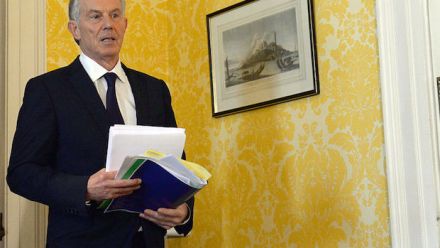
Tony Blair appeared emotional, sounded hoarse, and constantly fixated upon his belief that he acted in ‘good faith’ over Iraq when he responded to the Chilcot report this afternoon. The former Prime Minister spoke or took questions for two hours, and started by saying that he accepted ‘full responsibility, without exception and without excuse’. But he also made clear that he disagreed with Chilcot’s findings that the decision to invade Iraq could have been delayed. The key feature of the long press conference, though, was Blair ruminating constantly on whether he had acted in good faith when taking the decision to go to war.

Brexit Britain deserves a better PM than Theresa the Technocrat

From our UK edition

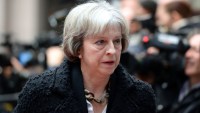
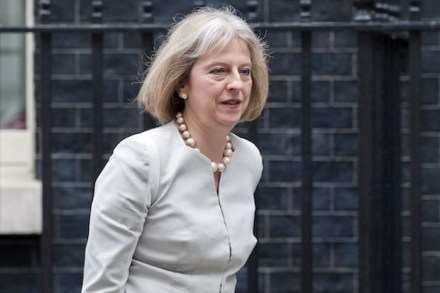
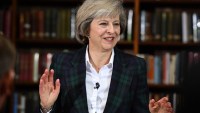
Please, no, not Theresa May. Theresa the technocrat, who doesn’t do ideology, passion or even gossip, would be the worst PM for Britain right now. Post-Brexit Britain, where politics has become interesting again, after 17.5m souls gave an otherworldly establishment just the fright it needed, needs a leader who is properly political, up for debate, and maybe even a ruck. Not May, not this apolitical politician, not this woman who says ‘I will get the job done’ as if she’s applying for a position in HR rather than Downing Street. Having May run Brexit Britain would be like having a bank manager referee a Mike Tyson fight. You can tell a lot about May from how she talks. She speaks in CVese.

‘I will be with you, whatever’: What Chilcot tells us about Tony Blair

From our UK edition

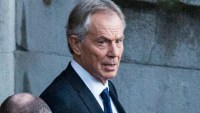
The Iraq Inquiry report is utterly scathing about Tony Blair. It paints a critical picture of his sofa government, in particular the way in which that government approached planning and preparation for Iraq without Saddam Hussein, and his ‘certainty that was not justified’ in presenting the severity of the threat posed by Iraq’s weapons of mass destruction to Parliament. The Prime Minister also appeared more concerned about the politics of the military action than its detail, and failed repeatedly to ensure that the relevant ministerial oversight and Whitehall resources were directed to the conflict. And he seemed unable to challenge or disagree with the US when necessary.

Iraq Inquiry: Key points from Sir John Chilcot’s statement

From our UK edition

Should the UK have gone to war in Iraq? Did it have the necessary legal basis and intelligence to do so? And did it mess up once involved militarily in the country? Sir John Chilcot’s Iraq Inquiry finally published its report this morning, and these are the key conclusions that he reached in his statement: While military action against Saddam Hussein ‘might have been necessary at some point’, in March 2003, he posed no imminent threat, the strategy of containment could have been continued for ‘some time’, and the majority of the Security Council supported continuing UN inspections and monitoring’. ‘Military action at that time was not a last resort,’ Sir John said in his statement.

How the UK messed up Iraq: what the Chilcot Inquiry says about post-conflict planning

From our UK edition

The Iraq Inquiry dismisses claims that the aftermath of the invasion could not have been foreseen. It describes the planning and preparations for the country after the fall of Saddam Hussein were ‘wholly inadequate’. In his statement, Sir John said that ‘despite explicit warnings, the consequences of the invasion were underestimated’. The report details both an awareness of the inadequacy of plans and a marked lack of effort from Whitehall. It says: ‘The scale of the UK effort in post-conflict Iraq never matched the scale of the challenge. Whitehall departments an their ministers failed to put collective weight behind the task.

Chilcot slimmed down: what you need to know

From our UK edition

The long-awaited Chilcot report has finally been published today. It comes during a very tumultuous time in British politics - and while its publication was always going to be fractious, it remains to be seen how the Tories - and more interestingly, Labour, use it to their advantage. The 12-volume report, which is 2.6 million words long and can be found here, will be dissected over the coming days, but here's a quick summary of some of the key statements from it: Key points The report concludes that the UK chose to join the invasion of Iraq before the peaceful options for disarmament had been exhausted. Military action at that time was not a last resort.

As Crabb drops out, can Gove pass Leadsom?

From our UK edition

Theresa May is, without a doubt, going to the membership round—and with the support of vastly more MPs than her opponent. In the first round, she won the support of 165 MPs—exactly half the eligible electorate. The question now is who will be her opponent? Andrea Leadsom finished second with 66 votes, Michael Gove was third on 48, Stephen Crabb got 34 and Liam Fox was eliminated after receiving 16 votes. Crabb has chosen to drop out of the race of his own accord after finishing fourth. If Gove is to overtake Leadsom, he is going to have to pick up a lot of votes from the Crabb pool. The Gove team hope they can do this by appealing on social reform grounds to Crabb’s supporters.

May comes top in first round of Tory leadership voting, Fox eliminated

From our UK edition

Graham Brady has announced the results of the first round of the Tory leadership contest as follows: Stephen Crabb 34, Liam Fox 16, Michael Gove 48, Andrea Leadsom 66, Theresa May 165. So as expected, Theresa May is out on top by a considerable margin, but what is striking is how close Michael Gove has come to Andrea Leadsom, given the rather visceral reaction in the Tory party to the way he treated Boris Johnson last week. Perhaps some of Leadsom's support drifted away after last night's hustings which even her supporters acknowledge did not go particularly well. There may now be pressure on Stephen Crabb to drop out after a not-particularly-good showing, which would speed up the contest, something even those resisting a coronation would be quite happy with.

Some thoughts on today’s Tory leadership elections

From our UK edition

You know what to expect: Theresa May wins, Andrea Leadsom comes second. Liam Fox forced out today, Stephen Crabb probably joins him voluntarily leaving Michael Gove to fight with Leadsom for second place – or, perhaps, both dropping out to let May take the crown. You also know that the expected stopped happening in British politics some time ago. Andrea Leadsom bombed in the Tory hustings last night; one Tory MP present told me that he’d have been embarrassed to have delivered a speech of that quality to a golf club. She finished by saying she was standing to be party leader then added, in a quiet voice as if even she didn’t quite believe it, 'and also as Prime Minister'.

Oliver Letwin left holding the Brexit baby

From our UK edition

Last week’s announcement that Oliver Letwin would be charged with putting together different models of Brexit for whoever takes over as Prime Minister to adopt didn’t necessarily reassure that many Tory MPs. Today the head of that Brexit unit came under sustained fire from MPs on the Foreign Affairs Committee who seemed staggered not just that the government had done no contingency planning for Britain voting to leave the EU but also that the new unit didn’t yet seem to know what it was doing. So many of the Committee’s questions received the same answers, all along the lines of 'I can’t tell you that’ or ‘it’s not in my gift’ to do this.

Labour coup enters its ‘last throw of the dice’ as Tom Watson turns on Corbyn

From our UK edition

Tom Watson this evening told the weekly meeting of the parliamentary Labour party that he is taking a ‘last throw of the dice’ before there is a move against Jeremy Corbyn. The party’s deputy leader held a 20-minute meeting with Corbyn this morning in which he warned him that he had to have the authority of the parliamentary Labour party, and that it wasn’t good enough just to have the support of the members. In response, Corbyn told Watson that he wanted to continue as Labour leader, but Watson’s spokesman said it was clear that there wasn’t a solution that involved Corbyn staying on as leader. Neil Kinnock also gave a rousing, booming speech to the meeting which received plenty of cheers from MPs.

Lawyers are leading the coup against democracy

From our UK edition

A coup is underway. In Britain, in the 21st century, unelected forces have come together to try to thwart the will of the people. It’s a polite coup. Its weapons are legal challenges rather than guns, and it’s being led by businesspeople and retired politicians rather than moustachioed military men hungry for power. It’s a coup in which tea is far more likely to be spilt than blood, as middle-class agitators plot over a cuppa how they might overturn the say-so of the silly little people. But it’s an attempted coup nonetheless, and anyone who cares one jot about democracy should take it very seriously. Today it is revealed that law firm Mishcon de Reya is taking legal action to try to block the triggering of Article 50 without a parliamentary act.

Labour struggles with empty frontbench after series of resignations

From our UK edition

‘Well this does seem like an upside down house,’ remarked Nick Gibb at Education Questions today. ‘We have the frontbench on the backbenches and the backbenches on the frontbench.’ The session was in fact rather weirder than that. It wasn’t just that Labour’s former frontbenchers such as Tristram Hunt and Lucy Powell were asking questions from a few rows back, or that Angela Rayner, the new Shadow Education Secretary, was only a few days into her new job following the appointment and swift resignation of Pat Glass. It was also that Rayner had to ask nearly all of the Opposition’s questions herself, because most of the frontbenchers sitting next to her weren’t actually part of the education frontbench team.

Nigel Farage’s departure means Ukip can seize its post-referendum opportunity

From our UK edition

Nigel Farage’s departure comes at the best possible time for Ukip. The party could be hoovering up votes from Labour’s heartlands which voted for Out in surprisingly large numbers in the referendum. But since that result, figures in Ukip had been feeling dismayed that their party seemed angry and disorganised, unable to reach out to those Labour voters. Farage spent most of the referendum campaign behaving badly, almost trying to sabotage his own side, before conceding that Remain had won just hours before it became clear that Leave had won. Now there is an opportunity for the party to re-brand as ‘Newkip’, taking a more optimistic stance.

Philip Hammond repeats Theresa May’s threat to EU immigrants

From our UK edition

Appallingly, Philip Hammond has just echoed Theresa May’s threat to use the two Britain’s million European Union immigrant workers as bargaining chips in negotiation with Brussels. He said it would be "absurd" to say - as Michael Gove, Boris Johnson, Dan Hannan and Vote Leave members have said - that no EU national will be deported no matter what. Here's the exchange on the Today programme. Philip Hammond: “Neither EU nationals in Britain nor British nationals in EU countries will find any change to their circumstances over the next few years.” Nick Robinson: “Crucial words, though, isn’t it: “over the next few years.

Is Theresa May really threatening to deport Europeans?

From our UK edition

Does Theresa May really understand Brexit? Speaking to Robert Peston today, the Home Secretary seemed to be entertaining the idea of deporting European nationals staying in Britain. Or, almost as bad, using them as collateral in some negotiation with Brussels: a deeply worrying and, to me, revolting suggestion. But coming from the Home Secretary, we have no choice but to take it seriously. Robert Peston: Now, there’s a lot of anxiety among migrants who’ve come here from the rest of the EU about whether they’ll be allowed to stay. There’s also quite a lot of anxiety among Brits living in the rest of Europe. What would you say to them?

The Brexit test

From our UK edition

Stephen Crabb made a passionate plea this morning for Tories to stop thinking in terms of Remain and Leave when it comes to picking a leader. He warned that if people carry on doing this, it will lead to the party splitting. But all things being equal, I do think it would be best for the next Prime Minister to be a Leaver. After all, David Cameron resigned because he had campaigned for Remain and the country had voted to leave and he thought that made it impossible for him to chart the country on the new course it must now follow. There are two main reasons for thinking a Leave PM preferable. First of all, this would provide some accountability for what Vote Leave promised in the referendum.

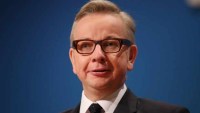
Michael Gove’s leadership pitch: the brutal man of principle

From our UK edition

Every candidate comes into a leadership contest needing to answer questions about their flaws and experience. But the questions that Michael Gove is having to answer about his own bid are of altogether a different order. The Justice Secretary spent the first chunk of his interview with Andrew Marr this morning having to explain not just why he decided to chuck Boris Johnson, but also why he did it in such a brutal way. "You are our Frank Underwood" Andrew to @Gove2016 @HouseofCards #marr https://t.co/9Qv9NUIIi5— The Andrew Marr Show (@MarrShow) July 3, 2016 Marr repeatedly pressed him, not so much for his reasons for turning on the Mayor, but for an explanation of why he was so brutal.