Uk politics

Why Andrea Leadsom may still benefit from her naive comments about motherhood

One of the rules of modern leadership contests is that at some point there is an almighty row about whether one of the candidates is just better than the other because she happens to have had children of her own. Labour reached that stage on 6 July 2015 when Helen Goodman wrote a piece saying she was supporting Yvette Cooper because she was a mother, which the Liz Kendall camp took exception to. The Tories reached it almost exactly a year later when Andrea Leadsom gave an interview to the Times in which she said she had a ‘real stake in the future of our country’ because she has children.

May must sound optimistic about Brexit

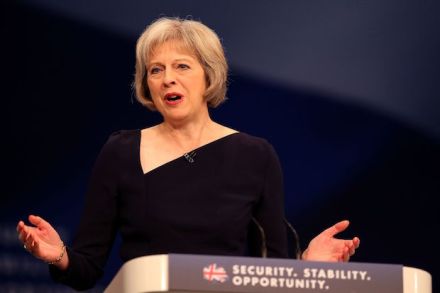
Theresa May’s biggest weakness in the Tory leadership race is that she backed Remain while most Tory members went Leave. But, as I say in The Sun this morning, if she can sound confident and optimistic about Brexit, then she will win and become Britain’s next Prime Minister. May needs to make clear that now the referendum result is in, she’s sees Brexit as an opportunity to be seized, not as a risk to be managed. She can’t afford to cede optimism on this to Andrea Leadsom. I understand that her Leave-voting supporters—Liam Fox, Priti Patel, David Davis and her campaign chair Chris Grayling—will all be out and about this

Sajid Javid is grabbing the Brexit bull by the horns

While frustrated Remain campaigners continue to speak of economic Armageddon, a very significant move happened yesterday. Business secretary Sajid Javid flew off to Delhi to begin preliminary negotiations for a trade deal between Britain and India. It is significant because this is exactly the sort of deal that we have been forbidden from doing for the past 43 years. As members of the EU we are forbidden from signing our own trade deals with third countries. Instead, we must rely on deals collectively negotiated with the EU. Trouble is, the EU isn’t very good at negotiating them. It is painfully slow process because the competing demands of 28 different EU

What has happened to Labour’s coup?

Things have gone mysteriously quiet in the Labour party. Every so often, Len McCluskey and Tom Watson emerge from a meeting, asking their comrades to give them a little bit more time before any of them move against Jeremy Corbyn. And nothing seems to happen. How much more time do the plotters need to give the unions and the party’s deputy leader before they give up and make a move on the leader? Or have thy already given up, and decided that they can’t defeat him and that it’s all over? Some reports in the past few days suggest that Labour MPs have marched all the way up the hill

The scapegoating of Blair is excessive

Blair’s great mistake was his desire to believe the best of America. It must know what it’s doing in invading Iraq, he thought. And in 2002, for once, this mighty superpower was hurt, needy – he felt needed by the leader of the free world. Which must be an intoxicating experience. Many of the rest of us shared in this basic mistake, this assumption that this generally benign superpower should be trusted. It’s an assumption bolstered by hundreds of films in which American power saves the day. And it’s an assumption largely backed up by history: Western Europe has been made safe by American power, for many decades. Yes, he

Brexit has encouraged an eruption of nasty nativism. Why is anyone surprised by this?

Even in an age of ridiculousness there is something preposterous about the sight of so many prominent Leavers clutching their pearls in horror as they contemplate the possibility – the real possibility – that Andrea Leadsom could become the next leader of the Conservative party and, by golly, Prime Minister too. I mean, where do they think she came from? Who created her? Mrs Leadsom’s credentials to occupy the highest political office in the land come down to one single fact: she is the most virulently eurosceptic candidate available. That’s a powerful thing, however, and those Leavers who think their creation can be safely kept in the laboratory may yet have

I’ll vote for Theresa, but only if she passes these three tests

I’ve made no secret of the fact that I wanted Michael Gove to be in the final two in the Conservative leadership race and I’m disappointed that he isn’t. As a Conservative Party member, I’m willing to vote for Theresa May, but on three conditions. First, she commits to repealing the 1972 European Communities Act. I’m less fussed about whether and when she triggers Article 50 – it was the 1972 European Communities Act that surrendered British sovereignty by making European law superior to British law. Repeal that Act, then pass another Act preserving all the laws that would thereby be rendered invalid and then decide which of those laws we

Gove camp nervous as Tory MPs go to vote again

This afternoon we will find out which two Tory MPs will face the Conservative party members in the leadership contest. Theresa May is the favourite and is far out in front of her closest rival, Andrea Leadsom, who has a decent lead over the third candidate, Michael Gove. But neither have had a very good few days. Leadsom was mocked for talking about frontal cortexes at the first party hustings this week, and has endured a great deal of criticism about her claims she is an experienced City figure. Gove, meanwhile, is still trying to overcome the charge that he is treacherous (he explains why he did what he did

Theresa May’s first test: guaranteeing EU citizens the right to stay

On Sunday I watched in disbelief as Theresa May was asked about the status of EU citizens already in the UK. She failed to do the obvious – to guarantee as Home Secretary the rights of EU families living and working here to stay in Britain. In a debate on Monday not a single MP on either side of the House – whether Leave or Remain – supported the Government’s position. An opposition motion to support rights of EU nationals yesterday won by 245-2. Theresa May appears on course to become our next Prime Minister. She will have the responsibility on her shoulders of clearing up the mess we are

‘I had to step up’

On the way to interview Michael Gove, we meet a government minister, an Old Etonian, who suggests we ask him, ‘How can anyone trust you ever again?’ Just a fortnight ago, proposing such a question would have been unthinkable: the Justice Secretary had a reputation for being one of the most consistent, decent and honourable men in the cabinet. When Gove agreed to back Boris Johnson’s leadership bid, the pair seemed a dream team. But on the morning of their campaign launch, Gove announced that Johnson was unfit for the job, so he’d stand himself instead. Then, he was knocked out by Conservative MPs who were still recovering from the drama.

Theresa May love bombs Tory MPs

The final parliamentary hustings of the Tory leadership contest has now taken place. With Theresa May assured of a place in the final two, the real interest was in whether Andrea Leadsom or Michael Gove could extract more from the occasion. Leadsom was first up, and I understand gave a better performance than she had on Monday night. She joked at the end of her speech, ‘I’m a quick learner—note I didn’t use the expression baby’s brains once’. But concerns were raised by her saying that she wouldn’t publish her tax return now but would let Tory MPs come and look at it if they wanted to.  Her answer that

Tony Blair’s rumination over his own ‘good faith’

Tony Blair appeared emotional, sounded hoarse, and constantly fixated upon his belief that he acted in ‘good faith’ over Iraq when he responded to the Chilcot report this afternoon. The former Prime Minister spoke or took questions for two hours, and started by saying that he accepted ‘full responsibility, without exception and without excuse’. But he also made clear that he disagreed with Chilcot’s findings that the decision to invade Iraq could have been delayed. The key feature of the long press conference, though, was Blair ruminating constantly on whether he had acted in good faith when taking the decision to go to war. He seems tortured by this question,

Has Parliament learned the lessons of the Iraq war?

Normally whenever someone mentions Iraq in the House of Commons, the Chamber descends into a grouchy scrap. But today’s statement on the Chilcot report from David Cameron and the questions that followed it were surprisingly measured and thoughtful. As James notes, Jeremy Corbyn didn’t mention Tony Blair, and he didn’t give a furious response to the Prime Minister, either. Of course, his analysis of the report wasn’t comfortable for many Labour MPs – indeed, Ian Austin shouted from the backbenches that his party leader was a ‘disgrace’. But he did not call for Blair to stand trial, and neither did he rant at length about the failings of the West.

Brexit Britain deserves a better PM than Theresa the Technocrat

Please, no, not Theresa May. Theresa the technocrat, who doesn’t do ideology, passion or even gossip, would be the worst PM for Britain right now. Post-Brexit Britain, where politics has become interesting again, after 17.5m souls gave an otherworldly establishment just the fright it needed, needs a leader who is properly political, up for debate, and maybe even a ruck. Not May, not this apolitical politician, not this woman who says ‘I will get the job done’ as if she’s applying for a position in HR rather than Downing Street. Having May run Brexit Britain would be like having a bank manager referee a Mike Tyson fight. You can tell

Iraq Inquiry: Key points from Sir John Chilcot’s statement

Should the UK have gone to war in Iraq? Did it have the necessary legal basis and intelligence to do so? And did it mess up once involved militarily in the country? Sir John Chilcot’s Iraq Inquiry finally published its report this morning, and these are the key conclusions that he reached in his statement: While military action against Saddam Hussein ‘might have been necessary at some point’, in March 2003, he posed no imminent threat, the strategy of containment could have been continued for ‘some time’, and the majority of the Security Council supported continuing UN inspections and monitoring’. ‘Military action at that time was not a last resort,’

How the UK messed up Iraq: what the Chilcot Inquiry says about post-conflict planning

The Iraq Inquiry dismisses claims that the aftermath of the invasion could not have been foreseen. It describes the planning and preparations for the country after the fall of Saddam Hussein were ‘wholly inadequate’. In his statement, Sir John said that ‘despite explicit warnings, the consequences of the invasion were underestimated’. The report details both an awareness of the inadequacy of plans and a marked lack of effort from Whitehall. It says: ‘The scale of the UK effort in post-conflict Iraq never matched the scale of the challenge. Whitehall departments an their ministers failed to put collective weight behind the task.’ The government ‘failed to take account of the magnitude

Chilcot slimmed down: what you need to know

The long-awaited Chilcot report has finally been published today. It comes during a very tumultuous time in British politics – and while its publication was always going to be fractious, it remains to be seen how the Tories – and more interestingly, Labour, use it to their advantage. The 12-volume report, which is 2.6 million words long and can be found here, will be dissected over the coming days, but here’s a quick summary of some of the key statements from it: Key points The report concludes that the UK chose to join the invasion of Iraq before the peaceful options for disarmament had been exhausted. Military action at that time was not a last resort.

As Crabb drops out, can Gove pass Leadsom?

Theresa May is, without a doubt, going to the membership round—and with the support of vastly more MPs than her opponent. In the first round, she won the support of 165 MPs—exactly half the eligible electorate. The question now is who will be her opponent? Andrea Leadsom finished second with 66 votes, Michael Gove was third on 48, Stephen Crabb got 34 and Liam Fox was eliminated after receiving 16 votes. Crabb has chosen to drop out of the race of his own accord after finishing fourth. If Gove is to overtake Leadsom, he is going to have to pick up a lot of votes from the Crabb pool. The