Uk politics

Len McCluskey’s hollow victory

Len McCluskey has seen off a challenge to be elected to a third term at the helm of Unite. And what a seeing off it was. When the votes starting to come in, and reportedly showed the top two contenders neck-and-neck, McCluskey’s rival was promptly suspended. Gerard Coyne was stripped of his duties as West Midlands regional secretary – although it’s not clear what he’s supposed to have done wrong or who his accusers are. Coyne has been a thorn in the side of the McCluskey hierarchy for some time. The Guardian points out that he was given a written warning in 2016. His offence? Speaking at an event hosted by moderate Labour MPs

There is something grubby about Theresa May’s snap election

Since I suggested last July that Theresa May, newly anointed as leader of the Conservative and Unionist party and Prime Minister of the United Kingdom of Great Britain and Northern Ireland, should call an election to both establish her own legitimacy and allow the country an argument over the kind of Brexit it preferred, it would be unseemly to now deplore her belated decision to go to the country.  Happily, there remain many other things that may be deplored. Far from the least of these is the manner in which the Prime Minister has made her case for an election. It’s not her fault, you see, that she has (correctly, in

Theresa May is right to say no to a TV debate

I worked on the first TV debate of the Scottish referendum. I was involved in countless more. I was to be found on the production team for televised clashes during the 2015 general election and the 2016 vote for Holyrood. So I speak with some experience when I say TV debates are a terrible idea. Theresa May’s refusal to participate in any is the first good news to come out of the general election. When the format debuted in 2010, I was optimistic. Here was an opportunity to extract a good deal more honesty and accountability from the overspun and media-managed Gordon Brown and David Cameron. Cleggmania (remember that? Come

Can Labour survive this general election?

‘There are times, perhaps once every thirty years, when there is a sea-change in politics,’ reflected James Callaghan in 1979, conscious he was about to be turfed out of Number 10. He didn’t know the half of it. While Margaret Thatcher’s election did herald the end of the post-war consensus, it kept the Conservative/Labour ‘mould’ intact, despite later attempts by the SDP/Liberal alliance to break it. But with a ‘Brexit election’ now called for 8 June, Labour will be fighting for its very survival. The last great national political realignment was the 1922 general election in which Labour beat the Liberals into second place for the first time. This was

The general election will be a vote on Scottish independence

‘Now is not the time’ except, apparently, when now is the time. The reasons for engineering a general election are many and obvious. The current government is tolerated, not welcomed. Theresa May needs a mandate of her own. A thumping Tory majority – the only conceivable outcome of any dash to the country – will not hugely strengthen her position with Britain’s erstwhile european friends and partners, but it will secure her position on the domestic front. For Labour, too, this is an opportunity to lance a boil: it will, or should at any rate, end the Jeremy Corbyn era. For their part, the Liberal Democrats should welcome the opportunity

Labour has abandoned workers. Trade unions must avoid doing the same

I’m not a member of a trade union, but I should be. As a freelance journalist, my employment situation is precarious — yet it still wouldn’t occur to me to join the National Union of Journalists. My reasons are both personal and political, but mostly practical: the NUJ talks tough but, in the end, seldom achieves more than a few quid extra in your redundancy package. Still, the union movement seems bent on wooing me; at least that’s how I’m interpreting Gerard Coyne’s campaign to oust Len McCluskey as Unite’s general secretary. Coyne’s manifesto touches on expected areas — better value for membership dues; a Brexit focus on training and

Ed Miliband needs a second act, not a comedy act

When a shell-shocked Ed Miliband stepped down as Labour leader following the party’s defeat in the 2015 election, he concluded his speech by saying that: ‘The course of progress and social justice is never simple or straightforward. Change happens because people don’t give up, they don’t take no for an answer, they keep demanding change’ The change that party members demanded from the blank slate of Labour’s election defeat turned out to be Jeremy Corbyn; and Miliband slunk back to Doncaster to not ‘take no for an answer’ – from the scenic climes of the backbenches. But it doesn’t have to be this way. Last week, I voiced my frustration that Miliband was appearing

Like them or not, Theresa May’s grammar school plans will end the postcode lottery of education

Grammar Schools. Now there’s a potent pair of words. Mention them, and genial conversation will instantly shift into awkward silence or seething torrents of passion. In either case, reasoned argument is in short supply. Yet now that Theresa May seems committed to overturning Labour’s ban on opening new grammar schools, discussion is vital. But instead of rehashing the same arguments in favour of academically selective schools, or raking over the same problems they can cause, it’s important instead to look carefully at the evidence about whether grammar schools really do promote ‘social mobility’. One of the major themes of anti-grammar salvos is that they don’t. And to make this point, the crudest approach is typically

The Brexit battle is only just beginning

Nick Robinson, of the BBC, compares the Brexiteers and Remainers to ‘fighters who emerge after months of hiding in the bush, [and] seem not to accept that the war is over’. It is a false analogy because, unfortunately, the war is not over. Its most arduous phase has only just begun. This is an extract from Charles Moore’s Notes, which appears in this week’s magazine

Britain’s comics can’t stand Brexit – but the joke is on them

One of the best things about Brexit has been its shattering of anti-establishment pretensions. All the people who for yonks had been getting away with posing as rebels and disruptors and irritants to the status quo have been exposed as utterly allergic to radical political change; as small-c conservatives freaked out by revolt; as the nervous, nodding footsoldiers of political power. From the trustafarians of Momentum, those laptop Leninists who fantasised that they were revolutionaries, to columnists like Caitlin Moran, the Times’ token rebel who once said she lives ‘like it’s 1969 all over again and my entire life is made of cheesecloth, sitars and hash’ (cringe much?), virtually every

How to solve the Gibraltar problem – in the style of Donald Trump

Two of the top tips in Donald Trump’s The Art of the Deal, of which I wrote last week even though he allegedly didn’t write it himself, are ‘Think Big’ and ‘Maximise the Options’, also expressed as ‘I keep a lot of balls in the air’. How should Theresa May apply that advice in response to Spain’s opportunistic bid to raise the issue of sovereignty over Gibraltar as a potential Brexit hurdle? She could, of course, offer a repeat of the 2002 referendum in which Gibraltarians voted 99 per cent ‘No’ when asked whether Britain and Spain should share the Rock’s sovereignty. But the ‘balls in the air’ gambit I

The Labour party has become institutionally anti-Semitic

Listen to Douglas Murray and James Forsyth debating Ken Livingstone’s non-expulsion: In the past, Labour has been quick to take a stand against bodies where racism, sexism, and homophobia were allowed to fester. Discrimination was discrimination, and institutions in which it routinely took place were culpable for it. But anti-Semitism now routinely takes place in the Labour party – and party members must acknowledge this. By its own definition, the Labour party is institutionally anti-Semitic.  No fair-minded person can read the failure to expel Ken Livingstone from the party any other way. After careful consideration of his latest calumny, Labour’s National Executive Committee has chosen merely to extend the former London mayor’s suspension for a further year. 

When our armed police open fire have we got their backs?

I walked past Parliament, five days after Khalid Masood’s fatal attack. I looked at all the armed policemen on all the gates visible to the public. All were talking to one another rather than surveying the scene in front of them. As I write, the only person, so far as we know, being actively investigated by the authorities for his part in the events of last week is Sir Michael Fallon’s close protection officer, who shot Masood dead. Under our rules, it is automatic that the Independent Police Complaints Commission investigates any officer who shoots anyone. It is hard to know whether to admire this as a mark of civilisation

Let’s compare Sturgeon and May’s sure-footedness – not their legs

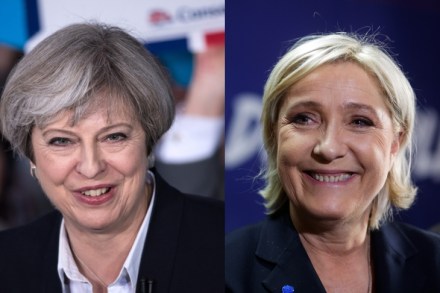
One must not make odious comparisons between Mrs May’s legs and those of Ms Sturgeon, but it is not sexist to ask which is the more sure-footed. So far, Ms Sturgeon has run much the faster, and by doing so has gained attention far in excess of the numbers she can command. Mrs May might look the more plodding. But as Ms Sturgeon charges forward yet again with a call for another referendum, I wonder if she is becoming like Bonnie Prince Charlie, who reached Derby, and then slipped. This is an extract from Charles Moore’s Notes, which appears in this week’s Spectator

Confirmed: UK economic growth accelerated after the Brexit vote

All of the blank ink that the FT used on the day after the Brexit vote, all of those predictions of the job losses and recessions – and still, the economy still refuses to behave as those economists predicted. Not only did British economic growth actually accelerate after the Brexit vote (GDP now confirmed at 0.7pc up in the last three months of 2016) but the confidence continues. A Deloitte survey of chief financial officers finds their optimism at an 18-month high as they become more relaxed about Brexit. As has the Bank of England (see below).

Parliament must take back control of Brexit

In the early, sunlit days of New Labour, the left-wing comedian John O’Farrell had a skit on how the Tories, after a generation of dominating British politics, found their party and its principles rejected by the electoral mainstream. ‘Now the Conservatives are like a lunatic fringe party,’ he said. ‘Soon we can expect to see them outside Woolworths next to the Socialist Workers on a Saturday afternoon shouting “Daily Telegraph! Get your Daily Telegraph! Britain out of Europe!”‘  A generation on, the Tories are in power, Woolworths is gone, the Socialist Workers are running the Labour Party, and Britain is indeed coming out of Europe.  This serves as a useful

A great day for British democracy

Today is a great day for British democracy. One of the greatest ever, in fact. Tune out Project Fear, with its overblown claims that Brexit will cause economic collapse and possibly revive fascism, and just think about what is happening today. The largest democratic mandate in the history of this nation, the loudest, clearest, most populous democratic cry Britons have ever made, is finally being acted upon. The political class is starting the process of severing Britain’s ties with the EU not because it wants to — it desperately doesn’t want to — but because a great swarm of its people have told it that it must. This is amazing.

Who has the better mandate: Theresa May or Nicola Sturgeon?

For the last week, the Unionist opposition at the Scottish parliament has enjoyed observing that the Scottish government is happy to ignore non-binding votes at Holyrood when it suits them to do so but now expects the UK government to be bound by today’s vote authorising the Scottish government to seek a Section 30 order that would begin the process by which a lawful second referendum on independence can be held. It is a neat line but an insufficient one, not least since this vote – unlike some of those on which the SNP government has been defeated – actually recommends a particular course of action that the government should

Ed Miliband’s sassy Twitter reinvention is bad news for Labour

I really liked Ed Miliband. I thought he would make a great Prime Minister. He was wide-eyed and striving, the less hip or handsome of the Miliband brothers, but undeniably a fine man. In recent months, however, he has tried to shed that image. He now wants to seem cool. This morning, for example, Miliband responded to the Daily Mail’s controversial ‘Legs-it’ cover by tweeting ‘The 1950s called and asked for their headline back’. He then proceeded to engage in a back-and-forth with James Blunt (another of Twitter’s surprise rehabilitations) who wrote ‘It’s been such a pleasure guest-editing @Ed_Miliband’s Twitter page these last couple of weeks.’ Miliband then delivered the exchange’s coup de grace, slaying

Forget ‘virtue signalling’ – ‘empathy patrolling’ is the new moral phenomenon

I’ve had just about enough of being told how to feel about what happened last Wednesday.  I feel angry. I still feel shock. I feel a keen ache for the families of those murdered, especially the loved-ones of PC Keith Palmer.  I feel that cold spite that works its way into your heart at times like these, vengeful cruelty passing itself off as hard-headedness. When I remember this, I feel ashamed to have given in to it.  I feel scared of an ideology that crashed into the 21st century in an outrageous spectacle but has now made its choreography more low-key.  I feel contempt for the demagogues who seek to exploit