Uk politics

Labour’s abortion stance is the final straw

From our UK edition

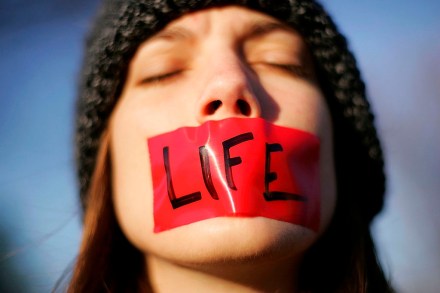
Well, that didn’t last long: in April, I rejoined the Labour Party. Last Sunday, I cancelled my subscription and cut up my membership card. Being part of the official opposition to a Tory Government, my conscience can live with; being the official opposition to the unborn, it cannot. I've always leaned towards backing Labour. And while my radicalism may have mellowed somewhat in my old age, I would certainly have voted for Jeremy Corbyn in the first leadership contest. So when the snap election was called, it seemed like an obvious move to put my money where my ballot is.

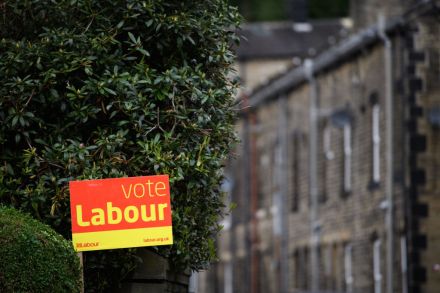
Sticking up a ‘Vote Labour’ placard is an exercise in virtue signalling

From our UK edition

To judge by the number of Labour placards outside people's houses at the moment, you'd be forgiven for thinking the party is heading for a romping victory. Sure, you will see some 'Vote Conservative' placards dotted about here and there. But for the most part, putting up political posters is now predominately a left-wing pastime. This is certainly the case in the urban heartlands of England's three big cities, London, Birmingham and Manchester, where the rare Conservative posters that have made an appearance are often defaced or torn down. Perhaps surprisingly, 'Vote Labour' posters are most conspicuous in the wealthier parts of our cities.

Fact-checking what Nicola Sturgeon told Andrew Neil about education

From our UK edition

I’ve been on the campaign trail in Scotland, and was struck by how often education was raised by voters – underlining a trend of the SNP’s domestic record catching up with Nicola Sturgeon. She had come prepared for her interview with Andrew Neil on this point, but how reliable were her answers? Ms Sturgeon’s tactic is to drag any discussion about education into the land of acronyms and statistics, knowing that the best way to get out of a tight spot is to make the subject sound dull, or parochial. But online, we have infinite space to team up with people who know these briefs, and scrutinise politician’s answers. The result is below. A health warning: this is about details, and about Scotland.

Jeremy Corbyn must have been the most secret peacemaker of all

From our UK edition

I suppose that if you are under thirty, Northern Ireland seems a place far away and it must be difficult to imagine a time when news from the province was a regular feature of the BBC and ITV nightly news bulletins. The Good Friday Agreement, for all its imperfections and awkward compromises, settled something that now belongs to something close to ancient history. A YouGov poll last month suggested only one in five voters thought they knew even a fair amount about Jeremy Corbyn’s history with Sinn Fein, the IRA, and the wider republican movement. The young can be forgiven their ignorance. But there are many people old enough to remember what really happened in the 1970s, 1980s and 1990s who seem determined to ignore historical record.

Merkel is right about Trump – so where does that leave Britain?

From our UK edition

Angela Merkel has never been a showboating politician. Public speaking isn’t her forte – she prefers to work behind the scenes. That’s why her latest speech has made such big waves, on both sides of the Atlantic. The Washington Post said it marked the beginning of a ‘new chapter in US-European relations.’ The New York Times called it a ‘potentially seismic shift.’ Seasoned US diplomat Richard Haas described it as ‘a watershed’ in America’s relationship with Europe. So what did Merkel say? What did she mean by it? And what are the implications for Germany, and for Britain?

Paul Nuttall, the hopeless populist

From our UK edition

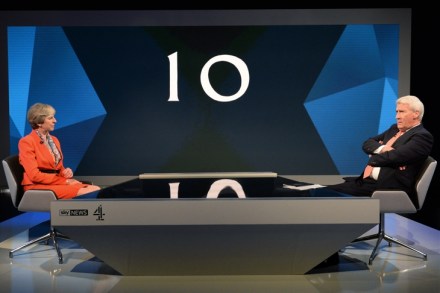
Paul Nuttall doesn't want to be a hangman after all. There was some doubt over the weekend when the Ukip leader said he'd bring back the death penalty and would even pull the lever himself.   This left Andrew Neil somewhat curious and so he used his election interview to enquire if Nuttall had been signalling a career move. But it turns out he wasn’t. He’d be up for stringing up nonces to make a point but wasn't seeking new opportunities in that sector. 'I don't want to be Albert Pierrepoint,' he told Neil. 'That's not what I want to go into after politics.

Scottish Labour’s Jeremy Corbyn problem

From our UK edition

At one of Lord Ashcroft’s focus groups recently, participants were asked what jobs they thought might suit politicians if they were not, well, politicians. In Edinburgh, one respondent unkindly suggested Nicola Sturgeon would make an excellent traffic warden. For her part poor Kezia Dugdale - I’m afraid 'Poor Kezia Dugdale' has become the accepted form of labelling the Scottish Labour leader - was reckoned to be just the sort of person who would thrive working in a pet rescue centre. There are many times that must seem preferable to leading the Labour party in Scotland. For the whole of this campaign Ms Dugdale has suggested that the very last thing Scotland, and indeed the United Kingdom, needs is a second referendum on independence. No, no, no, she says.

Nicola Sturgeon raises prospect of a SNP-Corbyn ‘progressive alliance’ in Westminster

From our UK edition

The most memorable poster of the 2015 general election campaign was an image of Alex Salmond with Ed Miliband snug in his top pocket. As Adam Boulton points out today, the Tories haven’t tried to revisit that image, but Nicola Sturgeon might have helped them along. She expects Theresa May to win a majority, she said. But if it’s a hung parliament, asked Andrew Neil, would she work with Mr Corbyn on his tax and spend? Her answer:- ‘We’ll work for progressive policies and we’ll work for the policies we put forward in our Manifesto. If there was to be a hung parliament of course we would look to be part of a progressive alliance that pursued progressive policies.

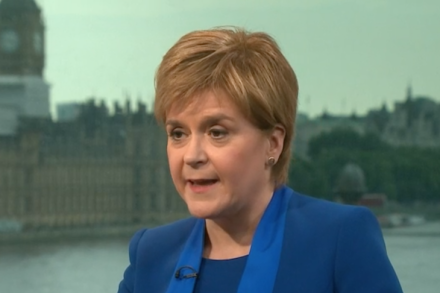
Nicola Sturgeon knows her policy – but her only real concern is independence

From our UK edition

No-one has ever accused Nicola Sturgeon of winging it. Unlike some politicians, she enjoys doing her homework. If you want to talk about the detail of policy, about the technical parameters within which this or that is measured, about the baseline assumptions that dictate funding decisions or the procedural manner in which policy is formulated, then she’s your lady. That much was evident in her election interview with Andrew Neil this evening. I imagine long sections of it were baffling to viewers outwith Scotland as the first minister and Mr Neil traded statistics on the economy, health and, especially, education. Sturgeon has asked to be judged on her record and Neil was happy to accept her invitation.

The three lies that Jeremy Corbyn told Andrew Neil

From our UK edition

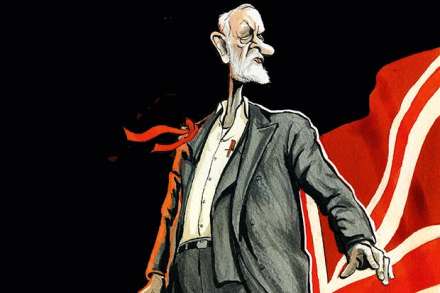
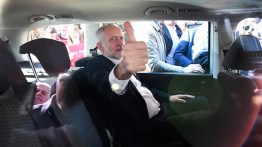
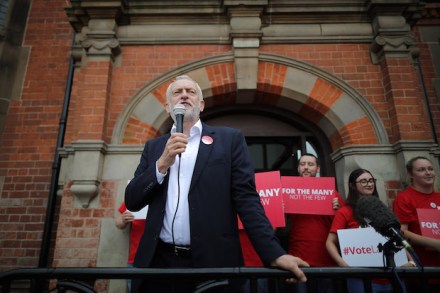
We learned something important from Jeremy Corbyn’s interview with Andrew Neil: The Labour leader wants to be Prime Minister and will do whatever it takes. His soppier critics often announce their sympathy for a man who would be much happier on the backbenches. Do not believe a word of it. Listen instead to what he told the BBC presenter and you will hear a man trying to rewrite his record and trusting that most voters know too little to challenge him.  Corbyn told Neil: 'I didn’t support the IRA. I don’t support the IRA. What I want everywhere is a peace process.’ This is a lie. Corbyn opposed the Anglo-Irish agreement. He reportedly lobbied the government on behalf of IRA prisoners.

Andrew Neil interviews Jeremy Corbyn: Full transcript

From our UK edition

AN: Mr Corbyn, today you drew a link between terror attacks at home and British actions abroad. Do you believe if Britain had not followed the foreign policy it has since Tony Blair was in office the attack on Manchester would not have happened? JC: The attack on Manchester was shocking, appalling, indefensible, wrong in every possible way. The parallel I was drawing this morning was that a number of people ever since the interventions in Afghanistan and Iraq have drawn attention to the links with foreign policy, including Boris Johnson in 2005, two former heads of MI5, and of course the Foreign Affairs Select Committee. And the point I was making was we have to make our streets secure. We have to make our population secure.

Nothing hurts Jeremy Corbyn more than being right

From our UK edition

With Labour closing the gap on the Tories in the polls, it was only a matter of time before an act of self-immolation returned them to square one. This morning, Corbyn gave a speech in which he drew a link between British foreign policy and terrorist attacks on home soil. This will surely go down like a lead balloon with the party’s working-class base, particularly in the north of England which is still reeling from their worst terror attack in modern history. But in London and the home counties, there might be whispered recognition of the fact that Corbyn is, essentially, right, even if he’s wrong to say it. It seems that nothing is more destructive in British politics at the moment than being right.

Could Theresa May blow this general election?

From our UK edition

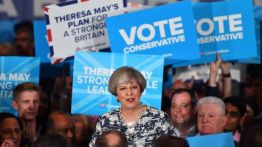
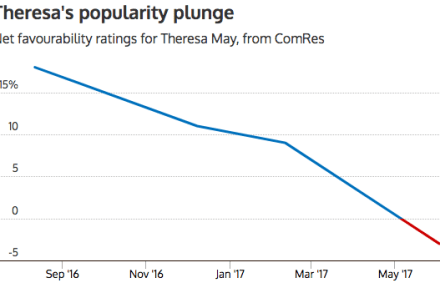
Until recently, the prospect of Theresa May flopping in this general election would have been absurd - but today’s YouGov poll shows her lead cut to just five points, less than a quarter of its peak. Converted into seats, that would mean a majority of just two MPs, down from the 17-strong majority achieved by David Cameron against Ed Miliband. At a time when the extraordinary is happening all the time, it is impossible to dismiss this opinion poll. The public like her style, but her shambolic U-turn over the so-called ‘dementia tax’ has given everyone cause to doubt whether she is as ‘strong and stable’ as she says she is. In fact, she can look indecisive and a bit dozy. She repeatedly promised us that she would not hold a general election, but then did.

Jeremy Corbyn’s speech on terrorism, full transcript

From our UK edition

Our whole nation has been united in shock and grief this week as a night out at a concert ended in horrific terror and the brutal slaughter of innocent people enjoying themselves. When I stood on Albert Square at the vigil in Manchester, there was a mood of unwavering defiance. The very act of thousands of people coming together sent a powerful message of solidarity and love. It was a profound human impulse to stand together, caring and strong. It was inspiring. In the past few days, we have all perhaps thought a bit more about our country, our communities and our people. The people we have lost to atrocious violence or who have suffered grievous injury, so many of them heart-breakingly young .

The death of the Welsh Labour party appears to have been exaggerated

From our UK edition

Never underestimate the resilience of the Welsh Labour party. Up until now, this year's general election had looked like it was going to be an historic one in Wales, where the Conservatives have not won since the 1850s, and Labour have come first in both votes and seats every time since 1922. Both Welsh polls conducted since the election was called had given the Tories a clear lead, and put them on all-time high levels of support. But the latest Welsh poll, published today, puts a very different light on things. Labour are now, it appears, back in a clear lead: up nine percentage points in the last two weeks, to 44 per cent, and ten points ahead of the Conservatives whose rating has slumped by seven per cent over the past fortnight.

The night the audience turned on Nicola Sturgeon

From our UK edition

After the agony of the recent ITV opposition leaders’ debate, the Scottish leaders’ debate felt like a much-needed upgrade – in terms of leaders, and debate. Both Ruth Davidson and Nicola Sturgeon are better speakers than most MPs, and Kezia Dugdale (Labour leader in Scotland) makes more sense than anyone on Labour’s front bench. In the UK we get ‘strong and stable’ clichés from the Tories, a tragicomedy from Labour and either sex or marijuana from the Liberal Democrats. The BBC Scotland debate, deftly compered by Sarah Smith, felt like proper politics. The debate we should have had in the rest of the UK, but haven't. It was rowdy. Scots often are.

Stupid is as stupid votes | 21 May 2017

From our UK edition

John Stuart Mill is usually credited as the person who first called the Conservatives ‘the stupid party’, but that isn’t quite accurate. Rather, he referred to the Tories as the stupidest party, and he didn’t mean that it was more stupid than every other party in the country, just the Liberals. If you substitute the Lib Dems for the Liberal party, that probably isn’t true any more, and it certainly isn’t true if you include Labour in the mix. No, I think there is now a strong case for passing the crown to Jeremy Corbyn’s party. If you look at Labour’s leaders, this is a very recent development. Harold Wilson was the most brilliant prime minister of the 20th century, having got the highest First in his year in PPE.

Labour knew about Corbyn and the IRA. Now the country knows

From our UK edition

The security services are a rum lot. All that intrigue gets to you eventually, and that’s not counting those who sign up with less than laudable intentions. Harold Wilson was paranoid but not necessarily wrong.  So when Jeremy Corbyn’s MI5 file finds its way onto the front page of the Daily Telegraph, even those not well-disposed to the Labour leader could be forgiven for arching an eyebrow. Are the spooks spooked by the possibility of Britain’s first Marxist prime minister?  For those who came up with Corbyn in 1970s and ‘80s, those heady days of the hard-Left when revolution was ever round the corner, this is obviously the case.