Uk politics

The new Equalities Act only increases the risks for mental illness sufferers

From our UK edition

Mrs May promises to amend the Equalities Act to prevent employers from ‘unfairly’ dismissing those with mental disorders. It is a laudable aim, but imagine what would happen if businesses had to keep on a disturbed worker. Imagine what it would be like, not only for the employer, but for the other employees. In her speech on ‘the shared society’ in January, Mrs May pitched into the ‘burning injustice of mental health and inadequate treatment’. In doing so, she praised the ‘tremendous campaigning work by Black Mental Health UK’. Again, this was rash. Mental health is an over-politicised subject, and organisations like Black Mental Health UK help make it so.

There’s a palpable desire for a no-nonsense alternative to the SNP – and Ruth Davidson is delivering it

From our UK edition

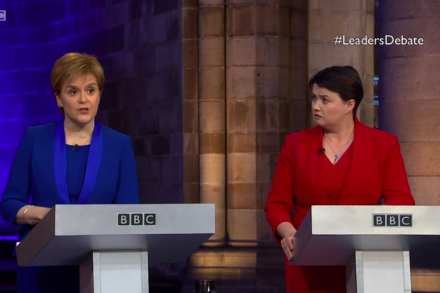
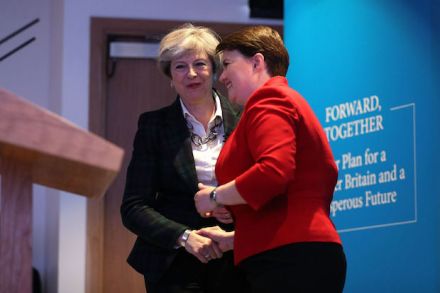
Theresa May came to Scotland today to offer her support to Ruth Davidson. Notionally, the Scottish Tory leader is supposed to support the Prime Minister but in this election, Ruth is a greater asset to the Conservative and Unionist party than Theresa.  Today’s YouGov poll for The Times confirms as much. Mrs May has a net approval rating in Scotland of -17; Ms Davidson’s is +10. Two thirds of those voters who endorsed Labour candidates in 2014 think Davidson is doing a good job and so, remarkably, do one in three voters who supported the SNP two years ago.  The same poll was interesting precisely because there was nothing startling in it.

Labour’s elections chief expects party to be cut down to 140 seats

From our UK edition

Labour's elections team expects the party to be left with just 140 seats after the election, The Spectator has learned. I understand from two very good sources that this working assumption developed by Patrick Heneghan, the party’s elections director, is based on the party’s private data. This could mean that 89 sitting Labour MPs lose their seats - and means the party considers previously safe constituencies to be at risk.  This internal prediction may well explain why Len McCluskey chose this week to set 200 seats as the sign of a ‘successful campaign’. Falling so far short of that threshold would give those on the Left who have previously supported Jeremy Corbyn an excuse to move against him after the election.

Do the Tories want to become the party of unemployment?

From our UK edition

‘Exclusive invitation: I want to hear from you, Charles’, it said in my inbox. Theresa May wanted me to take part in her ‘telephone town hall’, she told me, offering ‘an opportunity to voice your opinions and ask questions directly to me in a simple and open way’. Unfortunately, the line was open only between 7 and 8 on Tuesday night, and I was engaged elsewhere. One thing I might have asked was ‘Who do you listen to before you say something in public?’ Although Mrs May has a reputation for caution, she is capable of throwing out ideas which sound as if they have not been tested on the people they might affect.

A vote for the Tories is now a vote for a free press

From our UK edition

I have long campaigned against the activation of section 40 of the Crime and Courts Act, as well as a second Leveson inquiry which would have examined the culture, practices and ethics of the press, so I was delighted that the Conservative manifesto says that neither will happen. The Government held a consultation about this earlier this year and the wording in the manifesto is the first official response to that consultation. I hope that this now puts the matter to bed.  If section 40 of the Crime and Courts Act was activated it would have meant that any publication not a member of Impress, the press regulator largely funded by Max Mosley, would have had to pay all the costs in a libel case even if it successfully defended a claim.

Theresa May’s preachy government is on a mission to restore our confidence

From our UK edition

Every political moment is informed by, and a reaction against, its predecessor. The Age of May is no exception. David Cameron’s successes were founded, at least in part, on the vague appreciation that he seemed like a nice enough chap. Theresa May’s victories are built on the fact that she isn’t.  Being a 'bloody difficult woman', if also a bloody dull one, has its advantages and not just in terms of paying a measure of homage to the great ghost of the Iron Lady. Theresa will stand for no nonsense, you understand, and things will be done properly and with a sense of order and purpose. What you see is what you get and there’s no need to like it; you are simply asked to respect it.

Ten Labour MPs that Tories should vote for

From our UK edition

The Conservatives are going to win the election -- that much we know. The question is what kind of opposition Britain is going to be left with. If a slew of moderate Labour MPs are swept out, the Corbynite grip on the party will strengthen. The leader will not go and Labour will take a great leap forward in its journey to oblivion.  Tories should not relish this outcome. It would do serious violence to our parliamentary democracy, which was not designed to cope with one dominant party and no real opposition. Legislation would not face proper scrutiny, ministers would become less accountable, and the business of government would be less transparent. Tory MPs, eager to be 'team players', would begin to soften their questions and pull their punches.

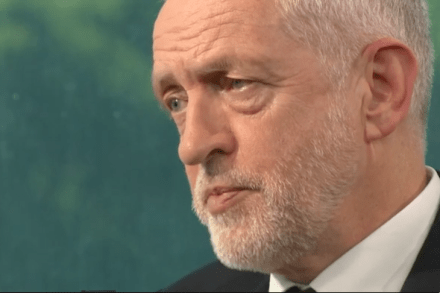
Jeremy Corbyn, the new Worzel Gummidge

From our UK edition

Lord Ashcroft’s reports from his election focus groups give a flavour of attitudes. All group members were asked to name a fictional character whom each party leader most resembles. One suggested Worzel Gummidge, the scarecrow, for Jeremy Corbyn. That was what everyone called Michael Foot in 1983. I wonder if the group member was old enough to remember this, or whether the comparison just swam naturally into her mind. This is an extract from Charles Moore's Notes. The full article is available tomorrow.

The one question Theresa May should ask Labour voters — in order to win them over

From our UK edition

Prime Minister, I have good news and bad news.  The good news is that you have been denounced in the letters page of the Daily Telegraph. One correspondent huffs: 'I wonder if Theresa May and her small group of advisers closeted in Westminster are aware of the fact that each initiative they introduce in an attempt to win over traditional Labour voters risks having the opposite effect on traditional Conservative voters.’ Another damns your energy price cap as ‘wrong-headed’ and even accuses you of ‘play[ing] into the hands of Jeremy Corbyn’s muddle-headed electioneering economics’. Lord Tebbit echoes these fears: 'The further Labour goes Left, that would mean the further we go Left. We need to stick to sensible, Conservative economics.

Labour manifesto: key changes from the leaked draft

From our UK edition

Last week, Labour revealed - ahead of schedule - a draft of its manifesto. Today, the party has revealed its official manifesto - and the comparison between the two makes for interesting reading. Here are some of the key policies that have been removed, altered or added to the manifesto. Removed policies The commitment to 'cover apprentices’ travel costs, which currently run to an average of £24 a week' has been removed. The draft contained a pledge that there would be 'no private prisons under Labour’. However, this has been watered down for the published document: ‘Under a Labour government, there will be no new private prisons and no public sector prisons will be privatised.

Labour Party manifesto 2017 (official version): full text

From our UK edition

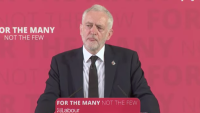
Labour have this morning launched their manifesto for the election. A big part of being the leader of a political party is that you meet people across the country and hear a wide range of views and ideas about the future. For me, it’s been a reminder that our country is a place of dynamic, generous and creative people with massive potential. But I’ve also heard something far less positive, something which motivates us in the Labour Party to work for the kind of real change set out in this manifesto. It is a growing sense of anxiety and frustration. Faced with falling living standards, growing job insecurity and shrinking public services, people are under increasing strain. Young people are held back by debt and the cost of housing.

This election is about just one thing: Brexit

From our UK edition

Can we please stop pretending this is a normal election? Everyone’s at it. Gabbing about NHS funding, arguing over energy price caps. Everyone’s acting as if it’s 2015, or 2010, or any other election year of the modern period, when mildly right-wing parties and mildly left-wing parties argued the toss over fairly technical matters and voters decided which was most trustworthy. It’s pantomime, a performance of normalcy in an era that’s anything but normal. Because we all know, somewhere in the attic of our minds, that this is an election like no other, and that it’s about one issue and one issue only. You don’t even have to name it. It hangs in the air, a perfume of liberty to those of us who like it, a foul stench to those who hate it.

To tax the rich, introduce a tax cut

From our UK edition

Jeremy Corbyn wants to put up income tax only for people who earn more than £80,000 a year, he says. Anyone below that figure is safe. This reminds me of John Smith’s ‘shadow Budget’ in the 1992 general election. Smith said that the top rate of income tax would rise to 50 per cent for everyone earning more than £36,375 a year (which would be just under £72,000 today). Most people earned much less than the sum chosen, but voters decided they did not like such a clear intention to damage the higher earnings they hoped they might one day achieve. The shadow Budget was said to have lost Labour the election. Perhaps bearing this in mind, Mr Corbyn has so far avoided a specific percentage and pitched the taxable sum a little higher, but the signal is similar.

Labour’s plan to ban unpaid internships will do more harm than good

From our UK edition

Nothing better sums up middle-class millennials’ sense of entitlement than their demand that they be paid for interning. ‘Paid internships now!’ has become the rallying cry of young media people and the Twitterati and now the Labour Party, too. Its throwback manifesto, leaked this week, promises to ‘ban unpaid internships’, on the basis that ‘it’s not fair for some to get a leg up when others can’t afford to’. Self-regarding youths will cheer this, as will their sad-eyed supporters in the press, but the rest of us should raise a collective eyebrow. There are many grating things about the call for paid internships. Here are just three of them.

Jeremy Corbyn’s Chatham House speech, full text

From our UK edition

Chatham House has been at the forefront of thinking on Britain’s role in the world. So with the General Election less than a month away, it’s a great place to set out my approach: on how a Labour Government I lead will keep Britain safe, reshape relationships with partners around the world, work to strengthen the United Nations and respond to the global challenges we face in the 21st century. And I should say a warm welcome to the UN Special Representative in Somalia,  Michael Keating, who is here today. On Monday, we commemorated VE Day, the anniversary of the victory over Nazi Germany in Europe. VE Day marked the defeat of fascism and the beginning of the end of a global war that claimed seventy million lives.

Labour’s manifesto reveals one thing: the Left has run out of ideas

From our UK edition

Just when you thought things couldn't get any worse for Labour, Noam Chomsky goes and endorses Jeremy Corbyn. 'If I were a voter in Britain, I would vote for him...He’s quiet, reserved, serious, he’s not a performer,' Chomsky told the Guardian. But the more you read of Chomsky's endorsement, the more you wonder if he was put up to it for a bet. He says that: 'The shift in the Labour party under Blair made it a pale image of the Conservatives.' Tony Blair, that infamous electoral dud. Chomsky is regularly cited as the world's 'top public intellectual'. It's a slippery phrase. Friedrich Hayek called his ilk 'the secondhand dealers in ideas'. I certainly wouldn't buy a used ideology from Noam Chomsky.

Leaked draft of Labour 2017 manifesto – full text

From our UK edition

Labour's draft manifesto for the general election has been leaked; here's the full text: Manifesto: For the many not the few Creating an economy that works for all Our economic strategy is about delivering a fairer, more prosperous society for the many, not just the few. We will measure our economic success not by the presence of millionaires, but by the ability of people to make ends meet. Labour understands that wealth creation is a collective endeavour - between investors, workers, public services, and government. Each contributes and each must share equitably in the rewards. This manifesto is about rebalancing the economy and re-writing the .rules of a rigged system, so that the economy really works for all.

Jeremy Corbyn is starting to sound like a decent Labour leader

From our UK edition

I didn’t see a ferret, reverse or otherwise, during Labour’s campaign launch or after. I heard some quite silly, grandstanding, questions from Laura Kuenssberg. And I heard a Labour leader who sounded a bit like…..well, a decent Labour leader. None of this is to deny the patent catastrophe of Corbyn’s leadership of the party hitherto, or to suggest that I agreed with everything he said. But he spoke from the heart, passionately, with a conviction I do not hear in Theresa May’s frankly automaton repetitiveness. And much of what Corbyn had to say about tax avoiders, inequalities and hardship will play very well with his core vote north of the Wash. I still wouldn’t vote for him and still less for his grim and sinister sidekick McDonnell.

How the hunting community could boost Theresa May’s campaign

From our UK edition

Out on the campaign trail in Leeds today, Theresa May stated that she supports fox hunting. ‘As it happens personally I have always been in favour of fox hunting and we maintain our commitment - we have had a commitment previously as a Conservative Party - to allow a free vote,' she said. The Prime Minister has consistently voted against the ban on hunting, and the general consensus has been that although she doesn’t necessarily think of it as a particularly important issue, she is supportive of the hunting community.  But it is perhaps something of a surprise that May has today come out and publicly said that she is actively in favour of fox hunting.

The SNP’s muddled education policy is failing Scottish kids

From our UK edition

I am afraid that whenever a politician asks to be judged on their record, it is sensible to assume this reflects a confidence they won’t be. At the very least such promises are hostages to future headlines. Take, for instance, Nicola Sturgeon’s boast that education  - and specifically closing the gap between the best and worst schools in Scotland - is her top priority. Judge me on this, she said. Well, OK.  Today the SNP government published the results of the latest Scottish Survey of Literacy and Numeracy and, as has become annually predictable, they make for depressing reading. While standards of reading have remained relatively constant amongst both primary and secondary pupils, there has been a sharp decline in writing ability.