Uk politics

Jeremy Corbyn: the nation’s therapist

From our UK edition

Comparisons between Jesus and Jezza became commonplace long before he chose to end his election campaign with a rally at a church in Islington. As far back as August 2015, which in today’s political currency is at least two lifetimes ago, commentators were asking, ‘Is Jeremy Corbyn The New Messiah?’. It wasn’t just the shared initials (it’s a sign!) but the crowds he drew and the tearful adulation among his audience. But Corbyn is not messiah-like – indeed his very lack of magnetism is part of his appeal. And neither does Corbynism fill some Christianity-shaped hole in British life. The old religion demanded confession, sacrifice and a commitment that extends beyond both the present and the self.

Nicola Sturgeon asks Scotland for one thing: patience

From our UK edition

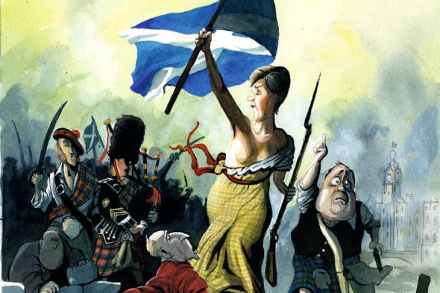
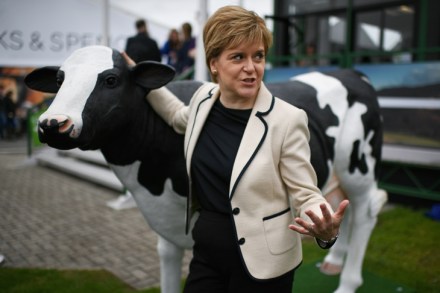
Ever since the general election Nicola Sturgeon has lurked in her tent, contemplating the future. The result of that election, in which the SNP’s share of the vote fell by 13 points and in which it lost 21 seats, demanded a period of 'reflection' from the first minister. Where does Scotland stand now? The answer, which was wearily predictable, is just where it stood before. Nicola Sturgeon emerged from her period of reflection yesterday with a simple message: nothing has changed. Sure, she talked about 'resetting' her timetable for independence, confirming that she would not this year introduce a bill at the Scottish parliament seeking the Section 30 order from the Westminster parliament that would permit a referendum to be held legally.

If you can’t afford a home, why vote Tory?

From our UK edition

Back in the 90s and even early noughties, it was a cliché that middle-class English people used to talk about house prices at dinner parties. That hasn't been the case for a good decade, if my social circles are any indicators; it would be like bringing up interesting anecdotes of people we know discovering they have cancer. For years, a handful of miserablists, such as our own Nick Cohen, have been warning that housing inflation is not the great boom it was once believed to be, but is in fact an unmitigated social disaster. For years we've done nothing about it. And finally, in 2017, rising house prices have proven to be the crack in the dam for the right. It has lead to a flood of devastating support from the under-45s for a left-wing Labour leader.

Grenfell Tower: a political prop in a morality play

From our UK edition

John McDonnell’s use of the M-word in relation to the Grenfell inferno marks a new low in the political milking of this catastrophe. I’m not normally squeamish, but I must say I have found the marshalling of the Grenfell horror to political ends, the transformation of this human calamity into effectively a meme saying ‘Austerity Bad’ or ‘Tory Scum’, deeply disturbing. And now McDonnell has dragged it down to its nadir, with his claim at Glastonbury that the residents of this tragic block were ‘murdered by political decisions’. The entire setting of McDonnell’s comments feels nauseating.

Give the DUP a chance

From our UK edition

A political party barely known outside Northern Ireland now holds the balance of power in Parliament. Nobody saw it coming, but then that’s the new catchphrase in politics. So who are the DUP? And do they deserve the pillorying that has been coming their way since the general election catapulted them into the spotlight? I have been watching the party up close for decades. Yet while the DUP isn't always a pretty sight to behold, the party is much more complicated than the hysterical stereotyping makes out. It's true that the DUP has its roots in uncompromising unionism and religion. And for many years it was little more than a one-man’s fan club: the political extension of Ian Paisley’s hardline Free Presbyterian Church.

England, you wanted Brexit so you can pay for it

From our UK edition

The message to be taken from today’s Downing Street proceedings is a simple one: England, you wanted Brexit so you can pay for it. That, in essence, is the meaning of the confidence and supply agreement brokered between the Conservatives and the Democratic Unionist Party. That the DUP favoured Brexit too is of no account and nothing more than a cute irony. Nobody gets between an Irish politician and their pork. ’Twas ever thus, north and south of the border, and ’twill ever be thus. This is the word of the book, you know. Enough too, please, of pretending to be shocked by the shocking discovery that politics is a shockingly transactional business. Besides, the sums involved are almost laughably small.

Corbynism is bigger than Glastonbury and avocado toast

From our UK edition

Glastonbury is notorious for being one of the most irritating spectacles in the British calendar, so it is hardly surprising that, when combined with a smattering of Jeremy Corbyn fanaticism, it has gone down badly. There is obviously something repellent about watching 100,000 yuppies – who had paid £238 for the privilege of standing in a field, listening to Ed Sheeran – chanting Corbyn’s name and extolling the virtues of a socialist utopia. But, beyond this, there is something more telling to the newspaper headlines and editorials: the right simply doesn’t have a clue what’s going on with the left.

Britain is in desperate need of a truly national party

From our UK edition

I am not sure I can think of any great public assembly in Britain I’d enjoy less than Glastonbury. Within reason, I’m not sure you could even pay me to go there. Glastonbury is a place for dear Hugo Rifkind not for me, and that’s the way I imagine we both prefer it.  Still, there was something worth seeing at Glastonbury this year. Jeremy Corbyn, obviously. His appearance was remarkable, even if it has also prompted a fresh outbreak of one of Britain’s under-appreciated traditional sports: members of the middle-class sneering at other members of the middle-class.  Even so, two things can be said about this. First, the Labour party cannot win unless it is a broad church.

Jeremy Corbyn and the cult of anti-knowledge

From our UK edition

A funny thing happened on the way to the revolution. On Saturday, thousands of earnest millennials – and better-humoured Gen-Xers pretending to be millennials – gathered in a field in Somerset for a concert. The headliner was an ancient rocker of an even older tune but the crowd cherished every word as their own – new, meaningful, of the moment. They cheered. They applauded. They sang this year's secular Te Deum: 'Oh Jeremy Corbyn', wailed to the tune of 'Seven Nation Army' by the White Stripes. And the snake oil flowed. Corbyn, a soft-spoken evangelist, testified and got them raptured up: 'Politics is actually about everyday life. It’s about all of us: what we dream, what we want, what we achieve and what we want for everybody else.

Brexit backsliding fears are stronger than ever

From our UK edition

In February, Matthew Parris wrote that Brexiteers seemed very anxious, despite having won. He thought this was because they were ‘secretly, usually unconsciously, terrified that they’ve done the wrong thing’. The following week, I suggested that our undoubted anxiety was more likely attributable to fear that ‘having come so far, we might be cheated of what we thought we had achieved’. Exactly a year after the referendum, this fear of being cheated is even stronger. Last week, the Chancellor of the Exchequer, Philip Hammond, came within an ace of saying in public that Britain must not leave the customs union, thereby undermining the negotiating position of the government in which he serves.

Theresa May is (slowly) seeing sense on EU nationals. Will the EU do the same?

From our UK edition

Theresa May has made a far better offer to EU nationals, saying they will be granted permanent residence after staying five years. But the EU has not. Donald Tusk, president of the European Council, has said that her offer is 'below our expectations and risks worsening the situation for our citizens'. He wants the European Court of Justice to have authority over the UK government in policing its pledge to EU citizens. Theresa May has ruled out any ECJ authority saying, quite rightly, that the Brexit vote was a move to end all that. So where now? Joseph Muscat, the prime minister of Malta which holds the rotating EU presidency, warned of the danger of 'pitfalls', in which people were 'treated differently' depending on when they arrived in the UK.

13 things we have learnt about Britain since the EU Referendum

From our UK edition

Happy Independence Day everyone (groan). One year on from that momentous day, here are 13 things we've learnt from the Brexit vote. Most people will take any argument that suits them. They will swap ideological clothing if needs be - note how many on the Left suddenly care deeply about the pound and the City, while many on the Right seem keen on huge economic risks. Most voters are ignorant. This applies to both sides, although on average Remainers are better educated. But as Dominic Cummings has pointed out, the average Remainer didn't know that much about how the EU actually works; they just looked at Nigel Farage and knew they were against that.

At long last, Theresa May offers assurance to EU nationals

From our UK edition

After a year of prevarication, it has emerged that the Prime Minister has agreed to offer permanent residency to all EU nationals who were living in Britain. Under current rules, anyone who has been here for five years can apply for permanent residency status: not quite the same as citizenship, but it confers the same rights as UK citizens enjoy. Two-thirds of our EU migrants are covered by this. What's new is that no one will be booted out (which would anyway be illegal) but it seems that those who hit the five-year mark, say, in 2022 will also be able to apply for permanent residency. Her offer is conditional on reciprocity - but the EU has already said it would reciprocate. Hopefully, the question can now be closed.

Labour should form a coalition with the DUP

From our UK edition

So, they limp on, and Corbyn is justified in holding aloft the Queen’s Speech in jubilantly derisive fashion. Some of you Tories are no doubt hoping that Theresa May 'recovers her mojo' and that the past six weeks have been some weird transgression from her norm. No, sorry. She does not have a mojo. She has never had a mojo. Theresa May with a mojo is about as probable as Ruth Davidson getting it on with a hunky fella. The rest of you – me included - wonder who she will be replaced by. Only Davies and Davidson would improve the current position. And even then not by much. But nor should Labour be too smug. Not least because it comprehensively lost the election. But also because a cannier socialist party would have co-opted the DUP.

The SNP are guilty of shocking chutzpah in their claims over a Tory ‘stitch up’

From our UK edition

I have an awkward relationship with the House of Lords. On the one hand, it regularly proves a doughty guardian of liberties against a rash, headline-chasing executive. On the other hand, it’s the House of Lords. Hereditary peers, bishops, Liberal Democrats — the clientele are a rum lot. We don’t have our constitutional troubles to seek but we might want to look at getting ourselves one of those elected upper chambers, albeit one independent of Downing Street and party managers.  Nevertheless, the Lords has its uses, and one of the most welcome is bringing experience to government. A good example is Ian Duncan, the Scottish Tory MEP who is reported to be heading for the red benches and from there to a junior ministerial post in the Scotland Office.

Gerard Coyne’s show trial is a stark warning to Labour moderates

From our UK edition

‘There is no step, thought, action, or lack of action under the heavens,’ wrote Aleksandr Solzhenitsyn, 'which could not be punished by the heavy hand of Article 58’. Unite the Union’s rules appear to operate on much the same basis as the Soviet provision against 'counter-revolutionary action’. Gerard Coyne, Unite’s West Midlands secretary, has been sacked after what he claims was a 'kangaroo court’.  So far, so internal union politics. But Coyne is not just some provincial functionary. He was most recently a contender for General Secretary of Unite, losing to incumbent Len McCluskey by around 5,500 votes.

DUP pushes a hard bargain as talks with Tories stall

From our UK edition

Tomorrow Theresa May will present a Queen’s Speech that doesn’t have the formal support of a majority of the House of Commons. Her negotiations with the DUP still haven’t concluded, with party sources this afternoon warning the Conservatives that they won’t be ‘taken for granted’ and criticising the way May and her team have conducted the negotiations. It’s almost as though the DUP know a thing or two about how to negotiate: certainly a thing or two more than Theresa May and her team. Party sources even dropped hints about the implications of these negotiations for May’s success in Brussels, hitting one of the most sensitive spots for the Tory leader.

Labour is now the party of the middle class

From our UK edition

I'm not sure I've ever been so pessimistic about this country's future, and I'm not usually a barrel of laughs to start with. Aside from the terrorism, and the recent tragedy in North Kensington, there are real black clouds in the distance. Investors are being put off Britain, a problem that pre-dates Brexit but is surely aggravated by it. There seems little hope that the Tories will follow Philip Hammond in pursuing a more moderate line in Europe. (Would the catchphrase 'Stop, Hammondtime', galvanise the public, I wonder? Kids still like MC Hammer right?). Meanwhile the opposition - even moderate members - are now calling for people's private property to be 'requisitioned', using heightened anger and emotion in order to trample over the most fundamental of rights.

Why is Philip Hammond trying to destabilise his government’s Brexit talks?

From our UK edition

You can see why Theresa May locked her Chancellor up in a cupboard during the general election campaign. Not only was his credibility shot in his bungled Budget, where he seemed not to realise that his plan to raise National Insurance violated the manifesto upon which he was elected, but he’s now still seeking to undermine his colleagues on Brexit. The UK position is clear: yes, we’d like a good deal with the EU but if one is not forthcoming then we’d walk away and use the default World Trade Organisation rules. Hardly a leap into the unknown; the WTO rules govern the UK trade with our largest single partner, the United States. And the guidelines have already been guaranteed.

Apart from independence, the SNP stands for nothing

From our UK edition

The deposed Scottish Nationalist MP for East Lothian, George Kerevan, found solace this week in the words of a distinguished former editor of The Spectator. Kerevan tweeted: 'I believe every Scotsman should be a Scottish nationalist', John Buchan, House of Commons, 24 November, 1932.’ Hundreds of disconsolate Nationalists took to their keyboards to embrace Buchan’s validation of their core belief. A retweet by my own MP, Angus MacNeil, whose devotion to Twitter greatly outweighs his capacity for research, caught my attention. The obvious conclusion was that none of them had actually read what Buchan said in his contribution to the debate on the Queen’s Speech, all those years ago.