Uk politics

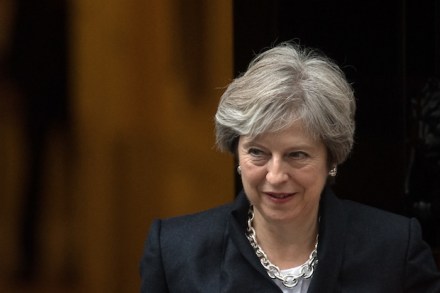
Theresa May’s bid to sound authoritative at PMQs falls flat

From our UK edition

Today’s Prime Minister’s Questions wasn’t exactly comfortable for Theresa May, but neither was it catastrophic. The session has been running along the same lines since the snap election result: Jeremy Corbyn has plenty of material to play with in terms of a government in disarray that isn’t confronting some of the most important domestic issues, but he never really manages to leave May looking less authoritative than when the session started. Today he focused on the problems with the roll-out of Universal Credit, which is spreading from being the concern of welfare policy specialists in parliament to being a political row.

Philip Hammond’s Brexit no-deal bind

From our UK edition

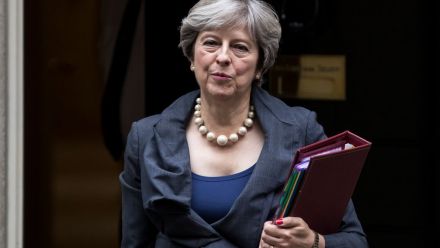
Philip Hammond has got himself into something of a bind over planning for a Brexit ‘no deal’. The Chancellor has ruled out - at least for the time being - spending money on contingency plans for a scenario in which Britain walks away from the EU without an agreement. The problem with this strategy is that it undermines Theresa May’s ‘No deal is better than a bad deal’ approach. Put simply, how credible is the government’s line on being ready to walk away empty-handed if planning for such an outcome takes a back seat for now? It’s also surprising for the Chancellor to rule out preparing for a scenario seen as being a 50-50 bet by some of his colleagues in the Cabinet.

Listen: Karen Bradley’s internet blunder

From our UK edition

Poor old Karen Bradley. This week it emerged the Culture Secretary was being investigated for not having a TV licence - and things aren’t getting any better for Bradley. This morning she unveiled the government’s plans to crack down on online abuse. But it seems Bradley got herself into something of a muddle when asked what she was hoping to achieve with the review. She told John Humphrys: ‘We want to make the internet the safest place to be online.’ Perhaps someone could explain to the Culture Secretary that 'the internet' and going 'online' are inextricably intertwined.

Grauniad’s sub-editing fail

From our UK edition

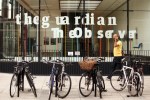
Oh dear. Much excitement today among the commentariat over Rafael Behr's op-ed in the Grauniad. The Guardian columnist says that for 'hardline Brexiters, the lure of the cliff edge is irresistible'. Unfortunately for Behr, it's his byline – rather than his words – that's receiving the most attention: Perhaps the Fleet Street doom-mongers were right when they said newspaper sub-editors' days are numbered...

What the papers say: A Brexit transition deal is a necessary evil

From our UK edition

Theresa May’s admission that the European Court of Justice could continue to play a role during any Brexit transition deal has not gone down well with some Leave supporters. Jacob Rees-Mogg suggested that the Prime Minister had gone too far in trying to appease Brussels. But the Sun doesn’t see the PM’s comments as anything to be worried about. ‘Most sensible Leavers accept the need for a limited Brexit transition’, the paper says, even if this means a role for the ECJ. Such a transition will ensure that the impact on the economy will be minimised, the Sun says. It will also ‘buy businesses time to adjust’. But May must remember her pledge that the UK will be out of the EU by March 2019.

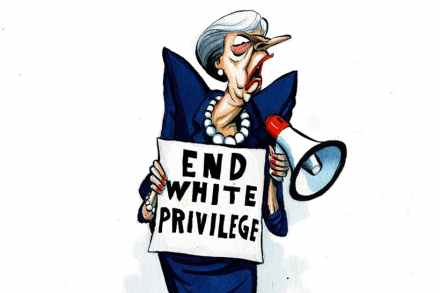
Theresa May’s phoney race war is dangerous and divisive | 10 October 2017

From our UK edition

Theresa May’s long-awaited audit into racial disparities in public services has finally launched. We were prepared for the worst. Unnamed Whitehall insiders had said that they had been ‘shocked’ by the picture it reveals of racial discrimination in the UK. The scene was set for another bout of political self-flagellation regarding the subject of race in Britain, in which half-truths are peddled by lobbyists and swallowed wholesale by officialdom. Several studies have already shown that some ethnic groups experience different outcomes in policing, health, employment and education. There are many causes behind these disparities but the evidence used by government to publicise the audit has been carefully selected and presented to suit a predetermined agenda.

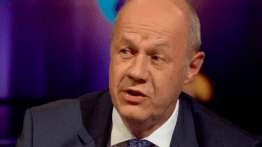
Watch: Damian Green says Britain would be better if Remain had won

From our UK edition

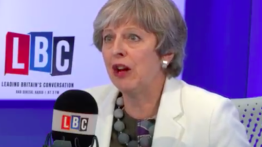
Oh dear. After Theresa May refused to say three times in an interview with Iain Dale on LBC whether she would back Leave in a second EU referendum, the Prime Minister has provoked the ire of some in the Brexit camp. But Brexiteers can take heart that May's comments are positively eurosceptic compared with those of her First Secretary of State. Damian Green has been touring the television studios this evening to talk about the government's race disparity audit. Also on the agenda is Brexit. First, the former Remain campaigner told Channel 4 News that he would vote Remain if another EU referendum was held. Now, he has just appeared on Newsnight where he appeared to double down on his comments.

Brexit could ensure social care gets the reform it badly needs

From our UK edition

Theresa May had planned to move the political focus this autumn from Brexit to domestic priorities. That was always a tall order when the next round of negotiations and this month’s EU council are looming, but it’s particularly difficult given the Prime Minister managed to lose, not gain, authority with her conference speech. It's also made harder given that her statement in the Commons yesterday seems to have enraged Brexiteer MPs, who were willing her on before the conference speech fiasco. One senior eurosceptic MP told Coffee House after the admission that the European Court of Justice would still have a role during the Brexit transition that he and colleagues were ‘extremely surprised as this was quite the opposite of what we had been led to believe’.

Theresa May refuses to say she’d now vote Leave

From our UK edition

Theresa May struck a defiant tone this afternoon in her first broadcast interview since her disastrous conference speech. Speaking to Iain Dale on LBC, the Prime Minister re-iterated her old claim that she still wishes to lead the party into the next election – even if the number of MPs in her party who support her wish is now in single figures: ID: Is it still your intention to lead the Conservative party into the next election? TM: Iain I've been asked this question many times and the answer has not changed, I can tell you that. ID: I just wondered after the events of last week whether it might have changed.

Theresa May’s race audit relies on misleading statistics

From our UK edition

We know from her unfortunate conference speech that it irks Mrs May to hear Labour claiming a monopoly on compassion, and this week’s racial disparity audit is her latest attempt to prove that she is equally concerned about injustice. The problem is that the disparity audit is based on a colossal intellectual blunder. Disparate outcomes may be the result of discrimination, but there are numerous other valid explanations. When comparing large groups using statistics there are many confounding factors at work. For example, the average age of ethnic minorities is younger than for the white population. This has given them less time to get promotion and increase their earnings. To assume that lower average earnings result from discrimination is a schoolboy error.

Watch: Boris’s bungled bid to get into No.10

From our UK edition

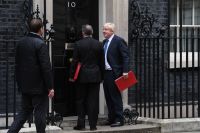
Boris Johnson’s leadership ambitions are no secret. But the Foreign Secretary’s latest attempt to get into Downing Street hit a more obvious snag this morning. Ahead of today’s Cabinet meeting, Boris and Liam Fox were filmed walking through Downing Street. When Boris tried to get into No.10, however, he found himself locked out.

Mhairi Black turns on herself

From our UK edition

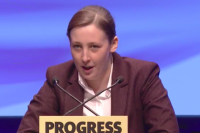
Who would want an MP who had never had a career outside of politics to represent them? That's the question Mhairi Black has been asking today at SNP conference. Black used her speech at the event to say the SNP must reject 'career politicians'. Hang on a minute. Given that the 23-year-old SNP politician went straight from a politics degree to a job in Westminster, isn't she the definition of a 'career politician'? Mr S hopes she isn't trying to put herself out of a job...

What the papers say: Why we must prepare for a Brexit ‘no deal’

From our UK edition

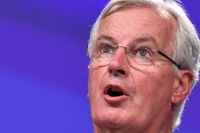
Theresa May’s ‘I’m in charge’ message she delivered to Parliament wasn’t only aimed at MPs - it was also directed at Brussels, says the Daily Telegraph. After all, there’s little doubt that Michel Barnier will have looked at Theresa May’s disastrous Tory party conference performance and have concluded ‘she is hanging onto power by her fingertips’. Surely he will have thought, says the paper, Britain’s PM is ‘not in a position to play tough’. If so, Brussels' politicians would be wise to ‘think long and hard about what life might be like if the negotiations go wrong’.

If the Tories are smart, they will stick with Theresa May

From our UK edition

It’s over 150 years since John Stuart Mill called the Conservatives the stupid party and in every one of those years they have worked hard to live up to that assessment.  Grant Shapps’ abortive leadership coup is the latest example of Tory idiocy. After Theresa May did herself a mischief in Manchester, Shapps scarpered over to his colleagues and piped up that the emperor had no clothes. To which they replied: ‘Where have you been, Grant?’ Unfazed, Shapps then offered himself up as a replacement, out of selfless devotion to party and country. The party, once it had established who he was again, said 'nah, you're all right, mate'.

Theresa May concedes that the European Court of Justice will have a role during the Brexit transition

From our UK edition

Most of Theresa May’s statement today was simply a reiteration of what she had said in Florence. But we did get clarity on one crucial point. In answer to a question from Jacob Rees-Mogg, Theresa May explicitly accepted that the European Court of Justice would have a role during the transition. She said that she hoped it would be replaced at some point by a new dispute resolution mechanism. But at the beginning of the transition, the ECJ will be the arbiter. Now, there will be Brexiteers who don’t like this; Jacob Rees-Mogg’s question was seeking an assurance that this would not be the case. But if the transition is to see the UK stay inside the single market in everything but name, it is hard to see how this can be avoided.

Theresa May needs to promote new ideas, not just new names

From our UK edition

Theresa May is threatening a reshuffle - and would be wise to threaten it for as long as possible as the only thing more problematic than naughty ministers you need to move is angry ex-ministers who didn’t want to be moved. Katy looks at who the Prime Minister could move in this post here, and points to a desire for new talent in the government. Promoting the next generation would achieve two things. Firstly it would energise a rather grey government (impressive, given the grey government is opposed by a party led by Jeremy Corbyn and John McDonnell).

Why isn’t Theresa May’s conference catastrophe showing in the polls?

From our UK edition

After a lacklustre conference and a disastrous speech, Theresa May's position within her party has never looked more fragile. But she can take heart that her relationship with the public is a different story entirely. In a sign that conference is only a headline event for politicos, it appears May's shaky performance in Manchester has meant diddly squat. An ICM poll claims the Tories have actually gained a point from the whole debacle. Even if you combine the three different polls done since the conference – they show a swing between the main parties of... zero. https://twitter.com/britainelects/status/917406487936491525 The findings will come as a blow to Parliamentary plotters such as Grant Shapps, who had hoped to use recent events to push May out.

How powerful can the Tory Universal Credit rebellion really be?

From our UK edition

One of the brewing Tory rows of the autumn looks to be over Universal Credit, with Heidi Allen now claiming she has 25 Conservatives prepared to rebel on the matter. They are worried about a number of aspects of the fiendishly complicated reform which is supposed to make the benefit system less, er, fiendishly complicated. Chief among their worries is the six weeks that claimants have to wait for their benefits, which is a long period in itself, but almost a quarter of claimants have had to wait even longer than that to receive their money, leaving many of them unable to buy food.