Uk politics

Economic forecasts are almost always wrong – so why do we take them seriously?

From our UK edition

There is a weird psychology behind economic forecasts. We know they are going to be wrong, because they always are. Yet such is our appetite for information – any information – that nevertheless we can’t stop ourselves taking them seriously. The Sunday Times this morning has gone big on a report by serial doomsayers the EY Item Club claiming that the government needs to move quickly to obtain a transitional deal on Brexit or face a collapse in business investment. Even with a deal it predicts that the growth in business investment next year will fall to 1.5 per cent, from 2.1 per cent this year. Maybe. But then again, maybe not. There is absolutely no evidence from previous EY Item Club forecasts to suggest that this is better than a figure plucked out of the sky.

May is repeating Cameron’s mistakes in dealing with the EU

From our UK edition

Theresa May’s style of negotiating with the European Union is coming spookily to resemble David Cameron’s. She is in the mindset where the important thing is to get a deal, rather than working out what sort of a deal is worth getting. The EU understands this, and therefore delays, making Cameron/May more desperate to settle, even on bad terms. Eventually, there is an inadequate deal which the British government then has to sell to a doubting electorate. Mr Cameron was punished for this at the referendum he had called. Mrs May is inviting punishment at a general election.

The EU needs to ask itself some searching questions about Brexit

From our UK edition

I have come to Greece in search of sanity over Brexit. Ostensibly it is a symposium to discuss relations between Britain and Greece. But it is also an excuse to step away from the minutiae of the negotiations to think about the future of Europe. It was from Greece, of course, that our continent derived its name — from the mythological Europa who was ravished by Zeus and bore a future king of Crete. One contributor notes dryly that Greece is also not a bad place to think about the rise and fall of empires, the follies of politicians, the failings of institutions and what happens to elites when they become obsessed by Byzantine theological detail. The EU has no monopoly on schism.

Why lambast Michael Gove for the Weinstein joke – and not Neil Kinnock?

From our UK edition

Michael Gove has a good line in risqué jokes, not all of which ought to be broadcast – as he demonstrated this morning when he used an appearance on the Today programme to compare being interviewed by John Humphrys to being in Harvey Weinstein’s bedroom: 'Sometimes I think going into the studio with you John is a bit like going into Harvey Weinstein’s bedroom. You just pray you emerge with your dignity intact.' Cue entirely predictable outrage and apology from Gove. https://twitter.com/michaelgove/status/924198131637673984 But while politicians rush to condemn Gove – why does no one seem interested in his co-interviewee Neil Kinnock? No one seems to be demanding his head on a plate yet the Labour grandee joined in, saying: 'John goes way past groping...

The Tories need a positive vision for Britain after Brexit

From our UK edition

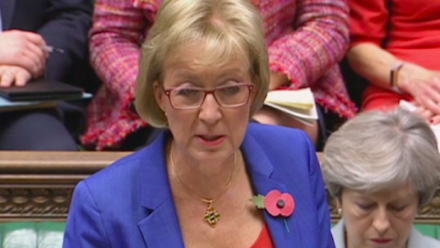
Political Cabinet on Tuesday was a fascinating occasion, as I say in The Sun, and not just because Andrea Leadsom took the opportunity to tell Theresa May she had a wonderful smile.  The Cabinet were given a detailed presentation on the state of public opinion—and bits of it made for grim reading for them. David Mundell, the Scottish Secretary, summed up the mood of the meeting when he told Theresa May, to chuckles, that his first impression from all the data was that she shouldn’t call an election anytime soon. The problem for the Tories is that the voters are wary of their values and fed up with austerity.

Moderate politics is struggling to get a proper hearing

From our UK edition

It is interesting how moderate politics cannot get a hearing just now. I do not mean that it is banned — after all, the moderate establishment is still, just, in control — rather that few seem to want to listen. This must explain why Oliver Letwin’s new book Hearts and Minds has so far been pretty much drowned out by endless discussion about whether Mrs May must go. Is it too reasonable in tone for people to want to discuss it? A pity if so, since it is excellent. The book is mercifully short, very clear, and an engaging mixture of memoir and argument.

Will Britain back Madrid for the sake of Brexit?

From our UK edition

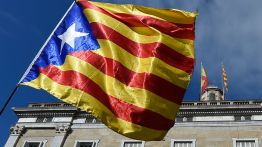
Theresa May’s official spokesperson has just issued a statement on Catalonia’s declaration of independence that will please Madrid. It makes clear that the ‘UK does not and will not recognise the Unilateral Declaration of Independence’. It says that the declaration is ‘based on a vote declared illegal by the Spanish courts’. It concludes by saying that ‘we want to see the rule of law upheld, the Spanish constitution respected, and Spanish unity preserved’. What is telling about this statement is that it doesn’t even included the kind of diplomatically phrased call for restraint that Donald Tusk’s tweet did.

What the papers say: The Czech election shows the march of the populists isn’t over

From our UK edition

The Czech election was something of a shock to those who thought the ‘march of the populists in Europe’ is over Andrej Babis – who ‘shares the anti-migrant stance and hatred for EU refugee policy of Hungary’s premier Viktor Orban and Jaroslaw Kaczynski, leader of Poland’s ruling party’ – was the ‘clear winner’, says the FT. What’s more, the paper points out, the ‘far right’ won 11 per cent of the vote in the country's election. Yet for all the comparisons, ‘the tycoon insists he is no Mr Orban’. Although he was against the euro, Babis says he ‘is not anti-EU’. But this does not mean the Czech Republic's EU partners won't need to be ‘vigilant’, says the FT.

Tom Tugendhat takes a swipe at Boris

From our UK edition

If proof was needed that deference is dead in Parliament, look no further than the interview Tom Tugendhat has given to The House magazine. The new chair of the Foreign Affairs Select Committee uses his first interview since winning the coveted position to make clear he's ready and willing to be Prime Minister, Foreign Secretary or Defence Secretary should his services be required. However, the part that caught Mr S's eye relates to the current occupant of the Foreign Office. Tugendhat – who was elected to Parliament in 2015 – appears to launch an attack on Boris Johnson's modus operandi: 'He’s certainly got a lot of passion for the United Kingdom and has a way of expressing himself which certainly carries a lot of noise.

Jared O’Mara discovers there’s no rest for the wicked

From our UK edition

It's been a tough week for Jared O'Mara. The MP for Sheffield Hallam had the Labour whip removed after a series of sexist and homophobic comments were unearthed online. Since then, allegations have been made regarding his behaviour towards women in his home of Sheffield. So, the news that he decided not to hold a surgery today should perhaps come as little surprise. But if O'Mara is looking to try and win over disgruntled constituents, Mr S suspects he could be well-served to put in some extra work at the local club he owns, West Street Live.

Critics of grammar schools are wrong

From our UK edition

Bright but poor kids have been failed for decades. Since the abolition of grammar school expansion some forty years ago, an educational bottleneck has been created, through which children from disadvantaged backgrounds cannot squeeze. State primary schools are banned from teaching how to pass the 11-Plus test, leading to the creation of an incredibly unfair system. Full disclosure; I live in Kent (grammar school territory) and both my kids were tutored and sat the test: one failed, one passed, no big deal either way as I too had failed the 11-Plus (and the world kept turning). A private tutor was essential if my kids were to stand a chance of understanding the questions, let alone answering them. In my day we were taught the 11-Plus in school.

The left’s sinister disdain for Israel betrays their movement’s pro-Zionist origins

From our UK edition

In the beginning, the Guardian was a friend of the Jews. Or rather, those Jews who believed that after millennia of persecution in exile, they deserved the right to live freely in their ancestral homeland. The overwhelming majority, in other words. The Zionists. The Labour party liked them, too. Three months before the Balfour Declaration, Britain’s key declaration of support for Jewish national aspirations – the centenary of which will be marked next month – Labour compiled a memorandum of policy priorities.

Theresa May can’t just expect employers to solve the mental health crisis

From our UK edition

Theresa May made mental health one of her key policy issues when she became Prime Minister, and it was supposed to be a key part of her relaunch after the snap election too. So far, though, the Prime Minister has done a fair bit of talking, and not a huge amount of doing. The big mental health launch in January involved very little money and a lot of worthy words about lifting the stigma. Worthy words are handy, given some people do still encounter a great deal of stigma when they are mental, rather than physically, ill. But the thing about being Prime Minister is that you can do a lot more than talk if you want.

Corbynite attempt to infiltrate Labour Irish Society falls flat

From our UK edition

Oh dear. Since Labour's surprisingly good defeat in the snap election, the hard left has managed to tighten its grip on the party. As last month's conference proved, Jeremy Corbyn's party is intent on socialism for the 21st century. But behind the scenes there are still battles being fought between the moderates and the Corbynistas. On Wednesday night, elections took place for the Labour Party Irish Society executive.

The Tories are playing a risky game with Jared O’Mara

From our UK edition

Why do politicians constantly bring plagues on their own houses? This week, the Tories have embraced the Jared O’Mara allegations with gusto, prompting Theresa May to speak about it at Prime Minister’s Questions, calling for emergency debates and writing letters about the matter. Some Labourites have been responding by pointing out that it’s highly unlikely the Tories will be entirely clear of sexists themselves. Of course, the Labour point is being deployed as whataboutery to distract from the party’s own nightmare with its Sheffield Hallam MP.

Tory whips’ letch list

From our UK edition

As concerns continue to be rise over Jared O’Mara's conduct towards women, his Labour comrade John Mann has suggested such behaviour isn't just limited to one MP in the party. With Mann threatening to expose a colleague who was sent home from a foreign delegation for inappropriate behaviour, the conversation has turned to who knew what and when. However, if Labour are in hot water over the conduct of their MPs at large, it's unlikely that the government whips have cause to relax. As Katy Balls reported in the i paper last week, Tory whips have drawn up a 'naughty list' of MPs who could mean trouble for the government. Parliamentary Private Secretaries – the lowest rung of the government ladder – have been given names of MPs to keep a close eye on.

What the papers say: It’s time to call off the Brexit inquisition

From our UK edition

The predictions of doom and gloom about Britain’s prospects after Brexit were widespread in the run-up to the referendum. One by one, these warnings have failed to materialise: yesterday, we learned from the ONS that the economy grew by 0.4 per cent in the last quarter in a clear sign it has 'outperformed expectations again’. It's clear that ‘the only thing in recession’ is the ‘reputation’ of the doom-mongering economists, says the Sun. This economic ‘resilience’ should not be taking for granted though, warns the paper, which says that ‘certainty’ is vital for ensuring things don't turn sour. This makes comments by Brexit secretary David Davis in Parliament yesterday hard to fathom.

How Russia stands to profit from Austria’s new government

From our UK edition

Yesterday, Sebastian Kurz, the leader of Austria’s conservative People’s Party, announced his intention to form a new coalition government with the far-right Freedom Party (FPÖ). The Austrian far-right have been in federal government before, as recently as the mid-2000s, and narrowly lost last year’s presidential election (which had to be re-run). While the opening of coalition discussions may come as little surprise, it is seen with extreme scepticism by many in Austria and abroad – some worry that such a right-wing coalition will clamp down on civil liberties, others that it might estrange Austria from allies inside the EU. In Moscow, in the meantime, the response to today’s announcement is likely to be positive.