Uk politics

Good, bad and ugly: Philip Hammond’s Spring Statement in nine graphs

From our UK edition

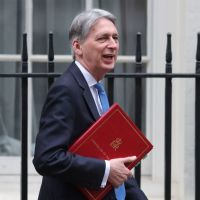
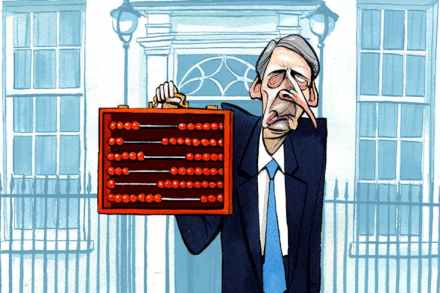
Philip Hammond declared himself to be an optimist in his Spring Statement today – and he had a few boasts to prove it: manufacturing enjoying the continued longest growth in 50 years, three million more jobs, borrowing down. He was laying into Labour, in a way he wishes he’d been allowed to during the general election campaign. But the news was in the accompanying financial forecasts: here’s what jumped out at me. 1. The Tories have given up trying to balance the books. Hammond didn’t make an announcement to this effect, but he laid out plans for deficits for years to come. George Osborne at least pretended to be, say, five years away from eliminating the deficit. Hammond has abandoned the pretence.
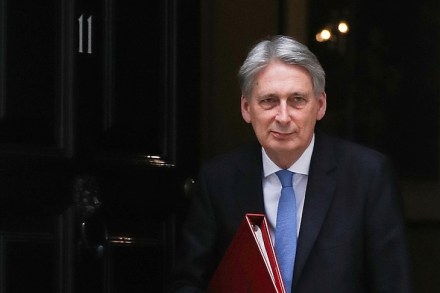
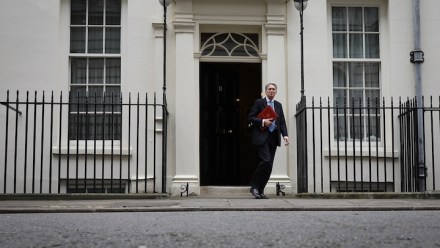
Full text: Philip Hammond’s Spring Statement

From our UK edition

The UK was the only major economy to make hundreds of tax and spending changes twice a year. And major international organisations and UK professional bodies alike have been pressing for change. In 2016 I took the decision to move to a single fiscal event in the Autumn. Giving greater certainty to families and businesses ahead of the new financial year. And allowing more time for stakeholder and parliamentary engagement on potential fiscal changes. Today’s statement will update the House on the economic and fiscal position. Report progress on announcements made at the two budgets last year. And launch further consultations ahead of Budget 2018, as set out today in my Written Ministerial Statement. I won’t be producing a Red Book today Mr Speaker. Mr Speaker.

Bercow’s ‘bollocks to Brexit’ sticker disgraces his office

From our UK edition

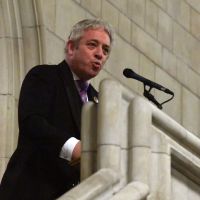
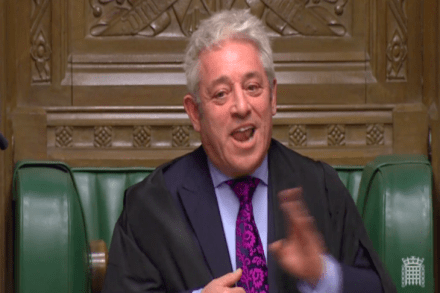
‘I have neither eyes to see, nor tongue to speak, in this place, but as the house is pleased to direct me, whose servant I am here,’ said speaker William Lenthall, the idea being that it was parliament’s views – not his own – that mattered. John Bercow has a message to his predecessor: bollocks to that. Or more specifically: bollocks to Brexit. That is the message printed on a sticker emblazoned on a car parked in the speaker’s personal parking spot outside parliament, as revealed by Guido Fawkes. [caption id="attachment_10054292" align="aligncenter" width="620"] Credit: Guido Fawkes[/caption] If Bercow’s choice of number plate – B13 RC0 – is bad enough, the sticker itself is unforgivable.

No, Britain shouldn’t invoke Article 5 of the NATO treaty

From our UK edition

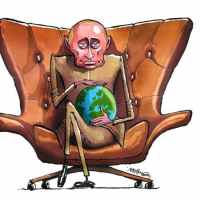
Theresa May might regret using such strong language in her statement on the Skripal case last night. Saying that there had been the 'unlawful use of force' on British soil and that a response would be imminent has led to a lot of people invoking Article 5 of the NATO treaty - something mentioned in newspapers today. Lord Ricketts, a former UK national security adviser, is one of many to say that this 'unlawful' act warrants the use of NATO. For its part, NATO has released a statement saying 'the UK is a highly valued ally and this incident is of grave concern to NATO'. May did not say ‘armed attack’ - the condition to invoke Article Five - but ‘unlawful use of force’, which is different. It’s all hot air, though - and will be seen as such by the Kremlin.

Theresa May steps up to the plate at British Kebab Awards

From our UK edition

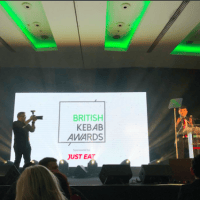
Forget secret dining societies, last night the inhabitants of SW1 descended on the Westminster Park Plaza for the British Kebab Awards. The annual event saw the likes of Angela Rayner and outgoing Labour General-Secretary Iain McNicol join forces with Tory MPs Paul Scully and Rehman Chishti to take a break from Russian espionage in order to chow down on some meat and raise a glass to the British kebab industry. The event's host İbrahim Doğuş, a Labour candidate in the snap election, told the well-hydrated crowd: 'In an otherwise darkened street, the kebab shop is the light that never goes out'. While there were some mentions of Brexit concerns, the event was not a partisan one.

What the papers say: Corbyn’s foolish response to the Salisbury attack

From our UK edition

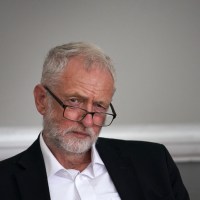
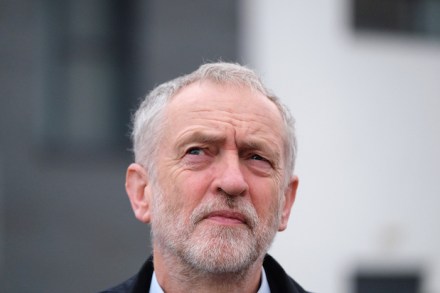
Theresa May did not hold back in her Commons statement on the Salisbury spy attack, warning Russia it has until midnight tonight to explain why a Russian nerve agent was used in the incident. The Sun praises her reaction as ‘admirably tough’. But there is criticism for the Labour leader: ‘Never has the gulf between her and Jeremy Corbyn seemed wider’, according to the Sun. While Theresa May was right to rebuke Russia and ‘trust (that) the civilised world will unite behind us’, Corbyn misjudged the mood ‘hideously’. Instead, the Labour leader chose this 'sombre national moment to advance Labour’s interests’.

Jeremy Corbyn’s stance on Russia is bad for Parliament

From our UK edition

Theresa May did a good job in uniting the House of Commons today, but someone who did an even better job in bringing together MPs to praise the Prime Minister was Jeremy Corbyn. The Labour leader's partisan response to May's statement on the poisoning of Sergei Skripal so antagonised Conservative MPs and so disappointed many on his own side that much of the session was about the failings of the Opposition, rather than the questions for the Government.

MPs avoid turning bullying Urgent Question into a campaign against Bercow

From our UK edition

When she was moved to the Leader of the House position, it appeared as though Andrea Leadsom was being given a low-profile job because she wasn't performing well in the Cabinet. Whether or not that was the case, Leadsom has actually turned out to be exactly the right person for this role. She proved that again today in the House of Commons when answering an urgent question from Caroline Lucas about bullying of House staff. This urgent question was rather odd in itself: it was in response in part to allegations made against Speaker Bercow, who both granted the UQ and then chaired it. Perhaps this was an attempt to show he believes in scrutiny even of himself, or perhaps Bercow hoped that by being present, he might have an effect on the mood in the Chamber.

The BBC’s shameful silence on the Telford sex scandal

From our UK edition

Last month, I wrote here about the BBC and ‘grooming gangs’. In particular, I speculated that it was unlikely that having once (after more than a decade) dramatized the mass gang-rape of British girls (and a man from Wales having partly been fired-up by it then ploughing a van into a crowd outside a mosque) that the BBC might not venture into such territory again. As I said, ‘nobody should be surprised if the BBC reverts to ignoring crimes like Rochdale in the future.’ As so often the situation is worse than I imagined.

Jeremy Corbyn’s Russia hypocrisy

From our UK edition

It's safe to say that Jeremy Corbyn's response to Theresa May's statement on Russia has divided opinion this afternoon. The Prime Minister confirmed to the House that a military-grade nerve agent of a type developed by Russia was used to poison Sergei Skirpal, the former Russian double agent. She concluded that this meant it was either a direct act by the Russian State or the Russian government had lost control of this potentially catastrophically damaging nerve agent. So, what did Corbyn have to say on the matter? Well, the Labour leader was keen to use the opportunity to criticise the Tories for being too close to Russia.

The latest Labour bullying row highlights the need for an independent body

From our UK edition

Labour's internal complaints body looks set to have a busy few weeks. After Debbie Abrahams was effectively suspended as Shadow Work and Pensions Secretary over allegations of bullying, the Labour MP made a bullying allegation of her own. Abrahams claims she's the one being bullied – accusing unnamed figures in the Leader's Office of behaving in an 'aggressive' and 'intimidating' manner towards her. Adding to those two impending investigations is a report today by the Financial Times alleging that Karl Turner, Shadow Transport Minister, slapped a woman’s buttocks  as she walked through his constituency office in the summer of 2015. Now these type of allegations are by no means confined to just Labour.

Minutes of an EU coup: How Martin Selmayr made his move

From our UK edition

Martin Selmayr’s power grab, elevating him to the post of Secretary-General and putting him in charge of 33,000 staff, was a brilliantly-executed Brussels coup. As Jean Quatremer reveals in The Spectator, the double promotion of Juncker’s chief of staff was over in nine minutes flat, and was described by one of those present as an 'impeccably prepared and audacious power-grab'. So how did he do it? And how can such skullduggery be covered up? On Friday, the European Commission slipped out the minutes for the meeting on February 21st at which Selmayr earned his promotion. Early in the meeting, we learn that the job of Deputy Secretary General was vacant: But then – surprise! – Selmayr wasn't finished there.

‘Stalin’s nanny’ backs Corbyn

From our UK edition

There was much excitement last week when Susan Michie told Communist Party members – at a meeting at the Marx Memorial Library in Clerkenwell – that they should work 'full tilt' to propel Jeremy Corbyn into No 10. Her claim that such a stance could act as 'a potential springboard for strengthening organic ties with Labour' will no doubt have worried moderates concerned about the party's direction of travel under Corbyn. So, Mr S was curious to read Sarah Baxter's column in the Sunday Times.

Philip Hammond’s false hope

From our UK edition

Theresa May came under fire last year when she appeared to dodge a question on whether – if there was a referendum tomorrow – she would now back Brexit. Since then, the Prime Minister managed to set tongues-wagging once again when asked in a Q&A after her big Brexit speech whether Brexit was worth it. May swerved the question – opting to confirm that she will deliver the will of the people. So, Mr S nearly choked on his tea this morning when the Eeyore-esque Chancellor appeared to enthusiastically say that Brexit was worth it, on the Andrew Marr show: AM: Is it worth it? PH: Yes.

My mum bought her council house. Can Laura Pidcock explain why that’s wrong?

From our UK edition

The moment that has defined my approach to politics came when my mother told me the proudest moment of her life: buying her council house.  Growing up in Consett, a former steel town in the north east, that house seemed to be like any of the other identikit terraced properties in the area. But to my mother, it was an asset she now owned and was able to pass on to me and my siblings. Later in life, I realised that Right to Buy had opened up new avenues for my mother, beyond having a roof over her head: it gave her choice, security, and a sense of achievement and self esteem. Especially as a single parent with three kids.

With 240 potential witnesses, were Skripal’s poisoners trying to send a message?

From our UK edition

‘Any fool can commit murder, but it takes an artist to make it look like suicide’ the KGB used to say. But whoever put Sergei Skripal and his daughter Yulia in hospital was rather less subtle: police have identified 240 potential witnesses, according to Amber Rudd, and have extensive CCTV coverage to go through.  I write in The Sun this morning that anyone capable of getting hold of the nerve agent used was capable of killing him in a far more subtle manner - with no witnesses and nothing in CCTV. Whoever carried out the attack on Skripal wanted to send a message. They wanted to prove that enemies of Russia are not safe wherever they may be.

Labour’s ‘woman’ problem

From our UK edition

There are plenty of things you could say about Labour’s All-Women Shortlists (AWS). Tony Blair called them 'not ideal at all' in 1995. In 1996, Peter Jepson and Roger Dyas-Elliott – two men who’d been rejected as Labour candidates – called them sex discrimination. An industrial tribunal agreed with them, and Labour was forced to suspend the policy until 2002, when it was able to bring in the Sex Discrimination (Election Candidates) Act, permitting positive discrimination in candidate selection. In 2002, Owen Jones called them 'most successful at expanding the career options of a tiny elite of professional, university-educated women', Blair’s hesitancy forgotten and AWS rewritten as a tool of centrist hegemony.

Will Philip Hammond drop the Eeyore act in his Spring Statement?

From our UK edition

A spring without a Budget is a bit like one without the Grand National or the Boat Race. It doesn’t feel right. The sight of the Chancellor’s red box, regardless of its contents, has always instilled in me a frisson of elation as one contemplates the warmer, sunnier months ahead. We do, however, have the consolation of a spring statement, which Phillip Hammond will deliver next Tuesday. What can we expect? Very little, if the briefings are anything to go by. Hammond has let it be known that the occasion will not mirror the autumn statements of the Brown, Darling and Osborne years, which were used as a second opportunity to jack up taxes or come up with a handout. In some years it was the autumn statement, not the Budget, which carried the more significant fiscal changes.