Uk politics

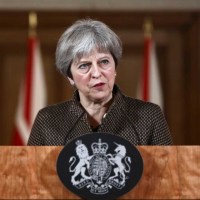
Theresa May now has authority for further military action

From our UK edition

Aside from the need to act swiftly and with an element of surprise when striking Syria's chemical weapons capability, it is still fair to say that Number 10's preferred option was not to have a vote before the strikes took place at the weekend. David Cameron's experience in 2013 of failing to get parliamentary consent for action has left institutional bruising which means everyone is now cautious of asking MPs for approval, despite the fact that the Commons has in fact consented to air strikes both in Syria and Iraq since that failed vote. Parliamentary recess did make it much more convenient to avoid such a vote, and there was certainly no appetite for the government to push for one retrospectively.

Windrush, Syria and the miserable state of British politics

From our UK edition

What a dismal week this has been for British politics. And it is still only Wednesday. The distinguishing feature of this political moment is its shabbiness. The two stories dominating the news this week, Windrush and Syria, each demonstrate as much.  The Windrush scandal – it ceased being a saga some time ago – is shameful. But it is not simply a question of Home Office incompetence (some of which is only, when dealing with matters of significant complexity, to be expected) but, worse, one of Home Office vindictiveness. It is a feature of the system, not a bug within it. A system which, quite deliberately, excises humanity and common sense from its calculations and concentrates, instead, on box-ticking and raw numbers.

What will happen to Millennials when they retire?

From our UK edition

Recently, a rather agitated Tory MP came to me and asked why on earth his party wasn't talking more about pensions. It was an important message to voters, he argued, managing to stay agitated about an issue that normally sends people off to sleep. This MP thought that highlighting the importance of a sound economic policy to public sector workers' pensions would be a good way of persuading them that the Conservatives are on their side. He has a good point: the Tories could do with working out how to talk to public sector employees, given their current tendency to vote Labour, and given the importance that many of those workers place on their pensions.

If Mumsnet can stand up for free speech, why can’t MPs?

From our UK edition

OK, I admit I’m a bit of a Mumsnet groupie, but this needs to be said: Justine Roberts is great. Roberts is the founder of Mumsnet who has this week come out fighting for free speech and sensible political discussion, both of which are at risk in the debate about gender laws. Why Mumsnet? Because a website previously best known for chat about childcare, biscuits and something called a penis beaker has developed an important role in an important political debate.

Whips struggle with emergency debate on Syria

From our UK edition

This afternoon's emergency debate on Syria isn't quite working out as anyone had really planned. For Labour, it was an opportunity to undermine the government by complaining about the lack of parliamentary consent for the weekend strikes on the Assad regime's chemical weapons capability. For the Tories, it was an opportunity to show that there was still strong support across the House for that action. Some MPs may even have come along to debate the principles in question; namely the balance of powers between executive and legislature.

The Brexit bounce making a mockery of George Osborne’s Project Fear

From our UK edition

We are now just two months away from the second anniversary of the Brexit vote and therefore in a position to judge the apocalyptic forecast made by the Treasury in May 2016 in the run-up to the vote. In a paper signed off by George Osborne, which neither the former chancellor nor anyone else who has made a grim prognosis for Britain’s departure from the EU should be allowed to forget, the finest minds in the Treasury came up with two scenarios for the aftermath of a vote to leave the EU. In the ‘shock’ scenario, GDP would be 3.6 per cent lower after two years (compared with if the country had voted to remain), the pound would fall by 12 per cent and unemployment would rise by 520,000.

The Tories’ biggest problem at the next election? Generation Rent

From our UK edition

The government is currently busying itself trying to win retrospective Commons votes on Theresa May's Syria intervention and clearing up the Home Office's Windrush mess. But should they have time for some morning reading, today's Resolution Foundation research on millenials' property prospects ought to give cause for alarm. The think tank predicts that one in three millennials will never own their own home. Instead, they will have to live – and potentially raise families – in privately rented accommodation throughout their lives. And that's before we get to what happens when they stop working and rely on a pension. What's more, half of current UK 20-35-year-olds are expected to be renting in their 40s. This has big implications for the Conservative party.

Why is the BBC preaching to the Commonwealth on gay rights?

From our UK edition

There’s a curiously two-faced aspect to the British take on the Commonwealth, wouldn’t you say? On the one hand, there’s justifiable contrition about the treatment of the elderly Windrush generation and a general feeling that the Commonwealth leaders assembled for this week’s summit might be justified in taking Britain to task for its cavalier approach to postwar Caribbean immigrants. On the other, when Commonwealth countries get uppity and show signs of not conforming to the social norms of this country, why, they get very short shrift indeed. There was an ugly little interview this morning on the Today programme which expressed precisely this ambivalence.

Why Theresa May is to blame for the Windrush scandal

From our UK edition

To see the cruelty of bureaucracy, the injustice that can spring from reducing public life to mere process and human beings to paperwork, look no further than the Windrush scandal. Scandal is an overused word these days. Everything from a politician’s ill-advised tweet to a celeb’s extramarital affair gets chalked up as scandal. But if we abide by the true definition of the word — to mean something that is morally wrong and which stirs outrage among the public — then the British state’s sudden, hostile turning against the Caribbean people and others who have made their home in Britain over the past 70 years genuinely fits the bill. This is truly scandalous.

Watch: Stop the War protester – ‘Assad is a good man – he’s a doctor for heaven’s sake’

From our UK edition

After Theresa May authorised targeted military strikes in Syria without seeking Parliament's approval, the Prime Minister has received a mixed response. One group particularly angry about recent events are Stop the War. The anti-war campaign group – of which Jeremy Corbyn is a supporter – gathered this evening to demonstrate against the government response. Only Mr S isn't sure the demonstration will win everyone round to their way of thinking. In an interview with Paul Brand for ITV news, one attendee explains why Assad – whose regime is thought to be behind the chemical attack which sparked the recent turn of events – is a good man. After all, he is a doctor: PB: You believe Assad over Theresa May?

Breaking: Home Secretary blames Home Office

From our UK edition

Oh dear. As the government goes into meltdown over whether or not Windrush immigrants have been accidentally deported or not, Amber Rudd has found herself in the firing line at the despatch box – with David Lammy tabling an urgent question. However, the Home Secretary appears to have found a scapegoat... the Home Office: 'I am concerned that the Home Office has become too concerned with policy and sometimes loses sight of individuals' Should someone tell her?

BBC’s car-crash television

From our UK edition

They say the term 'car crash TV' is over-used these days. However, Mr S is pretty sure a case of car crash television occurred this afternoon on BBC news. As a BBC correspondent reported from outside the drink-driving trial of Ant McPartlin – of Ant and Dec fame – a vehicle collision occurred. Well, that footage could come in useful...

Caroline Nokes’ bad day

From our UK edition

Oh to be a fly-in-the-wall at the Home Office today. The government department appears to be in a state of meltdown as Amber Rudd and her ministers attempt some damage limitation after it was revealed that a request by Commonwealth leaders to discuss the cases of the Windrush generation experiencing immigration issues with the Prime Minister had been turned down. In an interview with ITV news, Caroline Nokes – the Home Office minister – admitted to 'terrible mistakes' – suggesting that things were so bad that some Windrush immigrants may have even been wrongly deported: https://twitter.com/PaulBrandITV/status/985846900644614145 She's changed her tune from yesterday...

Government backtracks in Windrush row

From our UK edition

How did the government manage to create such a terrible row over the Windrush generation? The Home Office has told many people who arrived here as children in the late 1940s and 1950s that they are in fact illegal immigrants because they cannot produce documents from 40 years ago about their residence here. That in itself might have been a terrible cock-up, but Number 10's decision to then turn down a request from the representatives of 12 Caribbean countries for a meeting was totally bizarre particularly given those representatives are in London for the Commonwealth Heads of Government meeting this week. Inevitably, since the row about this broke, the government has decided it needs to wind back a little, announcing that Theresa May will meet those representatives after all.

Government wins first Commons vote on Syria

From our UK edition

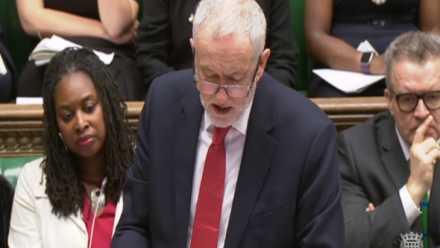
The government has won the first of two expected retrospective votes on Theresa May decision to join French and American allies in targeted military strikes in Syria, she did so without seeking Parliamentary approval. MPs debated Alison McGoverns emergency debate late into the evening – with the SNP calling a vote on the motion that the House has 'considered the current situation in Syria and the UK government approach'. Labour – minus Dennis Skinner – abstained and the government won at 314 ayes to 26 noes It now looks as though a more testing vote looms. Jeremy Corbyn has won approval for an emergency debate on a motion reaffirming the convention that Parliament should have to approve military interventions.

Sunday shows round-up: Boris Johnson – ‘the world has said enough is enough’

From our UK edition

The Foreign Secretary joined Andrew Marr to discuss the targeted missile strikes on chemical weapons facilities in Syria that took place during the early hours of Saturday morning. Although the US-led attacks were not intended to topple the government of Bashar al-Assad, and have reportedly seen no fatalities as a result, they have proved controversial, not least due to the likelihood of further strained relations with Russia. Johnson defended the government's course of action, which was agreed at a meeting of the Cabinet on Thursday: https://youtu.be/6hydxps3dDs AM: What is the mission, and have we really accomplished it?

Jeremy Corbyn’s rationale for opposing the Syria strike is collapsing

From our UK edition

The Syria missile strike has been backed by the governments of Germany, Canada, New Zealand and more – but not Jeremy Corbyn. Not for him the convention of the Opposition leader supporting the government in issues of war and peace. 'I say to the Prime Minister: where is the legal case for this?' he told Andrew Marr this morning. The legal case has been published here, at some length. Corbyn then suggested that international OPCW inspectors should be called in to judge what had happened. But is there any doubt about what happened? Today, the Sunday Times publishes testimonies of victims of the gas attack: accounts of differing people corroborate the use of a chlorine bomb.

Syria strike: the question for May is not ‘why’ but ‘what next’?

From our UK edition

Overnight, British, French and US forces took part in strikes against the Syrian regime as a punishment for the use of chemical weapons in Douma. In a statement released in the small hours, Theresa May described these as ‘co-ordinated and targeted strikes to degrade the Syrian Regime’s chemical weapons capability and deter their use’. The Prime Minister insisted that action had to be taken quickly ‘to alleviate further humanitarian suffering and to maintain the vital security of our operations’. But this action has had to take place without a vote in the House of Commons, which many in May’s own party, let alone those on the other side of the House, had been demanding.