Uk politics

Is time up for John Bercow?

From our UK edition

More trouble for the Speaker today. It’s becoming clear that John Bercow is not just unpopular but unlucky as well. He skipped PMQs to attend the funeral of his predecessor, Michael Martin, who was ousted by a mutiny in 2009. Newer members, perhaps believing that insurrection is the correct way to eject an unwanted speaker, may be plotting Bercow’s dethronement already. Unluckier still, he’s just earned a new tabloid nickname, ‘Bully Bercow’, over allegations of "explosive and intemperate" behaviour toward staff, which he denies and are now under investigation. The phrase has a certain felicitous musicality – like Billy Bunter – that may soften the sting of its literal meaning, but whatever happens to him the tag will stick forever.

Iran shows that even Trump can get things right

From our UK edition

An unexpected downside of Donald Trump's presidency is the rare occasion on which he makes a wise call. Trump's decision to withdraw from the Iran deal is wise and demonstrates a clear understanding of Tehran's motives and tactics. The Joint Comprehensive Plan of Action (JCPOA) was Barack Obama’s signature foreign policy achievement, and it was sold as a tough but realistic settlement that would normalise relations with Iran while frustrating its desires to become a nuclear power.  The JCPOA was an attempt to translate Obama's campaign idealism into hard policy. He won in 2008, in part, by promising a new way forward on American engagement with the world, one humbler and less hawkish than the Bush administration.

The Brexit compromise that satisfies nobody

From our UK edition

The EU referendum result was relatively narrow. 52/ 48 per cent is a very different result from 55/ 45 per cent or 60/ 40 per cent. In these circumstances, seeking some kind of compromise to try and unite the country seems sensible. But the problem is that while there is a coherent case for leaving the EU and a coherent one for staying in, it is hard to see what the coherent case is for leaving the EU only to become a permanent member of the EEA and stay in a customs union with the EU. A compromise along these lines would satisfy nobody. It wouldn’t deal with the sovereignty concerns of Brexiteers and it wouldn’t satisfy those Remainers who want to be at the European top table as the rules are made.

Advice for the current Duke of Wellington

From our UK edition

Yesterday, the present (ninth) Duke of Wellington proposed the latest Remainer amendment in the House of Lords, which removes the date of leaving the EU from the Bill. He is the most politically engaged Wellington since the first one, so it was nice to see him. But I wish he had called to mind his great ancestor’s behaviour over the Corn Laws. Wellington strongly opposed repeal, but when Peel backed it in 1846, the Duke urged peers to submit. They could not afford to cut themselves off from the Commons, he told them. He thought the good government of the country more important than any particular Bill. Should peers feel grander now than in 1846?

Hectoring Trump on Iran has done Britain and France no favours

From our UK edition

Three years ago when the Iran nuclear agreement was signed there was massive political resistance in Washington. Notably – but not solely – from Republicans.  In London, by contrast, there was almost nothing. As Catherine Ashton and co worked away with the Iranians there was next to no resistance from the UK political class and very little pushback from the British media. Considering that the deal delivered an astronomical cash-infusion to the Mullahs and only stood at best to delay their nuclear ambitions, this was striking. At the time I asked one Parliamentarian why there had been such silence in Westminster and was told ‘When the White House wants something this much it probably isn’t worth standing against it.’ Well now the boot is on another foot.

Corbyn’s cranks aren’t interested in power

From our UK edition

It ought to be a statement of the obvious that Labour is fighting a civil war between revolutionary socialists and social democrats, which goes back to the Russian revolution 100 years ago. The armies may have changed, but the battle line remains as static as ever. Instead of seeing what is in front of our noses, however, we lose ourselves in the familiar arguments of democratic politics. After last week’s local elections, Corbyn supporters claimed Labour had had its best performance since 1971 (which it had, but only if you exclude every part of Britain outside London). Their opponents said the results were a disaster, and “if we cannot beat this shambles of a Tory Party, we don’t deserve to be in the game”.

Is it really harder for young people to buy a home than it was 30 years ago?

From our UK edition

The Resolution Foundation has called for 25-year-olds to be paid £10,000 to help them afford homes, saying the ‘generational contract’ between young and old has broken down. But is it really harder for young people to buy a home now than it was 30 years ago? House prices were booming in the first half of 1988, when a typical first-time buyer home could cost £50,000. That same property now, according to the Halifax UK House Price Index, would cost £234,850. Since 1988, the Retail Prices Index has increased 2.7 times, according to the ONS, so, in real terms, £50,000 in 1988 is now worth £135,000 – making it harder to afford a deposit.

Theresa May is making Cabinet unrest on the customs partnership worse

From our UK edition

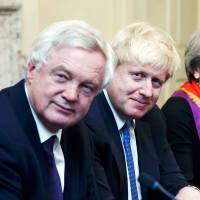
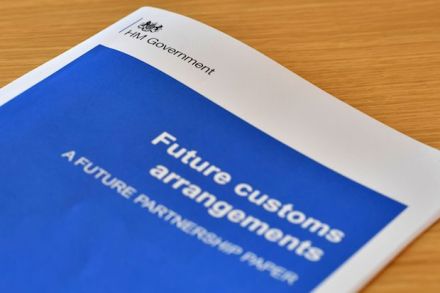
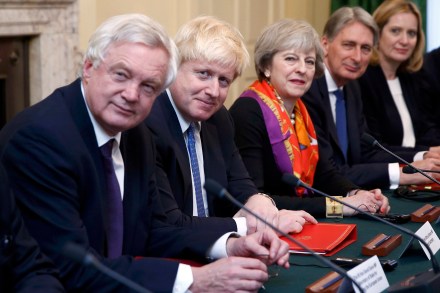
Boris Johnson's rather bold move on the customs partnership hasn't yet landed him in trouble, even though it has enraged some of his pro-Remain colleagues. At the Number 10 lobby briefing today, the Prime Minister's spokesman avoided giving the Foreign Secretary a slap down when asked whether Theresa May was happy that he had told the Mail that the customs partnership plan was 'crazy'. Instead, the spokesman used the sort of formula of words that declines to offer any sort of comment on anything at all: 'There are two customs models that were first put forward by the government last August, and most recently they were outlined in the Prime Minister's Mansion House speech, which the entire cabinet was signed up to.

Giving millennials £10,000 won’t tackle the generation gap

From our UK edition

David Willetts, one time minister of state for universities and science turned chief spokesperson for baby boomer self-flagellation, is clearly troubled by the year of his birth. Since his 2010 book, The Pinch: How the baby boomers took their children’s future and why they should give it back, he’s been desperately seeking atonement for the privileges that happy date accrued. Now, thanks to a report from the Resolution Foundation, we know the precise cost of easing Willetts’s conscience: £10,000 – to be made payable to every 25 year old. A cheque for £10,000 landing on the doormat will no doubt make hitting the quarter of a century milestone a little sweeter for Britain’s put-upon millennials.

Heidi Alexander joins the march of the moderates out of Westminster

From our UK edition

The march of the Labour moderates away from Westminster continues, with Heidi Alexander the latest to quit parliament. The Labour MP announced this morning that she will stand down from her seat and take up a job working with Sadiq Khan at City Hall. Her departure is no real surprise: speculation has been rife for a while that she would quit. It has also been obvious that Alexander wasn’t happy, to say the least, working under Jeremy Corbyn. Alexander was one of the first to quit the shadow cabinet in 2016 in the wake of the referendum. At the time, she told Corbyn that ‘a change of leadership is essential’, in the hope that Labour's moderates could oust their leader.

Watch: IDS’s Sky News Brexit clash

From our UK edition

Cabinet is certain to be tetchy this morning after Boris Johnson called the PM's preferred customs arrangement 'crazy'. Things were no different on Sky News just now when Iain Duncan Smith popped up to discuss Brexit. IDS clashed repeatedly with Adam Boulton as the pair discussed borders, Brexit and whether Boris would do a better job than Theresa May. Here’s how it unfolded: IDS: Let me finish, because you need to understand what the problem is AB: No, but you’re making an assertion IDS: No, I’m not … IDS: Adam, sorry, just wait. Let me finish. Wouldn’t you like to know the answer to that question? AB: Yeah IDS: Right, let me finish. … IDS: Do me a favour, Alan, err Adam. You ask me a question, let me finish.

It’s time to end the discussion on the customs union

From our UK edition

This never-ending circular discussion on customs unions is painful, particularly because the question should have been settled during the referendum. It’s now nearly two years since the vote to Leave the EU in June 2016. But we’ve spent months and months rehashing endlessly the exact same points. That’s profoundly damaging. Rewind back to this time two years ago. The leaders of the Leave campaign were talking about the possibility of the UK signing new trade deals after Brexit with the US, Japan, China, Australia and New Zealand – they were talking of life outside a Customs Union. The other side said we would have more negotiating weight as a big bloc of countries.

Kay Burley makes a splash on Marr

From our UK edition

After winning the 'broadcast journalist of the year' gong on Tuesday at the London Press Club awards, Kay Burley topped off a busy week with a debut on the Andrew Marr show. The Sky broadcaster joined Amanda Platell and Ayesha Hazarika for the paper review segment of the early morning current affairs show, Only while discussing the sad news about Sir Alex Ferguson's health problems, Burley caused quite a splash on air. Flicking through the Sun to show viewers at home the depth of their coverage on the story, Burley inadvertently showed more that she had intended – turning to a picture of a model wearing very little: http://www.youtube.com/watch?v=NnSd4_dQ-jo Ever the professional, Burley calmly returned to the front page with speed...

Introducing the Labour representative for Small Heath: councillor who claimed Isis doesn’t exist

From our UK edition

The Conservatives better-than-expected election result has been dampened somewhat by CCHQ's decision to reinstate a councillor suspended for comparing an Asian man with a dog last June in order to take control of Pendle council. Labour have been quick to go on the attack – accusing the Tories of abandoning decency in favour of a power grab. However, Labour don't have the monopoly on outrage over elected councillors. While the party failed to get the landslide it had hoped, there was one particular cause for celebration in Birmingham: Safia Alif Noor Akhtar, the party's candidate in Birmingham Small Heath, 'waltz[ed] to victory' in the words of the local paper. Mr S predicts a bright future in Jeremy Corbyn's Labour Party.

In defence of Olly Robbins

From our UK edition

I dislike the attacks on Theresa May’s Brexit adviser Olly Robbins. Mr Robbins is a capable and patriotic official charged with the exceptionally demanding task of extricating Britain from the European Union. This job is as difficult and complicated as taking Arizona out of the United States. I detect no evidence to support claims that Mr Robbins, whom I have not met, is sabotaging Brexit. He understands that his job is to carry out the orders of the government of the day as smoothly and skilfully as possible. The Conservative party has historically been dedicated to the preservation of our great institutions: parliament, monarchy, civil service, rule of law, etc.

The FT remembers Karl Marx – ‘more relevant than ever’

From our UK edition

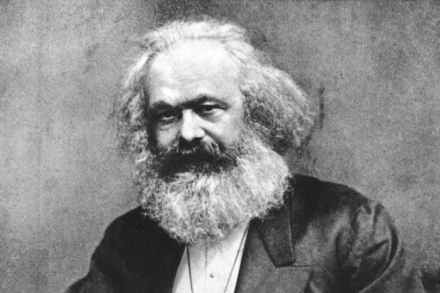
Happy Karl Marx day. To mark the 200th anniversary of the revolutionary philosopher's birth, a statue of the revolutionary philosopher (funded by the Chinese, natch) has been erected in his German hometown Trier to protests, Owen Jones has tweeted a picture of his cat reading Das Kapital and a range of pieces have been published across the media on his legacy. Only some articles are more gushing than others. Take for example, the Financial Times essay on new Marx biography 'A World to Win: The Life and Works of Karl Marx'. The glowing piece sees the journalist offer a rather selective account and verdict of Marx's life and legacy.

Theresa May won’t abandon her customs partnership idea: but she should

From our UK edition

Theresa May has received a shot in the arm from the local election results. But, as I say in The Sun this morning, she still needs to deal with the whole customs partnership question. Even after the remarkable rebuff that the ‘new customs partnership’ received from the Brexit inner Cabinet on Wednesday, despite the Prime Minister putting her authority on the line by making clear her support for it, Number 10 won’t give up on the idea. It believes that with a few changes it can be made to work. Already, ministers are being told that what really matters is getting out of the EU. The case is being made that once Britain is no longer, legally a member of the EU all these problems can be ironed out.

Why politicians love to blame an algorithm

From our UK edition

Jeremy Hunt as Home Secretary said something very important by mistake. He told the Commons in May 2018 that ‘a computer algorithm failure’ meant 450,000 patients in England missed breast cancer screenings. As many as 270 women might have had their lives shortened as a result. This point hasn't received the analysis it deserves. Scores of women died sooner than they should have done, because of an algorithm. He’s probably right, you know. It really could have been a computer model to blame here. But that’s obviously unsatisfactory, since we need humans to hold to account when things go wrong. Let’s say it was a poorly programmed algorithm – who’s at fault? The tech guy who wrote it, years ago?