Uk politics

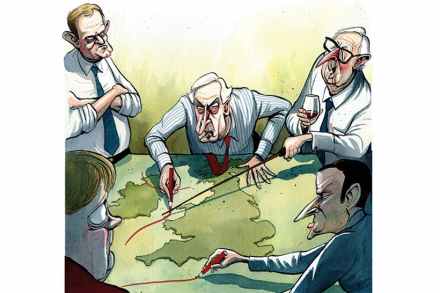
Theresa May’s Brexit is a mess. But will Tory MPs dare move against her?

From our UK edition

It’s time for Bond — Basildon Bond,’ is the joke among pro-Leave MPs as Theresa May serves up her mess of pottage as Brexit. Market research, however, shows the joke does not work on MPs under 40 because they do not know what Basildon Bond is. So perhaps I should explain to the hip Spectator crowd that Basildon Bond remains the commonest brand of quality paper on which to write letters. There need to be 48 such letters sent to Graham Brady, the chairman of the 1922 Committee, to provoke a vote of confidence in Mrs May among Conservative MPs. There are certainly far more than 48 who do not, in fact, have confidence in her. It does not automatically follow, needless to say, that they will say so when asked.

Why the Cabinet must reject Theresa May’s Brexit deal

From our UK edition

Let’s be clear. If the Cabinet supports the Prime Minister’s proposed deal today, and they somehow manage to whip Parliament into allowing it to proceed, then a whole raft of irreversible consequences will flow from it.  This will begin the breakup of the United Kingdom, not just isolating Northern Ireland, but also undermining the Unionist cause in Scotland. The so called backstop will not actually be a backstop at all but a foundation for EU ambition to constrain our opportunities and limit our competitiveness. In Brussels they admit this privately. This deal will contrive to make the Customs Union inescapable forever and effectively trap the UK to perpetual domination from Brussels.

Brussels ‘leverage’ leak makes life even more difficult for Theresa May

From our UK edition

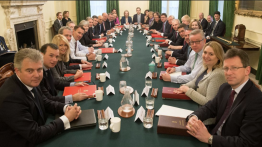
It's crunch day – yes, really this time – for Theresa May. After spending the evening in one-on-one meetings with a select few cabinet ministers, this afternoon the Prime Minister will chair a special cabinet meeting – where she will seek approval for her proposed deal. The devil will be in the detail – but for some the detail is neither here nor there with the European Research Group quick to see red ahead of reading the document. Last night, Jacob Rees-Mogg suggested on Newsnight that he could be forced to withdraw his support for the Prime Minister. Not helping matters is a Brussels leak that makes its ways into the Times and FT. Brussels negotiator Sabine Weyand has told EU ambassadors that the 'temporary' backstop may not be so temporary.

Jacob Rees-Mogg considers writing a letter

From our UK edition

Oh dear. The bulk of MPs haven't even see Theresa May's proposed deal yet but already suspicion is growing that it's a stinker. In that vein, Jacob Rees-Mogg appeared on Newsnight on Tuesday evening where – in a significant change in tone – he appeared to suggest he could write a letter of 'no confidence' to 1922 chair Graham Brady in the near future if the rumours are correct. The arch-Brexiteer who has previously said the policy – not May – ought to change, said there would come a time when he can't support her because she’s so tied to Brexit policy: https://twitter.com/BBCNewsnight/status/1062478026376527872 Watch this space.

Government threatened with Budget defeat

From our UK edition

The government is facing a defeat on the Budget. But rather than a Brexit showdown or the DUP pulling the rug from under Theresa May's feet over the rumoured backstop, the issue is a domestic one. After Tracey Crouch resigned from government over the decision to seemingly delay reducing the maximum stake for fixed odds betting terminals (FOBT) by six months, more than 20 Tory MPs – including Remain MPs and Brexiteers such as Jacob Rees-Mogg – and all 10 DUP MPs have signed an amendment demanding the new maximum stake be brought forward. The vote is scheduled for next week. While the government would currently lose that vote – no-one expects it to get that far with a climbdown expected in the next few days.

The stop and search race myth | 13 November 2018

From our UK edition

When I was working as a speech writer in the Home Office, under Theresa May, one of her special advisers told me that she wanted to give a statement to parliament on the police's use of stop and search. Part of the motive for doing this, he explained, was political: stop and search is a policy which consistently alienates members of the black community. I was told that it would help the home secretary's standing with Afro-Caribbeans if she made a statement that was critical of the police's use of stop and search. The grounds would essentially be that the tool was racist, or at least used by the police in a racist way: the statistics demonstrated that you were six or seven times more likely to be stopped and searched if you were a member of an ethnic minority.

Labour U-turn: ‘Brexit can be stopped’

From our UK edition

With Theresa May's government seemingly on the brink of collapse over the backstop agreement, the Prime Minister can take heart that the Opposition are also experiencing Brexit turbulence. Over the weekend, Jeremy Corbyn set the cat among the pigeons by telling a German newspaper that Brexit cannot be stopped. The Labour leader's comments dismayed a lot of pro-EU Labour voters. But fret not, in the space of two days Labour's Brexit position appears to have changed again. Keir Starmer – the shadow Brexit secretary – has just told the Today programme: 'Brexit can be stopped.' Expect the position to change again by end of play.

Another day, another Johnson calls for a second referendum

From our UK edition

After Jo Johnson resigned on Friday over the government's Brexit position, his brother Boris was quick to take to social media to commend Jo for taking a brave stand – by calling out the flaws with the proposed Brexit deal. However, the former foreign secretary stopped short of backing his brother's call for a second referendum – also known as a so-called 'People's Vote'. Still, Jo need not worry – there are plenty of other Johnsons willing to fill that void. With Jo and Boris's sister Rachel a vocal Remain campaigner already, their brother Leo has now joined the fold. Leo Johnson took to Twitter to praise his brother Jo and call for a 'real vote' – going so far as to @ his rogue Brexiteer brother Boris. https://twitter.

The only case Mrs May can make for her Brexit deal

From our UK edition

Jo Johnson’s resignation, the DUP kicking off and the European Commission's Article 50 task-force talking about a lack of progress mean that it hasn’t been a good end to the week for Theresa May. As I write in The Sun this morning, one government source says ‘if there’s no November Council, then no deal goes into overdrive’. But given Theresa May’s desire to avoid no deal there probably will be some sort of agreement in the not too distant future. But it will be flawed—and Theresa May should say so. Why would a Prime Minister admit that a deal they’ve negotiated isn’t great?

Could the UK out-grow the EU after Brexit?

From our UK edition

Collapsing retailers. A looming far-left government threatening nationalisation. And perhaps most significantly of all, our potentially chaotic rupture with our largest, closest and most significant trade partner. It doesn’t seem to matter what you throw at it, the British economy continues to be surprisingly resilient. Figures out today showed it expanded at 0.6 per cent in the third quarter, its fastest rate for a couple of years, and a rate which should keep annual growth at a more than respectable 2 per cent plus. That will come with all the usual caveats of course. It was helped by all the money we spent in the pub watching our boys do so well in the World Cup this summer, the pound was weak yet again, and much of it was financed by hammering our credit cards as usual.

The conundrum of Britain’s continued growth

From our UK edition

The conundrum of economic growth continues. The withdrawal process from the EU is, even by the admission of the most ardent Brexiteers, going pretty badly. We have a rearguard Remain lobby trying to talk down the economy at every opportunity – something which you might think ought to be undermining confidence. And yet still there is no sign of the Brexit-induced recession which the Treasury told us a month before the 2016 referendum would be inevitable within two years of a Leave vote. The GDP figures for the third quarter released by the Office of National Statistics (ONS) this morning, show that the economy grew by 0.6 per cent in the third quarter. It is not dynamite, especially considering that growth was a more modest 0.1 per cent in the first quarter and 0.

The leaked Brexit memo exposes May’s botched strategy

From our UK edition

The leaked plan of how the Government might try to sell the Brexit deal contains a telling passage. The memo instructs the Cabinet Office to talk up the agreement by ‘comparing it to no deal but not to our current deal’. For all the claims by a government spokesman that the 'misspelling and childish language in this document should be enough to make clear it doesn't represent the government's thinking', this key phrase is the closest we have come to a disturbing admission: that Theresa May’s deal could leave us worse off than remaining in the EU.

Second Cabinet this week to decide on Brexit backstop

From our UK edition

It looks like today’s Cabinet will only be the first of two meetings this week. I understand that another one, which may well make an actual decision, is now likely to be held later in the week. Today’s was significant for an intervention from Geoffrey Cox, the attorney general. Cox’s contribution was about balancing risks. He, I am told, did say that Northern Ireland would be under various, different regulations under the current proposals. But he said that a unilateral withdrawal mechanism—which a large number of Cabinet ministers again backed—wouldn’t be a panacea to all the UK’s problems in the Brexit talks.

Theresa May will pay any price for a Brexit ‘Deal’

From our UK edition

Halloween may be over but fear still stalks the land. As we enter the Brexit endgame, it is apparent that Theresa May plans to terrorise her turbulent troops into supporting the Chequers-style deal she has cooked up with the EU. A deal at any price? That is the Prime Minister’s position. From the very beginning of the negotiations, she has been intent on securing a deal. The lamentable events of the past two years can be traced back to this simple imperative. According to her, success in the talks equalled a deal; failure equalled no deal. And that is where I and my fellow economists in Economists for Free Trade (EFT) beg to differ. A deal is not success in itself. In fact, a bad deal is far worse than no deal (sound familiar?). I will come to why in a moment.

Should taxpayers pay for Chuka’s Brexit jaunt to Paris?

From our UK edition

Chuka Umunna loves to talk Brexit, telling anyone who will listen what a disaster Britain’s departure from the EU will be. The MP for Streatham has even made several hops across the Channel to discuss the subject with European politicians. But who paid for Chuka’s recent jolly to Paris to talk Brexit? Mr S can reveal that it was the taxpayer that footed the £397 bill for Chuka’s Eurostar ticket to the French capital: So is travelling to France really the best way of representing his constituents in south London? A spokesman for Chuka said that ‘by being active in the Brexit debate, including talking to European counterparts, he is fulfilling an election commitment he made to his constituents at the General Election’.

The Arron Banks delusion

From our UK edition

What do people mean when they say Arron Banks ‘bought Brexit’? That phrase is everywhere. It’s a New Statesman headline: ‘The man who bought Brexit.’ He ‘bought Brexit’, the Observer informs us, with his ‘funding of the populist, social media driven Leave.EU campaign’. OpenDemocracy, like many others, wants to know where Banks’ money comes from, so that we can finally answer the question: how could he ‘afford Brexit’? This vision of Banks ‘buying’ one of the largest democratic votes in British history, as if it were a second-hand car or something, is weird. And very revealing. What it reveals is the alarmingly low esteem in which voters are held by the Remain-leaning section of the chattering classes.

The faulty logic of a ‘Norway for Now’ Brexit

From our UK edition

The campaign ‘Norway for Now’, an idea promoted by Nick Boles, is that Britain should join the European Economic Area and EFTA, until such time as we can move further out of the EU, for example with a Canada-style free-trade deal. This is what Norway and Iceland and Liechtenstein do. The idea sounds nice as a friendly and temporary compromise. But in fact the psychology is wrong. Such arrangements were devised more as an entry chamber to full membership (which is what Norwegian elites still want) than as part of an exit strategy. The Norwegian Prime Minister is now making this point. The point of Leave is to escape the gravitational pull of Brussels. Why make self-contradictory efforts to stay in the orbit and leave it at the same time?

Brexiteers in government nervous about what’s going on in the negotiations

From our UK edition

It is quiet out there, too quiet in the views of many Brexiteers in government. As I say in The Sun this morning, they fear that right now a deal is being done that they’ll be bounced into supporting. They worry that since last week’s Cabinet meeting, there hasn’t been any new Brexit offer put either to Cabinet or the inner Cabinet yet technical talks have resumed in Brussels. They fear that a deal will be agreed and then they’ll be faced with a choice of rejecting it and having to take the blame for no deal and the chaos that would involve or accepting the agreement with all its flaws. This fear of being bounced has been heightened by Theresa May’s mood.

Will a ‘zero tolerance’ approach stop attacks on NHS staff?

From our UK edition

Obviously it is wrong to attack NHS staff. But does the government’s new ‘zero tolerance’ policy consider why such attacks take place? There are eternal reasons, such as the inherent nastiness of some people, and wider social ones, such as drug abuse. Are there also specific NHS-related ones too, though? The worst aspects of the NHS are not usually medical: they are to do with a bureaucracy which puts patients last. It is utterly extraordinary, for example, that a waiting time of four hours in A&E is now the norm or even, it would seem, the (often missed) target. Often have I sat there wondering not at the aggression of patients, but at their quiet acceptance of such ill treatment. It is wrong when patients attack, but not surprising.